
Following Standard Chartered's June 25, 2026, announcement that it is exploring the sale of its Wealth and Retail Banking business in Ghana, the evidence is mounting that the bank is systematically dismantling its retail footprint across Africa, leaving the Kenyan market as the next logical step in its managed liquidation.
Standard Chartered Kenya: The Final Act of a Managed Liquidation
Part 1: The Retention Red Flag
Standard Chartered Kenya’s 2025 retention rate of just 4.8% is not a growth strategy; it is a corporate death warrant. By paying out roughly 95% of its earnings as dividends, the bank is intentionally “starving” its growth engine to empty the safe.
The “Strip-Mining” Pivot: The shift from a 20.5% retention rate in 2021 to a 4.8% rate today signals that the bank has abandoned long-term reinvestment in favor of aggressive capital repatriation.
The “Buyability” Setup: A potential suitor doesn’t want a bank bloated with trapped cash. By stripping out retained earnings, Stanchart is creating a “lean,” high-yield asset that is mathematically groomed for a quick takeover.
The Verdict: You aren’t buying a growth engine; you are participating in a managed liquidation. The dividend isn’t a reward for performance—it’s the final harvest of inventory before the bank hands over the keys.
Part 2: De-risking into Irrelevance (The “Borehole” Analysis)
The narrative that Standard Chartered is “shrinking” is a lie; the bank is actually mutating. It is shedding the high-risk world of private-sector lending to morph into a sterile “Holding Company for State Debt.” This is a manicured balance sheet designed for one purpose: to be sold.
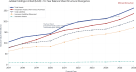
The Asset Shift: While total assets grew 14.3%, Net Loans and Advances stagnated with only 13.9% growth over five years—drastically trailing the 20%+ CAGR of local Tier-1 peers. Meanwhile, investment in Government Securities exploded by 40.6%, growing three times faster than core lending.
The LAR Stagnation: The Loan-to-Asset Ratio (LAR) remains stuck at roughly 37%. By refusing to scale its loan proportion in a booming market, Stanchart is signaling that it has surrendered the competitive credit war.
The Verdict: Stanchart has effectively become a glorified high-yield treasury fund. They have traded the “hard work” of evaluating Kenyan businesses for the “easy” yield of sovereign debt. They are keeping their capital liquid, sterile, and perfectly positioned for a quick exit.
Part 3: The Liquidation of the “Family Jewels”
In the world of corporate exits, real estate is the ultimate anchor. If a bank is staying, it renovates. If a bank is leaving, it clears the decks. The sale of the iconic East African headquarters on Chiromo Road in May 2026 isn’t a mere “real estate pivot”—it is the final step in making the franchise portable.
A buyer doesn’t want to inherit the headache of managing 110-year-old buildings or high-maintenance physical footprints. They want the digital ledger, the regulatory license, and the elite client list. By moving from “Owner” to “Tenant,” Standard Chartered is turning its operation into a “Plug-and-Play” asset.
The Blueprint of Retreat
We’ve seen this movie before. The logic follows the exact pattern of Stanchart’s exits in Jordan and Zimbabwe:
The “Asset-Light” Pivot: By liquidating the physical “crown jewels”—the Nairobi HQ and prime branches in Nyeri and the Coast—the bank is surgically removing the “brick-and-mortar” layer.
The Portable License: A lean, tenant-based operation is infinitely easier to fold into a new parent company’s infrastructure. Stanchart isn’t just selling property; they are dismantling the friction that would slow down a potential acquisition.
The Global Exit Pattern: Analysts often call this “streamlining.” We call it what it is: Packing the bags. From Amman to Harare, the pattern is identical—real estate goes first, the staff follow, and the license is handed off shortly after.
Why the Chiromo HQ Sale is the Final Signal
Symbolism Over Strategy: Selling the headquarters is a massive psychological signal. It tells the market, the staff, and the regulators that the bank no longer sees itself as a permanent fixture of the Nairobi skyline.
Capital Efficiency: The proceeds from these sales are not being reinvested into the Kenyan market. They are being funneled into the group’s global machinery, likely to be returned to shareholders as the “final parting gift” before the exit.
Making the Bank “Buyable”: Potential suitors like FirstRand or Absa aren’t looking for real estate; they are looking for a clean market entry. By turning these assets into cash, the bank is cleaning its balance sheet, removing overhead, and simplifying the transaction for whoever is next in line.
Boardlot Note: You don’t sell the house you live in unless you’ve already signed the lease on a new one—or decided you’re moving out of the neighborhood entirely. Stanchart is selling the furniture, settling the bills, and moving the remaining valuables into a safe-deposit box.
Part 4: Clearing the Legal Deck (Summary)
The rapid 2025 settlement of the high-value retirement benefits lawsuit wasn’t charity—it was a surgical removal of “poison pills.”
Buying “Buyability”: Contingent liabilities are deal-killers for M&A suitors. By settling, Stanchart cleared the legal “landmines” that would have stalled an acquisition or forced a massive price discount.
A Calculated Transaction Cost: The resulting dip in 2025 profits wasn’t a sign of operational failure; it was the price paid to make the franchise a clean, “plug-and-play” asset.
The Verdict: You don’t settle multi-billion shilling disputes to be “nice”—you do it because you’re painting the house for a final inspection. They’ve scrubbed the legal history so a buyer can walk in without a lawyer in sight.
Part 5: The Staff Squeeze (The -22% Human Shrinkage)
Stanchart hasn’t just cut staff; they have engineered a “Ghost Bank.”
The 22% Cull: A sustained headcount reduction since 2020 isn’t about “efficiency”—it’s about stripping the payroll to maximize short-term profits for the final exit.
The “Plug-and-Play” Ledger: By replacing humans with automation, they’ve created a lean, digital-only system. A buyer doesn’t want your payroll or internal politics; they want your tech stack.
The Sultan’s Verdict: Stanchart is no longer trying to compete with local banks; they are grooming themselves for a gavel. They’ve removed the human complexity so a suitor can perform a seamless, automated takeover overnight.
Boardlot Note: If you are running a retail business for the long haul, you invest in your people to fight for market share. If you are preparing a business for a quick sale, you fire the staff, automate the processes, and present the buyer with a clean, low-maintenance dashboard. The human contraction at SCBK is the definitive proof of life support before the plug is pulled.
Part 6: The Great Wealth Migration (Summary)
Standard Chartered is executing a final, surgical move: separating the “wealth” from the “bank.”
The Offshore Life Raft: Instead of building a local wealth powerhouse, Stanchart is aggressively migrating its “Premier” clients into global, offshore funds (like BlackRock).
The “Exit Hedge”: By moving assets into hard-currency global platforms, they ensure the money stays within the Standard Chartered global network, even after the local Kenyan retail branch is sold to a new owner.
The Smoking Gun: A bank committed to the Kenyan market would push local MMFs and asset-backed products. Stanchart is doing the opposite—they are building a bridge for capital flight.
The Verdict: They are securing their most valuable revenue stream (wealth management fees) before they auction off the retail “shell.” For the bank, it’s the ultimate way to lock in the assets while offloading the operational headache of the local retail business.
Part 7: The Curtain Call (Summary)
Standard Chartered has successfully transformed itself from a traditional lender into a “Turnkey” financial gateway, effectively making itself an indispensable acquisition target.
The Exit Kicker: We aren’t playing for growth; we’re playing for the acquisition premium. When a suitor like Absa or FirstRand moves in, expect a 20% to 35% premium over book value.
The “Special Dividend” Windfall: With the Chiromo HQ sale finalizing, expect one-time special dividends. Stanchart’s history suggests they will pass these asset-sale proceeds directly to shareholders.
The Yield Hedge: While we wait for the gavel to fall, we collect one of the best dividend yields on the NSE. You are effectively being paid to sit in the front row of the final auction.
The Verdict: The “Turnkey” Masterpiece
Standard Chartered has spent five years removing the “poison pills” that would have scared off a buyer:
No physical branch anchor (Real estate sold).
No messy labor relations (Staff headcount <1,000).
No contingent litigation (Pension lawsuit settled).
No private-sector credit risk (Balance sheet heavy on T-bills).
The Strategy: Do not sell into the noise. Treat every share of $SCBK as a “Call Option” on an acquisition. You aren’t holding a bank; you’re holding a ticket to the most anticipated M&A event on the Nairobi Securities Exchange.
Boardlot Note: The bank is choosing quality of balance sheet over the quantity of customers. We are choosing the bank that pays us to wait for the final acquisition premium. Keep your eyes on the exit sign—the payout is coming.
#NSE2026 #BoardlotSultan #SCBK #ManagedLiquidation #ExitKicker