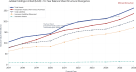

As Equity Group ties staff survival to generative AI and Huawei certifications, the writing is on the wall. For Kenya’s banking sector, the era of routine administrative labor is dead—and the automation purge has officially begun.
1. Introduction: The Ultimatum from Upper Hill
When James Mwangi moves, the rest of the banking sector watches. But the latest sweeping directive echoing through the glass towers of Upper Hill isn’t about opening another regional branch or chasing a trillion-shilling balance sheet. It is an internal cultural and technological revolution backed by an unmistakable ultimatum: master artificial intelligence or transition out.
Following strategic partnerships with global tech giants like Huawei (via the Huawei ICT Academy) and high-level digital skilling pipelines, Equity’s leadership has shifted from optional corporate upskilling to mandatory survival. As outlined directly in the group’s official corporate disclosures, the objective is explicitly clear:
“The strategy aims to expand operations to 15 countries, serve 100 million customers, deploy next generation digital and AI-enabled systems, for transformation finance across Africa.”
With thousands of employees rushed through business-focused generative AI courses and rigorous engineering tracks, the message is stark. This isn’t just about modernizing resumes; it is an existential stress test designed to strip away traditional operational fat and build a lean, automated banking titan by 2030.
To grasp the true magnitude of this sweeping mandate, look at the cold numbers. Across Kenya’s formal banking sector, a total workforce of roughly 39,000 to 40,000 employees anchors traditional financial intermediation. Yet within Equity Group’s regional ecosystem alone—housing a total group workforce of approximately 13,383 employees spanning its regional footprint—7,344 staff members have already been pulled directly into the mandatory generative AI upskilling pipeline under the Huawei ICT Academy and advanced engineering frameworks. When a single institution enforces a sweeping mandate that forces more than half its entire continental workforce through high-intensity machine learning and AI certification lines, it stops being a training program. It is an industrial conversion.
2. The Ghost Town Blueprint: What Tala Proves About AI and Headcount
If you want a terrifying glimpse of where the entire financial sector is heading, look no further than the evolution of digital credit pioneers like Tala.
For years, fintech lenders have demonstrated how machine learning, alternative credit scoring, and automated decision engines can disburse billions of shillings and manage millions of customer accounts with astonishingly thin human workforces. Operating with a fraction of the staff required by traditional tier-one banks, digital lenders proved that core underwriting, fraud detection, and customer verification can be handed over entirely to algorithms.
But the real warning shot came when these automated platforms began trimming even those lean teams. As AI-driven features—such as user-selected repayment schedules and automated customer resolution flows—took over routine inquiries, support and operational teams found themselves redundant, triggering localized restructuring and layoffs. Tala’s trajectory offers a chilling industry lesson: when code replaces clerking, whole departments vanish overnight.
3. What the Mandate Means for Equity Staff
For the thousands of employees sitting behind desks across Equity’s regional network, the rules of engagement have fundamentally changed under this sweeping mandate.
The Cost-Free Trap: The bank is footing the bill and providing the platforms, meaning individual compliance is the only metric that matters. There are no excuses for sitting on the sidelines.
The “Transition” Reality: In corporate euphemisms, telling staff who fail to adapt that they must “transition” translates directly to performance-managed exits. As routine back-office processing, customer onboarding, and initial credit scoring become fully automated, manual administrative labor is being systematically engineered out of existence.
4. The Headcount Paradox: Slashes vs. Scale
How does a financial behemoth cross the KSh 2 trillion asset threshold while aggressively compressing its cost-to-income ratio? By breaking the linear relationship between business growth and headcount expansion.
With over 98% of transactions now happening outside physical branches and nearly 90% processed entirely through digital platforms, traditional tellers, data entry clerks, and manual processing officers are losing their economic justification. Equity’s operational disclosures show that technology enablement allows fewer people to manage exponentially larger volumes of capital. The future headcount trend points toward lean, highly specialized pods where one AI-native employee commands the output that previously required an entire department.
5. The Broader Industry Shockwave: Mirroring Past Tech Disruptions
History is repeating itself, but at an unprecedented velocity. Think back to previous waves of core-banking modernizations, ATMs, and mobile-money integrations that quietly shrank branch footprints and decimated mid-level clerical jobs across Kenyan commercial banks over the last decade.
Now, generative AI and autonomous decisioning are moving up the food chain to middle management, risk assessment, and legal documentation. If East Africa’s most profitable bank successfully proves that algorithms can replace human layers in complex workflows, competitors like KCB, Co-op, and NCBA will be forced to follow suit to protect their profit margins. The traditional, unspecialized bank clerk is officially an endangered species.
6. Sink or Swim: Is It Time for Kenyan Bankers to Upskill or Pivot?
For the broader Kenyan financial workforce, the writing is glaringly obvious. A standard commerce degree or years of routine banking experience is no longer a permanent shield against redundancy.
The market is violently splitting into two camps: the digital-native knowledge workers who can prompt, parse, and partner with intelligent systems, and the administrative class waiting for the axe to fall. Surviving the next 24 months requires an aggressive personal pivot. Bankers across Kenya must either master the new tech stack or prepare to exit the financial sector entirely.
7. The Boardlot Verdict (And A Warning to the Insurance Industry)
From an investor’s standpoint, James Mwangi’s sweeping mandate and ruthless push toward a lean, tech-native workforce is a masterclass in operational efficiency and future-proofing. From a societal standpoint, it marks the brutal arrival of the Fourth Industrial Revolution on Kenyan soil—modeled on the lean, automated realities pioneered by app-based lenders.
A Warning to the Insurance Industry: If Kenya’s banking sector thinks it is alone in the firing line, it needs to wake up. Insurance underwriters, actuaries, and claims adjusters are staring down the exact same automated abyss. With AI-driven parametric products, automated document processing, and predictive pricing models already dismantling routine risk assessment, the insurance industry is next in line to be confronted by this merciless AI transformation.
The bottom line echoing across the Nairobi financial district is simple: Adapt your skill set, or the algorithm—and the boardroom—will do it for you.
Sources & References:
Equity Group Holdings (August 2026): Press Release: Equity Group Reports Strong Half Year 2026 Results, Underpinned by Strong Balance Sheet Growth, Regional Strength and Technology-Driven Growth (Detailed metrics on GenAI course completion rates, Huawei ICT Academy integration, and WorldQuant University admissions).
Equity Group Holdings (May 2026): Press Release: Equity Group Accelerates Technology Led Transformation Delivering Strong Q1 2026 Growth (Data on digital transaction adoption reaching 98.3% and initial staff upskilling frameworks).
Nairobi Business Monthly (June 2026): Tala cuts jobs in Kenya as AI reshapes tech workforce (Reporting on digital credit automation, operational streamlining, and workforce restructuring trends in Kenya).
About Boardlot Africa Research
Boardlot Africa is a premier financial intelligence and corporate governance publication dedicated to unpacking the mechanics of capital, market strategies, and structural shifts across East Africa’s corporate landscape. By bridging the gap between raw economic data and actionable market intelligence, we deliver deep-dive research, independent corporate analysis, and policy insights designed for institutional investors, boardrooms, and sharp market observers.
Get in Touch
Email: boardlot.research@gmail.com
Phone: +254 753 133 901
Substack: Subscribe to Boardlot Africa
X (Twitter): BoardLotSultan
Linkedn:): BoardLot Sultan