
Introduction: The Invisible Architect of Daily Life
Jaswant Singh Rai is not a billionaire of Silicon Valley innovation or high-finance speculation; he is the king of the “low-margin, high-volume” economy. In the Kenyan landscape, he has mastered a brutal, highly effective industrial philosophy: become the essential provider of the goods that define the daily rhythm of life. By focusing on the “basket of essentials”—the sugar in our tea, the oil in our cooking, and the soap on our washstands—the Rai Group has positioned itself as the indispensable foundation of the Kenyan household.
However, this industrial ubiquity comes with a complex shadow. To achieve such dominance in a market historically stifled by inefficiency and regulatory hurdles, the Rai model has often blurred the lines between private enterprise and political influence. His empire is a masterclass in “defensive industrialization,” where the mastery of supply chains and manufacturing costs is inextricably linked to navigating the corridors of power. This is the story of how Rai built an empire of pennies, and how, in the process, he became a central, albeit polarizing, fixture in the state’s economic architecture.
Table of Contents
Part I: The Genesis: The Tarlochan Legacy
Part II: The Distribution Gamble: Market Selection and Grit
Part III: The Sugar Monopoly: The Rise of Kabras
Part IV: Menengai Oil Refineries: The Master of the Daily Basket
Part V: The Menengai Cream Phenomenon: A Legend in the Washroom
Part VI: Aquamist: The Retail Leverage Play
Part VII: The Friction: Family Feuds and the Mumias Wars
Part VIII: The Succession: Passing the Torch to the Next Generation
Part IX: The Rai Blueprint: Four Pillars of an Empire
Part X: Legacy: The Invisible Landlord of Daily Life
Part X: The Nexus of Influence—The Kenyatta Connection
The Rai Blueprint: Four Pillars of an Empire
While the history of the Rai Group is marked by political turbulence, boardroom battles, and the weight of state-level scrutiny, the structural integrity of the empire rests on four immutable pillars. These foundational elements allowed Jaswant Singh Rai to transform a collection of industrial assets into a nation-wide supply chain, turning the “pennies” of low-margin manufacturing into a billionaire’s fortune.
Family Legacy: The foundation was laid by his father, Tarlochan Singh Rai, who moved from India to the DRC (then Zaire) to acquire distressed agricultural estates before expanding into Kenya. Jaswant inherited this “turnaround” mindset—the innate ability to identify, acquire, and revitalize struggling or undervalued industrial assets that others deemed unviable.
Distribution Network Leverage: Rather than relying on traditional, sometimes exclusionary, retail gatekeepers, Rai forged strategic partnerships with burgeoning, high-growth retail chains like Tuskys and Naivas. By becoming their most reliable supplier during periods of market shortages, he secured deep shelf space and built a distribution moat that reached even the smallest dukawala across the country.
The Menengai Brand Advantage: His FMCG strategy centered on high-volume, low-margin household staples. Products like Menengai Cream soap became “legendary” household fixtures, benefiting from intense brand loyalty and consumer trust—particularly among mothers who viewed the soap as a gentle, multipurpose solution, making it nearly impossible for global competitors to dislodge it.
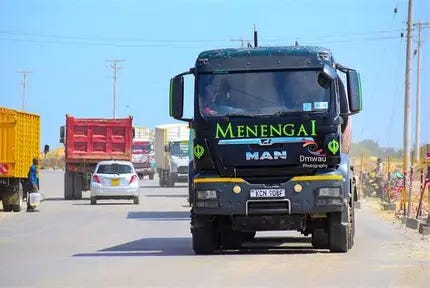
Logistics & Operational Vertical Integration: Rai minimized costs by controlling the entire value chain. He didn’t just sell sugar and soap; he manufactured his own packaging (plastics), managed his own refineries, and utilized a proprietary logistics fleet. This created an unbeatable efficiency; his trucks, for instance, would haul raw palm oil from Mombasa to Nakuru, and then immediately load finished sugar or soap for distribution on the return journey, ensuring that his transport capacity was never idle.
The Industrial Colossus: The Republic of Rai
I. The Abduction: When the Titan was Grounded
On a Friday evening in August 2023, the silence of Nairobi’s Wood Avenue was shattered by a scene that felt ripped from a high-stakes political thriller. Jaswant Singh Rai—the man who sits at the apex of Kenya’s sugar, timber, and FMCG empires—was abducted in broad daylight. For those who track the corridors of power, it was not merely a crime; it was a signal.

His disappearance came just days after President William Ruto, addressing the stubborn crisis in the sugar sector, had issued his infamous “Mambo ni matatu” (There are only three options) warning. The President’s message was blunt: those who were looting the industry and holding farmers hostage had three choices—leave the country, go to jail, or face a “journey to heaven.”
When Rai was plucked from the street, the business community went into a state of paralysis. Here was the “Sugar King,” a man who controlled the essential infrastructure of daily life—from the sugar on our tables and the water we drink to the timber in our homes—suddenly rendered vulnerable. His brief disappearance served as a brutal punctuation mark to the new administration’s arrival. It was a message that in the new Kenya, no amount of industrial influence or historical connection could insulate a tycoon from the cold, unpredictable arm of the state.
II. The Genesis: The Tarlochan Legacy
The foundation of the Rai empire was not laid in the boardrooms of Nairobi, but in the volatile, high-stakes frontier of the former Belgian Congo (Zaire) during the 1960s. It was here that the patriarch, Tarlochan Singh Rai, first demonstrated the industrial instincts that would define the family’s future.
The Origins: From Zaire to Kenya
Tarlochan Singh Rai’s initial fortune was built on a bold, contrarian bet: as Belgian settlers fled the Congo in the wake of post-independence instability, Tarlochan moved in. He acquired vast, distressed tea and coffee estates at a fraction of their value, demonstrating an early mastery of the “turnaround” play. By the time he transitioned his operations to Kenya in the 1970s—following the regional shifts that saw his brother also establish roots in East Africa—the family had already learned that true wealth was best acquired when others were in retreat.
Upon arriving in Kenya, the family didn’t just invest; they integrated. They began by partnering to produce tea chests and later pivoted into sawmilling, quickly recognizing that in a developing nation, the control of raw materials—timber, sugar, and eventually energy—was the ultimate leverage.
The Crucible: Learning the “Art of the Deal”
The 1970s and 1980s served as the family’s industrial crucible. Operating in an era of shifting political tides, the Rais learned that long-term survival in Kenya required more than just capital; it required navigating the delicate intersection of commerce and the state.
Defensive Industrialization: The family quickly realized that to thrive in high-risk environments, they had to become “essential.” By moving from simple agricultural processing into broader manufacturing, they made themselves indispensable cogs in the national economy.
The Adaptation: As the political landscape changed from the Kenyatta era to the Moi administration, the family demonstrated a rare capacity for resilience. They weren’t just “businessmen” in the traditional sense; they were industrial architects who understood that in a market characterized by bureaucratic inefficiency, those who could provide consistent, large-scale production would always find an audience in the corridors of power.
This era of “deal-making”—marked by strategic concessions, the acquisition of state-related assets, and a relentless focus on vertical integration—forged the “Rai Method.” By the time Jaswant Singh Rai took the reins, he wasn’t just inheriting a business; he was inheriting a blueprint for how to operate in a system where influence is a currency as valuable as the shilling itself
Part III: The Rai Method—A Blueprint for Industrial Hegemony
The abduction of Jaswant Singh Rai was not merely a moment of personal peril; it was a collision between an old-world titan and a new-world political order. To understand how he built an empire that made him a lightning rod for presidential warnings, one must peel back the layers of the “Rai Method.”
Rai’s business strategy is not about innovation in the sense of disruptive technology; it is about absolute control of the foundational layers of the economy. He is the “landlord of the mundane”—the man behind the essential items that sustain daily life in Kenya.

The Pillars of the Rai Empire
1. Timber and Infrastructure: The Timsales Foundation
Long before sugar dominated the headlines, timber was the bedrock. Through Timsales, the Rai Group mastered the art of vertical integration.
The Strategy: By controlling the sawmilling and production of wooden poles, Rai positioned himself as a primary supplier for national utilities like Kenya Power.
The Power Link: This wasn’t just a business; it was a state-critical service. When your infrastructure is built on the wood that Rai provides, you become an indispensable partner to the government, creating a symbiotic—and often controversial—relationship with the state.
2. The Water Monopoly: The Keringet Pivot
If timber provided the structural foundation, Keringet provided the cash flow.
The Strategy: The acquisition of the Keringet water brand (through Crown Beverages/Golden Africa interests) was a masterstroke of FMCG (Fast-Moving Consumer Goods) dominance.
Direction of Thought: Rai recognized that while heavy industry (like sugar or cement) is susceptible to political and climatic shifts, bottled water is a constant, recession-proof necessity. This move diversified the group’s revenue, ensuring that while his sugar mills might be under political fire, the “pipes” of his consumer-facing business continued to flow.
3. The Plastics Factory: Closing the Loop
The most overlooked element of the Rai empire is its sophisticated plastic packaging and manufacturing infrastructure (such as those tied to Menengai and subsidiary operations).
The Strategy: This is the “internalized supply chain.” By manufacturing his own plastic bottles for water and oil, and packaging for sugar and soaps, Rai doesn’t just sell products—he captures the margins that his competitors lose to external suppliers. He effectively turned his manufacturing overhead into a competitive weapon, allowing him to undercut rivals on price while maintaining higher profit margins.
The King of Low-Margin Manufacturing
If the Rai method is the blueprint for industrial hegemony, the execution is found in the relentless pursuit of the “commodity gap.” Jaswant Singh Rai does not build businesses for the prestige of innovation; he builds them to capture the high-volume, low-margin reality of the African consumer. In a market where disposable income is guarded, Rai has positioned himself as the essential provider of life’s daily necessities.
4. The Sugar Hegemony: Volume as a Weapon
Sugar is the “political commodity” of Kenya, but for Rai, it is an industrial machine. Through West Kenya Sugar, Sukari Industries, Olepito, and the newer Naitiri Sugar, the Rai Group controls nearly half of the nation’s sugar production.
The Strategy: While competitors struggle with aging machinery and bloated bureaucratic structures, Rai operates with the precision of a high-efficiency miller. He acquires distressed mills, strips away the operational waste, and achieves economies of scale that allow him to price his sugar (Kabras) in a way that effectively keeps the entire market in check.
The Logic: In the sugar industry, margins are razor-thin. Rai’s dominance isn’t about charging more; it’s about being the lowest-cost producer. By owning the supply chain—from the outgrower farmers in the Western and South Nyanza belts to the refinery floor—he captures every cent of value in a commodity that every Kenyan household consumes daily.
5. Menengai Oil Refineries: The Master of the Daily Basket
If sugar is the heartbeat of the Rai empire, Menengai Oil Refineries is its muscle. Jaswant Singh Rai recognized early on that by controlling the essential fats, cooking oils, and cleaning agents in the average Kenyan kitchen, he would hold a permanent, recession-proof stake in the household budget.
The Ubiquity of the “Menengai” Brand
Menengai is the quintessential low-margin, high-volume powerhouse. Its flagship product—Menengai Cream Bar Soap—has become a household fixture across the country, arguably the most recognizable cleaning product in the Kenyan mass market. This dominance is not a byproduct of luxury marketing; it is the result of relentless accessibility and aggressive, value-driven pricing. By positioning products like Menengai Cream soap, Top Fry cooking oil, and Somo fats as reliable, affordable staples, Rai ensured his brands became the default choice for millions of cost-conscious consumers.
The Manufacturing Edge: A Closed-Loop System
The Rai Group’s genius in the FMCG sector lies in a brutal commitment to vertical integration. They don’t just participate in the market; they own the industrial process from the raw material to the shelf.
Internalizing Costs: By producing their own vegetable oils, detergents, and the iconic bars of Menengai soap, the group bypasses the profit-margin markups that burden third-party logistics and external manufacturing.
The Plastics Advantage: This is where the Rai method achieves its true competitive distance. The group owns the plastic manufacturing facilities (Polypack and others) that produce the bottles for their oils and the specialized packaging for their soaps.
The Result: By internalizing the packaging process, Rai eliminated the reliance on external suppliers who would otherwise be capturing his margins. He turned the “overhead” of packaging—which is a massive cost for competitors—into an internal profit center. This cost-efficiency allows Menengai to undercut rivals on price while maintaining a level of profitability that would be unsustainable for less-integrated players.
In the high-stakes game of FMCG, where a few shillings can make the difference between a consumer switching brands or staying loyal, Rai’s ability to control his own input costs has allowed him to build an impregnable market position. He doesn’t just sell soap and oil; he operates a manufacturing ecosystem that makes it nearly impossible for competitors to match his pricing floor.
Part III: The Sugar Monopoly—The Rise of the Kabras Empire
The foundation of Jaswant Singh Rai’s sugar empire is built on a simple, clinical assessment of the Kenyan market: he saw state-owned millers as obsolete monuments to bureaucratic inefficiency and decided to replace them. While others saw the sugar belt as a political problem to be managed, Rai saw it as an industrial throughput issue to be optimized.

I. The Genesis: West Kenya Sugar (1989)
When West Kenya Sugar was founded in 1989, it did not enter a vacuum; it entered a landscape dominated by entrenched, state-managed behemoths. Rai’s genius was in his refusal to play by the “political sugar” rules. He didn’t want to be a stakeholder in a failing system; he wanted to build an engine that could run faster than the existing ones.
By establishing his base in the heart of Western Kenya, Rai ignored the conventional wisdom that prioritized political patronage over production capacity. Instead, he invested heavily in the mill itself, creating a high-output factory that could process cane at a speed the state-owned millers could only dream of. The Kabras Sugar brand—which would eventually become the household name for his sugar—was the public face of this industrial ruthlessness.
II. The Aggressive Expansion: Sukari and Olepito
Rai’s expansion was not organic; it was surgical. As the state-owned millers—Mumias, Nzoia, Muhoroni, and Sony—began to buckle under the weight of debt and mismanagement, Rai was there to fill the void.
Sukari Industries: Strategically positioned to capture the cane catchment areas where the state had failed to pay farmers, Sukari became a beacon for outgrowers. By consistently paying farmers and maintaining mill operations, Rai incentivized the farmers to abandon the state-owned millers in favor of his plants.
Olepito Sugar: By further expanding into new geographies, Rai ensured that he wasn’t just competing with his rivals; he was surrounding them. His ability to open new mills while others were closing theirs signaled to the market that the “Rai Model” was the only one that could generate consistent returns.
III. Vertical Integration: The Brilliance of Control
The true brilliance of the Kabras empire is not just the sugar it produces, but the control it exerts over the entire value chain. Rai’s model of vertical integration turned the volatile sugar market into a predictable machine:
Cane Development: Instead of waiting for third-party deliveries, the Rai Group became deeply involved in cane development, providing inputs and support to farmers to ensure a steady, high-quality supply of raw material. This reduced the risk of “side-selling”—where farmers sell their cane to the highest bidder—by locking them into a reliable, consistent partnership.
Refining Efficiency: Rai’s refineries are engineered for 24/7 efficiency. By minimizing downtime and maximizing the extraction rate per tonne of cane, he achieves a production cost that keeps the market price for Kabras Sugar at a level that puts his competitors—who are often paying off massive debts or nursing inefficient machinery—in an impossible position.
By-Product Capture: True to his low-margin manufacturing philosophy, Rai captures the value of sugar by-products. From ethanol production to bagasse-fired electricity generation, nothing in the Rai mill goes to waste.
IV. Eclipse of the State
The result of this strategy was the systematic eclipsing of the state-owned millers. While the state was tied up in parliamentary inquiries, leadership shuffles, and bailout requests, Rai was simply milling. He offered farmers cash when the state offered vouchers; he offered efficiency when the state offered excuses.
By the time the sugar crisis reached a boiling point in the 2020s, the “Kabras Empire” had effectively become the de-facto regulator of the industry. The state-owned millers were not defeated by a change in policy, but by an industrial reality: Rai had built a machine that worked, and in the brutal arena of low-margin manufacturing, that is the only competitive advantage that matters.
Part IV: The Industrial Web—A Multidisciplinary Conglomerate
Jaswant Singh Rai’s genius lies in his ability to see the Kenyan economy not as a collection of separate sectors, but as an integrated pipeline. By expanding from the sugar belt into timber, water, and manufacturing, Rai created an industrial web where the products of one company feed the growth of another.
a. Timsales: The Timber Hegemony
Rai’s influence in the timber industry is epitomized by Timsales, a giant in the wood-based industrial complex. Founded in 1932 and later brought into the Rai orbit, the company became the primary source of plywood, fiberboards, block boards, and flush doors.
The Power Link: Under Rai’s stewardship, Timsales became the backbone of Kenya’s construction sector. By securing major government tenders—most notably as a primary supplier of wooden utility poles for Kenya Power—Rai transformed the company into a critical public-utility partner. This wasn’t merely business; it was strategic infrastructure. By controlling the supply of wood for the national grid, Rai made himself essential to the state’s developmental agenda, creating a “too essential to fail” position that provided a buffer against shifting political winds.
b. The Keringet Pivot: Water as a Commodity
The acquisition of the Keringet water brand (through the Rai Group’s broader beverage and FMCG interests) marked a definitive shift toward the middle-class consumer.
Direction of Thought: Rai recognized that while heavy industry is sensitive to economic downturns, water is the ultimate recession-proof necessity. By moving into bottled water, he transitioned from raw materials to high-margin, high-volume consumer goods. This diversification provided a vital “cushion,” ensuring that even when the sugar industry faced intense regulatory or political pressure, his FMCG business continued to generate steady cash flow.
c. The Plastics Factory: Closing the Loop
The most overlooked element of the empire is the group’s plastic packaging and manufacturing capacity (often managed through subsidiaries like Polypack). This is the “glue” that binds the entire Rai ecosystem.
Strategic Integration: By manufacturing the plastic bottles for Keringet water, the packaging for Menengai’s edible oils, and the industrial wrapping for his sugar, Rai effectively eliminated his reliance on external suppliers.
The Competitive Advantage: This vertical integration turns what would be an “overhead cost” for his competitors into a profit center for his own group. By controlling the packaging, he protects his margins from market volatility, allowing him to undercut rivals on price while maintaining profitability. It is the perfect implementation of his “low-margin manufacturing” philosophy: win on volume, win on cost-control, and never pay a middleman if you can build the factory yourself.
d. The Webuye Resurrection: A Case Study in Turnaround
Perhaps the most famous display of the “Rai Method” was the 2016 acquisition of the collapsed Pan Paper Mills in Webuye. Placed under receivership in 2009 with debts exceeding Sh6 billion, the mill was a graveyard of industrial ambition.
Rai didn’t see a broken factory; he saw a set of assets that could be optimized. By injecting billions into technological upgrades and leveraging his existing timber supply chain (via Timsales/Raiply), he turned a defunct state project into a functional industrial powerhouse. It was the ultimate signal to the market: if you have a failing asset in Kenya, the Rai Group is the only entity with the stomach and the scale to fix it.
President Ruto wades into Rai’s Sugar woes
This video provides important context regarding the 2023 sugar sector crisis and the confrontation between President Ruto and Jaswant Singh Rai.
Part IV: The Distribution Gamble—Market Selection and Grit - The Feud with Nakumats Haku Shah
In the ruthless arena of Kenyan retail, shelf space is the ultimate currency. For decades, the mainstream retail giants—led by the behemoth Nakumatt—were controlled by an insular business class that largely kept Jaswant Singh Rai’s products at arm’s length. The feud with industry power-brokers like Haku Shah was not merely a personality clash; it was a structural barrier. When the formal, high-end retail chains closed their doors to him, Rai didn’t retreat. Instead, he engaged in a high-stakes pivot that would define his empire’s survival.
I. The Retail Pivot: Finding New Partners
Blocked from the “prestige” aisles of the elite, Rai looked toward the emerging, hungry retail challengers of the time: Tuskys and Naivas. These retailers, led by the Kamau families, were the disruptors of their day—fast-growing, community-focused, and willing to challenge the status quo.
Rai forged a formidable, symbiotic relationship with them. During periods of market turbulence and sugar shortages, when other suppliers were fickle or hoarding stock, Rai ensured that the Tuskys and Naivas shelves remained stocked with Kabras sugar, Menengai soap, and Top Fry cooking oil. This bond wasn’t just transactional; it was a bet on the “rising middle” of the Kenyan consumer base. While the traditional elite were busy protecting their exclusive supplier networks, Rai was cementing his place in the shopping carts of the millions.
II. The “Outsider” Advantage
There is a prevailing narrative in Kenyan industrial history that Rai’s rise was defined by his rejection by parts of the traditional Asian business establishment, which often favored closed-loop trade circles. This rejection, however, became his greatest competitive advantage. By being forced to look outside traditional circles, he found deeper, more resilient alliances within the local business community.
Market Natural Selection: When Mumias Sugar, the state-backed monopolist, finally buckled under its own weight, the market didn’t create a vacuum—it created a demand that only a player with an existing, aggressive distribution network could fill. Rai didn’t just “win” the market; he was the only one standing with a network that worked.
The Grit of the Underdog: His success is a study in grit. While the establishment viewed him as an outsider, he viewed the establishment as inefficient. By aligning with retailers who were just as hungry for market share as he was, Rai turned the “rejection” into a platform for total retail dominance.
III. The Result: A Distribution Moat
By the time the retail landscape shifted again, Rai didn’t need the traditional gatekeepers. He had already built a “distribution moat” that reached every dukawala and major supermarket chain in the country. His products became the bedrock of the Kenyan consumer basket—not because he had the best political connections, but because he built a machine that actually delivered when the economy needed it most. He was the man who kept the shelves full when the giants failed.
Who is Businessman Jaswant Rai?
This video provides an overview of Jaswant Singh Rai’s business interests and his role as a prominent tycoon in the East African financial landscape, illustrating the scale of the empire he built from the ground up.
Part V: The Menengai Cream Phenomenon—A Legend in the Washroom
If the Rai empire is a machine, Menengai Cream Bar Soap is its most vital gear. For over two decades, giants like Bidco and PZ Cussons—armed with global R&D budgets, sophisticated advertising, and hundreds of product launches—have attempted to displace Menengai from the Kenyan market. They have all failed. Menengai holds a dominant ~31% market share, more than double that of its nearest major competitors. This persistence is not just a triumph of business; it is the stuff of modern Kenyan industrial legend.

I. The “Magic” of the Cream Bar
The dominance of Menengai Cream stems from a potent mix of consumer psychology and product utility. Among Kenyan mothers, a deeply ingrained belief exists: that Menengai Cream is not merely a laundry soap, but a gentle, effective solution for baby skin and common ailments like eczema.
While the “eczema cure” narrative is a product of consumer folk-wisdom rather than clinical endorsement, it has become the brand’s most powerful moat. In the informal economy, where word-of-mouth is more trusted than a television commercial, this “mother-to-mother” testimonial is indestructible. Menengai became the soap that “does it all”—it is tough enough to scrub a collar clean, yet gentle enough to be trusted with a newborn’s bath.
II. Why Competitors Can’t Dislodge It
Competitors have tried to unseat the brand by segmenting the market—launching specialized “baby soaps” or “ultra-gentle” detergents. These efforts almost universally fail for three reasons:
The Utility Gap: Kenyan consumers, particularly those managing tight household budgets, prize “multipurpose” utility. Menengai Cream provides this in spades. Why buy one expensive soap for clothes and another for the skin when one bar does both efficiently?
The Distribution Moat: Rai’s retail relationship—forged in the trenches with Tuskys and Naivas—ensures that Menengai is available in the remotest dukawala across the country. Even if a competitor launches a “better” soap, it rarely gains the shelf space or regional penetration required to compete with a brand that is already stocked in every corner shop in Kenya.
Price-Performance Consistency: Menengai Cream isn’t competing on “luxury.” It competes on an unwavering price-to-volume ratio. By internalizing the costs of packaging and manufacturing, Rai ensures that the brand remains the most “rational” choice for the average shopper.
III. The Branding of “Trust”
How did Menengai achieve this? By being the only constant. While other brands rebranded, shifted focus, or chased premium segments, Menengai stayed the same. It didn’t try to be fancy; it tried to be there.
Its success proves that in Kenya’s low-margin retail environment, trust is a cumulative asset. Once a brand becomes the “default” for millions of households, it stops being a product and becomes a habit. For twenty years, competitors have tried to sell the Kenyan consumer a new habit, only to find that the “Cream Bar” is not just a soap—it is an institution. In the war for the Kenyan consumer’s basket, Rai didn’t win by being the most innovative; he won by becoming the most essential.
Part V: The Friction—Family Feuds and the Mumias Wars
If the Rai empire was built on the precision of industrial vertical integration, its most public vulnerability has been the volatile, deeply personal rift within the family itself. The “Mumias Wars” became the ultimate stress test for the Rai brand, exposing how a private family dispute could turn into a national corporate spectacle.
I. The Rift: Jaswant vs. Sarbjit
The Rai industrial dynasty, once a unified front established by the patriarchs who migrated from India, eventually split along geographic and strategic lines. Jaswant Singh Rai remained in Kenya, focusing on consolidating the sugar, timber, and FMCG sectors into a domestic juggernaut. His younger brother, Sarbjit Singh Rai, ventured across the border to establish the Sarrai Group in Uganda.
While both built empires based on the same “Rai Method”—low-margin manufacturing, aggressive asset acquisition, and vertical integration—they eventually found themselves in direct competition. The rift was not merely about market share; it was a fundamental clash of corporate identity. When the Mumias Sugar Company was placed under receivership, this dormant sibling rivalry erupted into a high-stakes corporate war.
II. The Mumias Battle: A Corporate War in Court
The struggle for the lease of the defunct Mumias Sugar Company became the defining battle of the Rai family.
The Conflict: When the receiver-manager sought a lessee to revive the ailing giant, the two brothers ended up on opposite sides of the courtroom. Jaswant’s West Kenya Sugar bid to operate the facility, but was ultimately locked out, with the lease being awarded to Sarbjit’s Sarrai Group.
The Public Spectacle: Jaswant immediately launched a barrage of legal challenges, accusing his brother’s firm of lacking the track record to manage the plant and, more explosively, alleging that the Sarrai Group was stripping and vandalizing Mumias’ assets. The courts became a theater of this “sibling rivalry,” with counter-suits and contempt-of-court proceedings flying between the two camps.
The “Mambo ni matatu” Climax: The battle reached a fever pitch in 2023 when the gridlock in the courts stalled any hope of reviving the factory, drawing the ire of President William Ruto. The President’s “Mambo ni matatu” warning was a blunt directive to “sugar barons” to drop their litigations or face the consequences. For the Rai family, the message was clear: the state would no longer tolerate the use of the judicial system to settle private family scores that were holding a national asset hostage.
III. The Aftermath: The Cost of the Conflict
The fallout was immediate. Jaswant Rai filed notices to withdraw all pending cases, signaling a forced retreat from the legal battleground. This move effectively ended the most public phase of the sibling rivalry, but it left the Rai brand exposed. The conflict had turned the “Rai” name from a symbol of industrial efficiency into a cautionary tale of how personal ambition and family infighting can complicate even the most powerful business empires.
The Mumias saga served as a reminder that in the “Republic of Rai,” there are limits to power. Even a titan who controls the sugar, the water, and the timber must eventually yield when the state decides that the business of the people—in this case, the revival of the sugar industry—is more important than the pride of the boardroom.
Ruto wades into Rai’s Sugar woes
This video captures the tense confrontation between the government and private sugar interests, providing critical context on how the President’s intervention forced an end to the protracted legal battles between the Rai family members.
Part VI: The Aquamist Acquisition—Leverage in Action
The acquisition of Aquamist Limited stands as a textbook example of the “Rai Method”—the strategic marriage of high-quality assets with the group’s brutal, unmatched distribution machine.

I. The Target: A Premium Legacy
For years, Aquamist, under the stewardship of the Karim Premji family, held a distinct position in the Kenyan market. It was a well-managed, premium brand that had successfully targeted the “top of the pyramid”—luxury hotels, international embassies, and high-end retail chains like the now-defunct Nakumatt. Its value lay in its reputation for purity and its established presence in the premium segment. However, when the retail landscape shifted—most notably following the systemic collapse of Nakumatt, which had been a primary artery for its sales—the business faced a moment of reckoning.
II. The Strategic Fit: Why Rai?
When Aquamist looked for a way out, the Rai Group did not just see a water company; they saw an underutilized engine. The Premji family had perfected the product; the Rai Group had already perfected the pipes.
The acquisition, executed through the Rai-controlled Menengai Group (via the special-purpose vehicle Aquapani Limited), was never about “saving” a brand. It was about plugging a premium brand into a mass-market distribution network.
Retail Dominance: Jaswant Singh Rai had spent years building the distribution muscle for Menengai soap and Kabras sugar. Every wholesale outlet, every dukawala, and every regional distributor that stocked Rai’s sugar and soap became a potential touchpoint for Aquamist.
Vertical Integration: The acquisition included Aquaplast Limited, the firm responsible for manufacturing the PET and PC plastic bottles for Aquamist. By acquiring the water brand and its plastics supplier, Rai eliminated the middleman’s markup entirely. He turned a cost center (plastic packaging) into an internal profit center, mirroring his strategy with cooking oils and detergents.
III. The Transformation: From Boutique to Ubiquitous
Post-acquisition, the direction of thought was clear: demystify the brand and scale it. By leveraging the same logistics fleet and retail relationships that fueled his FMCG empire, Rai moved Aquamist out of the “premium-only” niche and into the broad, high-volume market.
This was the “Rai Leverage” in practice:
Identify a Distressed Niche Brand: A company with high quality but limited market reach due to retail bottlenecks.
Infuse Capital & Scale: Use the group’s existing distribution infrastructure to flood the market.
Capture the Chain: Acquire the packaging manufacturing (Aquaplast) to ensure that the cost of production is the lowest in the market.
Today, Aquamist is a core pillar of the Rai Group, standing alongside West Kenya Sugar and Menengai Oil. It is no longer just a “hotel water” for the elite; it is a mass-market essential. For Jaswant Singh Rai, the Aquamist story is the ultimate proof of his philosophy: a great product is nothing without the infrastructure to move it. By simply attaching the “Rai machine” to a well-oiled brand, he proved that in Kenya’s retail environment, distribution is not just a part of the business—it is the business.
Part VII: The Legacy of the “Invisible Landlord”
Jaswant Singh Rai represents a rare breed of industrialist—a man who has spent decades building an empire that is, by every metric of the Kenyan economy, “too essential to fail.” He is the silent architect behind the rhythm of the average Kenyan’s day: from the sugar stirred into the morning tea to the cooking oil, the Rai Group acts as the invisible landlord of the consumer’s existence.
I. The Resilience of the “Pipes”
The 2023 abduction and the visceral “Mambo ni matatu” rhetoric served as a jarring, public reminder of the fragility of that empire. For a brief, terrifying moment, the man who moved billions and dictated the pricing of the nation’s staples was rendered powerless by the very state apparatus he had navigated for decades.
Yet, even after the dust settled, the “Sugar King” remained. His story is a testament to a fundamental truth in the brutal arena of Kenyan high finance: influence isn’t just about the liquidity in your accounts—it is about the essential “pipes” of the economy you control. Rai understood early on that if you own the distribution channels, the manufacturing staples, and the infrastructure materials, you are not merely a participant in the market; you are the infrastructure itself.
II. The “Republic of Rai” in the Modern Era
Whether history views him as a villain of industry or a necessary engine of manufacturing is ultimately secondary to the reality of his reach. The Republic of Rai is not a physical territory; it is a footprint that spans the daily life of every Kenyan household.
The Persistence of Scale: Even as his empire faced internal fracturing and external regulatory pressure, the sheer volume of his operations—the massive tonnage of sugar, the millions of liters of water, and the endless supply of industrial timber—ensures that the group remains an inescapable force.
The “Essential” Buffer: Rai’s legacy is defined by his ability to pivot into essential commodities that the nation cannot turn off, even during a crisis. By focusing on products that people purchase regardless of their economic status, he created a business model that is structurally insulated from the whims of the market.
III. Conclusion: Operating in the Background
As we look at the legacy of Jaswant Singh Rai, we see a man who mastered the art of being indispensable. His empire is a testament to the belief that in a developing economy, the surest way to build lasting power is to provide the things that a nation relies on to build itself.
Regardless of the boardroom battles, the political warnings, or the shifts in administrations, one thing is certain: as long as Kenyans consume sugar, drink bottled water, and build homes, the Republic of Rai will be there, operating in the background of every single day. He has successfully woven his industrial legacy into the fabric of the nation, proving that while individuals may be subject to the storms of politics, the “pipes” of the economy are meant to keep flowing.
Part VIII: The Succession—Passing the Torch
For a titan like Jaswant Singh Rai, the true test of an empire is not its current scale, but its endurance beyond his own leadership. Recognizing that the “Republic of Rai” has grown too complex for a single mind to steer, the group has quietly executed a generational handover, placing the pillars of the conglomerate into the hands of his two sons.
I. The New Architects
The day-to-day management of the Rai industrial complex has been devolved to a younger, more specialized generation of leadership:
Tejveer Rai (Managing Director, West Kenya Sugar): As the MD of the group’s sugar flagship, Tejveer occupies the most politically and industrially sensitive seat in the empire. Managing the production of Kabras Sugar—and navigating the complex relationships with sugarcane outgrowers, government regulators, and the fiercely competitive sugar belt—requires a unique blend of operational grit and diplomatic finesse. He has been the face of the group’s sugar operations during a time of immense regulatory scrutiny and market volatility.
Onkar Rai (Managing Director, Menengai Oil Refineries): Heading the group’s FMCG engine in Nakuru, Onkar oversees the manufacturing of essential household goods, including Top Fry cooking oil, soaps, and detergents. His role focuses on the high-volume, low-margin world of consumer retail. By managing the refinery and the delicate supply chains of edible oils, he ensures that the Rai Group maintains its presence in every Kenyan household, acting as the primary buffer against the cyclical downturns of the heavy industrial sectors.
II. Strategic Delegation
This transition is more than just a family matter; it is a strategic decoupling of the group’s operations. By bifurcating leadership between Sugar (Tejveer) and FMCG/Manufacturing (Onkar), Jaswant Singh Rai has created a management structure that allows the conglomerate to operate with greater agility.

Operational Specialization: Tejveer handles the industrial-political complexities of the sugar belt, while Onkar focuses on the efficiency and retail-reach of the consumer-goods market.
Legacy Continuity: This handover signals a move from the era of the “Founder-Operator” to the era of the “Institutionalized Conglomerate.” It demonstrates a plan to ensure that the Rai Group remains an integrated machine even as the individual roles of the patriarch become more advisory.

III. The Future of the Republic
The succession is a quiet acknowledgment that in the modern Kenyan economy, an empire as vast as Rai’s cannot remain a one-man show. By entrusting his sons with the most critical “pipes” of the economy—sugar and oil—Jaswant Singh Rai has ensured that the Rai industrial blueprint survives the transition to the next generation.
As they navigate the challenges of their respective sectors—Tejveer facing the regulatory storms of the sugar industry and Onkar driving the competitive growth of the consumer market—the two brothers are the stewards of a legacy that has fundamentally redefined Kenyan manufacturing. They are no longer just the scions of a billionaire; they are the chief operators of a nation’s supply chain.
Part IX: The Rai Blueprint: Four Pillars of an Empire
While the history of the Rai Group is marked by political turbulence, the structural integrity of the empire rests on four immutable pillars:
Family Legacy: Rooted in patriarch Tarlochan Singh Rai’s “turnaround” mindset, the family learned to identify and revitalize distressed assets that others deemed unviable.
Distribution Network Leverage: By partnering with high-growth retailers like Tuskys and Naivas early on, Rai secured a distribution moat that reached even the most remote corners of the country.
The Menengai Brand Advantage: His FMCG strategy focused on high-volume staples like Menengai Cream soap, which secured a level of consumer trust and brand loyalty that global competitors have been unable to penetrate for 20 years.
Logistics & Operational Vertical Integration: By controlling the entire value chain—from manufacturing his own plastic packaging to utilizing a proprietary logistics fleet that turns return trips (hauling palm oil from Mombasa, delivering sugar on the way back) into profit centers—Rai achieved an efficiency that makes his pricing floor impossible to match.
Part X: Legacy: The Invisible Landlord of Daily Life
Jaswant Singh Rai represents a rare breed of industrialist—a man who has spent decades building an empire that is “too essential to fail.” From the sugar in the morning tea to the construction timber in the walls, the Rai Group is the invisible landlord of the Kenyan consumer’s life.
The 2023 abduction and the “Mambo ni matatu” rhetoric served as a jarring reminder of the fragility of that empire. Yet, even after the dust settled, the “Sugar King” remained. His story is a testament to the fact that in the brutal arena of Kenyan high finance, influence isn’t just about the wealth you have—it’s about the essential “pipes” of the economy you control. Whether he is a villain of industry or a necessary engine of manufacturing, one thing is certain: as long as Kenyans consume sugar, drink water, and build homes, the Republic of Rai will be there, operating in the background of every single day.
Part X: The Nexus of Influence—The Kenyatta Connection
To understand the Rai empire is to understand that in Kenya, “business as usual” is often a dance between the industrialist and the political establishment. Perhaps no thread in this tapestry is as significant as the long-standing, symbiotic relationship between the Rai family and the Kenyatta family.
I. The Institutional Link
For decades, the Rai group has moved in the same rarefied orbit as the country’s political elite. Central to this alignment is the financial and corporate scaffolding that binds them. Reports and historical corporate records have consistently pointed to deep-seated cross-investments, most notably within the banking sector. The Rai family’s association with NCBA Bank—and its predecessor entities like the Commercial Bank of Africa (CBA)—serves as a primary example of this synergy. These financial institutions are not merely service providers; they are the bedrock of the Kenyatta family’s corporate empire. By sharing institutional “space” within these financial hubs, the Rais secured not just capital, but a seat at the table with the architects of the Kenyan state.
II. Beyond Banking: The Timsales Pivot
The depth of this alliance was perhaps best illustrated in the 1990s through the acquisition of Timsales Limited. Historically a major player in the timber industry and a direct competitor to Rai’s own plywood interests, Timsales became a focal point of this intersection. Analysts have long noted that Jaswant Singh Rai’s strategic move into Timsales—a company with deep historical ties to the Kenyatta family—was more than a market acquisition; it was an alignment of interests. This move effectively neutralized a competitor while simultaneously solidifying a partnership that allowed both families to harmonize their interests in the timber and agro-processing sectors.
III. The Pattern of Patronage
This connection is not an anomaly but a blueprint. The Rai family’s ability to “weather” the transition between the Moi, Kibaki, and Kenyatta administrations speaks to a sophisticated mastery of state relations. Whether through joint ventures, shared boardrooms, or the tacit mutual support of their respective manufacturing interests, the Rais and the Kenyattas have maintained a cordially integrated presence in the economy.
For critics, this relationship is a prime exhibit of “state capture”—the idea that the Rai family’s dominance in sugar, oil, and paper was facilitated by the proximity to the country’s most powerful political family. For the Rais, however, this is simply the “cost of doing business” in a market where the state is the largest customer, the largest landowner, and the ultimate regulator. By aligning themselves with the “First Family” of Kenyan politics, the Rais ensured that their industrial engine would never be stalled by the shifting political winds, allowing them to focus on what they do best: dominating the daily household basket of the Kenyan consumer.