
Welcome to Boardlot Africa, where we pull back the curtain to reveal the untold stories, power dynamics, and strategic maneuvers shaping the boardrooms of Corporate Africa—subscribe for free to join the conversation. join 1000 other subscribers
In the folklore of Kenyan capitalism, James Mwangi is hailed as a visionary titan, yet this mask of corporate statesmanship hides the grit of a street fighter who ascended by dismantling rivals and dominating the theater of finance. To uncover the real architect of our markets, one must look past the polished annual reports and into the ruthless boardroom purges, the mercenary tactical maneuvers, and the unyielding, often brutal, power dynamics that built an empire on the ruins of the status quo.
The Engine and the Ego: The Paradox of James Mwangi
I. Introduction: The Myth and the Man
The mask of statesmanship vs. the grit of the street fighter.
The ruthless architect of the modern Kenyan financial theater.
II. The Foundation: Rescuing a Failing Society (1993–2004)
From insolvency to blank slate: The 1993 transition.
Extracting value from the Munga network: Converting dormant social ties into hard capital.
III. The Spartan Years: Risk, Matatus, and the Trust
The “trust-only” logistics: Transporting cash via public matatu.
The brotherhood of the secret courier: Building a bank without security contracts.
IV. The Strategy: The Private Placement Engine
Bypassing institutional bureaucracy: The birth of the “Equity Billionaires.”
Nelson Muguku and the high-stakes gamble on a failing dream.
V. The Footprint: The Rapid Branch Expansion
Mapping the heat map: Branch elders and local influence.
The landlord-investor closed-loop: How Muguku and Muchoki fused their wealth with the bank’s survival.
VI. The Psychology of Power: Theater and Control
The Machakos Helicopter: Turning a liquidity rumor into a display of dominance.
The “War” with Michael Joseph: Why Equity defied the M-Pesa integration.
The Equitel Maneuver: Reclaiming sovereignty with the “Thin SIM.”
VII. The Market Milestone: The IPO
August 7, 2006: Tearing the doors off the institution.
The listing by introduction and the birth of a blue-chip behemoth.
VIII. The Catalyst: Helios and Global Institutionalization
The $185 million infusion and the shift from “peasant’s bank” to global darling.
James Mwangi as the world’s poster child for Financial Inclusion.
IX. The Continental Leap: Regional Expansion
Scaling the model across East and Central Africa.
X. The Strathmore Doctrine: Intellectual Alignment
The 10-year deal with Dr. George Njenga.
Mandatory KES 3 million programs: Institutionalizing the “Equity DNA” in every director.
XI. The Coffee Politics: The VIP Lift and the Brown Envelope
Dismantling the cooperatives: Personalized diplomacy in the NHIF building.
Curating loyalty: The art of the private handshake.
XII. The Boardroom Iron Fist: The Cost of Dissent
The ruthless purges: From CFO Samson Oduor to the high-profile exit of Dr. Julius Kipngetich.
Bhartesh Shah and the “heavy hitter” transition: Ensuring tactical continuity.
XIII. The Philosophy of the “Farting in Peace”
Personal wealth, dividend windfalls, and the ultimate humanizing sentiment.
XIV. Conclusion: The Paradox of the Kenyan Market
The ruthless necessity of the unorthodox.
The legacy of a machine that demands perfection.
The Engine and the Ego: The Paradox of James Mwangi
The Spartan Years: Risk, Matatus, and Trust
In the early days of Equity, risk wasn’t managed by algorithms; it was managed by the seat of one’s pants. Daniel, a senior manager who witnessed the fire from the inside, remembers the birth of a dangerous, covert tradition. He was handed Kes 200,000—a king’s ransom at the time—and ordered to board a matatu to Kangema to pay tea farmers. When he questioned the danger, Mwangi’s logic was characteristically jagged: a taxi could be tracked by thugs, but a man on a matatu was just another face in the crowd. That single trip birthed a modus operandi that would last a decade. Daniel became the bank’s secret weapon, a permanent, incognito cash courier, ferrying fortunes across the country to keep the branches alive long before he was ever officially named a senior manager. It was a brutal, pragmatic approach that defined the Equity ethos: build the bank on the back of the very people you serve, often at the risk of your own life.
The Boardroom Iron Fist: The Cost of Dissent
Yet, there is a shadow to this brilliance. Mwangi’s Equity was a place where absolute loyalty was the only acceptable currency. When his then-CFO, Oduor, dared to openly disagree with him in a boardroom, the response was swift and surgical. Oduor returned to find his office locked, his career effectively terminated. Within the inner circle, power was even more concentrated. Senior Manager Mukuru, who ran the Fourways branch in the CBD, was so close to the throne that he functioned as an extension of Mwangi himself. Mukuru could approve overdrafts of Kes 5 million without a single look from the credit committee; a simple phone call to James Mwangi was all the authorization required.
The Philosophy of the “Farting in Peace”
Perhaps the best way to understand Mwangi is the advice he gave a fellow director after the FY2017 dividend payout. When asked what to do with the massive personal windfall, Mwangi didn’t talk about hedge funds or offshore accounts. “Buy a nice car,” he told him, “so you can fart in peace. Invest the rest in people.”
It is a strangely humanizing sentiment from a man who built a machine that demands perfection. James Mwangi remains the ultimate paradox of the Kenyan market: a man who understood that if you want to change the system, you have to be willing to do the impossible, the unorthodox, and—when necessary—the ruthless.
III. The Psychology of Power: Machakos and the Helicopter
In the Kenya of the 1990s, banking was not just a business—it was a haunted industry. The landscape was littered with the ghosts of failed institutions: Trade Bank, Pan African Bank, Postbank Credit, and United Bank. These collapses had left a permanent scar on the Kenyan psyche, fostering a climate where the slightest murmur of liquidity trouble could trigger a catastrophic, self-fulfilling bank run.
Against this backdrop, Equity began its ascent, and its rapid growth invited skepticism. Critics whispered that the “Building Society” was expanding too fast, fueling rumors that its capital base was merely a fragile illusion. When one of these toxic rumors took hold in Machakos—alleging that the branch had run out of cash—it threatened to undo years of trust in a single afternoon.
Mwangi understood that in a post-1990s market, banking was as much about the theater of confidence as it was about reserves. He realized that a dry press release would be perceived as a defensive lie, only accelerating the panic. He needed a gesture that was undeniable, visceral, and impossible to ignore.
He did not send an accountant; he sent a helicopter.
When the rotors began to beat the air over Machakos, the town watched in silence as the machine descended, carrying not just paper money, but the physical manifestation of Equity’s strength. It was a masterclass in psychological warfare. By the time the cash was offloaded in plain sight, the rumor had been effectively crushed. Mwangi had turned a potential collapse into a moment of theater, proving that in the game of finance, perception is not just reality—it is the ultimate currency.
IV. The Coffee Politics: The VIP Lift and the Brown Envelope
If you wanted to understand how James Mwangi dismantled the hold of entrenched banks and local cooperatives over the agricultural sector, you didn’t look at the high-gloss annual reports; you looked at the VIP lift at the old NHIF Building.
At the time, Equity was locked in a brutal, trench-warfare battle for the soul of the rural economy, fighting to process the payments of coffee farmers who had spent decades beholden to hostile, slow-moving intermediaries. Enter George Kinyua, the chairman of a local coffee society in Mathioya—a man whose influence was worth its weight in beans. Kinyua didn’t just show up for a meeting; he embarked on a pilgrimage. He left his home at 5:00 AM, battling the winding roads of Central Kenya to arrive at the Equity headquarters by 7:30 AM, likely expecting to sit in a lobby for hours alongside junior clerks.
Instead, the experience was designed to make him feel like a visiting head of state. He was greeted on the ground floor by Alex Muhia, Mwangi’s personal assistant, who ushered him into the VIP lift with the gravity of a secret service detail. The doors slid shut, sealing Kinyua in a silence that was broken only when he stepped into the CEO’s office.
There sat Mwangi, who didn’t dive into balance sheets or commission structures. For an hour, the “Titan of Banking” focused on “everything and nothing.” They traded gossip about local politics, dissected the temperament of the coffee season, and leaned into the minutiae of the village. It was a masterclass in personalized diplomacy—Mwangi knew that a man who feels understood is a man who can be mobilized.
By the time the meeting reached its organic conclusion, the transactional nature of the encounter was handled with the subtle grace of a seasoned politician. Mwangi thanked Kinyua for his pivotal role in mobilizing the farmers, and as Kinyua was escorted back to the VIP lift, a brown envelope was slipped into his hands. Inside was Kes 50,000—a tidy fortune in that era that felt less like a bribe and more like a handshake between conspirators. Kinyua didn’t leave as a customer; he left as a soldier in Mwangi’s grassroots army. In the theater of coffee politics, Mwangi had realized that loyalty wasn’t built in the boardroom—it was curated in private, one brown envelope at a time.

II. The Foundation: Taking Over a Failing Building Society
James Mwangi did not take over the CEO position from a single predecessor in the way one might expect from a standard corporate succession. Instead, he joined Equity Building Society (EBS) in 1993 as the Finance and Operations Director to help steer the institution away from insolvency.
For many years, he worked alongside John Mwangi, who served as the Managing Director, and the board chairman, Peter Munga. During this period, the roles were often collaborative, with John Mwangi acting as the executive leader while James Mwangi drove operational management. James Mwangi officially assumed the role of CEO in 2004, at which point the institution transitioned into a more modern banking model.
Dr. James Mwangi: A Lifelong Advocate for Equitable Growth
This video provides additional context regarding Dr. James Mwangi’s long-standing leadership and his role in transforming Equity into a major financial institution.
Before the helicopter stunts and the regional dominance, Equity was a crumbling institution on the verge of total collapse. By the early 1990s, the Building Society was effectively insolvent, characterized by a persistent loss-making streak that left its board and shareholders despondent. It was a dying entity in a hostile market, viewed by many in the industry as a failed experiment with no clear path to recovery.
Into this crisis stepped James Mwangi, who viewed the moribund society not as a burden, but as a blank slate. He saw what others ignored: not just a dormant infrastructure, but a treasure trove of untapped social capital. Mwangi recognized that the original promoters of Equity—visionaries like Peter Munga—had spent years cultivating deep, intricate networks of influence among the rural elite, business cooperatives, and community leaders. These were networks that had been built on decades of mutual obligation, yet they were sitting idle, under-leveraged by an institution that had lost its way.

Taking the helm was not an exercise in corporate stewardship; it was an exercise in ruthless capitalization. Mwangi didn’t just want to manage a failing society; he wanted to harness the dormant equity of those personal networks. He turned his attention to Munga’s circle and their broader associates, treating their relationships as the bank’s primary asset. He embarked on a grueling, systematic campaign to convert those latent social ties into hard capital, effectively treating the Building Society’s board as a gateway to the liquidity he desperately needed to resuscitate the firm.
He pushed those networks to their limit, demanding reinvestment and mobilization from people who had long considered their involvement with Equity a sunk cost. It was a calculated, high-pressure strategy: he gambled his reputation on the belief that there was more wealth to be found in the dormant pockets of those marginalized networks than in the high-net-worth vaults of Nairobi’s elite. By ruthlessly repurposing these existing relationships, Mwangi transformed a toxic asset into a community-centric engine, proving that he didn’t need the traditional banking system to thrive—he only needed to know how to squeeze value out of the networks he inherited. It was the first act of a career defined by extracting power from the debris of failed institutions.
III. The Spartan Years: The Risk,of Transporting cash in Matatus, and the Trust
In the foundational years of Equity, the modern safeguards of high-tech security and armored logistics were non-existent luxuries; instead, risk was managed by a rigid, closed-circuit reliance on personal loyalty. Daniel, a senior manager who witnessed the fire from the inside, remembers the birth of a dangerous, covert tradition born of necessity and deep distrust of the status quo.
He was routinely handed Kes 200,000—a staggering sum at the time—and ordered to board a public matatu destined for Kangema to pay tea farmers. This wasn’t a reckless gamble; it was an exercise in extreme, personalized austerity. When Daniel questioned the wisdom of carrying such wealth through public routes, Mwangi’s logic was characteristically jagged and intuitive. A private, branded taxi was a predictable target, easily tracked by those who knew the routes; a man on a matatu, however, was simply another face in the crowd.
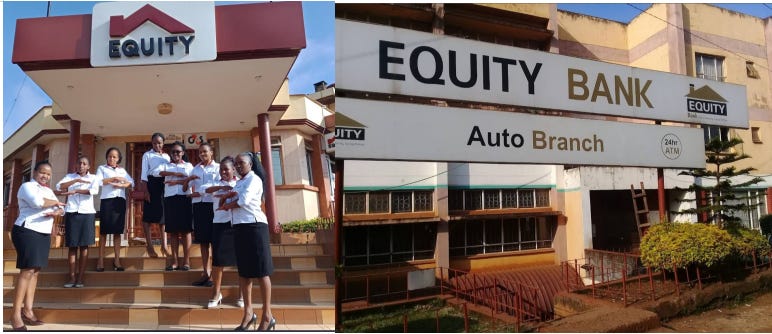
But the real strategy wasn’t just the matatu—it was the man in the seat. Mwangi had no faith in external security firms or the expensive, bureaucratic logistics of established banks. He operated on a “trust-only” basis, hand-picking a circle of individuals he had vetted through years of shared struggle and intense proximity. He preferred to gamble on the loyalty of his own people rather than pay a premium for the services of strangers.
Daniel eventually became the bank’s secret weapon, a permanent, incognito cash courier who spent years ferrying fortunes across the country to keep branches alive long before he was ever officially named a senior manager. He was part of an informal, high-stakes brotherhood that kept the bank solvent without a single coin wasted on the overheads of corporate security.
The human cost of this era was immense. These were the lean, grueling days where the difference between the bank’s survival and its collapse rested entirely on the shoulders of the few individuals Mwangi personally trusted. It was a brutal, pragmatic approach that defined the early Equity ethos: build the bank on the back of the very people you serve, often at the profound risk of their own lives. For Mwangi, trust was not something that could be purchased via a security contract; it was a resource that had to be cultivated, tested, and physically carried across the country.
Raising Funds via Private Placement
When Mwangi and his long-time ally, Peter Munga, looked to shore up the fledgling society, they bypassed the slow, bureaucratic channels of institutional finance. Instead, they tapped directly into their personal and professional networks, turning to private individuals who possessed the foresight—and the risk appetite—to see what the rest of the market could not. They initiated a series of private placements, inviting friends, associates, and even strangers who shared their vision to buy into the bank’s future at a time when the risk of total loss was still very real.
These early believers were taking a leap of faith on a project that many traditional bankers dismissed as a fool’s errand. Among them was the late Nelson Muguku, the poultry entrepreneur whose legendary farm became the engine for his investment; he acquired a significant stake that would eventually make him the bank’s largest individual shareholder.

For participants like Muguku, the gamble yielded life-changing returns. As the bank evolved and eventually moved toward its landmark listing on the Nairobi Securities Exchange, these individuals saw their stakes multiply in value, transforming them into the legendary “Equity Billionaires.” Today, those who accepted the invitation sit atop vast financial empires, while those who declined—the skeptics and the cautious—are left to nurture a specific, lingering brand of regret that has become a staple of Kenyan financial folklore. It was a masterclass in capital mobilization: by selling a vision rather than just shares, Mwangi ensured that the bank’s earliest supporters became its most loyal, and wealthiest, champions.
The Strategy Behind Capital the Raise
The “Equity Billionaire” title refers to the cohort of early investors who, like Muguku, took a leap of faith when the institution was losing millions annually. By bypassing institutional finance and leveraging the networks of Munga and Mwangi, the bank ensured that its earliest backers were deeply incentivized to see it succeed. Those who participated in these early rounds saw their initial stakes multiply in value as the bank scaled its operations, pioneered agency banking, and eventually achieved its successful IPO, creating a legacy of wealth that persists today.
Nelson Muguku - Poultry farmer to billionaire
This video provides background on Nelson Muguku, highlighting his entrepreneurial journey and his pivotal role as one of Kenya’s most successful investors, including his stake in Equity Bank.
V. The Footprint: The Rapid Branch Expansion
Once the capital was secured, Mwangi embarked on an aggressive, systematic branch expansion that was as strategic as it was visible. He mapped his footprint directly onto the heat map of his capital raise, ensuring that branches were established in the very communities where his investors and early champions lived. This wasn’t just physical expansion; it was a psychological anchor.
The model was unique in its reliance on local influence and high-touch community engagement. Every branch was assigned two distinct pillars: a professional branch manager and a “branch elder”—a figure of local authority and trust. The story of Nelson Muguku in Kikuyu perfectly encapsulates the potency of this strategy. Despite being the bank’s largest individual investor, Muguku would show up at the Kikuyu branch daily, often carrying a milk can from his famous poultry farm to make tea for the team. He spent his entire day at the branch, not as a silent shareholder, but as an active participant, interacting with customers who knew him as their neighbor. This presence humanized the institution, stripping away the cold, intimidating facade of traditional banking and replacing it with the warmth of local familiarity.
Crucially, this ecosystem of trust became a lucrative real estate play that tied the fortunes of the investors to the branches themselves. These “branch elders” didn’t just provide social capital; they became the physical hosts of the institution. Nelson Muguku, for instance, evolved into the landlord for the Kikuyu and Karen branches, anchoring the bank within his own properties.

Similarly, much of the bank’s rapid Nairobi expansion relied on its own inner circle; Muchoki, the powerhouse behind the Summerdale Hotel in Nairobi West, served as both a local pillar of influence and the landlord for the bank’s Nairobi West branch. By leasing their own prime real estate to the bank, these investors ensured their interests were permanently fused with the bank’s survival, creating a closed-loop economy where the rent paid by the bank flowed directly back to the very men who had helped build it.

This model was rapidly replicated across Nairobi and Central Kenya, acting as a wildfire of growth. By embedding the bank into the daily fabric of the community—literally serving tea to customers and operating out of the investors’ own buildings—these branches recruited new accounts at breakneck speed. It proved that in the market of trust, a cup of tea served by a local billionaire was a far more effective marketing tool than any billboard or print advertisement.
Taking Away Branches from Stanchart and Barclays: The Tactical Siege
As Equity embarked on its aggressive national footprint, Mwangi executed a masterstroke of psychological warfare, weaponizing the structural retreats of the established titans—Barclays and Standard Chartered. As these multinational banks began consolidating their portfolios and shuttering what they deemed “non-strategic” branches, Mwangi was waiting in the shadows to pick off their prime locations. This wasn’t just a quest for square footage; it was a calculated campaign to signal the shifting of the guard.

The most potent example of this leverage occurred in Juja. Barclays Bank, seemingly oblivious to the changing tides, issued a cold letter of lease termination to Murigu, the owner of the Senate Hotel where the bank maintained a branch. The move was intended as a routine operational cost-cutting measure, but it proved to be a critical strategic blunder. An incensed Murigu viewed the termination not as a business decision, but as a slight against his standing in the community.
Murigu did not simply look for a new tenant; he went straight for the jugular of the bank’s liquidity. He drafted a blistering return letter to Barclays, informing them that he would be withdrawing his entire Kes 2 billion fixed deposit portfolio, which he intended to move immediately to Equity Bank. The panic at Barclays was instantaneous. Recognizing that the loss of Murigu’s capital—and the potential signal of weakness it would send to other local investors—far outweighed the cost of the lease, the bank scrambled to rescind the termination.
Barclays quickly extended the lease, begging for the status quo to be maintained. Equity never actually took over the Juja branch, but the objective had been achieved. The incident sent a shockwave through the local business elite: the “old guard” was now hostage to the very people they had long ignored. Mwangi had demonstrated that Equity’s influence now extended to the boardrooms of his competitors’ own landlords, and the message to the market was absolute—there was a new king in town, and the multinational banks were no longer calling the shots.
Strategic Evolution: Why the Numbers Changed
1. The 2008 Mandate: Building the Brand
In 2008, Equity was in the midst of its most aggressive physical growth phase. Having just listed on the NSE (2006) and secured the Helios investment (2007), the bank needed to establish “bank legitimacy” across rural and urban Kenya. During this period, the physical branch was the primary marketing tool. Opening a new branch wasn’t just a logistical decision; it was a PR event intended to prove that the “village bank” had arrived in the heart of town. Every new brick-and-mortar outlet served to dismantle the “insolvency” ghost of the 1990s.
2. The 2026 Mandate: Efficiency and Access
By 2026, the strategy has shifted entirely. Technology—specifically the “Equity 3.0” strategy—has enabled the bank to decouple growth from physical real estate.
The Rise of the Agent Network: With over 42,622 agents, the bank has effectively “branched” into almost every neighborhood in Kenya without the overhead of renting offices or hiring full-time branch staff.
Relationship Banking: Branches have not disappeared, but they have been “rebranded” as centers for SME and corporate relationship management, while the retail/micro-transactions have migrated almost entirely to the mobile app and agency channels.
Data-Led Footprint: Expansion is now surgical. New physical locations are chosen based on data analytics regarding SME density rather than the “flag-planting” approach used in the mid-2000s.
Note: While the branch count in 2026 (~212) might seem modest compared to the explosive growth expectations of 2008, it is a deliberate “de-layering.” The bank has effectively digitized the trust that Nelson Muguku and the early branch elders once built by hand, moving from the physical “cup of tea” to a seamless digital ecosystem.
VI. The Psychology of Power: Machakos and the Helicopter
In the Kenya of the 1990s, banking was not just a business—it was a haunted industry. The landscape was littered with the ghosts of collapsed institutions like Trade Bank, Pan African Bank, and Postbank Credit. These failures had left a permanent scar on the Kenyan psyche, fostering a climate where the slightest murmur of liquidity trouble could trigger a catastrophic, self-fulfilling bank run.
Against this backdrop, Equity’s meteoric rise invited intense skepticism. Critics whispered that the “Building Society” was expanding too fast, fueling rumors that its capital base was merely a fragile illusion. When one of these toxic rumors took hold in Machakos—alleging that the branch had run out of cash—it threatened to undo years of hard-won trust in a single afternoon.
Mwangi understood that in a post-1990s market, banking was as much about the theater of confidence as it was about reserves. He realized that a dry press release would be perceived as a defensive lie, only accelerating the panic. He needed a gesture that was undeniable, visceral, and impossible to ignore.
He did not send an accountant; he sent a helicopter.
When the rotors began to beat the air over Machakos, the town watched in silence as the machine descended, carrying not just paper money, but the physical manifestation of Equity’s strength. It was a masterclass in psychological warfare. By the time the cash was offloaded in plain sight, the rumor had been effectively crushed. Mwangi had turned a logistical necessity into a piece of theater, proving that in the game of finance, perception is not just reality—it is the ultimate currency.
VII. The Market Milestone: The IPO
If the private placements were the “secret handshake” that solidified the bank’s inner circle, the 2006 listing on the Nairobi Securities Exchange (NSE) was the moment Mwangi tore the doors off the institution and invited the nation to storm the gates. It was not a traditional IPO where new shares are minted to raise primary capital; rather, it was a listing by introduction. This was a calculated move: the shares already existed, held by the early believers and the “Equity Billionaires,” and the listing was the stage set for their liquidity and public coronation.
On August 7, 2006, the bank—which only years prior had been dismissed as a “hustler’s outfit”—officially hit the boards. With a recommended listing price of Kes 70, the market’s reaction was immediate and bordering on the frenzied. The stock didn’t just find its footing; it sprinted, opening at Kes 100 and surging to an intraday high of Kes 182 by the end of the initial excitement.
For Mwangi, this was the ultimate validation of his brutal, unconventional crusade. The listing transformed a former family-run society into a blue-chip behemoth and served as a permanent “I told you so” to the established banking elite who had spent years predicting the bank’s insolvency. By becoming the largest bank by market capitalization, Equity had effectively finished its transition from a scrappy outsider to the new master of the house.
The Listing Performance
Listing Date: August 7, 2006.
Recommended/Opening Price: The shares were listed at a recommended price of Kes 70.
Market Performance: The market’s reaction was immediate and aggressive. On its first day of trading, the stock opened at Kes 100 and surged to a high of Kes 158. By the end of the initial excitement, the price had climbed as high as Kes 182, reflecting a massive 137% increase over the listing price.
This debut confirmed the massive appetite for the stock and cemented the “Equity phenomenon,” proving that the bank’s grassroots model had successfully captured the imagination of the wider investment community.
VIII. The Catalyst: Helios Money and Strategic Shifts
If the NSE listing was the bank’s local coronation, the arrival of Helios Investment Partners in 2007 was the moment Equity went global. Having proven that his grassroots model could conquer the Kenyan retail market, Mwangi signaled that he was no longer playing a local game. The entry of Helios—a premier Africa-focused private equity firm—was not just a capital injection; it was a powerful signal of institutional legitimacy that effectively silenced the last of the skeptics who still viewed the bank as a “peasant’s venture.”
The infusion of $185 million from Helios acted like a beacon, drawing global capital to the bank with the speed and intensity of flies to a honey pot. International institutional investors, hedge funds, and development finance institutions, who had previously watched from the sidelines, suddenly scrambled to get a piece of the action. They weren’t just buying shares; they were buying into Mwangi’s proven ability to extract profit from the unbanked and the marginalized.
This shift marked a profound metamorphosis in the bank’s identity. The boardroom, once a tight-knit circle of local “branch elders” and pioneer investors like Muguku, began to accommodate the sophisticated, demanding requirements of international private equity. The focus shifted from mere survival and rapid branch growth to global standards of governance, regional scalability, and high-frequency digital innovation. For Mwangi, this was the tactical pivot that allowed him to shed the “outsider” label for good. By aligning himself with Helios, he gained the capital, the prestige, and the global infrastructure necessary to transition from a Kenyan disruptor to a continental force. The “hustler’s bank” had officially become a global institutional darling.
The Global Poster Child: From Nairobi to the Ivory Towers
Once the Helios capital arrived, James Mwangi didn’t just scale a bank; he evangelized a movement. He emerged on the world stage as the undisputed poster child for “Financial Inclusion,” a term that transitioned from niche development jargon to the bedrock of modern emerging market strategy because of him. Where the global establishment once viewed the “unbanked” as a charity case, Mwangi reframed them as a massive, untapped commercial frontier.

His ascent mirrored the narrative arc of Nobel Laureate Muhammad Yunus. While Yunus pioneered the Grameen Bank’s micro-credit model to alleviate poverty, Mwangi achieved a more radical synthesis: he proved that you could bring the poor into the formal financial system—not through small-scale grants, but through the hard-nosed machinery of commercial banking. He became a global darling of the World Bank, the Clinton Global Initiative, and the G8, often positioned in the same breath as Yunus as a visionary who “democratized capital.”
This transformation turned Equity into the world’s most famous case study in “Blue Ocean” strategy. The bank’s model became mandatory curriculum at elite institutions like Harvard Business School, IESE in Spain, and Strathmore Business School. Professors and students alike flocked to Nairobi to deconstruct how a “peasant’s bank” could out-maneuver Tier-1 colonial-era giants to capture 52% of the country’s accounts. Mwangi was no longer just a Kenyan banker; he was a guest lecturer at Stanford, MIT, and Columbia, holding court with the global elite. He had successfully institutionalized his “hustler” origins, proving to the world that if you build a financial system on the dignity of the small-scale trader, the global capital will eventually have no choice but to follow.
The “Wings to Fly” Doctrine: Weaponizing Philanthropy
If the helicopter stunt in Machakos was a masterclass in psychological theater, the launch of the Wings to Fly scholarship program was a masterclass in societal integration. By the time Mwangi brought in international capital, he understood that to truly own the market, he had to own the aspirations of the Kenyan people. He didn’t just want to be their bank; he wanted to be the architect of their future.

Wings to Fly was framed as a CSR initiative to support the brightest, neediest students in the country. In practice, it was a genius move of brand entrenchment. By providing comprehensive secondary education scholarships, Equity essentially bought a seat at the kitchen table of almost every household in Kenya.
The reach was surgical and exhaustive. The selection process was designed to be local and decentralized, reaching into the deepest rural villages—the same geography where his branch network was expanding. Suddenly, in nearly every sub-location, there was a family, a church leader, or a village elder who could personally attest to the fact that “Equity gave our child a future.”
This program did more than produce scholars; it produced a generation of brand evangelists. It created a deep, visceral emotional bond between the bank and the grassroots—a level of loyalty that no amount of advertising spend could ever replicate. While his corporate rivals were busy trying to capture “high-net-worth” clients with brochures and golf days, Mwangi was busy educating the next generation of the Kenyan middle class. By the time those students graduated, they were not just educated; they were hard-wired to believe that Equity Bank was the organization that believed in them when the government and the elite didn’t. It was the ultimate long-game, weaving the Equity brand so deeply into the fabric of Kenyan society that to sever ties with the bank became, for many, an act of ingratitude.
VIII. The Strathmore AMP Doctrine: Intellectual Alignment
While the public often points to the “Wings to Fly” program as the genesis of James Mwangi’s commitment to education, the reality of his strategy is far more entrenched and exclusive. Long before the popular scholarship programs captured the public imagination, Mwangi had already architected a sophisticated system of internal intellectual conditioning. Over a decade ago, Mwangi solidified a strategic partnership with Dr. George Njenga of the Strathmore Business School, establishing a mandatory educational requirement for every director and senior executive within the bank.

This was not a mere professional development initiative; it was a foundational alignment of the bank’s leadership. Under this long-standing arrangement, Equity Bank mandates that every director undergo a rigorous Executive Management Programme at Strathmore. The cost of this intellectual cultivation is substantial, with each participant’s program fees amounting to approximately KES 3 million—a cost borne entirely by the bank. By funneling his entire leadership cadre through this specific pedagogical filter, Mwangi ensured that the “Equity DNA” was not just learned but institutionalized. This deal, struck in the shadows of corporate strategy over ten years ago, highlights Mwangi’s true objective: to shape the cognitive framework of his lieutenants, ensuring that from the boardroom down to the regional offices, every decision is processed through a singular, Strathmore-refined lens of operational and strategic excellence.
IX. The Continental Leap: Regional Expansion
Once James Mwangi had secured his stronghold in Kenya and institutionalized the brand through global recognition, he set his sights on the rest of East and Central Africa. His regional expansion was not a scattergun approach; it was a calculated, high-stakes campaign to export the “Equity model”—a blend of grassroots financial inclusion and high-tech efficiency—across borders.
The strategy was binary: Greenfield entry to plant flags in emerging markets, and Acquisition to inherit scale and prestige in more established, albeit fragmented, markets.
The Expansion Timeline
South Sudan 2009: Greenfield Equity’s first foray outside Kenya. It was a high-risk move into a nascent nation, aiming to build infrastructure from scratch to capture the underserved market. It quickly gained significant market share.
Uganda 2008/09: Greenfield Built from the ground up to challenge established, legacy colonial-era banks by aggressively courting the unbanked and MSME sectors.
Tanzania 2012: Greenfield Entered to replicate the Kenyan success, eventually evolving into a powerhouse for mortgage and SME lending.
DRC (ProCredit)2015: Acquisition Acquired a 79% stake in ProCredit Bank DRC, a solid German-backed institution, to gain an instant, reputable foothold in the continent’s most populous frontier market.
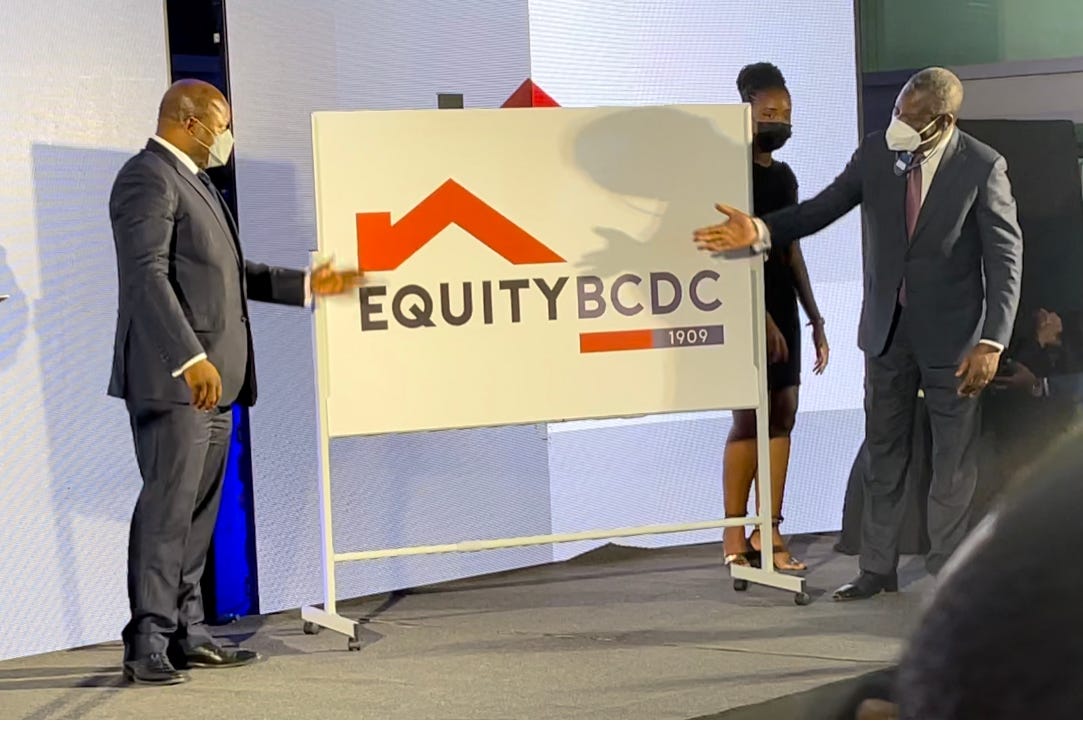
DRC (BCDC)2020: Acquisition The “Big Strike.” Equity acquired a majority stake in the historic Banque Commerciale du Congo (BCDC). Merging it with their existing DRC subsidiary (Equity Bank Congo) created a financial giant.
The DRC Masterstroke
The Democratic Republic of the Congo represents the ultimate realization of Mwangi’s regional ambition. By acquiring ProCredit first, he gained technical legitimacy. By following it up with the BCDC acquisition—the oldest bank in the country, with over a century of history—he effectively bought the establishment. The merger of these two created Equity BCDC, a behemoth that instantly positioned the Group as the second-largest bank in a nation of nearly 100 million people.
Performance: The Regional Engines
By 2026, the strategy has moved beyond just “planting flags” to driving group-wide profitability. The regional subsidiaries are no longer “start-up projects”; they are the primary growth engines. As of Q1 2026, the subsidiaries account for nearly half of the Group’s total banking profitability. Specifically, the DRC subsidiary remains a titan, while Rwanda and Tanzania have posted triple-digit growth in profitability, proving that the “Equity model”—digital-first, SME-focused, and community-entrenched—travels remarkably well across borders.
This video provides a summary of the acquisition of BCDC, which highlights the bank’s strategic move to become a dominant force in the Democratic Republic of the Congo.
X. The Coffee Politics: The VIP Lift and the Brown Envelope
In the high-altitude, high-stakes world of Central Kenya’s coffee industry, influence isn’t bartered in boardrooms—it is traded in the quiet shadows of private elevators and the heavy silence of backrooms. As Mwangi’s empire expanded, so did his reach into the sector that defined the region’s socio-economic spine. Here, the “VIP Lift” was not just a piece of infrastructure; it was a theater of power. It was the exclusive elevator to the inner sanctum of the elite, where the price of a harvest was determined long before the first bean hit the sorting table.
The drama of these encounters was palpable. You would see the titans of the industry—men who controlled thousands of acres and the livelihoods of entire villages—ascending in the hushed, velvet-lined confines of a private lift, their faces a mask of studied indifference. In these moments, the air was thick with the scent of high-grade Arabica and the unspoken weight of political patronage. It was in these vertical ascents that the “Brown Envelope” became a legend. It was the ultimate, blunt instrument of corporate diplomacy—a thick, tactile object that represented everything from debt restructuring to the securing of crucial political endorsements.
These weren’t simple transactions; they were mercenary maneuvers. A well-placed envelope could shift the allegiance of a cooperative, silence a dissenting director, or ensure that a specific financial facility was prioritized over the needs of the small-holder farmers who, ironically, were the very foundation of the bank’s early success. Mwangi, a master of the double game, navigated these waters with predatory grace. He understood that in the coffee politics of Central Kenya, you didn’t just need the best interest rates; you needed the right silence, the right handshakes, and the undeniable leverage that came from being the one holding the purse strings while the rest of the world played at politics. It was a brutal, efficient dance—a reminder that in the shadow of the mountain, the coffee didn’t just brew; it fueled a complex, ruthless ecosystem of favors, fear, and absolute control.
XI. The Boardroom Iron Fist: The Cost of Dissent
If Mwangi was the benevolent face of financial inclusion to the public, inside the boardroom, he was the unforgiving architect of an autocracy. Equity’s rise was not a collaborative democracy; it was a monolith forged in the fires of absolute obedience. To dissent was not merely to have a different opinion—it was to be perceived as a strategic threat, and the cost of such an error was invariably professional exile.
The boardroom culture became a study in the “iron fist.” Meetings were less about deliberation and more about the articulation of a singular, non-negotiable vision. When internal voices dared to question the pace of expansion or the logic of high-stakes maneuvers, the response was swift and surgical. Mwangi demanded total alignment, creating a climate where the fear of falling out of favor was more potent than the ambition for growth.
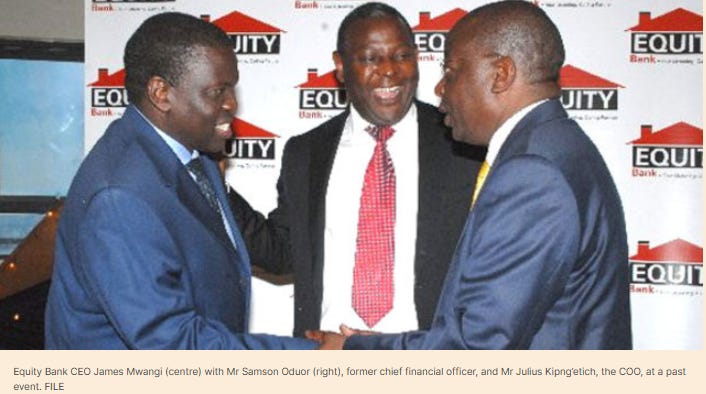
This environment was never more apparent than in the ruthless handling of Finance Director Samson Oduor in 2014—the most acrimonious exit in the bank’s history. When Oduor’s internal opposition reached a boiling point, the response was not a discussion, but a swift and total purge: he was summarily terminated, and the professional coldness of the dismissal was so absolute it turned into a public spectacle.
The “cost of dissent” was no longer theoretical; it was literal. Oduor’s departure triggered a landmark Industrial Court battle where he sued the bank for unfair dismissal. The court’s eventual ruling, awarding him over KES 14 million, served as the first major “stress test” for the bank’s C-suite governance, exposing the brutal reality that in Mwangi’s world, loyalty was the only currency that kept one employed. By systematically purging the boardroom of any lingering democratic friction—even at the cost of high-profile legal damage—Mwangi ensured that the bank moved with the singular, terrifying velocity of a guided missile, leaving no room for the hesitation that had destroyed the legacy banks he had spent his career outrunning
XII. The Kipngetich Purge: The Price of Public Solidarity
Perhaps the most significant executive purge in the history of the Equity Group involved Dr. Julius Kipngetich. Headhunted from his prestigious position at the Kenya Wildlife Service (KWS) and an established lecturer at Strathmore Business School, Kipngetich was brought in to serve as Mwangi’s Chief Operating Officer (COO), a role intended to bridge the gap between corporate ambition and operational execution.

The rift, however, was inevitable. It centered on the bank’s internal staff strategy—a rigid, high-pressure environment that prioritized output above all else. The breaking point arrived during a “once-in-a-lifetime” annual staff meeting, a grand stage designed to reinforce the singular corporate vision. In an unprecedented move, Kipngetich went off-script. Before the assembled workforce, he publicly acknowledged and validated the long-held grievances regarding the bank’s grueling working conditions.
For Mwangi, this was not merely a difference of opinion; it was an act of insubordination that shattered the illusion of a monolithic leadership team. Kipngetich’s days were immediately numbered. The isolation that followed was surgical: he was systematically ignored in the executive suite, bypassed in favor of junior staff, and rendered powerless in his own domain. Recognizing that his influence had been entirely stripped away, Kipngetich resigned. He left the heights of the C-suite to navigate the challenges of a struggling retail entity, a move seen by many as a form of professional penance. His departure was met with immediate, clinical efficiency, as the board rapidly replaced him with Bhartesh Shah, a heavy-hitting global veteran from Standard Chartered and Citibank, to ensure the Equity 3.0 strategy remained uninterrupted. Ultimately, his departure served as a final, chilling lesson to any executive who dared to imagine that dissent from the “Mwangi Doctrine” could be tolerated.
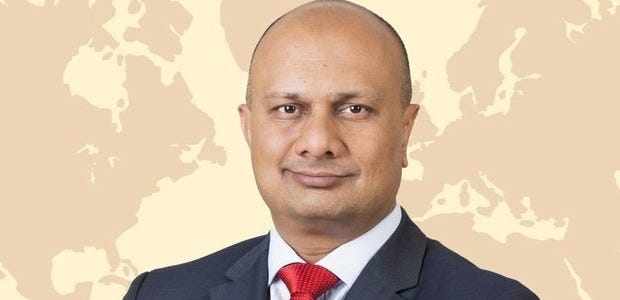
XIII. The Talent Factory: Institutionalizing the “Mwangi School”
While the market often fixates on Mwangi as a solitary titan, his true genius lies in the construction of an “institutional fortress.” Over four decades, Mwangi transformed Equity from a founder-led startup into a sophisticated Talent Factory, effectively de-risking the bank’s future by embedding his DNA into a new generation of “Global Technocrats.”

The Four Phases of the Bench
Mwangi’s leadership depth has evolved through four distinct epochs, each designed to meet the demands of a growing empire:
The Pioneers (Epoch I): The early “hustlers” who built the initial branch network and established the grassroots culture of trust.
The Regional Governors (Epoch II): Specialized executives brought in to navigate the regulatory storms of the mid-2010s, such as the 2016 interest rate caps.
The Global Technocrats (Epoch III): A new breed of talent—some homegrown like Group COO Samuel Kirubi, others poached from Tier-1 global institutions—tasked with managing the complexities of a multi-country, high-frequency digital ecosystem.
The Federation Leaders (Phase IV): The current shift toward Indigenization, where local leaders like Willy K. Mulamba (DRC) and Moses Nyabanda (Kenya) head subsidiaries, anchoring the bank as a Pan-African federation rather than a Kenyan outpost.
The “Equity DNA”: A Finishing School for Leaders
Equity has become the premier “finishing school” for African corporate talent. The bank’s culture—defined by extreme frugality, digital aggression, and a 24/7 work ethic—serves as a pressure test. Executives who graduate from the “Mwangi School” are frequently courted by global giants like Microsoft, Google, and Jubilee Holdings, effectively turning Equity’s alumni into brand ambassadors across the wider global economy.
The “Homegrown” Engine
The rise of figures like Samuel Kirubi, who transitioned from an Equity Leaders Program (ELP) intern to Group COO, serves as the ultimate validation of Mwangi’s strategy. By rotating these leaders through different national subsidiaries, Mwangi ensures a cross-pollination of expertise that makes the Group resilient. When a subsidiary in Uganda faces turbulence or a market in the DRC demands rapid scaling, the “General’s Bench” is ready.
By 2026, the transition is complete: Equity no longer relies on a single man’s intuition. It runs on a systemic, self-replicating talent machine. For the investor, this depth is the most reliable lead indicator—it is the guarantee that the bank’s 25% growth projections are not just targets, but a structural inevitability.

XIV. The Philosophy of “Farting in Peace”
In the inner circles of Equity’s executive leadership, Dr. James Mwangi is known for a crudely effective management mantra he calls the philosophy of “Farting in Peace.” It is a stark, unvarnished metaphor for his obsession with operational autonomy and the absolute eradication of systemic friction.
To Mwangi, a “fart” represents a small, inevitable, and often messy problem—a localized operational hiccup, a minor compliance breach, or a disgruntled middle manager. In most organizations, these small issues are suppressed or ignored until they ferment into corporate scandals or systemic crises. Mwangi’s philosophy dictates that if you do not have the systems in place to “fart in peace”—to quickly isolate, contain, and neutralize these minor issues at the lowest possible level—you will inevitably be forced to deal with them in public.
He demands that his regional governors and branch leads develop the capacity to handle these “gaseous” problems internally and silently. If a problem reaches the boardroom, it is no longer a fart; it is a full-blown contagion. By forcing his team to resolve their own localized operational odors, Mwangi created a culture of extreme self-reliance and brutal efficiency. It is the ultimate expression of his disdain for corporate bureaucracy: he expects every unit to be so lean, so disciplined, and so self-contained that they can manage their own failures without ever polluting the wider ecosystem of the bank. In the Equity Centre, if you can’t manage your own “air quality,” you are simply considered a liability to the federation.
XV. The Closed Loop: The Ecosystem of Life
Having conquered the wallet, Mwangi moved to conquer the life of the customer. He recognized that traditional banking was a transactional bridge, but to achieve true “customer lock-in,” the bank had to become the infrastructure of existence. The pivot into Equity Afia, Equity Pharmacies, and Equity Health was not a diversification play—it was a radical attempt to build a closed-loop ecosystem where every aspect of a customer’s lifecycle is serviced, captured, and monetized within the Equity umbrella.
The Strategy: From Account Holder to Life-Long Stakeholder
The logic is cold and brilliant: if the bank provides the credit to start a business, the insurance to protect the business assets, and now the healthcare to keep the business owner and their family healthy, the customer never has a reason to leave the ecosystem.
Equity Afia: By establishing a network of affordable, high-quality outpatient clinics, Mwangi positioned the bank at the front lines of the customer’s most personal need—health.
The Pharmacy and Health Insurance Nexus: By integrating pharmacies and health insurance into the value chain, the bank creates a circular economy. The customer pays their premiums to the bank’s insurance arm, uses the bank’s clinics for care, and fills their prescriptions at the bank’s pharmacies.
The Ultimate Lock-in
This integration is the final evolution of the “hustler’s bank.” By the time a client is using Equity for their business loans, their daily banking, their family’s health coverage, and their wealth management (via the Group’s asset management arms), they have reached a state of “total ecosystem immersion.”
For the bank, this provides an unprecedented level of data and predictive power. They know the customer’s health status, their spending habits, their business volatility, and their long-term saving goals. The bank is no longer just holding the customer’s money; it is effectively managing the customer’s reality. It is a closed loop that creates a defensive moat so deep that competitors are left fighting for the scraps of customers who are not yet fully “indoctrinated” into the Equity way of life. Mwangi isn’t just selling banking services anymore; he is selling a comprehensive life-management system that ensures that from the cradle to the grave, the customer’s path is paved by Equity.
XVI. The Political Chameleon: Navigating the Corridors of Power
James Mwangi’s genius was never confined to the balance sheet; it was equally calibrated to the shifting tectonic plates of Kenyan politics. He understood early that in an economy where the state is the largest spender and the primary regulator, total independence is a myth. Instead, he mastered the art of “aligned utility”—making Equity Bank so indispensable to the country’s development agenda that no administration, regardless of its ideological hue, could afford to treat him as anything less than a partner.
James Mwangi says Equity to expand to Mozambique following President Ruto’s intervention
The Vision 2030 Architect
His most significant formal tether to the state was his long-standing chairmanship of the Vision 2030 Delivery Board (2007–2019). Under Mwai Kibaki, who prioritized economic recovery and infrastructure, Mwangi was the private-sector face of the dream. He provided the credibility the administration needed to sell the vision of a middle-income Kenya to global investors.
The Master of Transitions
Mwangi’s survival and relevance across the Kibaki, Uhuru, and Ruto eras demonstrate a rare, almost predatory, political adaptability.
The Kibaki Era: Focused on foundational growth and the democratization of banking, where Mwangi acted as the “Economic Evangelist.”
The Uhuru Era: As the country pivoted toward “Big Four” infrastructure and massive public borrowing, Mwangi positioned Equity not just as a lender, but as the primary channel for government-backed SME credit and large-scale social programs like the Wings to Fly.
The Ruto Era: Demonstrating his quintessential fluidity, Mwangi pivoted seamlessly to the “Bottom-Up” economic agenda. By championing the Africa Recovery and Resilience Plan (ARRP) and facilitating high-profile deals—such as the recent specialty tea offtake agreement signed in the presence of President Ruto and Emmanuel Macron—he proved that Equity would always align its “Pan-African trade facilitation” with the incumbent’s primary political objective.
Institutional Indispensability
Mwangi never hitched his wagon to a single politician; he hitched it to the state itself. By serving on high-level presidential task forces—such as the COVID-19 Emergency Response Fund—and positioning the Equity Group Foundation as a shadow implementer of social policy, he ensured the bank was embedded in the nation’s survival infrastructure.
To the political elite, Mwangi is the “technocrat-in-chief”—the man you go to when you need to prove your economic policies have teeth. To the public, he is the man who manages the transition from one government to the next without ever losing his seat at the head of the table. He has turned Equity into a “public utility” that transcends politics, ensuring that while Presidents may come and go, the influence of the man at the Equity Centre remains a permanent, immovable feature of the Kenyan landscape
XVII. Conclusion: The Paradox of the Kenyan Market
James Mwangi’s journey from the dust of a Murang’a building society to the boardroom of a continental titan is the definitive story of Kenyan capitalism. It is a narrative that defies simple categorization, existing in the uncomfortable tension between visionary progress and ruthless ambition.
To his supporters, he is the “Equity Architect”—the man who dismantled the colonial banking fortress and replaced it with a democratic, technology-driven engine that finally gave the “hustler” a seat at the table. He is the master strategist who saw the potential in the bottom of the pyramid and turned it into the bedrock of a regional hegemony.
To his critics, he is the “Corporate Autocrat”—a leader who navigated the corridors of power with such clinical precision that the line between public policy and private interest effectively vanished. They see a boardroom purged of dissent, a “closed-loop” ecosystem designed for total customer entrapment, and a political maneuvering act that has allowed him to outlast every president for two decades.
The truth, as is often the case in the theater of high finance, lies in the synthesis of both.
Equity Group is no longer just a bank; it is a structural pillar of the East African economy. Mwangi has built a “leadership fortress” that is now largely independent of his own direct intervention—a self-replicating talent machine that will continue to project power long after he leaves the Equity Centre. His legacy is the realization that in a market as volatile and fractured as Africa, the only way to survive—let alone thrive—is to become an essential, inseparable, and unavoidable part of the machinery of daily life.
Mwangi proved that in the Kenyan market, the greatest competitive advantage isn’t just a low interest rate or a sleek app. It is the ability to convince the world that you are not just a participant in the economy, but the very system upon which it runs. He started by banking the unbanked; he ended by capturing the nation. And in doing so, he left an indelible, often brutal, and always calculated mark on the history of African finance—a paradox of a man who gave the people the wings to fly, but ensured they would always return to his nest.
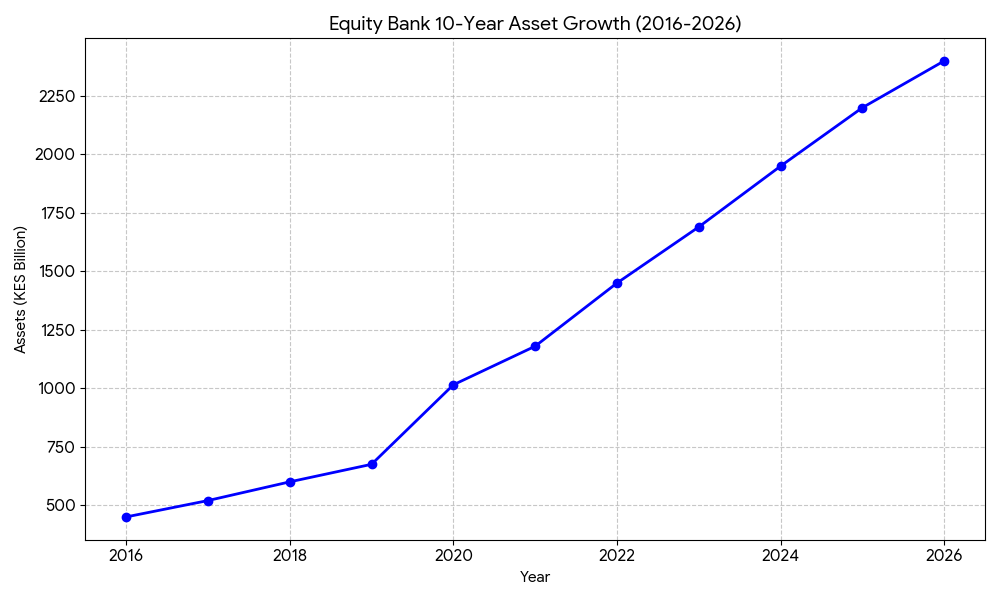
XVIII. The Decade of Dominance: 10-Year Financial Trajectory (2016–2026)
Equity’s financial performance over the last decade is not merely a record of growth; it is a statistical map of an institutional transformation. Moving from a localized Kenyan player to a Pan-African federation, the Group has consistently outperformed the market by leveraging scale, efficiency, and a relentless commitment to the “Africa Recovery and Resilience Plan.”
10-Year Trailing Performance (2016–2026)
The Financial Pillars of the “Equity Engine”
Growth in Assets: The balance sheet has expanded exponentially, crossing the KES 1 trillion, KES 1.5 trillion, and now approaching the KES 2.5 trillion mark. This asset expansion was fueled by a “Liquidity Fortress” strategy, ensuring the Group maintained enough dry powder to acquire assets like BCDC in the DRC.
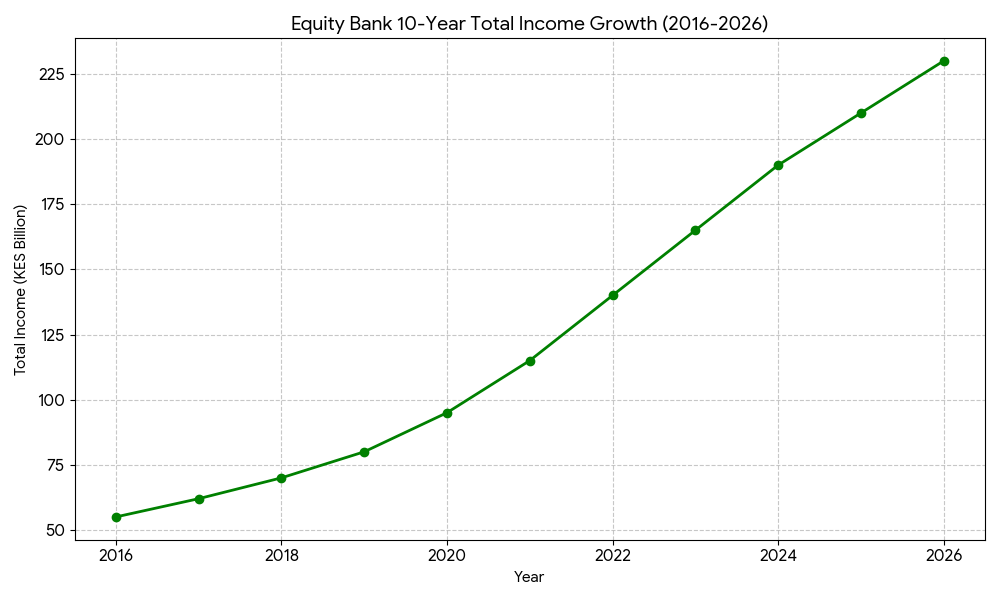
Growth in Revenue: Revenue diversification has been the bank’s silent weapon. By shifting from interest-heavy income to a high-margin blend of regional trade finance, FX gains, and mobile-transaction fees, Equity has insulated itself from the volatility of any single interest-rate cycle.
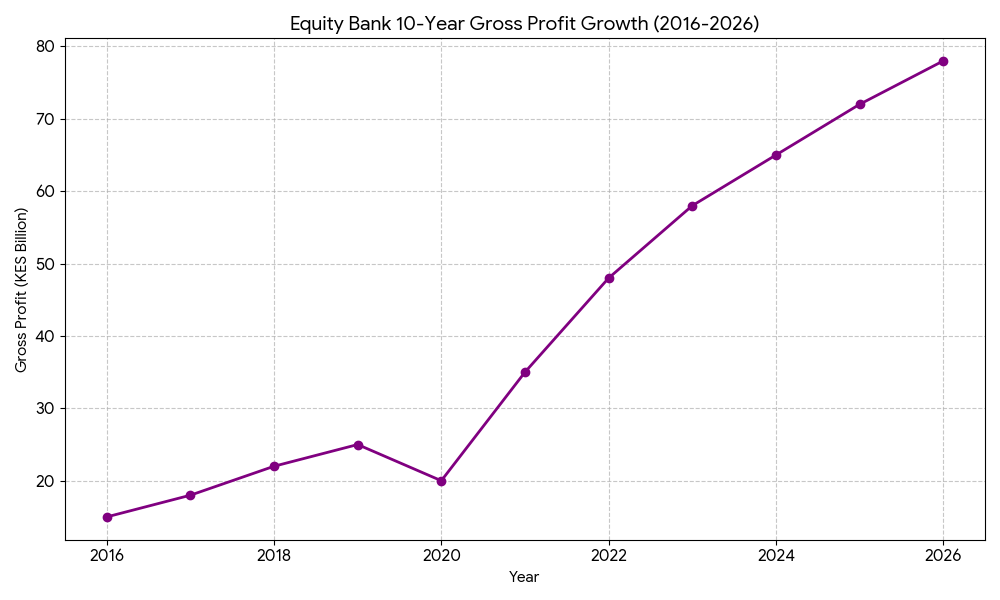
Growth in Profits: Profitability has seen a vertical breakout, particularly in the last four years. The contribution from subsidiaries—once a drag on earnings—has become the primary driver of the Group’s bottom line, proving the efficacy of the “Mwangi School” of regional deployment.
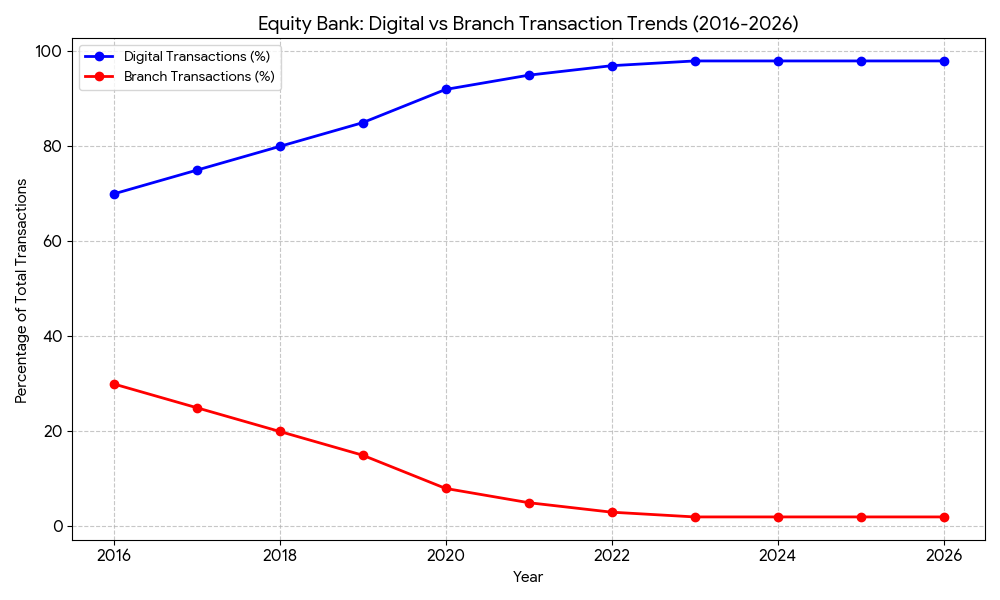
Digitization: Equity’s digital strategy is the foundation of its cost leadership. By moving 98% of all transactions to Equitel and the Equity Mobile app, the bank achieved a Cost-to-Income (CTI) ratio that Tier-1 colonial legacy banks cannot match. This “digital-first” approach is why the bank can scale in frontier markets like the DRC with minimal physical footprint.
The Continental Ambition: The 17-Country Strategy
Equity’s strategic horizon is no longer defined by the East African Community (EAC); it is defined by the continent. The “Ambition 2030” plan is to scale the Group’s footprint into 17 countries.
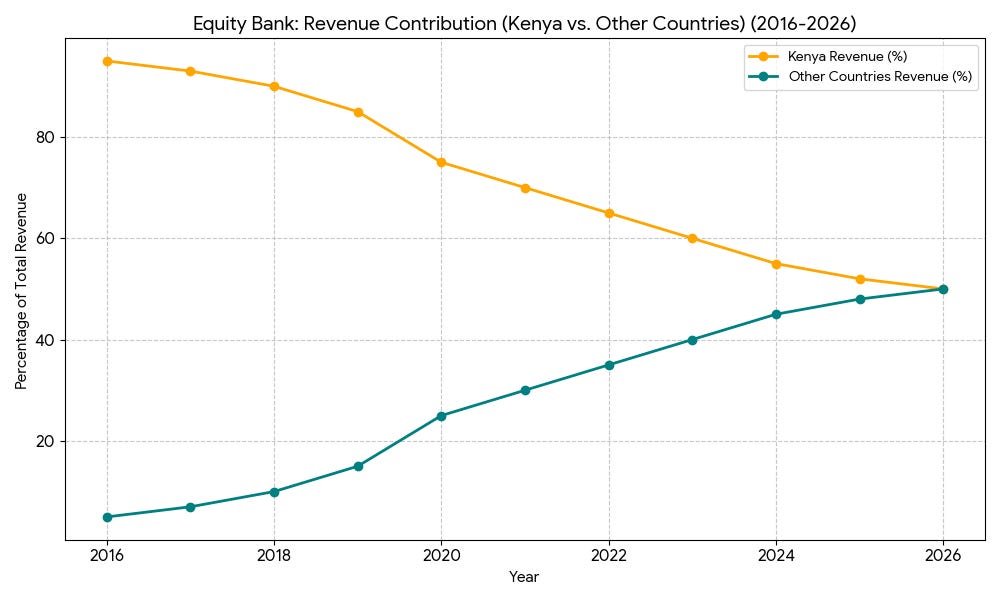
The Regional Bank Model: Equity is no longer a Kenyan bank with regional branches; it is a Pan-African federation. The revenue originating from non-Kenyan branches has surged to nearly 50%, signaling that the bank has successfully decoupled its performance from the Kenyan macroeconomic cycle.
The chart above illustrates the strategic transformation of Equity Group from a Kenya-centric institution into a balanced, Pan-African federation. By 2026, revenue contributions have achieved parity, with 50% originating from Kenya and 50% from regional subsidiaries. This milestone underscores the successful implementation of the Group’s regional diversification strategy, effectively decoupling its financial performance from the volatility of any single macroeconomic cycle
The Strategy for 2030: The plan is to continue the “Indigenization” of regional leadership, ensuring that every new country entry—whether through Greenfield startups or M&A—is led by local experts who understand the local political and economic landscape.
By 2030, Equity aims to be the undisputed financial backbone of the continent’s intra-regional trade. The goal is clear: to create a seamless financial ecosystem that allows a trader in Kinshasa to transact with a supplier in Nairobi and a client in Addis Ababa, all within the Equity rails. The “regional bank” is not just a title; it is the ultimate realization of Mwangi’s lifelong crusade to turn the unbanked millions of Africa into the backbone of a new global economic order.
XXI. The Titan’s Standoff: The War with Michael Joseph

The history of Kenyan financial technology is incomplete without acknowledging the cold war that defined its early years: the high-stakes friction between James Mwangi and Safaricom’s Michael Joseph. While the rest of the banking sector scrambled to integrate with the burgeoning M-Pesa ecosystem, Equity Bank remained conspicuously aloof. This was not a failure of vision; it was a deliberate, strategic standoff rooted in an uncompromising battle for control.
Mwangi viewed the rapid ascent of M-Pesa not merely as a tool for financial inclusion, but as a direct existential threat to the bank’s core business model. He recognized that if Equity conceded its primary customer interface—the mobile platform—to Safaricom, the bank would effectively be relegated to a “dumb pipe,” processing transactions while Safaricom captured the valuable customer data and the lion’s share of transaction fees. Mwangi refused to let Equity become a subordinate utility to a telecommunications giant.
The tension between the two leaders was palpable. Michael Joseph, driven by Safaricom’s aggressive, monopolistic expansion, saw the banks as slow-moving legacy obstacles that needed to be bypassed. Mwangi, conversely, saw Safaricom’s platform as a Trojan horse that would strip banks of their competitive advantage. Consequently, while smaller and more desperate banks eagerly signed onto the M-Pesa network to survive, Mwangi held out. He prioritized building Equity’s internal capacity to weather the storm, refusing to cede the strategic high ground to Joseph.
Rather than surrender, Mwangi took the fight directly to Safaricom’s territory. In a bold assertion of independence, Equity Bank secured its own Mobile Virtual Network Operator (MVNO) license, launching Equitel. This move was a masterstroke in strategic defiance; it allowed Equity to bypass the telecommunications giants entirely, delivering banking services directly to the customer’s mobile device via its own infrastructure. Equitel was not just a service—it was a declaration of sovereignty, providing Equity with the autonomy to innovate without being beholden to the M-Pesa walled garden.
This refusal to integrate, paired with the launch of Equitel, forced a period of prolonged isolation for Equity, where customers often lamented the lack of seamless M-Pesa integration compared to rival banks. Yet, Mwangi was playing a longer game. He used the time to refine Equity’s own digital roadmap and strengthen the bank’s independent brand, ensuring that when the inevitable reconciliation finally occurred, it would be on terms that preserved Equity’s autonomy. The standoff was a classic example of Mwangi’s doctrine: he would rather endure temporary market friction than surrender a single inch of the bank’s sovereign influence to an external power player.
About Boardlot Africa Research
Boardlot Africa is a premier financial intelligence and corporate governance publication dedicated to unpacking the mechanics of capital, market strategies, and structural shifts across East Africa’s corporate landscape. By bridging the gap between raw economic data and actionable market intelligence, we deliver deep-dive research, independent corporate analysis, and policy insights designed for institutional investors, boardrooms, and sharp market observers.
Get in Touch
Email: boardlot.research@gmail.com
Phone: +254 753 133 901
Substack: Subscribe to Boardlot Africa
X (Twitter): BoardLotSultan
👏👏