
Behind the disciplined growth of East Africa’s most critical infrastructure and manufacturing sectors lies the uncompromising leadership of Lutaf Kassam. This document maps the trajectory of his career, the "nerve center" operations of his Kimathi Street headquarters, and the strategic oversight that spans from Kenyan agribusiness to global development boards. Below is a breakdown of the key facets of his leadership and the institutional impact of his work at the Aga Khan Fund for Economic Development.
Table of Contents
I. Lutaf Kassam: The Architect of the AKFED Industrial Empire
Executive Overview: The “Man to Whom Over 10 CEOs Report”
The IPS Ecosystem: Strategic Development and Governance
Early Life and Professional Trajectory
II. Headquarters Operations: The Kimathi Street Nerve Center
Corporate Architecture: The Management Structure
Financial and Human Capital Control
The Culture of Accountability: The Allpack Intervention
“Gestapo” Tactics: The Baba Ndogo Intervention
Global Strategic Scope
III. Strategic Portfolio Oversight
Energy and Infrastructure
Agribusiness, Manufacturing, and Pharmaceuticals
Textiles & Apparel
Global Linkages: The Aiglemont Connection
IV. Global Energy Policy and Leadership
Sustainable Energy for All (SE4ALL): Influence at the Advisory Level
Collaborating with Global Peers: Shaping the Nexus of Policy and Practice
V. Institutional Impact and Future Outlook
Market Development and Policy Advocacy
Regional Integration and Capital Mobilization
The Future of Industrial Stewardship
I. Lutaf Kassam: The Architect of the AKFED Industrial Empire
Executive Overview: The “Man to Whom Over 10 CEOs Report”
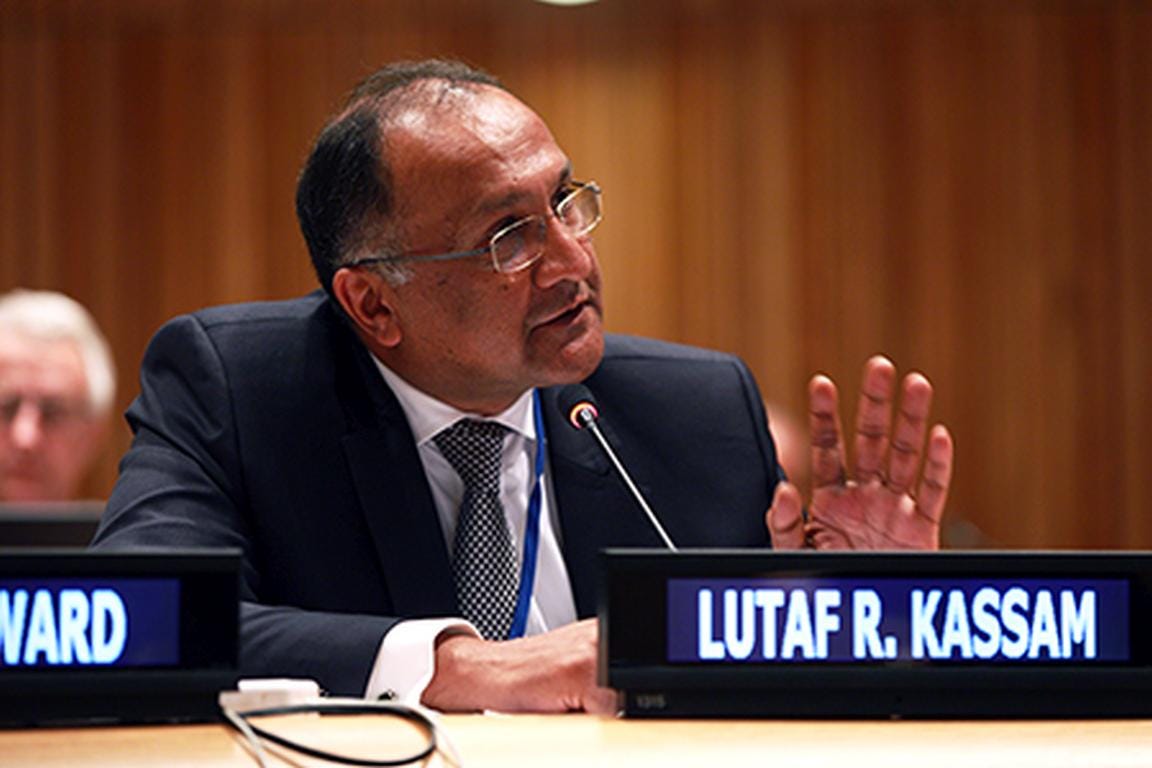
Lutaf Kassam occupies a unique and formidable position in the East African corporate landscape. Widely regarded as the “man to whom over 10 CEOs report,” he serves as the Group Managing Director of Industrial Promotion Services (IPS). In this capacity, he acts as the primary orchestrator for the industrial and infrastructure arm of the Aga Khan Fund for Economic Development (AKFED), a key member of the Aga Khan Development Network. His influence is so expansive that his presence is considered an essential thread in the industrial fabric of the region.
The IPS Ecosystem: Strategic Development and Governance
Industrial Promotion Services (IPS) functions as the core industrial development engine for AKFED, dedicated to catalyzing economic growth through long-term infrastructure and industrial management. Headquartered at the IPS Building on Kimathi Street in the Nairobi CBD, IPS operates as a centralized governance powerhouse with a network of subsidiaries spanning Tanzania and Uganda.
At the local level, Kassam works in close, daily proximity with the Chairman of IPS, with both leaders sharing the same office space to ensure tight-knit operational alignment. However, this local collaboration is balanced by a distinct institutional reality: Kassam’s primary reporting line is upward, directly to the global seat of power for the Aga Khan Fund for Economic Development (AKFED) at Aiglemont, France.
Kassam has positioned IPS as a critical “local anchor” for large-scale development, frequently pooling capital with prestigious international institutions such as the International Finance Corporation (IFC) and the German Investment Corporation (DEG). This strategic anchoring allows IPS to mobilize project funding and execute complex industrial ventures, bridging the gap between global investment mandates and regional operational execution.

Early Life and Professional Trajectory
Kassam’s foundational years were spent in Mombasa, where he attended Jamhuri High School. His career trajectory is defined by a rare level of corporate loyalty and institutional immersion. Rather than ascending through external hops, Kassam “cut his teeth” entirely within the IPS ecosystem. He methodically navigated the corporate hierarchy, showcasing persistent commitment and operational mastery. His climb culminated in his appointment as the General Manager of Wire Products Limited, a role that served as a precursor to his eventual ascent to the top of the IPS group, where he now oversees a vast portfolio of diverse and high-stakes business interests.
II. Headquarters Operations: The Kimathi Street Nerve Center
Corporate Architecture: The Management Structure
The operational heart of the IPS empire beats on the 9th floor of the IPS Building on Kimathi Street in the Nairobi CBD. This office is the nerve center of a sprawling industrial conglomerate, meticulously organized to maintain absolute control over a diverse portfolio. The management structure is lean and centralized, comprising a Group CFO, Group HR, Group IT, Group COO, Group Audit, and the Group Company Secretary.
Financial and Human Capital Control
Centralization at IPS extends beyond simple financial oversight; it encompasses the management of the organization’s most critical resource: its people. All recruitment for CEOs, CFOs, and senior HR staff, as well as the administration of their payrolls, is managed directly out of the IPS head office. This process is under the direct oversight of Kassam, the Group HR department, and the Group CFO.
To maintain the high standards required of his industrial empire, Kassam is frequently involved in the interview process for major subsidiary CEO roles. These high-stakes recruitments often involve engaging with international candidates—frequently sourced from India—via Zoom to ensure that only the most qualified leaders are installed at the helm of his companies.
Furthermore, governance is maintained through a rigid, high-frequency cadence of financial oversight. Subsidiaries are required to dispatch daily parcels to the headquarters containing cheques for signature and board papers for review. To ensure ironclad security, Kassam, the Group Company Secretary, and the Group CFO serve as alternate signatories for every IPS project company. While subsidiary General Managers and CFOs manage day-to-day operational issues within specific thresholds, any expenditure beyond these defined limits requires authorization directly from the head office. Monthly management reports and quarterly board meetings ensure that the 9th floor maintains constant visibility into the financial health of every entity under its stewardship.
The Culture of Accountability: The Allpack Intervention
Kassam’s reputation for operational monitoring is legendary, characterized by a hands-on approach that eschews distance in favor of direct confrontation. A defining moment occurred in 2012 when he noticed declining gross margins in management reports for Allpack Industries. Upon investigation, he discovered that reels of paper supplied by Pan Paper Industries, valued at KSh 20 million, had disappeared. Kassam and the Group Internal Auditor arrived unannounced at the Mlolongo factory at 8:00 a.m., catching the management team, led by the GM and CFO, completely unprepared. The resulting silence in the boardroom was absolute, serving as a masterclass in the aura of accountability he demands.
“Gestapo” Tactics: The Baba Ndogo Intervention
To manage such a vast portfolio, Kassam employs high-impact, irregular visits to ensure his authority is felt even at companies he may only physically visit once a year. A notable example occurred at Premier Foods Limited in Baba Ndogo. Staff arriving for work at 7:30 a.m. found the General Manager pacing incessantly outside the factory gates, unable to enter. Kassam had arrived earlier and ordered the gates locked, forcing the entire staff—including the GM—to account for their tardiness. The drama continued for 30 minutes until Kassam finally allowed the doors to open, requiring senior staff to submit formal letters of explanation for their lateness.
Global Strategic Scope
When he is not reviewing board papers or conducting surprise operational audits, Kassam’s focus shifts to the macro-economic horizon. His purview is as wide as the continent itself, as he meticulously analyzes financial projections for potential AKFED acquisitions stretching from the Ivory Coast to Afghanistan. He operates at the nexus of regional execution and global strategy, ensuring that every project, whether in East Africa or beyond, remains strictly aligned with the long-term vision of the Aga Khan Fund for Economic Development.
II. Strategic Portfolio Oversight
Energy and Infrastructure
Kassam’s leadership has been central to the development and equity participation of high-impact energy infrastructure across East Africa. These projects are foundational to the regional power grid and industrial stability:
Kipevu II (Tsavo Power): IPS maintains equity participation in this 74MW power plant in Kenya.
Bujagali Hydropower Project: IPS is a key partner in this 250MW power plant in Uganda, which stands as a massive power generation project on the Nile.
Nyagak I Power Station: Through its special purpose vehicle, the West Nile Rural Electrification Company, IPS manages this 3.5MW power station in Northern Uganda.
Agribusiness, Manufacturing, and Pharmaceuticals
IPS maintains a diverse industrial portfolio designed to support food security, consumer goods, and healthcare across the region. Within this portfolio, Kassam oversees several undisputed market leaders:
Farmers Choice Limited: The absolute market leader in meat processing.
Frigoken: The absolute market leader in the horticulture export segment, specifically focused on high-quality produce like miciri.
Allpack Limited: A market leader in corrugated carton manufacturing, serving critical sectors such as the flower export industry and FMCG giants including Unilever and PZ Cussons.
Pharmaceuticals: Kampala Pharmaceutical Industries.
General Manufacturing:
Rubber Industries Kenya.
Leather Industries (Kenya, Tanzania, and Uganda).
Wire Products Limited.
Beyond his expansive industrial and infrastructure mandates, Lutaf Kassam has also maintained a long-standing tenure as a Director of Jubilee Holdings Ltd. His extended service in this capacity reflects his deep institutional integration within the Aga Khan Development Network, where he has provided long-term strategic oversight for the insurance group alongside his core leadership roles within the Industrial Promotion Services (IPS) framework.

Textiles & Apparel
The textile sector represents a strategic pillar of the IPS industrial footprint, focusing on export-oriented manufacturing and value addition within the region. This division includes:
Alltex EPZ: A leading manufacturer of top-brand garments for the USA market.
Kamyn Industries: A core manufacturing unit within the textile portfolio.
Uganda Fishnet Manufacturers: Specialized production supporting regional fisheries and industrial supply chains.
Global Linkages: The Aiglemont Connection
Kassam operates at the highest levels of the Aga Khan Development Network (AKDN), acting as a vital bridge between regional industrial execution and global strategic vision. His operational authority is physically manifested by his dual-office presence: he maintains a base in Kenya to oversee regional operations and a critical office at Aiglemont, France—the global seat of power for the Aga Khan. This positioning allows him to integrate the localized needs of East African subsidiaries into the broader international investment strategy of the Aga Khan Fund for Economic Development.
IV. Global Energy Policy and Leadership
Sustainable Energy for All (SE4ALL): Influence at the Advisory Level
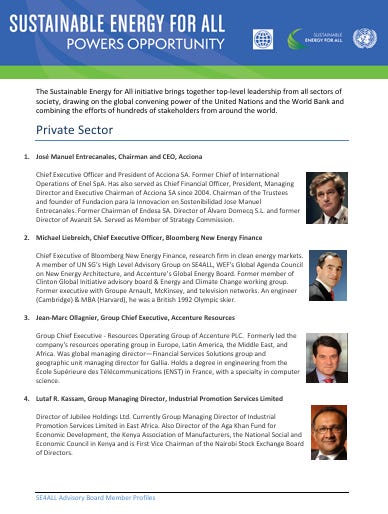
Lutaf Kassam’s influence extends far beyond the factory floors of his East African subsidiaries, placing him at the nexus of international development and energy policy. He served as a member of the Advisory Board for the Sustainable Energy for All (SE4ALL) initiative, a prestigious global platform that draws on the convening power of the United Nations and the World Bank to mobilize stakeholders from every sector of society.
His inclusion in this body recognized his experience as a practitioner managing the complexities of industrializing energy-poor regions. As an Advisory Board member, he collaborated with a cohort of high-level global luminaries to address the critical constraints that a lack of energy access places on global development.
Collaborating with Global Peers: Shaping the Nexus of Policy and Practice
Kassam’s work within SE4ALL was rooted in the organization’s core philosophy: that economic progress without social development is unsustainable, and social development without economic progress is impossible. In this collaborative environment, he worked alongside global heavyweights to shape the strategic agenda for sustainable energy, focusing on several key pillars:
Poverty Alleviation and Energy Access: Kassam engaged with leaders like Kandeh Yumkella (Chief Executive, SE4ALL), Reema Nanavaty (SEWA), and Mary Robinson (President, Mary Robinson Foundation) to emphasize the direct link between “energy poverty” and “income poverty”. His contribution brought the practical, on-the-ground perspective of an industrialist to the policy-making table, focusing on how reliable electricity improves the productive capacities of rural populations.
Infrastructure Investment Advocacy: Working alongside financial leaders like Donald Kaberuka (President, African Development Bank) and Luis Alberto Moreno (President, Inter-American Development Bank), Kassam leveraged his expertise in “local anchoring”—the practice of using private sector industrial projects to pool funds with Western and international development finance institutions. His peer group included private sector and industry leaders such as:
José Manuel Entrecanales, Chairman and CEO, Acciona.
Michael Liebreich, CEO, Bloomberg New Energy Finance.
Jean-Marc Ollagnier, Group Chief Executive, Accenture Resources.
Mustapha Bakkoury, CEO, Moroccan Agency for Solar Energy.
Helge Lund, CEO, Statoil.
Ceri Powell, Executive VP of World Wide Exploration, Royal Dutch Shell.
Sultan Ahmed Al Jaber, CEO and Managing Director, MASDAR.
Strive Masiyiwa, Founder, Carbon War Room; Executive Chairman, Econet Wireless.
Klaus Schwab, Executive Chairman, World Economic Forum.
Ratan Tata, Former Chair, Tata Group.
Shaping Global Agendas: As a member of the board, Kassam was part of a broader network—which included civil society voices like Julia Marton-Lefèvre (IUCN) and political leaders like Andris Piebalgs (European Commission)—that pushed energy issues to the center of global policy-making. This allowed him to champion the shift toward renewable energy technologies while simultaneously maintaining the need for the reliable, baseload power that the IPS portfolio has historically delivered to East African industries
V. Institutional Impact and Future Outlook
Market Development and Policy Advocacy
Lutaf Kassam has utilized his extensive tenure in leadership to advocate for structural changes in the Kenyan financial landscape, specifically targeting the deepening of the Nairobi Securities Exchange (NSE) bond market.
His influence is cemented by his roles as a Director of the Kenya Association of Manufacturers and the National Social and Economic Council in Kenya, platforms he has leveraged to champion industrial policies that favor long-term capital formation. By positioning IPS as a reliable “local anchor,” Kassam has effectively mobilized capital, successfully pooling funds with prestigious international institutions such as the International Finance Corporation (IFC) and the German Investment Corporation (DEG) to finance large-scale industrial projects.


Regional Integration and Capital Mobilization
Kassam’s vision extends to regional industrial and energy integration, where he has focused on scaling impact through collaborative investment vehicles. His strategy involves:
Joint Power Platforms: Partnering with international organizations, such as the CDC Group, to mobilize the substantial capital required for sub-Saharan Africa’s energy infrastructure.
Regional Synergy: Coordinating industrial projects that transcend national borders to build a cohesive economic fabric, ensuring that IPS subsidiaries in Uganda and Tanzania operate in alignment with the broader East African industrial agenda.
The Future of Industrial Stewardship
As Kassam looks toward the future, his focus remains on maintaining the operational excellence of the IPS portfolio while navigating the complexities of emerging markets. His approach combines:
Operational Rigor: Ensuring that the culture of high accountability—typified by his hands-on oversight of subsidiary performance—remains a cornerstone of the group.
Strategic Expansion: Continuously evaluating new investment opportunities and ensuring that the organization remains agile enough to respond to the evolving macroeconomic environment of the continent.
Through these efforts, Kassam continues to cement the role of IPS as the primary engine for industrial and infrastructure development in East Africa, ensuring that the group remains a central player in the region’s long-term economic narrative