
Welcome to Boardlot Africa, where we pull back the curtain to reveal the untold stories, power dynamics, and strategic maneuvers shaping the boardrooms of Corporate Africa—subscribe for free to join the conversation. join 1000 other subscribers
We publish:
Sultans weekly NSE Stock Picks, every Friday at 5pm
Kenya’s Most Consequential Legal, Governance & Labor Disputes
A Series on the 100 Most Influential Kenyan Captains of Industry
The Queens of East Africa Boardrooms
The Silicon Savana Chronicles, every Wednesday at 5.00pm
Sultan’s Farming Diary, every Monday at 5.00pm
This comprehensive operational blueprint provides investors and agribusiness professionals with a brick-by-brick financial and logistical framework for launching a high-yield, 1,000-litre per day dairy processing plant along the Kenol corridor, this can be replicated elsewhere with minimal changes.
Table of Contents
1. Introduction: The Economics of the Kenol Corridor
2. Financial Model & Capital Allocation Matrix
3. The Monthly Profit & Loss Statement
4. Phase 2: The Regulatory and Licensing Checklist
5. Phase 3: The Feed Logistics Engine
6. Phase 4: Day-to-Day Production & Operations
7. Phase 5: Cold-Chain & Market Logistics
8. Phase 6: Execution Checklist & Strategy Matrix
Introduction: The Economics of the Kenol Corridor
The Hook: Central Kenya’s Agile Distribution Hub
For decades, the standard playbook for commercial dairy farming in Kenya dictated that an investor look deep toward the traditional green highlands of Nyandarua, Limuru, or the Rift Valley to sell exclusively to massive national aggregators. But a quiet, structurally superior shift is occurring along the dual-carriageway just past Thika. Kenol, situated at the geographic and economic gateway of Murang’a County, has rapidly transformed into a strategic dairy frontier.
While proximity to major corporate factories remains a safety net, the true, high-margin attraction of Kenol is its role as a launchpad into an aggressive, hyper-local consumer network. Positioning a processing plant here unlocks immediate, short-haul access to a booming constellation of rapidly growing urban centers: Thika, Kabati, Makutano, and Maragua. Rather than fighting for lean margins as a passive price-taker at the gates of massive processors, a Kenol-based producer sits at the epicenter of thousands of independent small shops, milk bars, and neighborhood micro-retailers (mishikaki and vibanda networks). These informal, high-velocity small shops buy raw, cooled milk daily at premium spot cash prices, turning the Kenol corridor into a high-liquidity distribution engine that cuts out expensive corporate middlemen.

The Macro Target: Scaling to a 1,000-Litre Per Day Plant
To the uninitiated corporate professional or retail investor, a target of 1,000 litres of milk per day (30,000 litres per month) sounds like a massive industrial hurdle. In African capital markets, we break macro numbers down into their daily operational and biological units to understand their true execution risk.
When unbundled, a 1,000-litre daily plant is simply a game of managing a highly optimized, commercial herd baseline:
At an optimized yield of 25 litres per day per cow, the entire enterprise requires a tight, high-performing active milking line of 40 cows.
Factoring in standard reproductive cycles (animals in dry periods, transitioning heifers), the total standing herd scales to roughly 50 to 55 head of cattle.
Moving 1,000 litres a day shifts the business from a smallholding pilot into a serious, mid-tier commercial distribution unit—a volume perfectly sized to dominate local supply routes across the Kabati-Makutano-Maragua circuit using a single light commercial utility vehicle or dedicated motorcycle team.

The Core Thesis: The Victory of Lean Local Engineering
The primary reason most ambitious agribusinesses fail in Kenya is the “Importation Perfection Trap.” Investors erroneously believe that moving to a 1,000-litre commercial scale requires importing European prefabricated steel housing, fully automated computerized milking parlors, and foreign turnkey pasteurization plants. These capital-heavy import mindsets load the business with massive, unrecoverable upfront CAPEX, dragging down the Return on Investment (ROI) and stalling the project before the first cow is even inseminated.
The core thesis of this blueprint is a radical departure from that model: true margin protection in African agribusiness lies in a lean, efficient, 100% locally engineered architecture.
By substituting expensive imported steel with basic, functional masonry and locally sourced timber, and by deploying processing machinery fabricated right here in Kenya, we can drive down entry barriers by over 60%. Crucially, this lean initialization does not mean sacrificing the non-negotiables: biosecurity, animal comfort, and cold-chain performance remain strictly world-class. A rugged concrete floor and a locally assembled bulk chiller are all it takes to maintain the hygiene standards needed to secure the trust of small shopkeepers from Thika to Maragua. This article provides the definitive, brick-by-brick guide to proving that a basic, locally structured cowshed can out-perform, out-distribute, and out-earn an imported showcase farm every single day of the financial year.

Part 2: The Financial Model & Capital Allocation Matrix (1,000L/Day Scale)
Scaling to a 1,000-litre per day capacity demands a meticulous approach to capital allocation. At this volume, inefficient capital expenditure will quickly bleed a venture dry. By utilizing basic construction materials, regional jua kali machinery fabrication, and leveraging the free KDB Milk Bar licensing framework for your retail outlets, the initialization capital remains lean, preserving your cash runway for livestock genetics and feed banking.
1. Herd Acquisition Costs
To maintain a consistent 1,000 litres per day, the model assumes an active milking line of 40 high-grade cows (averaging 25L/day) supported by 12 heavy in-calf heifers to step in as older cows cycle out of lactation. Stock is sourced entirely from premium domestic breeding hubs within Central Kenya (e.g., Limuru, Githunguri, or Naivasha) to ensure climate adaptability.
40 Early-Lactation Cows (Friesian / Ayrshire Crosses): Sourced from verified high-yield local herds, producing at or near the 25L/day threshold.
Estimated Unit Price: KES 140,000
Subtotal: KES 5,600,000
12 High-Grade In-Calf Heifers: Timed to freshen and join the active milking line sequentially to flatten seasonal production dips.
Estimated Unit Price: KES 120,000
Subtotal: KES 1,440,000
Total Herd Acquisition Capital: KES 7,040,000
2. CAPEX & Upfront Feed Setup
This section captures the infrastructure and machinery requirements for a 1,000L/day plant, heavily optimized by using basic local materials and local engineering workshops rather than imported turnkey packages.
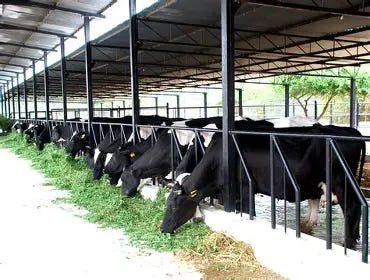
Commercial Cowshed Construction (Basic & Local Sourcing):
Large-scale eucalyptus (blue gum) structural poles, basic timber off-cut partitions, and gauge-30 iron sheets (mabati) designed for a 55-head total herd footprint.
Estimated Cost: KES 750,000
Flooring & Masonry Works:
Heavy-duty hand-grooved concrete slab (local cement, river sand, ballast) sloped for drainage, smooth-plastered quarry-stone feeding mangers, water troughs, and an expanded 4-stall elevated milking parlor.
Estimated Cost: KES 420,000
Locally Assembled Cold-Chain & Plant Infrastructure:
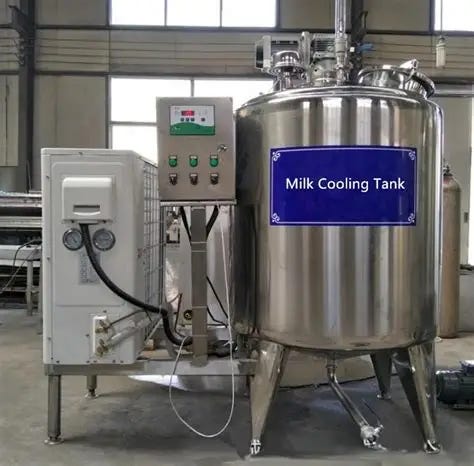
A 1,500-litre bulk milk cooling tank completely fabricated, insulated, and clad in food-grade stainless steel by refrigeration workshops in Thika or Nairobi (giving you a safe buffer for daily collection).
Estimated Cost: KES 850,000
On-Farm Milling & Processing Machinery:
Commercial-grade, locally manufactured stationary motorized silage chopper, plus a heavy-duty posho mill style hammer mill and a 500kg vertical drum mixer for home-made concentrate (HMC) production.
Estimated Cost: KES 380,000
Milk Handling Equipment (KDB Compliant):
Thirty 50-litre food-grade stainless steel milk cans fabricated in Nairobi’s Industrial Area for collection and transport (completely eliminating illegal plastic jerrycans).
Estimated Cost: KES 285,000
Initial Fodder Bank Deployment (Upfront Feed Capital):
Leasing large-scale fodder acreage along the Tana/Murang’a basin, bulk contract purchasing of maize forage, tractor hire for automated chopping, and heavy-duty silatox polythene sheeting to pack and seal your 1.5-year benched earth-trench silage reserve.
Estimated Cost: KES 950,000
Regulatory & Licensing Capital:
Murang’a County Unified Business Permit (UBP), NEMA clearance filings, sub-county Public Health inspections, Food Handlers certificates, and KDB processing plant registration fees (Note: Milk Bar retail permits remain Free).
Estimated Cost: KES 75,000
Total CAPEX & Feed Setup: KES 3,710,000

3. Monthly OPEX (Running Costs at Full Capacity)
At 1,000 litres per day, your operating expenses are kept tightly in check by bypassing expensive commercial concentrate brands and utilizing local maintenance loops.
On-Farm Feed Ingredients & Supplements (Monthly HMC Blends):
Bulk procurement of raw agricultural by-products (maize germ, wheat bran from Thika millers, cotton seed/sunflower cake from regional oil-pressers, lime, and macro-mineral dairy premixes).
Estimated Monthly Cost: KES 345,000
Veterinary Care, AI Synchronization & Biosecurity:
Routine veterinary cover, 60-day post-partum AI synchronization protocols using high-yield KAGRC Kabete straws, weekly local acaricides for footbaths/spraying, and iodine teat dips.
Estimated Monthly Cost: KES 65,000
Labor & Plant Salaries:
6 full-time farm attendants managing intensive feeding, cleaning, and milking; 1 farm supervisor; and 2 dedicated logistics delivery drivers/riders.
Estimated Monthly Cost: KES 180,000
Logistics Fuel & Power Utilities:
Three-phase or single-phase electricity/fuel to run the locally fabricated 1,500L chiller, power the commercial hammer mill daily, and fuel the utility pickup/motorcycle delivery routes across the Thika-Maragua circuit.
Estimated Monthly Cost: KES 110,000
Contingency & Local Machine Maintenance:
Immediate, localized welding, belt replacements, or electrical repairs on your jua kali fabricated machinery using cheap, locally available spare parts.
Estimated Monthly Cost: KES 35,000
Total Monthly OPEX: KES 735,000
Core Metric: This brings your ongoing, locked-in Cost of Production (CoP) to roughly KES 24.50 per litre (KES 735,000 OPEX ÷ 30,000 Litres). The economy of scale achieved by moving from a small herd to a 40-cow milking line drives down the per-litre overhead significantly.
Part 3: The Monthly Profit & Loss Statement (1,000L/Day Plant)
Distributing a monthly volume of 30,000 litres (1,000 litres per day) straight into independent small shops, estate milk bars, and local pastry networks across the Thika-Maragua circuit at a competitive spot price of KES 55 per litre unlocks immediate cash liquidity. By avoiding corporate payment delays and maintaining a low Cost of Production (CoP), the monthly Profit and Loss (P&L) statement demonstrates an exceptionally resilient net profit margin.
Monthly Income Statement (At Full Capacity)
Gross Milk Revenue 30,000 Litres × KES 55 / Litre Kes.1,650,000
Direct Operating Expenses (OPEX)
On-Farm Feed Ingredients & Supplements Bulk maize germ, wheat bran, cotton seed cake, premixes Kes 345,000
Veterinary, AI Sync & Biosecurity KAGRC straws, weekly acaricides, teat dips, vet checks Kes. 65,000
Labor & Plant Salaries6 farm hands + 1 supervisor + 2 delivery drivers Kes. 180,000
Logistics Fuel & Power Utilities Chiller power, mill electricity, delivery vehicle fuel Kes. 110,000
Contingency & Local MaintenanceOn-the-fly local repairs and hardware replacements Kes. 35,000
Finance costs (Loan repayment kes. 300k monthly)
Total Monthly Operating Expenses: Kes 735,000
Net Monthly Profit Kes 615,000
Core Financial & Performance Metrics
Gross Margin Spread: KES 30.50 Profit Margin per Litre (KES 55.00 Retail Price minus KES 24.50 Production Cost)
Operating Profit Margin: 55.5% (An exceptionally high yield driven entirely by the omission of heavy structural debt and retail commercial feed markups)
Working Capital Efficiency: Because you are dealing with small shopkeepers who buy on immediate spot cash or short-cycle 24-hour terms to restock their shelves, your cash conversion cycle is practically instantaneous. This cash immediately funds the next month’s bulk feed ingredient purchases.
Capital Payback Analysis
Your total project initialization cost—combining Herd Acquisition (KES 7,040,000) and CAPEX / Upfront Feed Setup (KES 3,710,000)—amounts to a commercial entry capital of KES 10,750,000.
With a consistent, de-risked net cash generation of KES 615,000 per month, the business achieves full payback of its entire structural and livestock investment in exactly 11.7 months of active operation. In the African agribusiness landscape, clearing your capital entry risk within the first year while owning 52 elite biological assets and a fully operational cold-chain infrastructure is the ultimate validation of the lean local engineering model.
Phase 2: The Regulatory and Licensing Checklist
Operating a commercial-scale 1,000-litre per day plant that directly services retail channels across Thika, Kabati, Makutano, and Maragua requires a tight, non-negotiable legal shield. Because your model bypasses large corporate processors to sell directly to independent small shops, you must establish immaculate health and regulatory compliance to protect your distribution network from sudden enforcement crackdowns.
1. The Devolved Hurdle: Murang’a County Government Approvals
Before your utility vehicles or motorcycle teams load their first daily milk cans, your infrastructure must clear the county regulatory gates:
Unified Business Permit (UBP): Issued by the Murang’a County Government. For a 1,000L/day commercial operation, this single permit consolidates your agricultural processing license, heavy-duty fire safety clearance, and local advertising/branding permissions for your distribution fleet.
Public Health Sanitation Inspection: Public health officers from the Kenol sub-county office will inspect your expanded 4-stall concrete milking parlor and cold-chain room. Because your setup utilizes a hand-grooved concrete floor matrix and smooth, plastered stone troughs, clearing this requires demonstrating a simple, high-volume daily running water sanitation routine.
Food Handlers Certification: Due to the volume of product being handled, all 6 farm attendants and 2 logistics drivers must undergo mandatory routine medical examinations to receive Food Handlers Certificates, guaranteeing zero human-to-milk contamination along the route.
2. NEMA & Slurry Architecture: Driving a Circular Economy
A standing herd of 50 to 55 commercial dairy cattle produces a massive volume of dung and slurry daily. In a semi-urban, high-growth corridor like Kenol, poor waste management will quickly trigger neighbor complaints, environmental degradation, and punitive National Environmental Management Authority (NEMA) fines.
Sequential Manure Pit Infrastructure: Instead of loading the business with the heavy CAPEX of an imported mechanical bio-digester, you must construct a basic, multi-stage sequential masonry slurry system. This consists of three interconnected, brick-lined or concrete pits dug away from the main cowshed, sloped to allow gravity to separate heavy solids from liquid runoff.
The Organic Fertilizer Monetization Asset: By treating waste as a core asset, the dried solids from the final pit can be bagged and sold directly as high-value organic fertilizer. This can either be routed back into your own leased fodder fields along the Tana basin to slash your feed production costs or sold directly to neighboring Murang’a coffee and horticulture smallholders, turning a strict NEMA compliance hurdle into a secondary cash-flow line.
3. The Kenya Dairy Board (KDB) Shield: Navigating National Regulations
The Kenya Dairy Board strictly regulates the handling, quality, processing, and movement of dairy products across county lines. Understanding the regulatory terrain reveals an immense structural advantage for an independent 1,000L/day plant:
The Zero-Cost Retail Advantage: If you or your core retail partners establish dedicated dispensing points or estate milk bars to serve walk-in consumers, you can exploit a vital national incentive. As detailed in Screenshot 2026-07-06 114718.png, the Milk Bar Permit Fee is entirely free. Both the Annual Fees and Application Fees are permanently set at zero cost for retail outlets dispensing dairy produce directly to consumers for their own use, significantly dropping the regulatory cost barrier for your distribution footprint.
Building on Mini-Dairy Precedents: For bulk production and commercial plant operations, you must register as a formal processor. A historical audit of KDB data for Murang’a County, captured in Screenshot 2026-07-06 121630.png, shows a well-established precedent of localized operations successfully holding official Mini Dairy licenses. Local enterprises such as Usafi Creameries Ltd, Lowland Dairies, Siche Dairy, and Makuyu Evergreen Investments Limited demonstrate that the regulator actively backs independent commercial units within this exact terrain.
The KDB Milk Movement Permit: This is the ultimate shield for your daily logistics route. When your delivery trucks cross county borders from Kenol (Murang’a) into Thika (Kiambu), a valid daily or monthly movement permit ensures traffic police and KDB inspectors at checkpoints cannot impound your 1,000-litre cargo.
The Stainless Steel Mandate: To pass spontaneous KDB alcohol-testing, density, and lactometer audits, plastic jerrycans must be completely banned from your operation. Plastic traps bacteria in microscopic scratches and curdles milk rapidly. You must strictly enforce the use of standard 50-litre food-grade stainless steel milk cans. These cans, easily fabricated by industrial workshops in Thika or Nairobi, ensure your 1,000-litre daily pipeline cleanly passes milk-quality tests at every single shop landing.
Phase 3: The Feed Logistics Engine (The Margin Protector)
When operating a commercial processing plant at a scale of 1,000 litres per day, your profit margin is entirely made or lost in the feed bunk, not the milk parlor. Buying commercial dairy meal and baled hay at retail prices from local agrovets will wipe out your cash flow. To sustainably milk 25 litres per cow per day across a 40-cow milking line, you must build a localized, heavy-duty industrial feed engine right in Kenol.

1. Large-Scale Fodder Banking & Earth-Trench Silos
The Seasonal Price Trap: Relying on rain-fed green forage means your production will surge during wet seasons (when prices soften) and drop during dry spells (when your local small shops need you most). To be a reliable 1,000L/day contract partner for retailers in Thika and Maragua, your supply must be entirely flat and predictable all year round.
The Earth-Trench Storage System: You must establish a strict 1.5-year benched silage reserve before your full herd reaches peak milking capacity. At this commercial scale, instead of constructing expensive above-ground concrete bunkers that lock up capital, use an excavator to dig heavy-duty earth trenches directly on your land.
Preservation Mechanics: Line these deep trenches with high-gauge silatox polythene sheeting, pack them tightly with bulk-purchased or estate-grown chopped maize forage using a tractor to roll over and expel oxygen, and seal them with a thick layer of soil. This basic, highly optimized method preserves high-energy feed for pennies on the shilling compared to commercial hay bales, completely insulating your production from regional droughts.
Motorized Chop Infrastructure: Deploy a heavy-duty, locally fabricated stationary motorized silage chopper powered by a rugged 3-phase electric motor or a standalone diesel engine (easily sourced from mechanical workshops along the Thika highway). This keeps your daily feed processing fast, high-volume, and completely independent of expensive imported machinery.
2. On-Farm Home-Made Concentrate (HMC) Milling
Commercial dairy meals carry high manufacturer markups and distribution overheads. For a 40-cow active milking line consuming significant volumes of concentrates daily, you must blend your own production-grade rations on-site.
The Processing Setup: Install a basic, locally built heavy-duty hammer mill (posho mill style) coupled to a 500kg vertical drum mixer. This local machinery allows you to buy raw, unblended feed ingredients in bulk directly from primary producers and wholesale millers.
The Hyper-Local Cost-Arbitrage Formula: Capitalize on Kenol’s strategic logistics location to source cheap, high-quality agricultural by-products from regional processors:
Energy Base: Maize germ, wheat bran, and wheat pollard purchased in bulk directly from major milling plants in Thika and Nairobi.
Protein Anchors: Sunflower seed cake and cotton seed cake sourced directly from regional oil-pressing businesses and distributors.
Macro-Minerals: Standard local macro-nutrient dairy premixes, salt, and agricultural lime to ensure high calcium availability for intensive milk synthesis.
The Operational Advantage: This raw, basic on-farm mixing strategy reduces your total concentrate feed costs by up to 40% compared to buying branded commercial bags. This gives you an unbreakable margin advantage, allowing you to easily lock in your low Cost of Production (CoP) of KES 24.50 per litre and protect your business from market volatility.
Phase 4: Day-to-Day Production & Basic Operations
1. Reproductive & Health Management
To maintain a consistent output of 1,000 litres per day, your herd’s calving schedule must run like clockwork. A commercial dairy enterprise risks swift financial decline if animals experience extended dry periods or delayed conceptions, which turn high-grade cows into expensive, non-productive consumers of feed. At a 55-head scale, managing this requires a disciplined, programmatic approach to breeding and herd health.
The 60-Day Post-Partum AI Synchronization Protocol: Every cow in the milking line must be put on a strict reproductive timeline. Exactly 60 days after calving, the cow must be evaluated and placed on an Artificial Insemination (AI) synchronization protocol. This targeted synchronization ensures that you maintain a tight calving interval of under 400 days, meaning your cows return to peak lactation rapidly and your daily 1,000-litre milk pipeline never dries up.
Sourcing Domestic Elite Genetics (KAGRC Kabete): Completely avoid unregulated, third-party AI brokers who walk around the Kenol corridor with undocumented semen tanks. All semen straws must be sourced directly from the Kenya Animal Genetic Resources Centre (KAGRC) in Kabete. By purchasing directly from the national center, you gain access to top-tier, progeny-tested Friesian and Ayrshire bulls specifically bred for high volumetric yields and adapted to weather conditions in Central Kenya. Utilizing high-conception sexed semen from KAGRC also strategically ensures a 90% chance of heifer drops, allowing you to build your own replacement herd without spending capital on outside stock.
The Biosecurity Shield (Basic Concrete Footbaths): In an intensive zero-grazing setup, introducing disease from the outside will completely derail your production targets. You must construct a basic, shallow concrete footbath right at the single entry point of the cowshed. This footbath is built simply using standard local masonry blocks and concrete, and must be kept filled with a fresh solution of affordable, locally sourced disinfectant or acaricide.
Preventing ECF and Mastitis Outbreaks: Every farm hand, vet, or visitor must step into this footbath before entering the unit to kill pathogens carried on boots. This simple defensive line, combined with a strict weekly hand-spraying routine using local agro-vet acaricides, isolates your herd from deadly tick-borne diseases like East Coast Fever (ECF). Furthermore, enforcing a basic pre- and post-milking teat-dipping protocol using local iodine-based dips acts as your primary defense against Mastitis, protecting the udders of your 40 elite milkers and ensuring your 30,000-litre monthly pipeline remains clean, unadulterated, and ready for your retail shop network.
Phase 5: Cold-Chain, Local Aggregation & Market Logistics
Milking 1,000 litres a day shifts your operations into a serious, commercial-tier distribution bracket. At this volume, raw milk spoils rapidly if left unchilled, meaning your entire market leverage depends on immediate, reliable cooling. Maintaining low bacterial counts allows you to dictate terms to independent small shops across Thika, Kabati, Makutano, and Maragua.
1. The 100% Locally Fabricated Cold-Chain System
The CAPEX Trap: Importing a turnkey, European-manufactured 1,500-litre bulk milk cooling tank can instantly drain your capital reserves.
The Local Engineering Solution: You must source a 1,500-litre bulk milk cooling tank assembled entirely by specialized refrigeration technicians based in Thika or Nairobi’s Industrial Area. These local workshops utilize high-efficiency imported compressors (the core moving parts) but custom-fabricate the food-grade stainless steel tanks, insulation jackets, and automated paddle agitators locally.
Operational Discipline: The moment milk leaves the cow’s udder at roughly 37°C, it must be filtered through a clean cloth and dumped straight into the chiller. A locally fabricated tank is engineered to drop the milk’s temperature down to 4°C within three hours. This rapid cooling stalls bacterial multiplication completely, ensuring your milk stays fresh for up to 48 hours without souring, giving you total control over your delivery scheduling.
2. Offtake & Distribution Logistics: Serving the Small Shop Circuit
Bypassing corporate aggregators means you must manage your own daily logistics. Your 1,000-litre daily pipeline should be routed through a highly disciplined, short-haul distribution route:
The Logistics Setup: At 1,000 litres per day, your morning yield fits into roughly twenty 50-litre stainless steel milk cans. This volume is perfectly suited for a single, fuel-efficient light commercial utility vehicle (like a small pick-up truck) or a coordinated team of two heavy-duty motorcycles fitted with reinforced side carriers.
Targeting the Thika-Maragua Retail Constellation: Your delivery route should map directly out of Kenol into the high-density residential nodes of Kabati, Makutano, Maragua, and outer Thika.
Building the Small Shop Network: Secure supply agreements with independent neighborhood micro-retailers, estate milk bars, and small pastry shops. These micro-retailers sell milk daily to walk-in consumers. Because they operate on high turnover, they are willing to pay a premium spot cash price of KES 55 per litre for chilled, high-fat milk that does not curdle on their shelves, allowing you to bypass corporate payment delays and capture immediate cash flow.
Sourcing the Dairy Herd: Building the Milk Factory
Success in an intensive dairy unit is dictated by the genetic capacity of your herd. Nutrition can only unlock what a cow’s genes have already pre-programmed; you cannot feed a cow into producing 30 liters of milk if her DNA does not support it.
Ayrshire vs. Holstein-Friesian: The Strategic Trade-Off
While Holstein-Friesians serve as massive, large-framed capital assets capable of unmatched volumetric output—averaging 38 to 45 liters daily under high-input management—they function as incredibly heavy feeders. They require substantial daily forage and carry severe reproductive and metabolic risks if their nutritional intake drops by even a fraction.
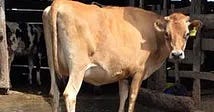
Conversely, the operational blueprint pivots toward purebred and high-grade Ayrshire genetics for structural hardiness and economic longevity in the transition zones of Murang’a. The Ayrshire is selected for:
Superior Disease Resistance: High natural resistance to localized mastitis due to tighter teat canal closures and excellent udder attachments.
Robust Forage Conversion: Highly efficient ruminal conversion rates that maintain a positive Body Condition Score (BCS) even when fodder quality fluctuates.
High Component Pricing: A rich total solids profile (4.0% butterfat and 3.4% protein) that commands premium spot cash pricing from direct-to-consumer networks and local shopkeepers.
Optimized Herd Architecture
To sustain a permanent, stable daily delivery baseline, the herd must be structured as a rolling manufacturing line:
Active Lactating Cows: Maintained to target peak and mid-lactation phases.
Dry/Pregnant Cows: Entering late-stage recovery and preparation to refresh the milking line.
Replacement Heifers: High-grade juveniles stepped up through strict nutritional programs to insulate the farm against future replacement costs.
Elite Institutional Sourcing Protocols
To eliminate the extreme risk of buying over-aged, disease-carrying animals from erratic open-air markets, stock must be sourced exclusively as certified, performance-tracked lines from premier institutional nodes:
Gicheha Farm (Nakuru/Naivasha): Specialized pedigree nodes offering premium 3 to 6 months in-calf heifers to ensure immediate production velocity upon arrival at the Kenol unit.
Agricultural Development Corporation (ADC): Elite livestock breeding farms in Lanet and Kitale supplying performance-tested, pedigreed pregnant heifers with fully certified lineage charts.
Kenya Agricultural & Livestock Research Organisation (KALRO): Institutional dairy research stations (such as KALRO Naivasha) providing deep access to elite genetic stock and pedigree records.
The Kenya Stud Book & Livestock Breeders Association (LBA): Official registries allowing direct procurement from certified corporate ranches implementing strict genomic testing and artificial insemination (AI) data logs.
About Boardlot Africa Research
Boardlot Africa is a premier financial intelligence, corporate governance, and agribusiness research firm dedicated to unpacking the mechanics of capital, market strategies, and structural shifts across East Africa’s corporate landscape. By bridging the gap between raw market data and actionable intelligence, we deliver deep-dive research, independent corporate analysis, and macroeconomic insights designed for institutional investors, boardrooms, and sharp market observers.
Our coverage spans the full velocity of the regional economy—from analyzing equity trends and governance transitions at the Nairobi Securities Exchange (NSE) to architecting lean, highly optimized commercial agribusiness models.
What We Do
Deep-Dive Publications: Provocative, data-driven essays on corporate histories, market peaks, sector liquidations, and capital allocation strategies.
Agribusiness Intelligence: Technical blueprints, cost-of-production optimization, and logistics modeling for mid-tier and commercial-scale agricultural operations.
Advisory & Consulting: We provide bespoke corporate advisory, asset optimization frameworks, and strategic investment consulting for local operators and the diaspora network seeking to deploy capital efficiently into liquid instruments or high-yield physical ventures.
Get in Touch
Email: boardlot.research@gmail.com
Phone: +254 753 133 901
Substack: Subscribe to Boardlot Africa
X (Twitter): BoardLotSultan