
Welcome to Boardlot Africa, where we pull back the curtain to reveal the untold stories, power dynamics, and strategic maneuvers shaping the boardrooms of Corporate Africa—subscribe for free to join the conversation. join 1000 other subscribers
We publish Kenya’s Most Consequential Legal, Governance & Labor Disputes and A Series on the 100 Most Influential Kenyan Captains of Industry
Rock Investment Bank Partnership
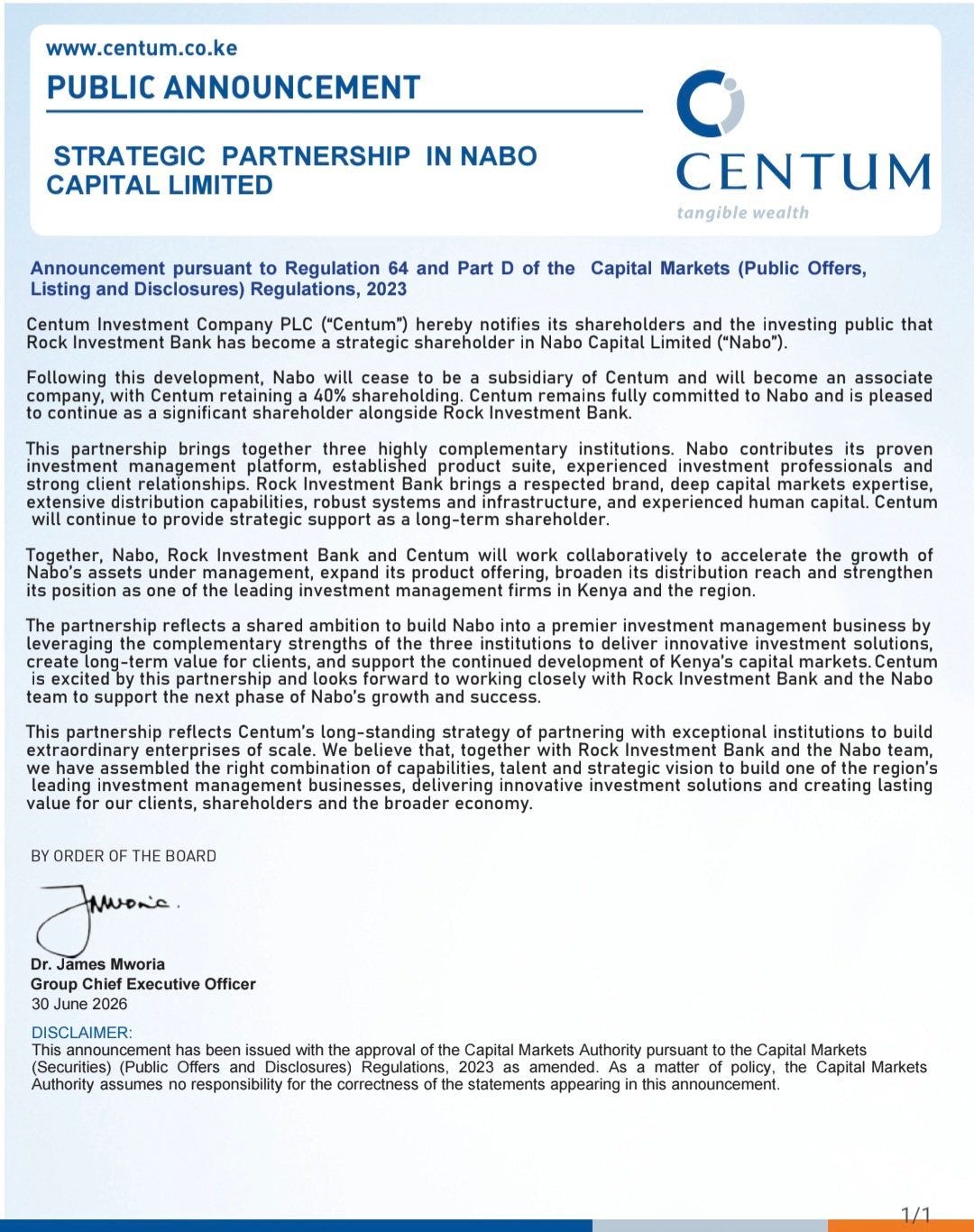
As a shareholder in Centum Investment Company PLC, I have been closely monitoring the company’s recent strategic maneuvers. Following the public announcement, I have examined the new strategic partnership between Nabo Capital Limited and Rock Investment Bank as detailed in the document

The Strategic Rationale
On its face, this is a highly logical combination of synergies and a step in the right direction for Centum. By bringing together Rock Investment Bank—a firm licensed by the Capital Markets Authority—with the proven platform and experienced team at Nabo Capital, we are looking at the consolidation of two complementary institutions.
For Nabo Capital, this partnership is a significant evolution. It allows the firm to progress beyond its traditional fund management scope into a full-scale investment advisory and trading play, including the capacity to provide IPO advisory services. This expansion creates an undeniable path toward higher revenue generation and a stronger regional market position.
A Necessary Departure
It is important to note that this shift was overdue. Unlike its direct competitors, Nabo’s Assets Under Management (AUM) have stagnated while the rest of the market has significantly expanded. I firmly believe that Nabo is better managed outside the overarching umbrella of Centum, which has historically appeared to choke its subsidiaries and stall their growth. This transition to an associate company model—with Centum retaining a 40% stake—should allow Nabo the autonomy it needs to finally thrive.

What’s Next: The Valuation Question
While the strategic intent is clear, the real test of this transaction lies in the financials. As of March 2025, Centum was carrying Nabo at a market value of KES 470 million.
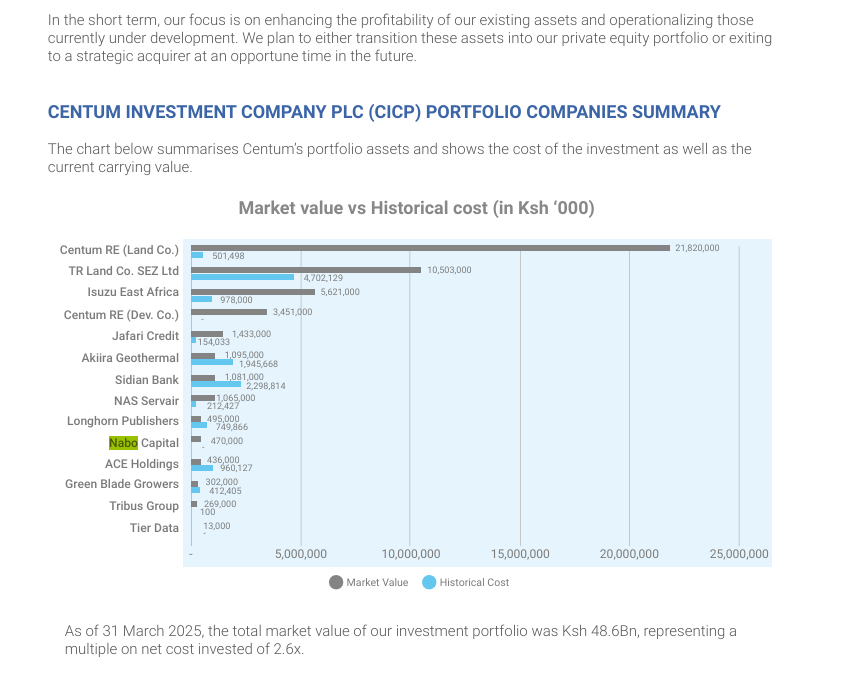

As a shareholder, I am currently scrutinizing the details of this deal against that valuation, particularly noting that the broader market is currently in a state of ascendancy. I will be issuing further, detailed guidance once I have fully examined the deal’s financial terms vis-à-vis the transaction price. Whether this transition captures the true value of the asset or undervalues it in a rising market is the next big question for the board.
Stay tuned for my deep dive.
About Boardlot Africa Research
Boardlot Africa is a premier financial intelligence and corporate governance publication dedicated to unpacking the mechanics of capital, market strategies, and structural shifts across East Africa’s corporate landscape. By bridging the gap between raw economic data and actionable market intelligence, we deliver deep-dive research, independent corporate analysis, and policy insights designed for institutional investors, boardrooms, and sharp market observers.
Get in Touch
Email: boardlot.research@gmail.com
Phone: +254 753 133 901
Substack: Subscribe to Boardlot Africa
X (Twitter): BoardLotSultan