
Table of Contents
I. Introduction: The Billionaire in Khaki
The transition from the classroom to the boardroom.
Defining the “Muguku Archetype”: Humility as a business strategy.
II. The “Equity Elder”: Roots in Kikuyu
Establishing the local branch: Beyond simple banking.
The “Tea Session” governance: Demystifying high finance for the local community.
III. The Poultry King: From Micro-Industry to Macro-Capital
The two-hen foundation: The discipline of early business years.
The Muguku Methodology: Why investing in what you know is the key to scaling.
IV. The Equity Leap & The Iconic Acquisitions
Private placement to public listing: The moment the fortune became national news.
The Standard Chartered HQ move: Challenging the old guard.
Strategic real estate: From Triton Petroleum to the Quickmart legacy.
V. The Portfolio: A Tapestry of Kenyan Wealth
Mapping the assets: Waterfront Mall, commercial CBD properties, and schools.
Investing in the future: Education in Kiambu as long-term preservation.
VI. The Legacy: Bricks, Mortar, and the Financial Frontier
The “Scared Investor” critique: Breaking the fear of financial markets.
Stewardship and the modern era: The family, the Trust, and current developments.
I. Introduction: The Billionaire in Khaki
In the modern Kenyan imagination, the billionaire archetype is often defined by extravagance—a spectacle of high-end vehicles, high-profile politics, and ostentatious displays of consumption. Nelson Muguku was the antithesis of this persona. He was the “Billionaire in Khaki,” a man whose immense wealth was cloaked in the simplicity of a farmer’s attire and the quiet humility of a lifetime of labor. Before he became a titan of industry, he was a humble teacher, having served at Kapenguria Intermediate School and Kabianga Teachers College. It was from this background of disciplined public service that he emerged, eventually walking away from the classroom to pursue a vision that defied the expectations of his peers and parents alike.
His life presented a profound economic paradox. He was rooted in the most humble of agricultural beginnings—the intensive, gritty work of poultry farming started with just two hens, a cock, and Sh2,000—yet he emerged as a formidable titan of the Nairobi real estate and financial landscape. His wealth was not inherited or the product of fleeting speculation; it was the fruit of an unparalleled discipline, grown from the soil of a farm and hardened by the complexities of capital markets.
Ultimately, Muguku represents the evolution of the Kenyan capitalist. He serves as the bridge between the old and new financial orders, having masterfully navigated the transition from the purely tangible—bricks, mortar, and eggs—to the institutional power of banking and equities. He was the pioneer of the “Equity Billionaire” class, proving that one could build a monumental fortune through patient, quiet, and relentless accumulation while simultaneously shaping the very foundations of the national economy. Even as his family faces contemporary challenges, such as recent court disputes over the management of the Nelson Muguku Family Trust, his legacy remains anchored in that remarkable journey from a teacher’s desk to the boardroom of Kenya’s most iconic financial institutions.
How to Build Generational Wealth | Nelson Muguku Njoroge
This video provides an in-depth profile of Nelson Muguku, detailing his transition from a teacher and small-scale farmer to one of Kenya’s wealthiest and most influential business magnates.

II. The “Equity Elder”: Roots in Kikuyu
While the Equity Bank brand had already established a significant national footprint with numerous branches by the time it arrived in Kikuyu, the opening of a local branch marked a pivotal moment for the community. For Nelson Muguku, this was his home turf—the heart of his agricultural empire and the place where he had famously helped develop the Kidfarmaco Estate, a residential landmark that remains a testament to his influence in the region.
In this familiar setting, Muguku stepped into a role that went beyond his status as the bank’s largest shareholder. He became the unofficial “branch elder,” a figure who acted as the primary bridge between the bank’s formal systems and the local business community. During the now-legendary “tea sessions” he presided over, Muguku did not speak like a remote financier; he spoke as one of them. He used these informal gatherings to demystify the bank for farmers, small-scale traders, and residents, personally overseeing customer recruitment with the same hands-on approach he applied to his poultry operations.
By leveraging his reputation as a man who had built his wealth from the ground up, Muguku made banking feel accessible, turning the Kikuyu branch into a community hub. He effectively bridged the gap between rural, asset-based wealth and formal financial systems, showing his neighbors that the bank was not just for the elite, but a tool for those building a future through hard, persistent work. In doing so, he solidified his position as the bank’s most trusted ambassador, anchoring the institution in the trust of the local people he had lived and worked alongside for decades.
III. The Poultry King: From Micro-Industry to Macro-Capital
Long before his name was synonymous with equity holdings and commercial real estate, Nelson Muguku was the undisputed “Poultry King” of Kenya. His empire was not built on the volatility of speculative trades, but on the disciplined, day-to-day management of his extensive poultry farms. This foundation was the crucible of his business philosophy; the grit required to manage large-scale animal husbandry instilled in him a profound sense of operational discipline that would define his entire career.
This agricultural success provided the essential liquidity that fueled his eventual pivot into formal capital markets. Muguku mastered the art of extracting surplus value from a micro-industry and converting it into robust, investable capital. His foresight extended beyond the farm; he invested heavily in the education sector, notably establishing the Muguku Tumaini Schools in Limuru. These schools served as both a social investment and a testament to his belief in building infrastructure that would outlast a single harvest season.
The “Muguku Methodology” was rooted in a philosophy of quiet, relentless accumulation. He was a practitioner of “investing in what one knows”—a strategy that required him to achieve mastery over his immediate environment before venturing into complex, abstract assets. By treating the farm, the school, and the bank as parts of a cohesive ecosystem, he demonstrated how traditional wealth could be methodically migrated into the financial frontier. He was not a gambler in the market; he was a cultivator who viewed the Nairobi Securities Exchange with the same analytical patience he applied to his poultry houses, proving that the most sustainable wealth is that which is grown, not merely acquired.
IV. The Equity Leap: From Poultry to Public Markets
The pivot from the farm to the boardroom was finalized through Muguku’s strategic participation in Equity Bank’s private placement. Recognizing the bank’s potential long before it became a household name, he committed his capital to the private equity phase, securing a position as a top-tier shareholder ahead of the institution’s formal listing on the Nairobi Securities Exchange. This was a masterstroke of financial positioning; he saw the transition from a community-based banking model to a national powerhouse as an inevitable evolution, and he ensured his stake was established when the valuation was still reflective of its grassroots origins.
When the bank finally went public, the listing acted as a seismic event for Muguku’s personal fortune. The market’s reception of Equity Bank was nothing short of historic, and as a primary shareholder, he was instantly propelled into the stratosphere of Kenya’s wealthiest individuals. Overnight, the quiet poultry farmer from Kikuyu found his name plastered across the front pages of every major newspaper in the country.
The visibility was, by all accounts, beyond his wildest dreams. Where he had once been known in the corridors of Kikuyu and the agricultural circles of Limuru, he was now a national financial icon whose every investment move was scrutinized by the press. This sudden shift from a local entrepreneur to a public billionaire tested the man’s resolve; yet, even amidst the media frenzy, he remained grounded in the same austere, hard-working philosophy that had defined his earlier years. The listing did not change his character, but it solidified his place in history as the architect of the “Equity Billionaire” phenomenon.
The Poultry King’s Masterstroke: How Muguku Turned a KES 380M IPO Stake into a Nearly KES 1B Fortune
Nelson Muguku stands as the definitive poster child for Kenya’s “poultry-to-wealth” narrative, a testament to the power of patient capital and disciplined asset rotation. By securing a 6% stake in Equity Bank prior to its 2006 IPO, he effectively transformed his agricultural success—built on the humble foundations of two hens and a cock—into a financial powerhouse. At the time of the listing, that 6% stake was valued at approximately KES 380 million, a figure that would eventually balloon to nearly KES 978 million as the bank’s share price surged toward 180 KES. Muguku’s journey is so iconic because he treated his equity not as a static trophy, but as a strategic engine for growth; by eventually trimming that massive position, he successfully recycled “bank dividends” into landmark real estate ventures like the Waterfront Mall. His story remains the ultimate blueprint for the Kenyan entrepreneur: start with the grind, scale with the market, and diversify with the exit.
Nelson Muguku didn’t just follow the old Kikuyu elders’ rulebook — he rewrote it. The conventional wisdom among the old men was clear: “Invest only in brick & mortar. Land and buildings never die.” Yet Muguku boldly put his poultry millions into Equity Bank shares (pre-IPO) — “paper” that many dismissed as risky. That 6% stake exploded from KES 380M to nearly KES 1B. Only then did he rotate the gains into iconic real estate like Waterfront Mall. True vision: Respect tradition, but don’t be imprisoned by it.

IV. The Iconic Move: The Standard Chartered HQ Acquisition
When Standard Chartered finally placed its iconic headquarters on Moi Avenue—right next to the Kenya Archives—on the market, the sheer scale of the asset meant that only a handful of individuals in the country possessed the liquidity to even consider the bid. In a market where such prime commercial real estate was traditionally out of reach for local investors, it was Nelson Muguku who stepped forward to secure the property.
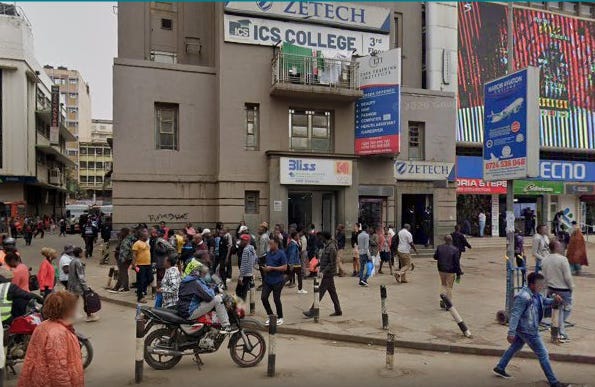
This transaction was far more than a simple real estate acquisition; it was the ultimate display of “Equity billionaire” confidence that captured the national imagination. For a public that had long viewed colonial-era institutions like Standard Chartered as immutable pillars of the city, seeing a local entrepreneur—a man who had built his foundation on poultry—purchase their headquarters represented a seismic shift in the power dynamics of the Nairobi Central Business District. It became the poster child move of the new financial order, signaling the arrival of a breed of investor capable of challenging the old-guard financial institutions on their own turf.
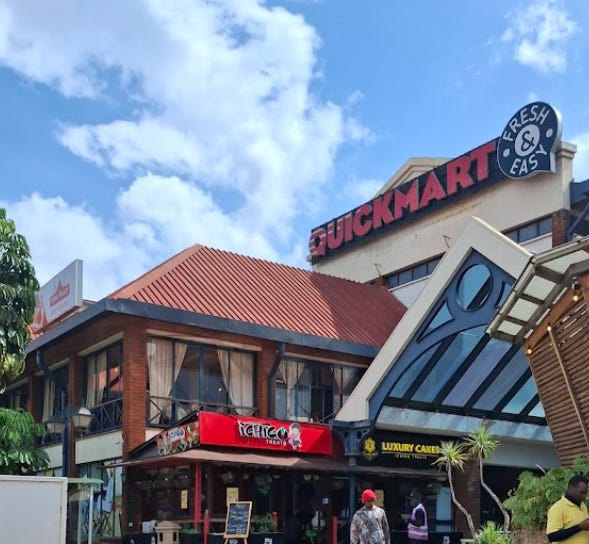
Muguku did not stop at the CBD. He continued his strategic pivot from agricultural production to high-value real estate by acquiring the landmark building at the Karen Crossroads junction. Previously owned by Triton Petroleum, the property was a high-profile asset that further cemented his dominance in Nairobi’s prime commercial zones. Today, that same property houses a Quickmart supermarket, illustrating the seamless way Muguku’s assets were transitioned to meet the demands of a modern, retail-driven economy. Each of these moves sent a clear message: the wealth generated in the countryside had come to town, and it was here to stay, occupying the very spaces once reserved for the traditional corporate elite.
V. The Portfolio: A Tapestry of Kenyan Wealth
The transformation of the Muguku estate from an agricultural powerhouse to a pillar of the Nairobi real estate market is a masterclass in capital migration. Nelson Muguku’s foundational discipline—mastering the poultry business and capitalizing on the growth of the financial sector—provided the liquidity that his family later deployed into some of the most strategic real estate in Kenya.
The Strategic Shift
Following his passing in 2010, the family executed a significant pivot. They systematically reduced their holding in Equity Bank—down from a peak of over 6% to a strategic minority stake—redirecting those billions into physical, income-generating assets. This move reflected a classic generational transition: moving from the volatility of equities into the enduring stability of land and infrastructure.
The Karen Landmark: The Waterfront Ecosystem
The flagship of this new era is the Waterfront Karen. Developed by the family’s firm, Crossroads Limited, this 50-acre mixed-use development has redefined the Karen lifestyle landscape.

The Mall: A 200,000-square-foot lifestyle destination, the mall is set around a signature 3-acre man-made lake. It represents a Sh3 billion investment that prioritizes sustainability, featuring solar energy and extensive green spaces.
Vision: Far more than a retail center, the Waterfront serves as a long-term urban hub. Plans for the site’s total 50-acre master plan include high-end residential apartments, professional office complexes, and luxury hospitality, with total potential investments nearing Sh10 billion.
Resilience: Despite persistent market speculation regarding the potential sale of the asset, the family has consistently clarified that the Waterfront is not a speculative flip, but a generational asset held for the long term.
A Portfolio of Prime Assets
The family’s footprint extends across key nodes of Nairobi’s economic geography:
Crossroads Mall (Karen): A premier, high-visibility commercial development that predates the Waterfront project and continues to be a hub for retail activity.
Urban Commercial Interests: The family retains significant commercial properties in the Nairobi CBD, including holdings on Mfangano Street.
Kikuyu Foundations: The original 22-acre poultry farm in Kikuyu remains a cornerstone holding. As Kiambu County has urbanized, the value of this land has appreciated exponentially, bridging the gap between the family’s rural industrial roots and the modern metropolitan landscape.
Legacy as Preservation
This portfolio is not just an accumulation of buildings; it is a tapestry of wealth preservation. By investing in education (such as the Muguku Tumaini Schools) and mixed-use commercial developments, the family has ensured that the “Muguku Methodology”—patient, relentless, and disciplined—continues to shape the Kenyan landscape. They have moved the family fortune from the cyclical nature of poultry and the volatility of the stock market into the “bricks and mortar” permanence that Nelson Muguku respected above all else.
VI. The Legacy: Bricks, Mortar, and the Financial Frontier
For much of Kenya’s older generation of wealth, the comfort of “bricks and mortar” was a psychological fortress. There was a deep-seated historical fear of financial markets—a belief that real, tangible property was the only true measure of security. Nelson Muguku stood as the definitive outlier to this mindset. While his peers remained tethered to the physical world, he mastered the transition from traditional property ownership to the dynamic, liquid world of the equity market, proving that the greatest growth lay in the financial frontier.
The “Muguku Way” was never defined by the noise of the market, but by the quiet, unrelenting discipline of patient accumulation. He carried the ethos of the farmer into the boardroom: you do not rush the harvest; you prepare the soil, you sow with precision, and you wait. His legacy is one of absolute integrity in the pursuit of wealth, demonstrating that one could attain billionaire status without abandoning the humble, grounded nature that defined his early years in Kikuyu.
Ultimately, Nelson Muguku remains the foundational pioneer of the “Equity Billionaire” class. He shattered the ceiling of what was thought possible for the local investor, proving that the transition from small-scale poultry farming to holding the keys to the city’s most iconic corporate headquarters was not only possible but a natural progression of capital. By fundamentally altering Kenya’s financial landscape, he left behind a blueprint for the next generation: that true wealth is not just about what you accumulate, but about having the courage to move your capital from the safety of the ground into the limitless potential of the market.
Following his passing in 2010, the stewardship of this vast ecosystem—spanning the Waterfront Mall, the commercial hubs in Kikuyu, and the family’s strategic investments—has been transitioned to his wife, Leah Wanjiku, and his children. Today, the family continues to manage their extensive portfolio through investment vehicles like Crossroads Limited, ensuring that the empire Muguku built from a pair of hens remains a cornerstone of the Kenyan economy.