
The Architect’s Vision: Leading the NSSF toward a Trillion-Shilling Future
As the Managing Trustee of the National Social Security Fund, my focus is clear: to transform this institution from a legacy-burdened repository into a high-performance investment engine. This manifesto outlines the strategic blueprint—built on digital efficiency, aggressive asset diversification, and a radical commitment to service—that will guide us toward our KES 1 trillion milestone by 2027. Below is the structure of the institutional roadmap we are executing to ensure that every Kenyan worker’s contribution is not just collected but compounded for a dignified future.
Table of Contents: David Koros – The Architect of Institutional Reform
I. The Modernizer’s Mandate: An Introduction
The State of the Fund: Inheriting a Legacy of Bureaucracy
Redefining the NSSF: From Passive Repository to Active Investor
The “Architect” Persona: Engineering Trust and Performance
II. The Architect’s Foundation: Education and Professional Pedigree
Academic Rigor: A Foundation in Engineering, Policy, and Finance
The Pension Value Chain: Experience at RBA, LAPFUND, and Stanbic
From Technician to Leader: A Career Built Across the Financial Ecosystem
III. The Strategic Pivot: Alpha and Diversification
Beyond Government Bonds: The Move to High-Yield Infrastructure
The Private Equity Frontier: Scaling the Portfolio through Partnerships
FY2025 Milestones: Achieving a Record 17% Return on Savings
IV. Operational Excellence: The 24-Hour Promise
The 2023–2027 Corporate Strategic Plan: A Blueprint for Efficiency
Tech-Driven Transformation: Digitization and Records Management
Shattering the “Legacy Waiting Time”: From Months to Hours
V. The Trillion-Shilling Vision
Ambitious Targets: Mapping the Path to KES 1 Trillion by 2027
Risk-Adjusted Diversification: Identifying Real-Sector Opportunities
Governance as a Growth Driver: Aligning Contributions with Returns
VI. Cultural and Structural Reform
Changing the Narrative: Distinguishing Savings from Taxes
Stakeholder Synergy: Collaborating with Employers and Labor Unions
Restoring Dignity: Building a Performance-Oriented Institutional Culture
VII. The Verdict: The Future of Kenya’s Safety Net
Comparative Analysis: Competing with Private Sector Efficiency
David Koros’s Legacy: Architecting the Retiree’s Peace of Mind
Final Outlook: Sustaining Long-Term National Prosperity
VIII. The Trillion-Shilling Vision: Addressing the Real Estate Controversy
The Twin Towers: Balancing Ambition with Market Reality
Addressing Concerns: Transparency in Procurement and Impact
IX. Cultural and Structural Reform: The Engine of Enhanced Contributions
The Shift to Earnings-Based Savings
Navigating the Legal Crossroads
Restoring Dignity Through Resilience
I. The Modernizer’s Mandate: An Introduction
The State of the Fund: Inheriting a Legacy of Bureaucracy
For the better part of three decades, the National Social Security Fund (NSSF) was the embodiment of institutional stagnation. It was a repository defined by a “siloed” mentality, where the primary objective seemed to be the collection of contributions rather than the creation of value for the Kenyan worker. The fund was perpetually haunted by the ghosts of its own history: recurring audit queries regarding missing cash books, fragmented records, and a public perception that was overwhelmingly defined by bureaucratic inertia. For the average contributor, the NSSF was not a retirement partner but a black hole—a place where money went to disappear, only to be reclaimed after months of grueling, often humiliating, red tape.
Redefining the NSSF: From Passive Repository to Active Investor
When David Koros assumed the role of Managing Trustee, he arrived at a crossroads. The institution was not just fiscally conservative; it was strategically paralyzed. Koros’s mandate was clear: transform the NSSF from a passive state-run collection agency into an agile, performance-driven institutional investor. By leveraging the implementation of the NSSF Act of 2013, Koros pivoted the fund toward high-impact asset classes. He moved the institution beyond the “safe” but stagnant world of government bonds, aggressively steering billions into infrastructure and private equity. Today, the fund is no longer a static vault; it is a market-moving engine with an ambitious roadmap to reach KES 1 trillion in assets by 2027.
The “Architect” Persona: Engineering Trust and Performance
Koros’s approach to leadership is distinctly “architectural.” He views the NSSF not as a government department to be managed, but as a critical piece of national infrastructure to be engineered. His “Architect” persona is rooted in his technical background, favoring data-backed reconciliation, automated efficiency, and a radical commitment to transparency. Whether it is by clearing a backlog of 300,000 long-overdue beneficiary claims or by setting the audacious goal of 24-hour benefit payouts, Koros is dismantling the legacy of “wait and see.” By prioritizing consistent, double-digit returns—as evidenced by the historic 17% interest declared in 2025—he is proving that the NSSF can compete with the best of the private sector, finally engineering the trust that the Kenyan retiree has lacked for generations.
II. The Architect’s Foundation: Education and Professional Pedigree
Academic Rigor: A Foundation in Engineering, Policy, and Finance
David Koros’s approach to public management is defined by a rigorous synthesis of technical precision and strategic policy foresight. His academic journey reflects a deliberate effort to master the mechanical and analytical components of institutional systems:
Core Finance & Policy: He holds a Master’s degree in Public Policy Management from Strathmore University and a Master of Business Administration (MBA) from the University of Strathclyde (Scotland). This academic base equipped him with the frameworks necessary to navigate the complex intersection of state mandates and private-sector financial performance.
Technical Foundations: His technical acumen is anchored in an undergraduate background in Civil Engineering, which has arguably shaped his preference for structural, scalable, and data-driven organizational reforms.
Global Exposure: His professional toolkit is further bolstered by certifications in Public Policy Management from New York University (NYU) and leadership training from the Gordon Institute of Business Science (GIBS), ensuring his management philosophy remains aligned with international standards of governance.
The Pension Value Chain: Experience at RBA, LAPFUND, and Stanbic
Koros did not enter the NSSF as a political appointee unfamiliar with the complexities of retirement benefits; he arrived as a seasoned veteran of the “pension value chain.” His career has been a methodical immersion into every aspect of the industry:
Regulatory & Oversight: His tenure at the Retirement Benefits Authority (RBA) provided him with a bird’s-eye view of the regulatory landscape and the essential compliance mechanisms required to protect member interests.
Institutional Management: As the former CEO of the Local Authorities Provident Fund (LAPFUND), he managed retirement savings for county government and water company employees, gaining firsthand experience in the logistical and political challenges of large-scale pension administration.
Investment Mastery: His roles at Stanbic Investment Management (EA) Services Limited and CFC Financial Services allowed him to operate within the competitive sphere of asset management, where he learned the art of growing capital in volatile markets—a skill that is now the engine of his performance-driven strategy at NSSF.
From Technician to Leader: A Career Built Across the Financial Ecosystem
Koros’s professional history is a testament to the idea that true institutional reform requires a deep, cross-sector understanding of the economy. Before his leadership at NSSF, he traversed roles at the Kenya Tourist Development Corporation (KTDC) and various high-level corporate boards, including Bamburi Cement PLC.
III. The Strategic Pivot: Alpha and Diversification
Beyond Government Bonds: The Move to High-Yield Infrastructure
The NSSF’s much-touted transition from a passive buyer of government debt to an active infrastructure investor is being marketed as a revolutionary strategy—but for many, it smells like a convenient bailout for a cash-strapped State House. While official messaging frames this as an “alpha” pursuit to escape the “institutional decay” of bond-heavy portfolios, the reality is that the Fund’s investment mandate is increasingly being dictated by the government’s urgent need to fund capital-intensive projects that international markets are shying away from. David Koros, as Managing Trustee, is the public face of this pivot, effectively tasked with implementing a policy agenda handed down from the Executive, which views the NSSF’s growing liquidity not as a sacred trust for retirees, but as a deep pocket for national infrastructure.
Under the guise of diversification, the Fund is now deep into projects that carry significant sovereign risk. The strategic stake in the Rironi–Mau Summit highway is a prime example; while Koros defends this as a hedge against volatility, it essentially ties the retirement savings of millions to the success of a complex, 28-year Public-Private Partnership (PPP) alongside Chinese state-owned firms. By shifting from the relative safety of Treasury bills to the long-term uncertainty of toll roads, the Fund is taking on the risk of development delays, cost overruns, and shifting political priorities—risks that historically fall outside the traditional scope of a pension fund.
Key “investments” that reflect this state-led agenda include:
The Rironi–Mau Summit Highway: We have committed significant capital to this KES 170 billion flagship project. By securing a strategic equity stake in one of Kenya’s most vital economic arteries, the Fund is now effectively a co-developer, saddled with the complexities of toll revenue collection and infrastructure maintenance for the next three decades.
The Kenya Pipeline IPO: During the 2026 IPO, the NSSF absorbed a massive 63.1% stake in the Kenya Pipeline Company. While this is marketed as a “dividend-oriented income stream,” critics view it as an aggressive intervention to provide the government with immediate cash while concentrating the Fund’s exposure in a single state-run entity.
Talanta Sports City Bond: To facilitate the government’s deadline-driven infrastructure goals for the 2027 AFCON, the NSSF diverted KES 44.9 billion into the Linzi 003 Infrastructure Asset-Backed Security. This move underscores the criticism that the Fund is being used to bypass the constraints of the national budget, prioritizing “national prestige” projects over the conservative risk profiles typical of pension management.
Urban Renewal and Real Estate Assets: Even the KES 30 billion twin-tower project in the CBD—long criticized for its reliance on office space in a declining market—is a testament to the Fund’s mandate to build regardless of commercial viability. By converting idle land into high-cost construction, the NSSF is absorbing the risk that the private sector is currently avoiding.
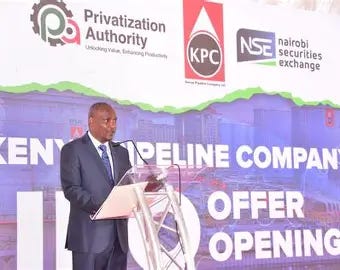
These investments demonstrate how the NSSF is being steered toward tangible assets that provide utility to the nation, but at a cost: the Fund’s assets are no longer just growing for the contributor; they are becoming the primary financing mechanism for the government’s economic agenda. Koros’s task is to manage this transition while maintaining the appearance of a prudent, independent investor—a delicate balancing act as the Fund’s fortune becomes inextricably linked to the success (or failure) of the state’s multi-billion-shilling infrastructure gambles.
The Private Equity Frontier: Scaling the Portfolio through Partnerships
Recognizing that the Fund lacked the internal bandwidth to operate as a direct venture capitalist, Koros pioneered a “partnership-first” model. He repositioned the NSSF as a cornerstone investor in indigenous private equity funds and strategic corporate ventures. This shift serves a dual purpose: it grants the NSSF access to high-growth, non-listed investment opportunities—ranging from energy projects to large-scale agribusiness—while mitigating risk through professional fund managers. By effectively “outsourcing” the technical selection of assets to specialized players while retaining the massive scale of NSSF capital, Koros has transformed the Fund into a catalytic investor, fueling economic growth across sectors while securing higher, risk-adjusted returns for members.
FY2025 Milestones: Achieving a Record 17% Return on Savings
The strategic shift to “Alpha”—the pursuit of excess returns above the market benchmark—yielded undeniable results in FY2025. By shedding the skin of its conservative past, the NSSF generated KES 105 billion in investment returns for the fiscal year. This performance translated directly into a historic 17% interest payout for contributors, a landmark figure that shattered the historical norm of single-digit or low-double-digit declarations. This milestone served as the ultimate proof of concept for the “Koros Model”: it demonstrated that with a disciplined, diversified, and aggressive investment mandate, the NSSF could not only beat inflation but could compete head-to-head with the most successful private money market funds in Kenya. For the retiree, this was the first tangible evidence that the NSSF had shifted from a state-run repository to a genuine wealth-creation vehicle.
IV. Operational Excellence: The 24-Hour Promise
The 2023–2027 Corporate Strategic Plan: A Blueprint for Efficiency
When David Koros launched the 2023–2027 Corporate Strategic Plan, he did not merely present a set of financial projections; he laid out a total overhaul of the NSSF’s operational DNA. Recognizing that the Fund’s historical reputation for lethargy was its greatest liability, Koros embedded “Efficiency” as a core institutional pillar. The strategy serves as a living blueprint, moving the NSSF away from the archaic, paper-based workflows that previously paralyzed claim processing. By setting measurable milestones and holding senior management accountable for service delivery metrics, Koros transformed the strategic plan from a stagnant document into an active driver of organizational change.
Tech-Driven Transformation: Digitization and Records Management
Central to this operational renaissance is an aggressive digitization agenda. For years, the “lost file” was the standard excuse for NSSF’s service failures; Koros replaced this with automated, cloud-based records management systems. By integrating digital platforms—including the utilization of E-Citizen for contributions and the implementation of automated reconciliation systems—the Fund has bridged the gap between manual human error and digital precision. This transition has done more than just clean up the data; it has built a transparent digital audit trail, ensuring that every member’s contribution is accounted for in real-time, thereby reducing the scope for fraud and systemic mismanagement.
Shattering the “Legacy Waiting Time”: From Months to Hours
The most striking manifestation of this operational shift is the NSSF’s commitment to paying retirement benefits within 24 hours of a claim being filed. Historically, retirees could wait up to a year—or in tragic cases, pass away—before accessing their life savings. Koros has challenged this “legacy waiting time” as a moral failure, not just an administrative one. By streamlining the verification process and eliminating the bureaucratic “red tape” that once necessitated multiple in-person visits, he is moving the Fund toward a future where a claim filed on Tuesday is processed and paid out by Wednesday. For the Kenyan worker, this is the ultimate validation of the new NSSF: it is no longer an institution that guards savings from its members, but one that empowers them with the liquidity they have earned, precisely when they need it most.
V. The Trillion-Shilling Vision
Ambitious Targets: Mapping the Path to KES 1 Trillion by 2027
The “Trillion-Shilling” target is not merely an aspirational figure; it is the cornerstone of David Koros’s strategic roadmap for the NSSF. As of 2026, with the Fund’s assets hovering near KES 670–737 billion, Koros has set a clear trajectory to hit the KES 1 trillion mark by June 2027. This growth is being driven by a combination of three factors: the increased mandatory pension contributions following the implementation of the NSSF Act, the compounding effect of double-digit investment returns, and a shift in the Fund’s appetite for larger, capital-intensive projects. Koros has framed this target as a “great leap,” necessitating an aggressive acquisition strategy that moves the Fund away from the incremental growth of the past and toward a scale capable of anchoring Kenya’s long-term economic development.
Risk-Adjusted Diversification: Identifying Real-Sector Opportunities
To reach this valuation, Koros is executing a fundamental shift in portfolio construction. He is moving the NSSF beyond the “safety” of traditional government bonds—which have historically dominated the portfolio—and into the “real sector.” This diversification strategy focuses on:
Infrastructure: Notable examples include the Fund’s 40% stake in the KES 170 billion Rironi–Mau Summit highway, an asset expected to provide consistent, inflation-indexed returns for decades.
Private Equity (PE): Koros has identified PE as a top-tier priority, partnering with firms like Kuramo Capital to gain exposure to unlisted, high-growth companies in financial services, agribusiness, and consumer sectors.
Real Estate: High-yield developments, such as the landmark KES 30 billion twin-tower complex in Nairobi’s CBD, are designed to unlock value from idle assets and provide the long-term rental yields and capital appreciation necessary to support the trillion-shilling goal.
Governance as a Growth Driver: Aligning Contributions with Returns
Koros understands that the sustainability of this growth depends entirely on public trust and corporate governance. By strictly adhering to the Retirement Benefits Authority (RBA) guidelines and enhancing transparency in investment decisions, he is working to ensure that the Fund is seen as a prudent manager of members’ savings rather than a tool for political or bureaucratic excess. This governance-led approach is crucial for “aligning contributions with returns”: it reassures the Federation of Kenya Employers (FKE) and the individual workers that their mandatory deductions are not being “taxed” away but are being actively invested in a diversified portfolio that delivers competitive interest. By professionalizing the investment process, Koros is effectively turning the Fund’s governance into its strongest competitive advantage, ensuring that as the NSSF scales toward a trillion shillings, it does so with the rigor and accountability of a global institutional player.
This video is relevant as it features President Ruto discussing the government’s strategic expectation for the NSSF to reach the KES 1 trillion valuation by 2027, reinforcing the institutional mandate driving David Koros’s strategy.
VI. Cultural and Structural Reform
Changing the Narrative: Distinguishing Savings from Taxes
For decades, the NSSF suffered from a damaging perception problem: many Kenyans viewed their mandatory deductions as a “tax”—an irrecoverable loss—rather than a dedicated investment in their future. David Koros has made the re-education of the contributor a central pillar of his tenure. By championing a policy of aggressive performance communication, he has forced a shift in the national conversation. When a contributor sees a 17% interest return on their statement, the narrative naturally shifts from “deduction” to “wealth accumulation.” Koros uses this transparency to combat the legacy of cynicism, framing every shilling contributed as a building block toward personal financial independence rather than a levy claimed by the state.
Stakeholder Synergy: Collaborating with Employers and Labor Unions
The institutional health of the NSSF depends on a fragile “tripartite” balance: the government, the labor unions, and the private sector employers. Koros has navigated this landscape by fostering active, rather than adversarial, collaboration. By working closely with the Federation of Kenya Employers (FKE) and COTU, he has effectively built a consensus around the necessity of the 2013 NSSF Act. Instead of pushing through reforms as a top-down mandate, he has presented them as a collective bargain—emphasizing that higher, well-managed contributions lead to better social security outcomes, which in turn benefits the entire Kenyan economy. This synergy has been vital in ensuring compliance, as employers now view the NSSF not just as a payroll burden, but as a stable partner in the national retirement ecosystem.
Restoring Dignity: Building a Performance-Oriented Institutional Culture
Perhaps the most difficult task Koros faced was changing the internal culture of an institution long characterized by a “public service” mindset—which, in the NSSF’s history, was often code for lethargy and lack of accountability. Koros has systematically introduced a performance-oriented culture modeled after top-tier private asset managers. By tying institutional KPIs to investment outcomes and customer service speed, he has shifted the staff’s focus from administrative processing to “member satisfaction.” This culture change is about more than just numbers; it is about restoring the dignity of the Kenyan pensioner. When the front-line staff treats a member’s claim as a priority to be resolved in hours rather than a file to be shelved for months, they are effectively restoring the member’s dignity. Koros is building an institution that respects the worker—creating a internal environment where efficiency, integrity, and performance are the new “standard operating procedure.”
VII. The Verdict: The Future of Kenya’s Safety Net
Comparative Analysis: Competing with Private Sector Efficiency
The NSSF’s recent declaration of a 17% interest rate has sent shockwaves through Kenya’s financial sector, effectively challenging the supremacy of private pension schemes and money market funds. By delivering returns that significantly outperform industry averages—often led by private players who have historically hovered between 10% and 13%—the NSSF has shifted the competitive landscape. For the first time, the “state-run” option is no longer seen as a last resort but as a formidable institutional competitor. This forced competition is a win for the Kenyan saver; it compels private pension managers to optimize their own investment strategies and cost structures to remain relevant, ultimately creating a more robust and efficient national retirement ecosystem.
David Koros’s Legacy: Architecting the Retiree’s Peace of Mind
David Koros’s legacy will not be defined by the assets he managed, but by the “institutional trust” he restored. By transitioning the NSSF from a source of perennial anxiety into a reliable pillar of financial security, he has fulfilled the architect’s ultimate mandate: creating a foundation that can hold the weight of a nation’s future. His success in balancing the rigorous demands of the NSSF Act with the high-performance expectations of a modern workforce marks him as a transformative technocrat. He took an institution defined by “lost files” and “missing cash books” and replaced it with a digital-first, high-return, and transparent engine. He proved that public institutions can, with the right leadership, operate with the agility and foresight typically reserved for the private sector.
Final Outlook: Sustaining Long-Term National Prosperity
The path to a KES 1 trillion portfolio is only the beginning. The long-term prosperity of the NSSF—and by extension, the Kenyan worker—rests on the successful integration of real-sector investments, such as infrastructure and private equity, into the country’s broader development agenda. As the Fund matures, its role will evolve from being a mere collector of savings to being the “anchor” of Kenya’s capital markets. With sustained governance, continued digital innovation, and the successful maturation of major projects like the Mau Summit highway and the Kenyatta Avenue twin towers, the NSSF is positioned to become the bedrock of a stable, prosperous Kenya. David Koros has provided the blueprint; the future of the nation’s safety net now depends on the discipline to continue building upon it.
NSSF audit and investment direction
This video is relevant as it highlights the public scrutiny and the Fund’s strategic move toward national infrastructure investments, which are central to Koros’s modernization agenda
VIII. The Trillion-Shilling Vision: Addressing the Real Estate Controversy
The Twin Towers: Balancing Ambition with Market Reality
The KES 30 billion twin-tower project—anchored by a 60-storey skyscraper at the junction of Uhuru Highway and Kenyatta Avenue—is the most ambitious real estate undertaking in the NSSF’s history. Once completed, this landmark will be the tallest structure in East and Central Africa, signaling the Fund’s arrival as a major player in urban development. However, I am fully aware of the skepticism surrounding this project. Critics have rightly pointed out the current paradox in the Nairobi real estate market: a surge in commercial office space supply occurring simultaneously with a decline in traditional occupancy rates due to the rise of hybrid work models.

To address these concerns, we have fundamentally shifted the development’s “DNA.” This is no longer a mono-purpose office block. We have re-engineered the project to feature a dynamic mix of assets:
Diversified Revenue Streams: Beyond office space, the towers will house a luxury business hotel, high-end serviced apartments, and curated retail outlets. This multi-use approach hedges against the volatility of the commercial office market.
Urban Efficiency: We are prioritizing premium, sustainable design that meets the needs of international tenants, effectively moving the project into a “flight-to-quality” category that remains resilient even when the broader market softens.
Addressing Concerns: Transparency in Procurement and Impact
I acknowledge the criticism regarding the appointment of a foreign contractor over local firms. It is a valid concern that touches on the fundamental role of the NSSF in fostering local enterprise. To this, my response is clear: our procurement process is strictly governed by rigorous international standards to ensure that we are delivering the best value for our members’ savings. While the scale and technical complexity of a 60-storey skyscraper necessitated global expertise, my mandate remains committed to local content in the supply chain and labor force wherever possible. We are continuously reviewing our procurement strategies to ensure that national development does not come at the expense of local contractor growth.
Furthermore, we are proactively addressing the environmental and logistical impact of such a massive build. Traffic mitigation, noise control, and sustainable waste management protocols are not afterthoughts; they are integrated into our construction management plan. We are not just building towers; we are building a piece of Nairobi’s future. My goal is to ensure that when the dust settles, this project is remembered not as a cautionary tale of “white elephant” real estate, but as a landmark investment that provides high-yield returns, generates thousands of jobs, and stands as a testament to the NSSF’s ability to drive complex, large-scale national infrastructure.

IX. Cultural and Structural Reform: The Engine of Enhanced Contributions
The Shift to Earnings-Based Savings
The implementation of the NSSF Act, 2013, represents the most significant structural pivot in the Fund’s history. By moving away from the archaic, flat-rate contribution system—which for years was capped at a meager KES 200—we have transitioned to an earnings-based model. Under this new framework, employees contribute 6% of their pensionable earnings, matched shilling-for-shilling by their employers. This shift is not merely administrative; it is an economic necessity. By gradually raising the Lower and Upper Earnings Limits (with the Upper Earnings Limit reaching KES 108,000 in 2026), we are capturing the true value of the Kenyan workforce’s productivity. This scaling is projected to balloon the Fund’s assets toward the KES 1 trillion target by 2027, providing the massive liquidity required to anchor our “real-sector” infrastructure projects.
Navigating the Legal Crossroads
I am acutely aware that this transition has not been without significant friction. The NSSF Act has been the subject of a protracted and high-stakes legal battle, reflecting the genuine anxieties of stakeholders regarding the pace of these reforms. From the Employment and Labour Relations Court’s initial declaration of unconstitutionality to the subsequent appellate interventions, the road to implementation has been arduous.
Most recently, the legal landscape shifted again with a May 2026 Court of Appeal ruling that temporarily stayed the implementation of the Act’s enhanced rates, citing the pending resolution of the substantive appeal. I view these challenges not as roadblocks, but as essential pressure tests for our governance frameworks. They underscore the importance of constitutional compliance and have forced us to engage in deeper, more transparent dialogues with the Federation of Kenya Employers (FKE), COTU, and other industry partners.
Restoring Dignity Through Resilience
Despite these judicial hurdles, our commitment remains unshaken. My office is dedicated to ensuring that we maintain the balance between legal compliance and our fiduciary duty to protect and grow our members’ savings. While the courts deliberate, we continue to refine our systems, ensuring that when the dust settles, our platform is not only legally robust but operationally prepared to handle the surge in contributions. The ultimate goal is to move past the “controversy phase” and demonstrate, through consistent 17% returns and rapid service delivery, that these enhanced contributions are the most powerful tool a Kenyan worker has for securing their dignity in retirement. We are building an institution that works for the member, regardless of the complexity of the legal environment.
