
Welcome to Boardlot Africa, where we pull back the curtain to reveal the untold stories, power dynamics, and strategic maneuvers shaping the boardrooms of Corporate Africa—subscribe for free to join the conversation. Join 1000 other subscribers.
We publish:
Sultans weekly NSE Stock Picks, every Friday at 5pm
Kenya’s Most Consequential Legal, Governance & Labor Disputes
A Series on the 100 Most Influential Kenyan Captains of Industry
The Queens of East Africa Boardrooms
The Silicon Savana Chronicles, every Wednesday at 5.00pm
Sultan’s Farming Diary, every Monday at 5.00pm
In the high-stakes theater of Kenyan capital, few figures have mastered the art of survival quite like Humphrey Kariuki—a man who transformed from a quiet observer in a downtown café into the architect of a pan-African empire that no regulator could dismantle.”
I. The Man at the Green Corner: Origins and the Art of Observation
II. The Charterhouse Storm: The Liquidity Battle & “None of Your Business”
III. The Industrial Pivot: Africa Spirits and the Billionaire’s Gamble
IV. The Resilience of Asset Capital: The Karen & Mount Kenya Strategy
V. The Continental Fortress: Beyond the Kenyan Border
VI. The Global Nomad: The Dubai Command Center & The “Coconut Water” Lifestyle
VII. The Custodian: Conservation as a Legacy
VIII. The Janus Perspective: A Vision for an Industrial Africa
IX. Analysis: The Janus Legacy & The Verdict on Indigenous Capital
The Shadow Side: Regulatory Scrutiny & Operational Realities
The Janus Perspective: A Vision for an Industrial Africa
I. The Man at the Green Corner
Before the Green Corner restaurant became the boardroom for Nairobi’s elite, Humphrey Kariuki occupied a much quieter office. His professional journey began as a clerk at the Central Bank of Kenya. It was here—within the marble halls of the nation’s monetary authority—that Kariuki gained his first real look at the mechanics of capital. While his peers were learning the basics of trade, Kariuki was observing the flow of liquidity and the levers of institutional power. It was this brief but formative stint that allowed him to walk away from public service with more than just a salary; he left with the unique ability to "read the room" of the Kenyan economy before anyone else.
Long before the name Humphrey Kariuki became synonymous with energy conglomerates, pan-African logistics, and the high-stakes legal chambers of the High Court, he was a man in transition. After a foundational stint as a clerk at the Central Bank of Kenya—where he first peered behind the curtain of monetary policy and institutional finance—Kariuki stepped into the volatile, exhilarating world of early 1980s entrepreneurship. His first major foray was the establishment of the Green Corner restaurant, located directly opposite Kencom House in the heart of Nairobi’s Central Business District.
In the Nairobi of the late 80s and 90s, the Green Corner was more than just a place to eat; it was a societal hub. It was the quintessential “third place” for the city’s burgeoning elite—a rare venue where one could conduct a serious business meeting, host a sophisticated dinner, or navigate the delicate social codes of the time. For many, it was the restaurant of choice for a milestone date, a status symbol that signaled you were part of the city’s evolving middle class.
The Aura
If you walked into the Green Corner during its peak, your eyes would eventually drift to a familiar, solitary figure. Humphrey Kariuki was often there, usually seated at a corner table, alone, sipping coffee. He was the quintessential “quiet observer.” While the restaurant buzzed with the frantic energy of deal-makers, journalists, and government officials, Kariuki remained an island of stillness.
He possessed the unnerving composure of a man who was reading the city’s pulse while everyone else was simply reacting to it. He watched the ebb and flow of Nairobi’s power—the fleeting alliances, the shifting trends, and the unwritten rules of the capital—with a detached, singular focus. At the time, the city saw him as a successful restaurateur, a man who had mastered the art of hospitality. Few in the room understood that the quiet man in the corner was not just watching the market; he was calibrating his own entry into it. He was a silent architect in waiting, biding his time before he would eventually reshape the financial landscape in ways that would, decades later, demand the attention of the entire nation.
Humphrey Kariuki business journey
This video features Humphrey Kariuki himself discussing his entrepreneurial path, his ventures into energy and real estate, and his leadership philosophy.
II. The Charterhouse Storm: “None of Your Business”
The Conflict: The Charterhouse Bank saga remains one of the most polarizing episodes in the history of Kenya’s financial markets. At the center of this storm was Humphrey Kariuki, whose association with the bank caught the attention of anti-money laundering authorities. In a move that sent shockwaves through the Nairobi business community, regulators attempted to freeze Sh2 billion held in accounts linked to Kariuki and his interests. When adjusted for inflation, this sum—roughly equivalent to Sh80 billion today—was staggering. It was an amount sufficient to fund the annual budgets of entire state departments, making it a target of intense scrutiny by the state.
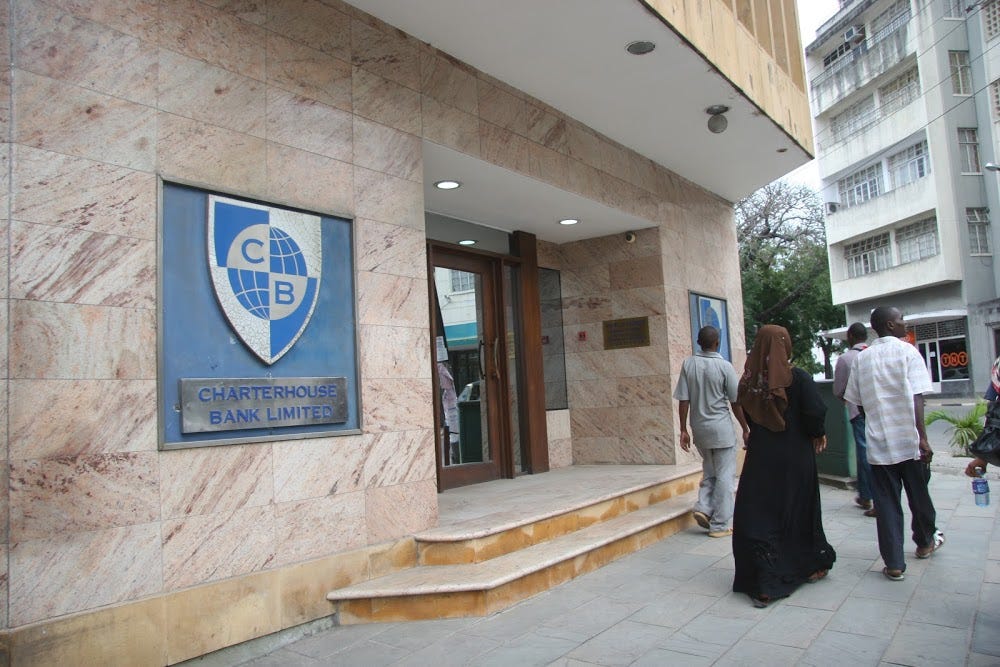
The Standoff What followed was a brittle, high-stakes legal battle that pitted Kariuki against the machinery of the State, then under the purview of Attorney General Amos Wako. The atmosphere was one of mutual distrust, characterized by aggressive regulatory oversight and equally forceful legal pushback. The State sought to frame the transactions within Charterhouse as a “money laundering machine,” while Kariuki’s legal teams systematically challenged the constitutionality of the freezing orders, arguing that the state was overstepping its mandate.
The Defining Moment The climax of this standoff revealed Kariuki’s tactical brilliance. On May 10, 2001, Justice Samuel Oguk delivered a pivotal ruling that lifted the freeze on the funds. In a display of speed that caught the State completely off guard, Kariuki acted with decisive precision. Within hours of the court order, Sh1.6 billion was wired out of the accounts, leaving only a nominal Sh15.6 million behind.
When investigators and state officials scrambled to intervene, they found they had been outmaneuvered. The funds had vanished into the global financial ether before the Attorney General’s office could mount an appeal. It was a masterclass in financial mobility. When pressed by authorities regarding the nature and destination of these funds, Kariuki’s response was characteristically blunt and uncompromising: “It’s none of your business.”
The incident cemented his reputation as an operator who could navigate the most hostile regulatory landscapes. While the Attorney General’s office and the Central Bank sought to tighten the net, Kariuki had already transitioned his capital elsewhere. The state’s legal pursuit eventually hit a dead end, leaving the public to marvel at the efficiency of a man who treated national investigative pressure as a mere operational hurdle.
Following its initial controversies, Charterhouse Bank remained a focal point of systemic financial scrutiny. The institution was eventually placed under statutory management in 2006 and spent over a decade in legal limbo before being officially liquidated in 2021. Throughout its long decline, the bank became synonymous with institutional misconduct, with subsequent investigations and whistleblower reports alleging that it had operated as a conduit for systemic tax evasion, large-scale money laundering, and the movement of illicit proceeds, including those linked to international narcotics trade networks.


III. The Industrial Pivot: Africa Spirits and the Billionaire’s Gamble
The Industrial Ambition Having mastered the art of high-stakes financial maneuvering, Humphrey Kariuki sought to transition from a financier into an industrialist. He consolidated his diverse interests under the Janus Continental Group (JCG), a sprawling conglomerate with interests spanning energy, logistics, and manufacturing. The crown jewel of this expansion was Africa Spirits Limited (ASL), a Thika-based manufacturing plant designed to dominate the regional alcohol market. For Kariuki, this was not merely a venture; it was an attempt to industrialize his capital, shifting from the service-oriented model of his early days to the high-volume, tangible output of heavy manufacturing.
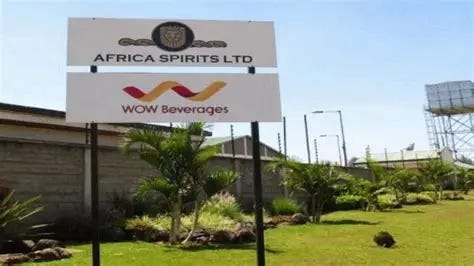
The Raid In early 2019, the industrial project hit a catastrophic wall. In a high-visibility operation that dominated the national news cycle, the Directorate of Criminal Investigations (DCI) conducted a dramatic raid on the Thika factory. The accusations were explosive: Kariuki was alleged to have evaded taxes to the tune of Sh41 billion—a figure that, if substantiated, would have been the largest tax evasion case in Kenya’s history. The narrative constructed by the State was one of industrial-scale illicit trade, and for a time, Kariuki—the man who once sat quietly in the corners of CBD restaurants—found himself the primary target of a State-led onslaught. His manufacturing base was shuttered, and his reputation was placed under intense public siege.
The Legal Redemption What followed was a years-long courtroom drama that tested the limits of both the Kenyan judiciary and the State’s investigative powers. Kariuki’s legal team mounted a relentless defense, challenging the legality of the raids and the veracity of the evidence presented by the Kenya Revenue Authority (KRA).
The tide eventually turned in 2021, when the High Court delivered a landmark ruling that effectively dismantled the State’s case. The court ruled that the entire investigative process, including the raids and the freezing of assets, had been conducted in a manner that was unconstitutional and malicious. The judge found no merit in the astronomical tax evasion claims, characterizing the State’s pursuit as an overreach that bordered on harassment. For Kariuki, the acquittal was more than just a legal victory; it was a total vindication of his business model. By successfully navigating the machinery of the State and emerging unscathed, Kariuki transformed the saga into a testament to his resilience, proving once again that in the high-stakes game of Kenyan capital, he possessed the endurance to outlast even the most aggressive regulatory storms.
IV. The Resilience of Asset Capital
The Compounding Siege While the Africa Spirits saga played out in the headlines, it was not an isolated incident. Kariuki’s battle with the State was multifaceted; his wine importation business had been effectively crippled by the freezing of hundreds of shipping containers by the Kenya Revenue Authority (KRA). He was facing an existential squeeze—a pincer movement intended to starve his liquid capital and destroy his manufacturing base.
The Pivot to Permanence Yet, in the midst of this intense regulatory scrutiny, Kariuki demonstrated the classic billionaire’s pivot: when the government attacks your liquid assets, you must hide your capital in plain sight within the physical earth. While he remained characteristically quiet, Kariuki had been busy fortifying his position through two of the most visible and high-profile acquisitions in East Africa:
The Fairmont Mount Kenya Safari Club: By acquiring this historic, world-renowned sanctuary, Kariuki did more than just buy a hotel; he purchased a piece of Kenyan heritage. It was a strategic move that elevated his status from a mere industrialist to a custodian of national luxury.
The Hub Karen: Perhaps his most audacious play was the development of The Hub. By creating one of Nairobi’s premier shopping and lifestyle destinations, he placed his capital into a “bricks and mortar” fortress that the State could not simply freeze or vanish. It was a masterstroke of diversification—a massive, income-generating asset that anchored his wealth in the soil of Karen, rendering the liquid-capital attacks of his opponents largely toothless.
The Strategy of “Visible Anchors” These investments served as his ultimate defense. By owning the destination where the country’s elite congregate, Kariuki made himself “too big to simply erase.” The Hub and the Mount Kenya Safari Club became his physical insurance policy—visible, indestructible anchors that allowed him to outlast the storm while his competitors were busy chasing him through the courts.
V. The Global Nomad & The “Coconut Water” Lifestyle
The Geography of Wealth
Today, Humphrey Kariuki is no longer bound by the city limits of Nairobi. Through the Janus Continental Group (JCG), he has orchestrated a pan-African footprint that stretches far beyond Kenya’s borders. His investments in the energy sector are particularly ambitious, ranging from massive gas power plants in Nacala, Mozambique, to solar energy projects in Ndola, Zambia. By positioning himself as a provider of critical infrastructure—energy, logistics, and power—he has effectively made his business interests an essential component of the economic growth of the entire continent.
Yet, he balances this industrial might with a high-end hospitality portfolio that includes the crown jewel of Kenyan tourism: the Fairmont Mount Kenya Safari Club. This is not merely a business asset; it is a statement of status. It places him at the intersection of high-stakes corporate power and the refined, exclusive world of global conservation and luxury.
The Lifestyle of the Insulated
If the young man at the Green Corner was defined by his presence, the modern Humphrey Kariuki is defined by his calculated absence. He operates as a global nomad, splitting his time between international hubs, with Dubai serving as a primary command center. This lifestyle is marked by a deliberate, uncompromising standard of living—one often joked about by those in his inner circle, such as his preference for imported, high-end coconut water, a small but telling symbol of a man whose daily routine is curated to the highest global specifications.
His life is characterized by a “velvet curtain” of insulation. Despite his visibility in the energy and conservation sectors, he remains remarkably elusive. He maintains a private office in Dubai—a sanctuary far removed from the headlines and the courtroom dramas of Nairobi—where he can observe the continent’s macro-trends with the same detached focus he once applied to the patrons of the Green Corner.
Kariuki has mastered the art of being everywhere at once, yet nowhere in particular. He has successfully detached his private identity from his public battles, retreating into a world of global standards and high-altitude perspective. He is a billionaire who has outgrown the need for public approval, instead choosing a life of strategic distance, where he manages his vast ecosystem with the precision of a man who knows that in the game of extreme wealth, the greatest luxury is not just what you own, but the ability to remain an enigma.
While his Kenyan assets—The Hub and the Safari Club—served as visible anchors in a volatile regulatory environment, the true engine of Kariuki’s survival lay far beyond the borders of East Africa. He had built a continental fortress that functioned independently of any single government’s agenda
IV. The Continental Fortress: Beyond the Kenyan Border
While his Kenyan assets—The Hub Karen and the Fairmont Mount Kenya Safari Club—serve as visible anchors in a volatile regulatory environment, the true engine of Humphrey Kariuki’s survival lies far beyond the borders of East Africa. He has built a continental fortress through the Janus Continental Group (JCG) that functions independently of any single government’s agenda.
By evolving from a local tycoon into an essential infrastructure partner, Kariuki has tethered his wealth to the survival of the very states that once scrutinized him.
The Janus Continental Group (JCG) Ecosystem
Kariuki’s strategy is built on the “Integrated Energy” model: controlling the supply chain from fuel distribution to power generation and infrastructure construction. His regional operations provide critical stability to developing economies, creating a natural buffer against local political and regulatory pressure.
Energy GL Africa Energy (GLAE)250MW Gas (Mozambique); 105MW Thermal (Zambia); 24MW Solar (Uganda)
Logistics Dalbit Petroleum Fuel supply and distribution across 9+ countries in East & Southern Africa
Engineering BSL Infrastructure Strategic tank farms, power plants, and refinery refurbishments (Zambia, DRC, Tanzania)
The Strategic “Macro-Play”
Infrastructure as Influence: Kariuki does not merely sell commodities; he builds the storage (BSL), distributes the fuel (Dalbit), and generates the power (GLAE) that keeps industries moving in places like the Zambian Copperbelt. He has become a vital stakeholder in the economic survival of his host nations, making it difficult for local authorities to disrupt his operations without inviting significant economic fallout.
Risk Mitigation via Geography: By operating across ten countries, he insulates his portfolio from localized shocks. When the Kenyan revenue authorities launched their 2019 investigations, his regional revenue streams provided the liquidity required to sustain his business and legal defenses.
The Dubai Command Center: Dubai serves as his neutral “high-altitude” base. From this vantage point, he manages cross-border capital flows and international partnerships, allowing him to observe the turbulence of Kenyan headlines with the detachment of an outsider rather than the anxiety of a target.
By diversifying his footprint, Kariuki has successfully moved his capital into a “bricks-and-mortar” fortress that the State cannot easily freeze or vanish. He has moved beyond the reach of local headlines, operating a continental network that effectively guarantees his resilience—proving that for a man of his ambition, the greatest luxury is not just what you own, but the ability to remain a global enigma.
Humphrey Kariuki on African Business
This video provides insight into Humphrey Kariuki’s perspective on doing business across the continent, reinforcing the “Pan-African” strategy that underpins his regional expansion.
V. Analysis: The Janus Legacy
The Enigma of the “Shadow Billionaire”
Humphrey Kariuki is arguably the most consequential—and least understood—figure in the history of Kenya’s private sector. His journey from a junior clerk at the Central Bank to the helm of a pan-African infrastructure empire is not merely a tale of wealth accumulation; it is a case study in the evolution of Kenyan capital. To some, he is a survivor who navigated a system designed to stifle indigenous enterprise; to others, he is the quintessential operator who utilized the “Janus” strategy—using the fluidity of capital to remain one step ahead of the state machinery.
The Judicial Legacy: From Charterhouse to Africa Spirits
Kariuki’s contribution to Kenya’s markets is etched in the jurisprudence he helped create, often inadvertently, through his legal battles:
The Charterhouse Precedent: His early litigation during the Charterhouse Bank saga (2001–2006) exposed the vacuum in Kenya’s anti-money laundering (AML) framework. At the time, the lack of robust AML laws made it nearly impossible for regulators to legally track “dirty” money. His defiance during this period and the subsequent legal maneuvers forced the state to reckon with its own institutional weaknesses, ultimately acting as a catalyst for the modernization of financial regulations and the eventual enactment of comprehensive AML legislation.
The Africa Spirits Jurisprudence: His more recent acquittal in the Africa Spirits tax evasion case (2019–2022) has become a landmark for Kenyan constitutional law. Justice A.C. Mrima’s ruling set a massive precedent: it is constitutionally impermissible for the KRA or police to act as both investigator and prosecutor. By successfully challenging this “double-hatting” by the State, Kariuki effectively secured a “Bill of Rights” for private investors, shielding them from the arbitrary and malicious use of the criminal justice system to settle civil tax disputes.
Politics and Power
Kariuki’s influence extended into the political theater, most notably through his support for President William Ruto’s 2022 campaign. This relationship signaled a shift in the status of “Mount Kenya Capitalists” who had previously been targeted by the Kenyatta-era anti-corruption drive. Following the 2022 election, Kariuki was appointed to the National Investment Council, a body tasked with advising the government on economic growth—a full-circle moment for a man who had spent years fighting the state in court.
The Verdict
Is Humphrey Kariuki a victim or an operator? The answer is likely both. He operated in a system that often viewed indigenous capital with suspicion, but he also mastered the rules of that system to his advantage. With an estimated wealth spanning billions of shillings—anchored by assets like the Fairmont Mount Kenya Safari Club, The Hub Karen, and massive energy projects in Mozambique and Zambia—he has moved beyond the need for public approval.
He stands as the definitive case study of our “100” series: a man who outlasted the state by becoming an indispensable partner to the region’s infrastructure, and who proved that in the game of Kenyan markets, the most enduring asset is not just money, but the ability to survive the storm.
Humphrey Kariuki tax evasion dismissal
This video documents the moment Humphrey Kariuki distanced himself from the controversial tax allegations, highlighting the legal resilience that defined his later career.
VI. The Shadow Side: Regulatory Scrutiny & Operational Realities
While the narrative of Humphrey Kariuki’s resilience is framed by landmark courtroom victories and the construction of “bricks-and-mortar” fortresses, a balanced assessment of his legacy must acknowledge the significant regulatory storms that have trailed his enterprises. His journey, particularly regarding Africa Spirits Limited (ASL), has been characterized by intense scrutiny that paints a more complex picture than a simple story of state overreach.
The Africa Spirits Volatility
The most visible point of friction has been the Thika-based Africa Spirits Limited. In 2019, the facility became the epicenter of a massive enforcement operation led by the DCI and KRA. Authorities alleged that the plant was a hub for large-scale tax evasion—pegged at Sh41 billion—as well as the smuggling of substandard ethanol and the use of counterfeit excise stamps. For the state, these were not just tax disputes; they were concerns regarding consumer safety and illicit trade.
Kariuki has consistently and vehemently denied these allegations. His defense team successfully argued that the state’s pursuit was procedurally flawed, with the High Court eventually quashing the criminal proceedings in 2022 on constitutional grounds—specifically regarding the KRA’s dual role as both investigator and prosecutor. While this resulted in a legal victory, the operational fallout was catastrophic. The factory remained dormant for years, and in June 2025, the company was officially placed under administration. The appointment of an administrator, Peter Kahi of PKF Consulting, signaled a final, desperate effort to restructure the business and manage creditor claims, highlighting the stark gap between the “billionaire” image and the reality of a flagship asset facing potential collapse.
The Complexity of Ownership
A recurring theme in the media coverage of Kariuki’s controversies is the friction between public perception and legal records. While mainstream narratives frequently attribute the direct management and ownership of ASL to him, Kariuki has maintained a consistent public stance: he is a passive investor with no directorial or executive role in the company’s day-to-day operations. He has often pointed to official business registration records (CR12) to clarify his position, urging media houses to retract reports that imply he manages the plant’s operational activities.
Beyond the Headlines: Libel and Legal Warfare
Kariuki’s history is also marked by a defensive legal strategy against what he characterizes as “irresponsible journalism.” Having successfully sued for libel in the past—such as his 2018 victory against the Standard newspaper over allegations linking him to organized crime and trafficking—he has made it clear that he will aggressively challenge any narrative that threatens his reputation. His supporters view this as the necessary protection of an indigenous entrepreneur against sensationalism; critics, however, note that these legal battles often serve to obscure the underlying allegations of financial misconduct that have haunted his businesses for years.
The Verdict on “Resilience”
When we analyze the entirety of his career, the “Janus” strategy becomes clear: it is a high-wire act of constant navigation. Whether it was the Charterhouse Bank saga, the Sh41 billion tax case, or the ongoing administration of his distillery, Kariuki has survived by shifting his capital from vulnerable liquid assets to durable “anchors” like The Hub and the Mount Kenya Wildlife Conservancy.
His story is ultimately one of “legal endurance.” By winning the procedural battles—often on the grounds that the State’s investigative machinery was unconstitutional—he has secured a significant level of protection for his remaining empire. However, the operational decline of his liquor interests reminds us that while an empire may be resilient enough to survive the law, it is not always immune to the market or the long-term impact of sustained regulatory fire.
Africa Spirits Limited under administration
This video documents the legal pressure on Africa Spirits Limited, illustrating the intense regulatory scrutiny that led to the company’s eventual placement under administration.
VII. The Janus Perspective: A Vision for an Industrial Africa
Over the past year (2025–2026), Humphrey Kariuki has emerged as a vocal advocate for a pragmatic, Africa-centric model of development. His commentary—spanning X, global forums like the Monaco Blue Initiative, and his role as the IUCN Patron of Nature—reveals a consistent philosophy: Africa’s prosperity depends on integrating economic infrastructure with community-led conservation.
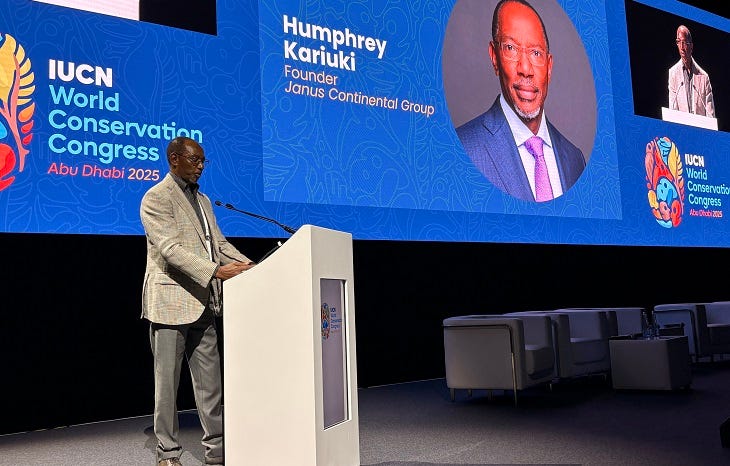
Energy as an Industrial Foundation: Kariuki views reliable, secure energy as non-negotiable for industrial scaling. He challenges the “idealistic” energy transition narrative, advocating instead for a balanced, realistic approach that pairs renewable energy with robust, reliable grid infrastructure to ensure Africa’s industrial ambitions are not stalled by power insecurity.
The Blue Economy & Regenerative Growth: Highlighting the continent’s vast but under-invested ocean resources, he pushes for African-led frameworks that balance commercial growth with environmental stewardship, moving beyond imported models to create value that stays within local communities.
Conservation as a Community Asset: From the rewilding of mountain bongos at the Mount Kenya Wildlife Conservancy to global ocean initiatives, Kariuki consistently frames conservation not as a luxury, but as a community-centric imperative. He argues that sustainability only succeeds when local populations are treated as active custodians and primary beneficiaries.
Sustainable Luxury as a Business Model: By leveraging assets like the Fairmont Mount Kenya Safari Club, he demonstrates how high-end hospitality can serve as a conduit for measurable environmental and social impact, redefining luxury to include ecological restoration and community upliftment.
The Bottom Line: Kariuki’s public output reveals a strategic alignment between his business interests—spanning power, fuel, and hospitality—and his vision for Africa. He positions himself as a practitioner-advocate, championing a future where infrastructure, policy, and community empowerment converge to create lasting, rather than ephemeral, economic value. For the modern observer, his voice provides a roadmap for how indigenous capital can navigate the complexities of the 21st-century global economy while remaining anchored to the realities of the continent.
The Custodian: Conservation as a Legacy
Beyond the balance sheets of the Janus Continental Group, Humphrey Kariuki has anchored his legacy in the soil of Mount Kenya. His involvement with the Mount Kenya Wildlife Conservancy (MKWC)—which he acquired in 2013—is a masterclass in private-sector conservation. As its Patron and principal benefactor, Kariuki has transitioned the conservancy into a global model for ecological restoration.
The Mawingu Sanctuary & The Bongo Recovery: Kariuki’s most audacious achievement is the breeding and rewilding of the critically endangered Mountain Bongo. In 2022, he launched the Mawingu Mountain Bongo Sanctuary, the world’s first dedicated wild sanctuary for the species. His investment provided the infrastructure to bring the population back from the brink of extinction, with over 100 bongos now successfully bred and enrolled in rewilding programs.
A Holistic Restoration: His work extends beyond species recovery to large-scale ecosystem repair. He has overseen the reforestation of over 350 acres with 40,000+ indigenous trees, effectively stabilizing the critical water tower ecosystem that sustains the surrounding communities and the Mount Kenya region’s agricultural viability.
Global Recognition as a Catalyst: In October 2025, Kariuki achieved a historic milestone by becoming the first African IUCN Patron of Nature. This appointment recognized his philosophy that conservation is not a “corporate social responsibility” add-on, but an economic necessity. He argues that healthy ecosystems are the foundation of any supply chain, and that by ignoring nature, businesses ignore the very resources that make their industrial growth possible.
The Integration Model: This work is the missing link in Kariuki’s “Janus” strategy. By aligning the Fairmont Mount Kenya Safari Club—a global luxury asset—with the neighboring conservancy, he creates an integrated ecosystem where high-end tourism directly funds wildlife protection, research, and community-based education.
For Kariuki, conservation is the ultimate long-term investment. By positioning local communities as the primary custodians of this heritage, he has ensured that his work is not just a collection of assets, but a permanent, living foundation for Kenya’s future. It is the final piece of the puzzle: a billionaire who doesn’t just build malls and power plants, but one who actively secures the natural capital upon which the entire continent’s prosperity depends.