

From Viral Scandal to Global Comeback: How the Ndichu Twins Survived the 2021 Ole Sereni Crisis and Rebuilt WapiPay into a Profitable Fintech Powerhouse
In the cutthroat world of African fintech, few stories burn as brightly—or crash as publicly—as that of the Ndichu twins. Eddie and Paul Ndichu were the golden boys of Kenya’s startup scene: identical, ambitious, battle-tested by hardship, and armed with elite banking pedigrees. In August 2021, they raised $2.2 million in a headline-grabbing pre-seed round for WapiPay, their cross-border payments venture. Investors like EchoVC, MSA Capital, and Kepple Africa Ventures bet big on their vision to slash the pain of Africa-Asia remittances. Then, in a single weekend, it all imploded.


The Spark: From Grief to Gateway:
The twins’ journey began far from boardrooms. Born into a disciplined middle-class Kenyan home, they lost their father suddenly at 18 while starting university in Australia. Grief hit like a freight train. With their mother’s support and sheer grit, they worked grueling odd jobs—cleaning malls, factory shifts, security, bartending—to stay in school. Eddie later pursued tech leadership, blockchain, and AI at MIT; Paul honed innovation and strategy at Harvard.
Their corporate climbs were meteoric. Eddie shaped digital channels at Standard Chartered, KCB (behind hits like M-PESA and Fuliza), and OPay. Paul drove transformation at Stanbic, Safaricom, Jumia, and Interswitch. But the real fire lit in Asia. While in China, Eddie tested a rough M-PESA-to-WeChat Pay integration. The transfer worked seamlessly. In that “coin-drop moment,” WapiPay was born—“Wapi” from Swahili for “where,” as in Where in the world do you pay?
Founded in 2019 (Singapore entity, Nairobi HQ), the company attacked the broken cross-border system: slow SWIFT rails, 15-20% FX losses, days of delays. WapiPay promised real-time, transparent payments via local rails like mobile money and banks.
The Hype: Golden Boys on the Rise
By mid-2021, traction was real. They bootstrapped with personal savings, iterated relentlessly, and built APIs that traders loved. Then came the August funding announcement. $2.2 million felt like destiny. The twins were everywhere—celebrated as Kenya’s fintech future, poised to dominate Africa-Asia corridors.
The Fall: One Night at Ole Sereni:
October 2021. A viral video from Nairobi’s Emara Ole Sereni Hotel lobby changed everything. In grainy footage, the twins appeared locked in a chaotic physical altercation with two women (the Murgor sisters). Social media erupted. Hashtags flew. Accusations of assault and GBV flooded timelines. Kenya Online (KOT) was merciless.
Kepple Africa Ventures moved swiftly, publicly relinquishing its entire stake with a zero-tolerance statement. Other investors watched nervously. The WapiPay board acted decisively: Eddie (CEO) and Paul (Executive Director) stepped aside immediately to allow investigations. Interim leadership, led by COO Elizabeth Kariuki, took over. The twins released a statement claiming they were intervening to separate a fight between the women—not instigating violence. The Murgor family pushed back hard, demanding a public apology.
The damage was catastrophic. Reputation shattered. Funding momentum halted. The “invincible” twins became a cautionary tale overnight.
The Rebuild: Silence, Sweat, and Resilience:
The months that followed were brutal. The company operated in survival mode—rebuilding trust, navigating regulatory mazes, and fighting to keep early customers. The twins stayed in the background but never quit. Drawing on their faith, twin brotherhood, and hard-won discipline from Australia’s lean years, they focused on execution over optics.
In 2023, a major milestone: Central Bank of Kenya (CBK) license after years of persistence. Operations stabilized. Then acceleration hit. Post-license, WapiPay exploded—hitting 1 million customers in roughly 18 months, processing ~100,000 transactions daily at peak, and carving out serious share of Kenya’s diaspora remittances.
They expanded products: business collections/payouts, treasury/OTC for large FX, APIs with webhooks, and RemitScore—an AI tool turning remittance history into credit insights for lenders, unlocking financial inclusion. By 2025, profitability returned. A sleek new Westlands HQ opened. The twins stepped back into visible leadership. In March 2026, they gave their first joint media interview—reflective, grounded, emphasizing grit over glory.

The Triumph: North America and Beyond:
June 2026 brought the loudest validation yet. WapiPay secured a FINTRAC Money Services Business (MSB) license in Canada through a new subsidiary. This unlocks FX, money transfers, payments, and even virtual currency services in North America—their first regulated foothold there. Operations now span Africa, Asia (China/India), UK, US, and Caribbean.
Eddie Ndichu, back as CEO, called it a “massive milestone.” From near-death in 2021 to a profitable, globally regulated player processing hundreds of millions in remittances—the comeback was complete.

The New Reality: From Payments to Credit
WapiPay in 2026 is no longer just a payments company. They are a data company. With the launch of RemitScore, they are using their transaction volumes to do what banks have failed to do for decades: generate credit scores for the historically unbanked by treating remittance inflows as reliable income.
They have traded the “hype” of 2021 for the “margin” of 2026. With their recent move into Canada via FINTRAC, they are officially operating on global rails. They are now a profitable enterprise, headquartered in Westlands, with a corporate-grade team that operates with the discipline of a bank and the agility of a startup.
WapiPay Secures FINTRAC MSB License, Enters Canadian Market
WapiPay’s Canadian market entry is a notable milestone for the Kenyan-founded cross-border payments fintech, marking its first regulated operational presence in North America.
Company Background:
WapiPay (Wapi Pay PTE LTD) was founded in 2019 by twin brothers Eddie (Edward) Ndichu (CEO) and Paul Ndichu. It specializes in cross-border payments, remittances, and financial infrastructure, with a core focus on connecting Africa and Asia (especially China) for traders, SMEs, and individuals. Key features of its platform include:
Transparent upfront pricing and real-time rates
Support for local rails (mobile money like M-Pesa, bank transfers, wallets, UPI)
Personal app transfers
Business APIs for batch payouts, approvals, reconciliation, and webhooks
Treasury/OTC services for large FX transactions
Built-in compliance (KYC/KYB, AML screening, sanctions checks)
The company operates with headquarters in Singapore, a strong presence in Nairobi (Kenya), and offices or operations in China and other locations. It has expanded beyond its Africa-Asia roots to include the UK, US, and (recently) the Caribbean via Jamaica approval in April 2026. It also launched a remittance-based credit-scoring tool in February 2026 to help Kenyan banks assess borrowers using diaspora remittance history.
The Canadian Expansion (June 2026)
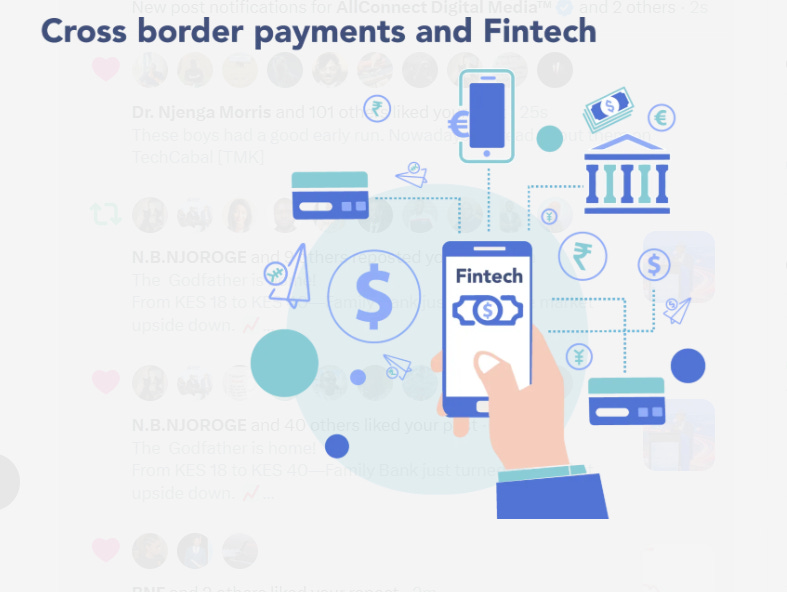
In mid-June 2026 (announced around June 20–22), WapiPay secured a Money Services Business (MSB) registration from FINTRAC (Financial Transactions and Reports Analysis Centre of Canada), Canada’s financial intelligence unit.This was achieved through a newly established Canadian subsidiary. The registration enables WapiPay to legally offer:
Foreign exchange (FX)
Money transfers and remittances
General payment services in Canada
Virtual currency and digital asset transactions (positioning it for crypto-related services under Canada’s regulatory framework)
CEO Edward Ndichu commented: “Securing a footprint in North America through obtaining a Money Services Business licence is a massive milestone for WapiPay. By pairing traditional fiat payment capabilities with virtual currencies and digital assets under a robust Canadian regulatory framework, we are building the next generation of global financial rails.”This represents WapiPay’s first regulated operational hub in North America, extending its network across Africa, Asia, the UK, the Caribbean, and now Canada.
Strategic Rationale and Market Opportunity:
Canada offers a strategic gateway for several reasons:
Growing African diaspora — Significant populations from Kenya, Nigeria, Ghana, Ethiopia, Somalia, and South Africa drive demand for remittances, family support, education payments, and business transfers.
High-cost corridors — Remittances to Sub-Saharan Africa remain expensive (average ~7.7–8% of transaction value), creating room for more efficient players.
Regulatory credibility — FINTRAC MSB registration demonstrates compliance with strict AML/CTF standards (under the PCMLTFA), which can facilitate banking partnerships and build trust.
Crypto angle — Canada has a relatively established framework for virtual assets, allowing WapiPay to combine traditional and digital rails.
Trade and business flows — Supports Africa-Canada commerce alongside remittances.
This move complements WapiPay’s existing US and UK presence and follows its Jamaica expansion (positioned as a Caribbean gateway).
What MSB Registration Means in Practice
FINTRAC registration is not a full banking license but a mandatory compliance registration for entities providing money services (including foreign MSBs/fMSBs serving Canadian clients). It focuses heavily on anti-money laundering, terrorist financing prevention, record-keeping, and reporting obligations.
Key implications:
WapiPay can now legally serve Canadian clients and direct services to them.
It gains a compliance foundation that may help secure local banking relationships.
Operations will initially focus on cross-border flows (e.g., Canada
Africa/Asia) rather than purely domestic Canadian services.
The subsidiary structure allows localized compliance while leveraging the parent company’s technology.
The registry is public and searchable on the FINTRAC website (though the exact subsidiary name may not be widely publicized yet, as the announcement is very recent).
Current Status and Outlook
As of late June 2026, this is still early-stage. WapiPay’s main website (wapipay.com) has not yet prominently featured Canada-specific details, which is typical for recent regulatory wins. Rollout of services will likely follow, starting with supported corridors involving the African diaspora and trade.
Potential benefits:
Lower costs and faster settlements for users
Greater transparency and compliance
New revenue streams from North American clients
Enhanced global credibility for future funding or partnerships
Challenges ahead:
Building local operations, customer acquisition, and banking infrastructure in Canada
Competition from established players (e.g., Wise, Remitly, banks, other fintechs)
Navigating full compliance requirements and any provincial nuances
Scaling while maintaining efficiency across multiple jurisdictions
Broader Context
WapiPay’s journey reflects a common path for ambitious African fintechs: starting with high-friction corridors (Africa-Asia), recovering from setbacks, securing key licenses (e.g., Kenya’s CBK), and methodically expanding into regulated developed markets. The Canada entry strengthens its positioning as a bridge between emerging and developed economies, with a particular emphasis on efficient, tech-driven rails that combine fiat and digital assets.
The Boardlot Takeaway
The viral video at the Ole Sereni hotel didn’t just cause a social media firestorm; it triggered an immediate existential crisis for the firm. Investors fled, the board pushed the founders aside, and the brand became a shorthand for “founder risk.”
In most ecosystems, this is where the story ends. The company folds, the assets are auctioned, and the founders disappear.
But WapiPay did something different: they leaned into regulatory patience. While the founders were sidelined, the machine kept running. They stayed focused on the one thing that actually grants a fintech its license to print money: compliance. By mid-2023, they secured the Holy Grail—a full operating license from the Central Bank of Kenya. It took four years of regulatory lobbying, but it provided the bedrock that made them “too big to ignore” once the dust settled on the personal branding crisis.
The WapiPay story is not a fairy tale. It is an industrial case study on the resilience of infrastructure. They proved that if you solve a big enough pain point—the Africa-Asia trade imbalance—and you survive the inevitable regulatory and reputational firestorms, the market will eventually forget the noise and focus on the utility.

Before founding WapiPay in 2019, both Eddie and Paul Ndichu built significant profiles in the East African financial services and fintech sectors. Their careers were characterized by leadership roles in digital transformation, mobile money, and payments architecture at major institutions.
Eddie Ndichu: Digital Transformation & Mobile Payments
Eddie’s background was deeply rooted in the technical and commercial deployment of banking products. His career path prior to WapiPay included:
Standard Chartered Bank: Led digital payments operations in East Africa (2011–2014).
Chase Bank Kenya: Served as Group Head of Digital Services (2014–2015), focusing on digital channel strategy.
KCB Group: Head of Digital Financial Services & Mobile Payments (2016–2017). During this tenure, he was instrumental in the scaling of major mobile banking products, including KCB-M-PESA and Fuliza.
Opera Software (OPay): Joined as Managing Director and Vice President for Fintech in Africa (2018–2019), where he led the deployment of the OPay platform and OKash micro-lending services across the continent.
Education: Holds a degree in Information Systems and Applied Statistics from Murdoch University (Australia) and pursued postgraduate studies in technology leadership, blockchain, and AI at MIT.
Paul Ndichu: Strategy, Payments & Ecosystem Growth
Paul’s career leaned heavily into executive management, strategy, and business growth within the fintech and payments ecosystem. His key roles included:
Stanbic Bank Kenya: Head of Digital Transformation, where he led efforts to modernize the bank’s digital interface and payment services.
Jumia Group: Appointed Managing Director (2015), overseeing digital commerce operations and the development of the “Easy App” taxi-hailing service.
Safaricom: Served as an advisor on digital and mobile payment strategy.
Cellulant: Held the position of Chief of Business, focusing on payments infrastructure.
Interswitch East Africa: Appointed CEO in 2016, where he led regional business strategy until his departure in 2018 as part of a group-wide operational reorganization.
Education: Graduated from Curtin University (Australia) with a Bachelor of Commerce. He also completed certificates in leadership, innovation, and entrepreneurship from institutions including Harvard and Stanford.
The twins’ decision to start WapiPay was directly informed by these experiences. Having spent their careers “transforming banks” and observing the inefficiencies of old, expensive payment rails while working in both African and Asian markets, they identified a clear gap in the cross-border trade flow between African importers and their suppliers in Asia.
Eddie Ndichu on how WapiPay took a bite of diaspora remittances
This video provides an interview context from the Business Daily where Eddie Ndichu discusses the mechanics of the WapiPay business model and his approach to the fintech market.
Interim Leadership as a Masterclass in Crisis Governance
In the eye of the storm, WapiPay’s board demonstrated a rare maturity that would later prove pivotal to the company’s survival. When the Ndichu twins stepped aside in October 2021, COO Elizabeth Kariuki was swiftly elevated to interim CEO. For several critical months, she steadied the ship — shielding day-to-day operations from the media firestorm, reassuring nervous partners, and keeping the product roadmap alive while regulators and investors watched closely. Her quiet competence bought the company precious time. The episode became a powerful lesson for the African startup ecosystem: even the most brilliant founders are replaceable in moments of crisis, but strong governance and prepared succession plans are not. WapiPay’s ability to install credible interim leadership without imploding showed that true resilience isn’t just about the visionaries at the top — it’s about building institutions that can outlast any single scandal. That institutional backbone, forged in the darkest chapter, ultimately enabled the twins’ return and the company’s spectacular global rebound.
Are you building, investing, or navigating the regulatory maze of Kenyan fintech? At Boardlot, we go beyond the public narrative to analyze the underlying capital structures and strategic pivots that define the winners.
Reach out to us at boardlot.africa@gmail.com for deep-dive research insights and private briefings on the Kenyan market.