
Welcome to Boardlot Africa, where we pull back the curtain to reveal the untold stories, power dynamics, and strategic maneuvers shaping the boardrooms of Corporate Africa—subscribe for free to join the conversation. Join 1000 other subscribers.
We publish:
Sultans weekly NSE Stock Picks, every Friday at 5pm
Kenya’s Most Consequential Legal, Governance & Labor Disputes
A Series on the 100 Most Influential Kenyan Captains of Industry
The Queens of East Africa Boardrooms
The Silicon Savana Chronicles, every Wednesday at 5.00pm
Sultan’s Farming Diary, every Monday at 5.00pm
While the history of Kenya’s financial markets is often written through the lens of political gatekeepers and high-profile IPOs, the true evolution of the industry was orchestrated in the quiet offices of those who prioritized structural innovation over political proximity. This profile explores the journey of James Wangunyu—a man who transitioned from a humble brokerage startup to the helm of a billion-dollar asset management powerhouse.
James Wangunyu – The Architect of Modern Capital
I. Introduction: The Quiet Disruptor
Framing Wangunyu as the “Architect” in contrast to the 1990s “Gatekeepers.”
Summary of his impact: Building an institution that survived where others merely traded.
II. 1995: The Rehani House Genesis
The founding of Standard Stocks with a staff of five and a single phone line.
The philosophy of “Integrity before Ambition”: Challenging the “closed-club” culture of the era.
III. The NSE Chairmanship: Building the Infrastructure
Leadership roles as Vice-Chair and Chair of the NSE.
Driving the automation revolution: Implementing the Central Depository System (CDS) and the Automated Trading System (ATS).
Steering the bourse through the 2008 global financial crisis and local post-election volatility.
IV. The Institutional Pivot: 2003–2018
Acquiring the Investment Banking license and the evolution into Standard Investment Bank (SIB).
Diversification strategy: Moving into corporate finance, fixed income, and Islamic investment banking (SIB Najah).
V. The “Mansa-X” Paradigm Shift
Becoming Kenya’s first licensed Online Forex Trading Money Manager.
Decoupling Kenyan wealth from NSE volatility and the move to global multi-asset strategies.
VI. The Succession Narrative: The Institutionalist’s Dilemma
The risks of dynastic transition versus the global standard of professional management.
The imperative of a meritocratic handover to ensure the institution survives its founder.
VII. Legacy: From Boutique Broker to Financial Powerhouse
Institutionalization: The transition from a “one-man show” to a 250+ employee organization.
Recognition as a National Hero in Entrepreneurship (October 2025).
The “SIB International Centre” in Westlands: Symbolizing the permanence of the institutional model.
VIII. Conclusion: The Architect’s Blueprint
Final assessment: Why Wangunyu’s focus on long-term wealth management successfully outmaneuvered the traditional broker-dealer model.
I. Introduction: The Quiet Disruptor
In the history of the Nairobi Securities Exchange, there are those who thrived on the theatre of the trading floor, and then there is James Wangunyu. While the 1990s and early 2000s were dominated by the “Gatekeepers”—power brokers who leveraged political proximity and scorched-earth tactics to capture deal mandates—Wangunyu played a vastly different game. He did not seek to gatekeep the market; he sought to architect it.
If the “Gatekeepers” viewed the Kenyan financial landscape as a finite kingdom to be divided, Wangunyu viewed it as a foundation to be engineered. As the founder and Managing Director of Standard Investment Bank (SIB), his trajectory offers a masterclass in professional evolution. He started in a cramped office in Rehani House with little more than a five-man team and a philosophy of “Integrity before Ambition,” a radical departure from the “closed-club” culture that defined the era.
This is the story of the Architect who saw beyond the next trade, successfully decoupled Kenyan wealth from the NSE’s volatility, and replaced the “Godfather” model of finance with a blueprint for modern, globalized institutional power.
II. 1995: The Rehani House Genesis
The origins of Standard Investment Bank (SIB) are deceptively humble, a stark contrast to the glass-and-steel dominance it commands today. In 1995, James Wangunyu launched “Standard Stocks” from a modest office in Nairobi’s Rehani House. At the time, the startup consisted of little more than a five-man team, a solitary telephone line, and a vision that was entirely out of step with the prevailing financial climate.
Challenging the “Closed-Club” Culture
In the mid-90s, the Nairobi Securities Exchange was not a meritocracy; it was a guild. The industry was characterized by a “closed-club” culture where deal flow was dictated by established family dynasties and deep-rooted political patronage. Information was hoarded, access was guarded, and the idea of a new entrant gaining traction without “godfather” backing was largely dismissed as an impossibility.
Wangunyu’s arrival disrupted this stagnation. While entrenched players relied on opaque handshakes to facilitate deals, Wangunyu operated under a rigid, almost counter-cultural philosophy: “Integrity before Ambition.”

II. The NSE Chairmanship: Building the Infrastructure
If James Wangunyu’s founding of SIB was his tactical victory, his tenure at the helm of the Nairobi Securities Exchange (NSE) was his strategic mandate. Serving in pivotal roles—first as Vice-Chairman and later as Chairman.
The Automation Revolution
The hallmark of Wangunyu’s leadership was his relentless push to modernize the bourse’s “plumbing.” During his tenure, the NSE was grappling with the inefficiencies of manual, paper-based trading, which rendered the market slow, prone to errors, and opaque.
IV. The Institutional Pivot: 2003–2018
Becoming an Investment Bank
The pivotal shift occurred in 2003, when the firm secured its formal Investment Banking license. This was more than a regulatory upgrade; it was a fundamental shift in identity. Shedding the restrictive “Standard Stocks” moniker, the firm rebranded as Standard Investment Bank (SIB).
With this license, Wangunyu began aggressively expanding SIB’s scope, moving beyond simple share trading into the high-stakes realm of corporate finance. SIB began positioning itself as a lead advisor for rights issues, corporate restructuring, and debt advisory.
The Diversification Strategy: Fixed Income and Beyond
Recognizing that equity markets are inherently volatile, Wangunyu spearheaded a aggressive push into the Fixed Income space. As Kenya’s government bond market matured, SIB became a key market maker, providing liquidity and advisory services to institutional investors, pension funds, and insurance companies. This move provided SIB with a consistent, defensive revenue stream that served as a buffer during equity bear markets.
V. The Talent-Magnet Strategy: Institutionalizing Excellence
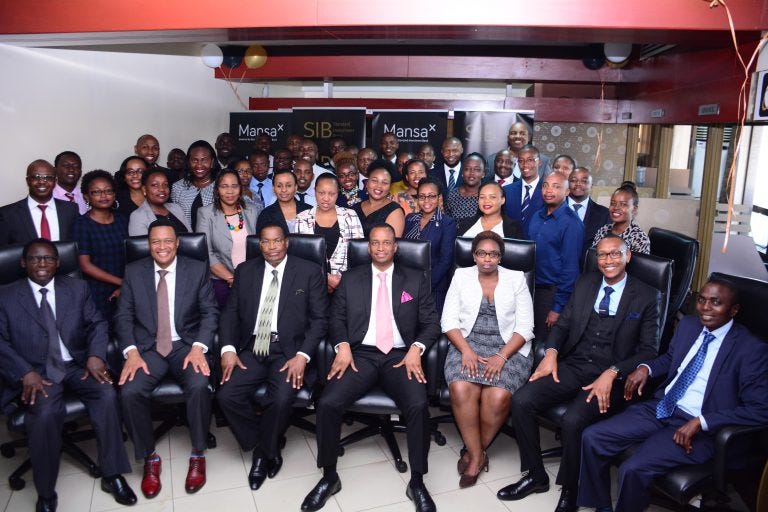
A defining, yet often overlooked, component of James Wangunyu’s success was his ability to break the “Founder’s Monopoly” on intelligence. In an era where most Kenyan brokerage firms functioned as extensions of the founder’s personality—and were thus limited by the founder’s own bandwidth—Wangunyu adopted a radically different approach: he turned SIB into a high-octane talent-magnet.
The “Division of Experts” Model
Wangunyu’s architectural brilliance was in his ability to identify the market’s most formidable minds and grant them the autonomy to act as the “CEOs” of their respective business units. By structuring SIB into specialized divisions—each headed by an industry veteran with a proven track record—he created a “holding company of experts.”
The Regulatory & Advisory Pillars: By bringing in Job Kihumba—the former CEO of the Nairobi Securities Exchange—to lead Corporate Finance, Wangunyu acquired deep institutional memory and regulatory credibility. Kihumba’s presence transformed SIB from a mere trader into an architect of capital structures for the nation’s largest institutions.
The Global Markets Engine: Wangunyu empowered Nahashon Mungai to treat Global Markets as a disciplined bank treasury. Mungai’s leadership of Mansa-X proved that SIB could compete with international giants on quantitative merit, effectively decoupling the firm’s growth from local NSE volatility.
The Fixed Income & Islamic Pillars: To secure the firm’s defensive strength, Wangunyu recruited Laban Gichuki to spearhead the Fixed Income division. Simultaneously, he tapped Abdulahi Adan as the Executive Director for Islamic Investment Banking (SIB Najah), allowing SIB to capture a vital, underserved market segment through values-based finance.
The Strategic Support Core: Wangunyu brought in Pauline Mwau as the Director of Finance (CFO), whose fiscal discipline provided the bedrock for the firm’s expansion. Complementing this, he appointed Eric Musau as the Director of Research, turning SIB’s research desk into a market-moving authority.
The Private Client Focus: Recognizing that high-net-worth individuals required bespoke care, Wangunyu appointed Franklin Kirigia and Boniface Kiundi as Directors of Private Client Services.
Leadership & Governance
To ensure the firm’s long-term sustainability, Wangunyu integrated family stewardship with independent, high-level corporate governance:
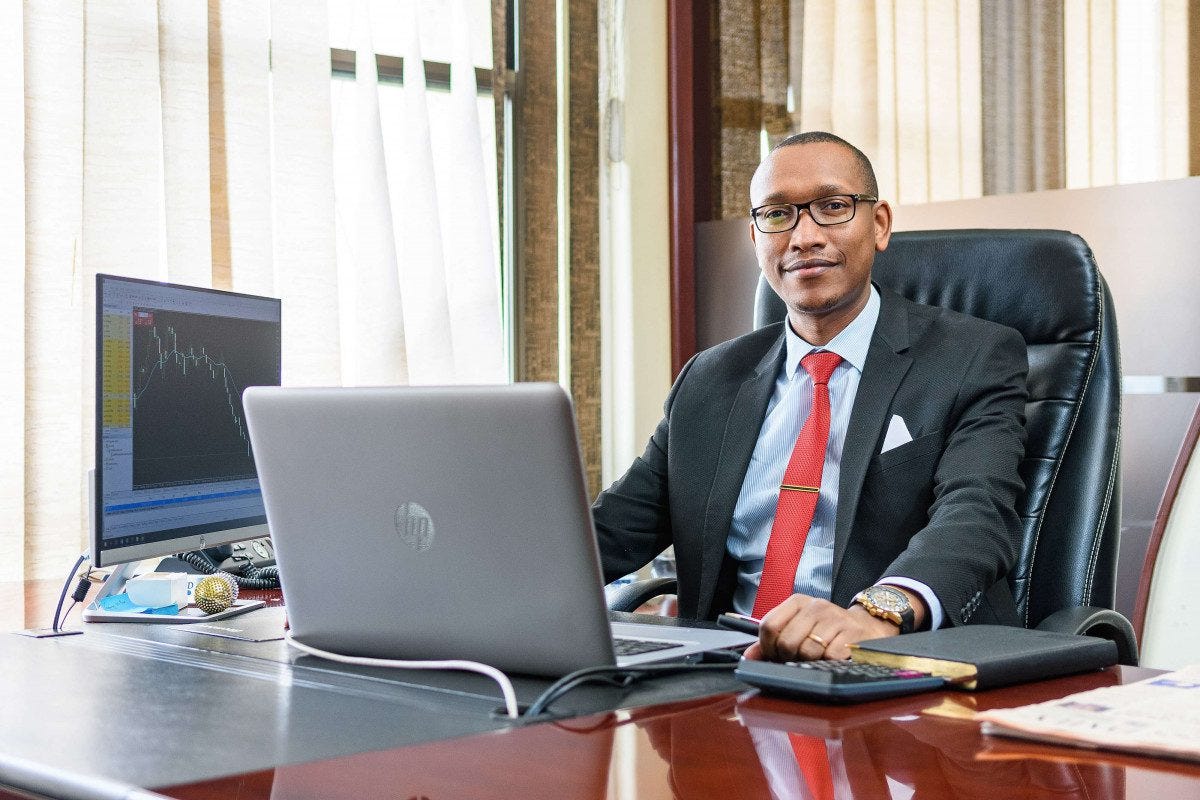
Executive Leadership: The firm’s strategic direction is driven by Executive Directors Donald Wangunyu (who leads key board and strategic initiatives) and Nickay Wangunyu (Director of Strategy & Operations), who has been instrumental in the firm’s digital transformation and the creation of its forex divisions.
Board Oversight: The board is anchored by Samuel Mbugua Njuguna, who serves as Chairman, providing decades of governance expertise. The firm further strengthens its objective oversight through Independent Directors George Okello and George Kamau Kihara, both of whom bring diverse executive experience from the healthcare and financial governance sectors to ensure the institution remains robust and accountable.
From Personal Brand to “Talent Brand”
This model offered SIB three decisive advantages:
Retention of the Best: The market’s top-tier professionals no longer needed to start their own boutiques; they could lead powerful, well-resourced divisions within the SIB ecosystem.
Scalable Fiefdoms: Each director operated with the autonomy of a mini-CEO, decentralizing leadership and ensuring resilience.
Cross-Pollination of Competence: By housing regulatory wisdom, quantitative drive, and specialized technical expertise under one roof, Wangunyu created a unique culture that combined the stability of the “Old Guard” with the innovation of the “New Guard.”
Unlike the “Gatekeeper” firms of the 1990s, where all roads led back to one man, SIB became a meritocratic ecosystem. Wangunyu proved that the most durable legacy is built not on the charisma of the founder, but on the systematic capture and integration of the market’s highest-performing human capital.
VI. The “Mansa-X” Paradigm Shift
The Nairobi Securities Exchange (NSE) remained a relatively shallow, illiquid market prone to extreme cyclicality. To scale SIB into a regional titan, Wangunyu realized he had to decouple the firm’s growth from the performance of the local bourse. This realization led to the birth of Mansa-X, a move that would ultimately cement his reputation as the “Architect” of modern Kenyan finance.

The Birth of a New Asset Class
The launch of the Mansa-X Special Fund was a calculated departure from traditional stockbroking. Wangunyu sought and obtained the first Online Forex Trading Money Manager license in Kenya.
Solving for Volatility: For years, Kenyan investors were captive to the “NSE-or-Nothing” paradigm, with few options to hedge against the depreciation of the Shilling. Mansa-X provided an elegant solution: a managed, multi-asset fund that generates returns regardless of whether the local market is in a bull or bear phase.
A “Manager” vs. A “Broker”: This pivot changed the fundamental nature of SIB’s business. As a broker, SIB made money when clients traded; as a money manager for Mansa-X, SIB generates alpha—delivering consistent, risk-adjusted performance that institutional investors and high-net-worth individuals could not find elsewhere.
Scale, Impact, and Market Dominance
The growth of Mansa-X has been nothing short of transformative for the Kenyan investment landscape. As of February 2026, the Mansa-X Special Funds surpassed the landmark USD 1 billion (approx. KES 130 billion+) in total Assets Under Management (AUM), cementing its position as Kenya’s largest special Collective Investment Scheme (CIS).
The Islamic Frontier: A key pillar of this success is the Mansa-X Shariah Special Fund. Since its inception in October 2023, it has grown rapidly to reach KES 3.8 billion in AUM as of May 2026, establishing itself as the largest regulated Shariah-compliant fund in the country.
Performance as the Engine: The funds’ growth is driven by exceptional risk-adjusted returns. In 2025, the Mansa-X Special Fund (KES) delivered a net return of 20.74%, while the Shariah-compliant variant delivered 17.25%, proving that institutional-grade management can deliver superior results in both conventional and ethical investment categories.
Economic Impact: By providing KES and USD-denominated options, Mansa-X has effectively become a tool for macroeconomic resilience, allowing local capital to hedge against currency fluctuations while gaining exposure to global markets. This has successfully repatriated and retained wealth within a locally-governed, professionally managed structure.
Changing the Market Narrative
With Mansa-X, Wangunyu effectively signaled that the era of the “stockbroker” was closing, and the era of the “fund manager” had begun. While competitors remained anchored to the floor of the NSE, watching their clients struggle with stagnation, Mansa-X is the mechanism that transitioned SIB from a participant in the Kenyan market to an architect of global wealth for the Kenyan investor.
This video features FA Nahashon Mungai, the Executive Director for Global Markets, providing a comprehensive review of the Mansa-X Special Fund’s performance and strategic outlook for 2026.
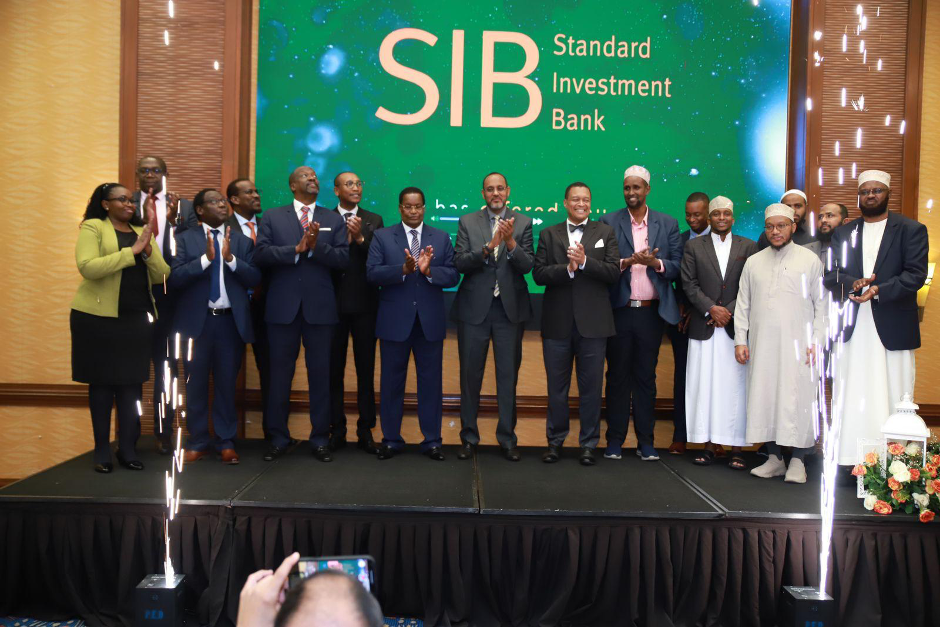
VII. The “Mansa-X” Effect: A Profitability Transformation
Standard Investment Bank’s FY2025 financial performance did not merely reflect growth; it signaled a fundamental decoupling of the firm from the traditional, cyclical nature of Kenyan brokerage. The firm posted a record profit of KES 1.040 billion—a staggering jump from the KES 97.50 million reported in FY2024.
Beyond the Commission Model
The eyebrow-raising surge in profitability was fueled by the structural shift from a volume-based brokerage to a fee-and-performance-based asset manager.
The Alpha Engine: The management fees generated by the Mansa-X fund suite, coupled with the performance-based incentive structures (typically 10% above a set hurdle rate), created a revenue stream that grew in direct correlation with the firm’s success in protecting and growing client wealth.
Diversified Revenue Streams: While brokerage commissions saw a robust increase of 169.8% to KES 338 million, it was the Financial Services Revenue—which surged by over 200% to KES 1.553 billion—that truly propelled the bottom line. This revenue diversity demonstrates that SIB was no longer dependent on the NSE; instead, it captured significant income from multi-asset management, interest income (which grew 10-fold to KES 214.4 million), and bespoke corporate finance advisory.
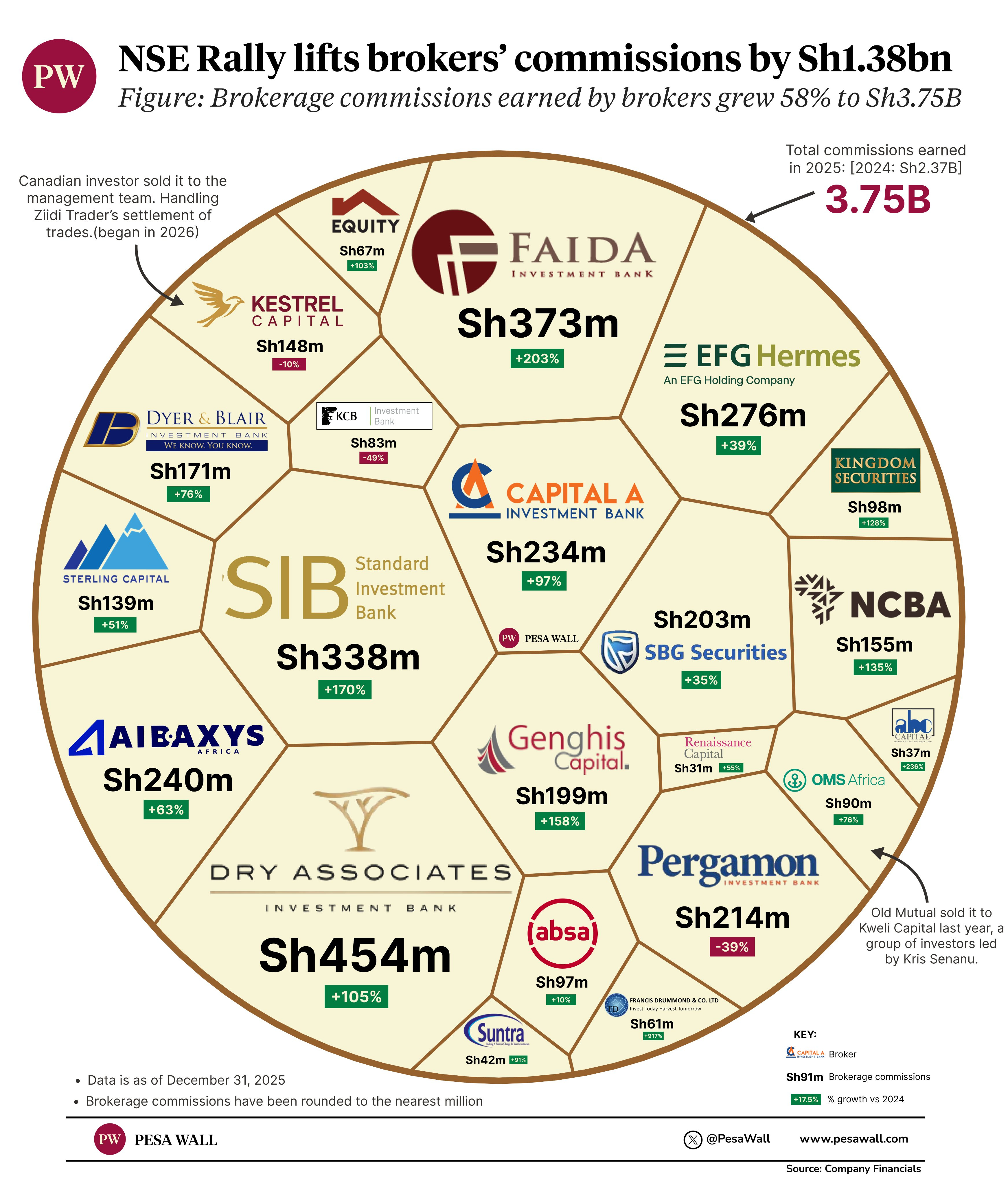
Source: @pesawall
VIII. Mansa X Criticism: Navigating the Critics: Transparency, Fees, and Access
As Mansa-X has scaled to become Kenya’s largest special Collective Investment Scheme, its prominence has inevitably drawn scrutiny. In the digital age, where financial products are dissected on social media and investor forums, SIB has faced a recurring set of questions regarding its entry barriers, cost structure, and disclosure practices. For a firm that prides itself on professionalizing the market, addressing these critiques is part of the “Architect’s” broader mandate of institutional maturity.
The Barrier to Entry: The “Minimum Investment”
A common point of friction is the KES 250,000 minimum investment threshold. Critics argue this excludes a vast segment of the retail market, effectively creating an “elitist” structure.
The Cost-Performance Trade-off
The fund’s fee structure—comprising a 5% annual financial services charge and a 10% performance fee (only on returns exceeding the 25% KES hurdle rate)—has been a frequent subject of online debate.
Disclosure and the “Black Box” Perception
Another critique involves the fund’s level of disclosure regarding specific underlying stock picks and positions. Mansa X the firm provides quarterly fact sheets.
The “Six-Month Lock-in” Clause
The six-month lock-in period is often perceived by retail investors as a restriction on liquidity.
VIA. (Cont’d) The Najah Frontier: Ethical Growth at Scale
If the Mansa-X platform was Wangunyu’s strike at conventional market volatility, the launch and aggressive scaling of SIB Najah was his masterstroke in market inclusion. Wangunyu recognized that a significant segment of the Kenyan and regional investor base was being sidelined by conventional financial models that did not align with their ethical and Shariah-compliant requirements.
The Institutionalization of Ethics
Under the expert leadership of Abdulahi Adan, Executive Director for Islamic Investment Banking, SIB Najah has evolved from a niche product offering into a powerhouse division. Wangunyu’s decision to grant Adan the autonomy to build a specialized, values-based investment bank within the SIB umbrella signaled to the market that ethical finance was not an “alternative” to be relegated to the sidelines—it was a core strategic pillar of the firm.
Innovation Through Compliance
The flagship innovation within this division is the Mansa-X Shariah Fund.
Growth as Validation: The market’s response has been nothing short of explosive. Since its inception in October 2023, the Mansa-X Shariah Fund has surged to become the largest regulated Shariah-compliant fund in Kenya.
The Power of Performance: The growth of SIB Najah is proof that “ethical” does not mean “sub-optimal.” With combined assets under management (AUM) reaching KES 3.8 billion as of May 2026, the division has proven that when professional management meets ethical demand, capital flows with undeniable momentum.
VII. Democratizing Capital: The SME Ecosystem Impact
James Wangunyu’s architectural vision for SIB was never limited to the rarefied atmosphere of the Nairobi Securities Exchange or the boardrooms of blue-chip corporations. He recognized that for an economy to truly thrive, the “plumbing” of finance had to extend to the bedrock of the Kenyan economy: the Small and Medium-sized Enterprises (SMEs).
The RecoSIB Breakthrough
While traditional banks have long viewed SMEs as high-risk entities—often demanding heavy, immovable collateral that most contractors and suppliers simply do not possess—Wangunyu steered SIB toward a more disruptive approach. Through the partnership with Recolte Limited to form RecoSIB, SIB challenged the status quo of trade finance.
RecoSIB represents a radical departure from the “stringent measure” culture that historically stifled SME growth. By offering collateral-free, short-term financing such as LPO financing, contract financing, and invoice discounting, the firm shifted the focus from a company’s fixed assets to the viability of their business flow.
In the Wangunyu ecosystem, no segment is too small to be structured and supported. By providing the working capital necessary to fulfill LPOs and execute contracts, he has ensured that SIB is not just a bank for the wealthy, but an engine for the enterprising. It is the final realization of his mission: building an institution where finance serves people and purpose, transforming the “missing middle” of the Kenyan economy into a driver of national prosperity.
VIII. Legacy: From Boutique Broker to Financial Powerhouse
The true measure of an architect is not in the buildings they start, but in the structures they leave behind to withstand the test of time. For James Wangunyu, the transition of Standard Investment Bank (SIB) from a “one-man show” at Rehani House to a multi-billion dollar financial institution is the ultimate testament to his legacy of institutionalization.
The Institutionalization of Talent
Wangunyu’s most significant achievement may well be the deliberate removal of himself as the “single point of failure.” While many of his peers built firms that were extensions of their own personal brand—and thus vulnerable to their retirement or exit—Wangunyu spent over a decade building a robust corporate machine. By scaling the organization to a team of over 250 professionals, he instilled a culture of research-led decision-making and rigorous governance. He successfully transformed SIB from a personality-driven boutique into a permanent institution, capable of attracting and retaining the best financial talent in the region.
Recognition as a National Hero
By October 2025, Wangunyu’s contribution to the nation was formally codified in the public consciousness. His recognition as a National Hero in Entrepreneurship served as the state’s acknowledgment of his role in transforming the financial sector.
The SIB International Centre: A Landmark of Permanence
Perhaps the most visible symbol of his legacy is the SIB International Centre in Westlands. In a market where financial services firms have historically been “renters” of corporate space—often operating out of leased offices—the construction of this headquarters is a deliberate statement of permanence.
A Statement of Intent: The centre is designed to be more than an office; it is the “nerve center” of a regional powerhouse. It symbolizes that SIB is no longer an aspiring entrant, but a cornerstone of the financial district.
The Blueprint for the Next Decade: By centralizing SIB’s global multi-asset operations, Islamic banking, and corporate advisory teams under one roof, the building physically manifests the “Integrated Financial Services” model Wangunyu pioneered.
IX. The Succession Narrative: The Institutionalist’s Dilemma
As Standard Investment Bank (SIB) enters its fourth decade, it faces the “Founders’ Curse”—the critical juncture where an institution’s long-term survival is tested by the transition from founder-led dominance to sustainable institutional governance. With both Donald Wangunyu and Nickay Wangunyu holding prominent executive roles within the firm, the narrative of succession at SIB has shifted from a question of “who” to a question of “how.”

The Meritocracy vs. Pedigree Debate
The active involvement of the founder’s sons in the executive suite presents a complex strategic narrative. While their presence provides a sense of continuity, it creates a dual-pressure environment. Critics of family-based succession argue that relying on lineage—even when those individuals are technically competent—risks signaling to the market and the firm’s 250+ employees that the path to the top may be influenced by pedigree rather than pure merit.
The Architect’s Final Test
The true test of James Wangunyu’s legacy will be whether he has successfully engineered an institution that functions independently of the family name. By placing his sons in executive roles while simultaneously strengthening the board with independent, seasoned governance professionals, Wangunyu is attempting to build a “hybrid” model.
Background to the Mansa-X product
This video features Nickay Wangunyu discussing the strategic development of the Mansa-X product, illustrating the firm’s commitment to innovation and specialized leadership.

X. Conclusion: The Architect’s Blueprint
The story of James Wangunyu is not merely a biography of a successful financier; it is the definitive account of the modernization of the Kenyan capital markets. If Jimnah Mbaru’s era represented the “Godfather” phase—where market dominance was an exercise in political leverage and gatekeeping—Wangunyu’s trajectory represents the “Architectural” phase: a period defined by technical precision, institutional structure, and the pursuit of global standards.
The Triumph of the “Manager” over the “Broker”
Wangunyu’s ultimate victory lies in his foresight. While his contemporaries remained tethered to the physical and conceptual boundaries of the Nairobi Securities Exchange (NSE), Wangunyu systematically dismantled his reliance on their ecosystem. By aggressively pivoting from a commission-based brokerage into a multi-asset fund manager—most notably through the Mansa-X platform—he achieved what was previously thought impossible: he decoupled Kenyan wealth from the volatility of local equities.
He outmaneuvered the traditional broker-dealer model by recognizing a fundamental truth of the 21st-century economy: the client no longer pays for access; the client pays for performance. By delivering global-standard, risk-adjusted returns, he transformed Standard Investment Bank from a boutique stockbroker into an institutional fortress, capturing billions in AUM while the traditional brokerage model suffered under the weight of local market stagnation.
A Legacy of Permanence
Wangunyu’s legacy is built on three immovable pillars:
Institutionalization: He replaced the “one-man show” model with a team of professionals, ensuring that SIB is defined by its systems, not its founder.
Innovation: From the automation of the NSE to the launch of SIB Najah and Mansa-X, he consistently forced the market to evolve at his pace.
Governance: By prioritizing integrity as a strategic asset, he elevated the standards of corporate conduct, leaving behind a blueprint that forces every other firm to compete on quality rather than connections.
