
Welcome to Boardlot Africa, where we pull back the curtain to reveal the untold stories, power dynamics, and strategic maneuvers shaping the boardrooms of Corporate Africa—subscribe for free to join the conversation. join 1000 other subscribers
The Anatomy of a Kajiado Goat Feedlot: Precision Caprine Economics and Commercial Fattening
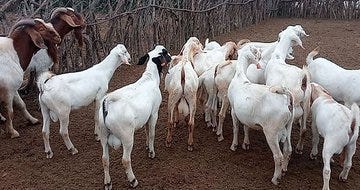
While beef feedlots capture the headlines, an aggressive, high-velocity livestock engine is quietly dominating the arid and semi-arid lands of Kenya: intensive goat feedlotting.
Goats offer a structurally distinct investment profile from cattle. They possess shorter biological cycles, higher prolificacy, lower individual capital requirements, and a hyper-liquid terminal market. In Nairobi alone, the consumption of choma (roasted meat) and specialized caprine cuts drives an insatiable, year-round demand that traditional, extensive pastoral herding can no longer consistently or qualitatively fulfill.
Following our deep dive into the 20-steer beef pilot, we are scaling our agricultural allocation horizontally. This blueprint details the complete operational, architectural, and financial architecture for establishing a 150-head commercial goat feedlot in Kajiado County running on a high-turnover, 90-day finishing cycle.
1. The Strategic Thesis: The Caprine Alpha
The investment thesis for goat feed lotting rests on three macroeconomic pillars:
Rapid Capital Rotation: Unlike cattle finishing which requires substantial working capital locked up for 90 to 120 days per head, goats can be conditioned, finished, and turned over in a tight 60 to 90 days, drastically increasing annual capital velocity.
Insulation from Climate Volatility: Goats are natural browsers, highly resilient to changing weather patterns, and possess exceptional survival metrics in semi-arid zones like Kajiado compared to large ruminants.
Market Premium for Uniformity: Urban butcheries, premium meat boutiques, and export slaughterhouses face a massive deficit in uniform, tender, and hygienically finished goats. They routinely pay a premium for animals that carry an optimal fat-to-muscle ratio over lean, range-depleted bush goats.

2. Genetics & Breed Selection: Sourcing the Meat Machines
Success in a goat feedlot is determined on day one at the sourcing yard. You require animals built for muscle deposition, not walking endurance.
[Lean Range Goats (18-22kg)] ➔ [14-Day Strict Medical Induction] ➔ [60-75 Day Intensive Concentrate TMR] ➔ [Finished Premium Caprine (35-40kg)]
The Breed Matrix
The Prime Choice: The Boer Goat (and high-grade Boer-Galla Crosses). The pure South African Boer is the undisputed king of meat caprine genetics, boasting an exceptional Average Daily Gain (ADG) and a blocky, well-muscled carcass. However, purebreds can be highly sensitive to local ticks and harsh environments. Crossing a pure Boer buck with local Galla (Borana) sisters yields the ultimate commercial feeder: highly adapted, tick-resistant, with incredible compensatory growth.
The Local Engine: The Galla Goat. White, tall, and fast-growing, pure Galla goats sourced from northern Kenya or reliable local breeders are excellent feedlot candidates. They feature superb skeletal frames ready to pack on muscle rapidly when transitioned to a high-energy diet.
What to Avoid: Small East African Goats (SEAG). While incredibly hardy, their genetic frame is small, they plateau early, and their feed conversion efficiency drops drastically past a certain weight, making them structurally unprofitable for intensive feedlotting.

Premier Institutional Sources for Top Caprine Genetics in Kenya
Sourcing uniform batches of 150 lean goats with known health backgrounds requires tapping into established institutional networks rather than relying entirely on erratic bush markets. Top sources include:
Agricultural Development Corporation (ADC) Farms: Specifically their institutional breeding nodes in the Rift Valley and semi-arid stations, which regularly breed and distribute performance-tested Boer and Galla seedstock.
Website: adc.or.ke
Kenya Agricultural & Livestock Research Organisation (KALRO): Stations like KALRO Naivasha and KALRO Katumani maintain highly researched, performance-tracked elite herds of pure Galla and Boer crosses designed for rapid meat conversion.
Website: kalro.org / Digital Portal: keep.kalro.org
Private Stud Breeders (Kajiado/Laikipia Networks): Registered members of the Livestock Breeders Association (LBA) of Kenya offer elite, hardy, and structurally sound commercial breeding bucks and replacement stock.
3. Nutrition & Metabolic Management: Optimizing the 70% Cost Base
Goats have a unique digestive strategy. While cattle are pure grazers, goats are selective browsers. In a confined feedlot setting, however, they must be transitioned to a highly digestible Total Mixed Ration (TMR) to eliminate selective feeding and maximize Feed Conversion Ratios (FCR).
The Caprine Feeding Architecture
We target an Average Daily Gain (ADG) of 150 grams to 250 grams over a finishing window of 60 to 90 days.
The Roughage Base: High-quality lucerne (alfalfa) hay, Boma Rhodes, or high-energy maize silage chopped to a fine particle size (1–2 cm) to prevent sorting.
The Energy & Protein Concentrates: A precise blend of milled maize germ, wheat bran, sunflower or cotton seed cake, molasses for palatability and energy, and specialized caprine mineral premixes.
Metabolic Risk Mitigation: Goats transitioned rapidly from poor range grass to high-grain feedlot rations are highly susceptible to acidosis and enterotoxemia (pulpy kidney disease). The induction protocol must feature a gradual, 10-day step-up feeding program alongside mandatory enterotoxemia vaccinations.

4. Capital Expenditure (CAPEX): Building a High-Density, Functional Yard
For a 150-head goat feedlot, the physical yard must prioritize high hygiene, absolute ventilation, predator-proof security, and moisture control. Goats despise mud and damp conditions; foot rot can decimate an entire batch’s growth curve in a week.
Our infrastructure is designed around an elevated or highly drained semi-intensive slatted system paired with optimized mechanical assets. Here is the exact architectural and deployment breakdown for our KES 2,050,000 setup capital:
A. Sourcing the Land & Constructing the Specialized Caprine Sheds
Sourcing the Land (Lease Logistics): We lease a 3-acre parcel in Kajiado at KES 100,000 annually, preserving our liquid capital for operations.
The Raised/Slatted Feeding Shed Structure: Budgeted at KES 550,000, this is the core structural asset. It features an elevated structure (0.5 to 1 meter off the ground) using local treated timber poles and durable slatted wooden or heavy-duty plastic mesh floors. This design allows manure and urine to fall directly through to the ground below, keeping the goats’ hooves permanently dry, eliminating foot rot, and making manure harvesting seamless. It includes a corrugated iron (mabati) pitched roof with wide overhangs to maximize cross-ventilation while providing absolute protection from rain and wind.
B. High-Density Security Perimeter, Solar Lighting & CCTV Telemetry
Goats are highly vulnerable to localized theft and canine/wildlife predators. At KES 250,000, our security layout is uncompromising:
The Physical Barrier: A 6-foot-high, heavy-gauge chain-link fence reinforced with concrete or treated posts, anchored by a low concrete foot base to prevent predators from digging underneath.
Off-Grid Digital Surveillance: Powered by standalone solar floodlights with built-in motion sensors and an off-grid 4G solar CCTV system streaming real-time alerts to our management team in Nairobi.

C. Mass Feeding & Water Reticulation Infrastructure
Elevated Water Silos & Reticulation (10,000 Liters): Budgeted at KES 180,000, comprising elevated plastic storage tanks linked via HDPE piping to automatic, stainless-steel nipple drinkers or clean, float-valve troughs. Goats are highly sensitive to contaminated water; automated clean water access drives feed intake.
Linear Feed Bunks & Hay Racks: At KES 120,000, we construct externalized linear wooden or PVC feeding troughs along the fence lines of the pens. This allows farmhands to distribute feed from the outside without entering the pens, reducing animal stress and preventing the goats from stepping into or defecating on the high-value TMR.
D. Operational Storage & On-Site Human Resource Housing
The Feed Store and Farmhand Accommodations: Budgeted at KES 180,000, this combined corrugated iron structural unit provides:
The Dry Feed Bank: A well-ventilated, damp-proof, elevated store to stock bagged concentrates, mineral blocks, and molasses drums, protected entirely from rodents and moisture.
The Stockman’s Quarters: Comfortable, on-site housing for our resident handlers, ensuring 24/7 care and operational readiness.
E. Precise Electronic Management & Veterinary Sorting Lines
Digital Scale with Specialized Caprine Crate: Sourced at KES 170,000, featuring a precise digital scale enclosed in a narrow walkthrough metal crate. This allows rapid, stress-free tracking of individual weekly weight gains.
Specialized Goat Handling Crush & Sorting Races: Budgeted at KES 250,000, this is a narrow, custom-built wooden or steel handling race that allows a single farmhand to isolate, ear-tag, drench, vaccinate, or inspect hooves safely and efficiently.
F. Mechanical Feed Processing Equipment
Commercial Hammer Mill & Feed Mixer Combination: Capitalized at KES 250,000, this 3-horsepower electrical/diesel machine evenly crushes grains, maize germ, and dry fodder, blending them uniformly with minerals and molasses to ensure a perfectly balanced, un-sortable TMR batch every time.
Summary of Setup CAPEX
Land Lease (3 Acres/Year): KES 100,000
Elevated Slatted Sheds (150-cap): KES 550,000
Security Chain-link Perimeter & Solar CCTV: KES 250,000
Linear External Feed Bunks & Hay Racks: KES 120,000
Automated Nipple Drinkers & 10kL Tanks: KES 180,000
Specialized Caprine Handling Crush & Race: KES 250,000
Digital Crate Weighing Scale: KES 170,000
Hammer Mill & Feed Mixer Machine: KES 250,000
Mabati Feed Store & Stockman Unit: KES 180,000
TOTAL CAPEX: KES 2,050,000
5. Running the Numbers: Operational Costs & Unit Economics
By structurally optimizing our input supply chain—transitioning from high-margin retail inputs to bulk farm-gate sourcing of agricultural by-products and dry-season forage preservation—the average daily feed cost drops dramatically.
Running an optimized feed matrix brings the feeding cost down to a lean KES 70 per goat per day. Below is the revised financial modeling for a single, 150-head cohort moving through a standard 90-day cycle.
Recurring Operational Costs (Per 90-Day Cycle)
Skilled Labor (2 Stockmen): KES 40,000 / month (KES 120,000 / cycle)
Veterinary Inputs, Induction Vaccines & Eartags: KES 35,000 / cycle
Logistics, County Cess Permits & Sourcing Transport: KES 75,000 / cycle
Utilities & Operational Overheads: KES 20,000 / cycle
The Return Profile (Per Cycle)
Finished goats are sold directly to premium urban butcheries, meat processors, or specialized abattoirs (such as those in Dagoretti or Kiserian) on a carcass dead-weight basis or a premium per-head live contract. Well-conditioned Boer-Galla crosses easily hit a dressing percentage of 50% to 54%.
Revenue per Goat: KES 12,150
Calculation: 36 kg (Exit Live Weight) × 50% (Dressing Percentage) × KES 675/kg (Premium Caprine Carcass Price)
Total Gross Revenue (150 Goats): KES 1,822,500
Calculation: 150 Goats × KES 12,150 per head
Profit and Loss Breakdown
Gross Revenue: KES 1,822,500
Cost of Goods Sold (Sourcing 150 Lean Goats @ ~20kg): KES 900,000
Optimized TMR Feed & Nutritional Inventory: KES 945,000
Calculation: 150 Goats × KES 70/day × 90 Days
Total Operational OPEX + Insurance: KES 291,500
Net Projected Profit (Per 90-Day Cycle): KES 586,000
Annualized ROI under Continuous Interlocked Operation
To run a professional commercial operation, we implement 4 distinct, overlapping cycles per year. By utilizing a secondary induction yard, Batch B is sourced, quarantined, and medically cleared during the final 14 days of Batch A’s finishing phase. This eliminates facility downtime and locks in maximum asset utilization.
Annual Net Profit: KES 2,344,000
Calculation: KES 586,000 (Net Profit per Cycle) × 4 Cycles per Year
True Total Invested Capital Base: KES 3,969,500
Why: Includes Fixed Infrastructure CAPEX (KES 2,050,000) + Cycle Working Capital (KES 1,569,500) + Overlapping Batch Buffer for early sourcing (KES 350,000).
True Annualized ROI: 59.1%
Calculation: (KES 2,344,000 Annual Net Profit ÷ KES 3,969,500 Total Invested Capital Base) × 100
The Macro Asset Comparison Landscape (Based on a KES 1,000,000 Allocation)
Assuming an identical KES 1,000,000 deployment across various asset classes in the Kenyan market:
91-Day Treasury Bills (CBK): ~8.3% Annualized ➔ KES 83,000 cash return.
Top-Tier Money Market Funds (MMFs): ~9.0% - 11.5% Annualized ➔ KES 115,000 upper bound cash return.
Nairobi Securities Exchange Index (NSEI 5-Yr Avg): ~6.8% Annualized ➔ KES 68,000 combined return.
Optimized Kajiado Caprine Feedlot (150-Head Continuous Pilot): 59.1% Annualized ➔ KES 591,000 cash return.
6. Optimization Layer: Vertical Margin Expansion
The Secondary Revenue Stream: Organic Caprine Fertilizer Pelleting
In an intensive 150-head setup, goats produce a massive volume of dry, highly concentrated manure. Because our elevated shed design keeps urine separated, the harvested manure is exceptionally high in nitrogen and potassium.
Instead of letting this accumulate as waste, we route it through our commercial hammer mill, blend it lightly with organic bio-char, and pack it into branded 25 kg bags marketed directly to high-value horticulture and flower farmers in neighboring Naivasha and Mount Kenya regions.
The Yield: 150 goats generate roughly 4,500 kg of clean manure per cycle.
The Alpha: Sold at KES 400 per 25 kg bag, this simple vertical integration manufactures an extra KES 72,000 in pure high-margin revenue per cycle, effectively covering the entire transport and county cess overhead of the farm.
7. Risk Mapping & Insurance Infrastructure
The Strategic Risk Map
Active caprine operations require strict defensive management. The primary risk vectors include:
🦠 PPR and CCPP Outbreaks (40%): Contagious Caprine Pleuropneumonia (CCPP) and Peste des Petits Ruminants (PPR) can wipe out a herd. Mitigation: Absolute zero-tolerance quarantine and mandatory vaccination on day 1 of induction.
📉 Sourcing Price Creep (30%): Middlemen inflating the cost of lean goats. Mitigation: Establishing direct sourcing networks with pastoralist cooperatives in interior Narok and Marsabit.
🌧️ Hoof and Respiratory Pathologies (20%): Caused by damp floors. Mitigation: The elevated slatted floor architecture.
💧 Water Quality Drops (10%): Goats will refuse alkaline or contaminated water, cutting off feed conversion. Mitigation: Inline filtration systems attached to our storage tanks.
Comprehensive Caprine Underwriting
To guarantee the safety of our rolling working capital during the high-risk interlock phase—where up to 300 goats (finished batch + incoming batch) can be on-site simultaneously—we secure a comprehensive agricultural asset policy.
The Interlocked Asset Valuation Base: KES 1,650,000
Annualized Underwriting Premium (4.5% Rate): KES 74,250 per annum
Prorated Cost Per 90-Day Cycle: KES 18,562
This policy explicitly covers losses stemming from lightning strikes, flooding, wild animal predation, transit accidents during sourcing, and state-ordered culls due to transboundary disease outbreaks. Prominent local underwriters providing specialized caprine coverage include CIC Insurance Group, Britam, and APA Insurance.
8. Off-Take Channels & Market Execution
Liquidating 150 finished goats every 90 days requires a diversified off-take strategy to avoid getting squeezed by traditional abattoir brokers.
                  ┌───► Premium Nyama Choma Hubs (Nairobi/Commuter Belts)
                  │
150 Finished ─────┼───► Institutional Cold-Chain Processors (Formal Contracts)
Caprine Batch     │
                  ├───► Premium Urban Butcheries & Estate Meat Boutiques
                  │
                  └───► GCC Export Consolidators (Halal-Certified Channels)
The Off-Take Matrix
1. Premium Nyama Choma Hubs
High-volume entertainment and dining corridors across Nairobi and its outer commuter belts (e.g., Kikuyu, Kitengela, Olepolos, and bypass nodes).
The Mechanics: These hubs demand continuous, predictable volumes of tender, well-marbled meat that cooks uniformly. By offering consistent weekly deliveries of 10–15 goats, we bypass mid-tier brokers and command premium spot-cash prices.
2. Institutional Processors & Export Consolidators
Formal cold-chain operations processing meat for local supermarkets or direct air-freight export to the lucrative Gulf Cooperation Council (GCC) corridor (UAE, Saudi Arabia, Qatar).
The Mechanics: Export channels require strict adherence to international phytosanitary standards and Halal certifications. They buy strictly on a carcass weight basis. While their margins can be slightly lower than direct-to-retail, they offer a massive benefit: infinite scalability. They can absorb 150 animals in a single afternoon, completely clearing the yard and allowing for immediate capital rotation.
3. High-End Estate Butcheries
Specialized meat boutiques located in upper-middle-class residential zones (e.g., Kilimani, Karen, Runda).
The Mechanics: These retailers cater to health-conscious urban consumers looking for premium, lean, and hygienically handled caprine cuts. They pay the highest margins per kilogram but demand impeccable cold-chain compliance and premium carcass presentations.
9. Final Thoughts
The math behind commercial goat feedlots is incredibly compelling. By shifting away from extensive range grazing to a highly structured, data-driven manufacturing model, you convert agricultural risk into a predictable, high-yield asset class.
By pulling down the daily feeding cost to KES 70 through hyper-efficient bulk sourcing, the operational alpha shoots past 59% ROI. The secret lies in strict health monitoring at induction, tight control over feed supply channels via automated mixing, and absolute clarity on your off-take contracts before the first animal enters the crush.
Are you running livestock operations or optimizing short-cycle agricultural capital in East Africa? Let’s analyze the unit economics in the comments below.
Disclaimer: This article is for informational and educational purposes only. It does not constitute formal financial, investment, or veterinary advice. Ruminant yields and market dynamics are subject to biological and economic variables; always conduct your own localized due diligence.
To visually analyze the operational realities and see how high-performing corporate ranches configure their intensive selection programs for finishing animal lines, take a look at this Feedlot Walkthrough at Hurwitz Farming. This deep dive helps map the exact structural discipline required to run high-yield commercial animal processing yards.
Ready to move from concept to execution? Contact us today to develop a comprehensive, investor-ready business plan for a modular goat feedlot facility. Let’s turn your strategic vision into a high-return reality.
About Boardlot Africa Research
Boardlot Africa is a premier financial intelligence, corporate governance, and agribusiness research firm dedicated to unpacking the mechanics of capital, market strategies, and structural shifts across East Africa’s corporate landscape. By bridging the gap between raw market data and actionable intelligence, we deliver deep-dive research, independent corporate analysis, and macroeconomic insights designed for institutional investors, boardrooms, and sharp market observers.
Our coverage spans the full velocity of the regional economy—from analyzing equity trends and governance transitions at the Nairobi Securities Exchange (NSE) to architecting lean, highly optimized commercial agribusiness models.
What We Do
Deep-Dive Publications: Provocative, data-driven essays on corporate histories, market peaks, sector liquidations, and capital allocation strategies.
Agribusiness Intelligence: Technical blueprints, cost-of-production optimization, and logistics modeling for mid-tier and commercial-scale agricultural operations.
Advisory & Consulting: We provide bespoke corporate advisory, asset optimization frameworks, and strategic investment consulting for local operators and the diaspora network seeking to deploy capital efficiently into liquid instruments or high-yield physical ventures.
Get in Touch
Email: boardlot.research@gmail.com
Phone: +254 753 133 901
Substack: Subscribe to Boardlot Africa
X (Twitter): BoardLotSultan
You should not substract the initial investment from the cycles revenue. Its a one off capex to be amotized over time
You got the maths wrong when calculating the cycle's P&L. You are actually making a loss of KES 314,000 per cycle (1822500-(900000+945000+291500))