
Welcome to Boardlot Africa, where we pull back the curtain to reveal the untold stories, power dynamics, and strategic maneuvers shaping the boardrooms of Corporate Africa—subscribe for free to join the conversation. join 1000 other subscribers
We publish Kenya’s Most Consequential Legal, Governance & Labor Disputes and A Series on the 100 Most Influential Kenyan Captains of Industry
How Ken Njoroge’s “local-first” vision turned structural friction into a billion-dollar fintech empire, providing the ultimate guide for the next generation of African founders.
The Architect of Africa’s Digital Rails: Ken Njoroge’s Philosophy of Scale
In 2002, inside a Nairobi café, two entrepreneurs—Ken Njoroge and Bolaji Akinboro—sketched a business plan on a paper serviette. At the time, the scope was modest: selling ringtones and music through mobile carrier networks. Yet, that dinner-meeting would eventually birth more than a mobile-content venture; it ignited the ambition to build the very “plumbing” of the African digital economy.
Ken Njoroge emerged as the architect of this shift, realizing that for Africa to truly leapfrog into a modern digital era, the continent did not need more fragmented mobile services, but rather unified, reliable payment rails that could connect banks, telcos, and merchants across borders. He transitioned from a software developer at 3Mice to the visionary founder of Cellulant, building an infrastructure that now powers transactions in over 35 markets.
Today, the man who engineered the hyper-kinetic, billion-dollar machinery of African fintech presents a striking duality. As captured in the image of his quiet home in Lavington, Nairobi, on July 24, 2025, Njoroge is a figure of profound reflection. Far from the frantic pace of the boardroom, he is often found in his garden under an elegant gazebo, engaging in a “dense and thoughtful anthropological diagnosis of the world”. It is a provocative juxtaposition: the architect of Africa’s high-speed payment infrastructure is, at his core, a philosopher who posits that while our instruments of commerce have fundamentally changed, the essence of human nature remains constant. Njoroge’s legacy is not merely the code or the capital he raised, but his ability to bridge that human constancy with the complex, evolving realities of African markets.
II. The Pivot: From Ringtones to Rails
The journey from a café napkin to a continental payments giant was neither linear nor preordained; it was a process of relentless adaptation through systemic friction. Before co-founding Cellulant in 2003, Njoroge honed his expertise at 3Mice Interactive Media, a digital agency he led through the early years of the internet in East Africa, which was eventually acquired by Africa Online. This period served as his “laboratory,” providing essential hands-on experience in managing teams, product development, and navigating corporate technology services across multiple markets.
The initial business model, however, hit a wall of operational reality. As co-founder Bolaji Akinboro admitted, the pair initially set out to sell music, news, and ringtones through mobile carrier networks. This B2C focus quickly exposed the “structural fragility” of the continent’s digital economy. As they rolled out these services, they faced persistent and debilitating hurdles:
Inefficient Billing Systems: The billing systems managed by mobile carriers were prohibitively expensive and fundamentally unreliable for the scale Njoroge envisioned.
Fragmented Ecosystems: Africa’s payments landscape was highly decentralized, with separate, incompatible networks for mobile money, bank transfers, and cards in almost every country.
Institutional Skepticism: When Njoroge attempted to court the financial sector, banks were openly dismissive, repeatedly rebuffing him by asking, “Guys, get serious, who on earth would trust a financial transaction made from their phones?”.
Operational Friction: Merchants were trapped in a cycle of managing multiple devices, logins, and manual reconciliation processes for each provider, which inevitably led to lost revenue, errors, and severe administrative delays.

This friction served as the crucible for Njoroge’s strategic evolution. He realized that the real market opportunity was not in selling content, but in building the “plumbing”—a unified, API-first infrastructure that could allow banks, mobile-money operators, and merchants to speak the same language. The success of M-Pesa by the end of 2007 eventually settled the argument, proving that mobile payments could scale. This transition—from a “content-delivery” startup to a “payment-infrastructure” company—marked Njoroge’s maturation into a market shaper. He stopped trying to be the merchant and started building the network that allowed all merchants to survive, shifting his focus from solving a “content problem” to dismantling the “structural bottlenecks” of the entire continent.
III. The Fundraising Struggle: A Lesson in Resilience
The narrative of Cellulant’s growth is often characterized by its landmark $47.5 million Series C round, yet this success obscures the reality of a decade-long climb through an environment that initially offered no real venture capital for African startups. For Ken Njoroge, the fundraising journey was not merely a financial task; it was a grueling test of conviction and persistence.
The Early Wilderness Years
When Cellulant was in its infancy, the concept of venture capital in Kenya or across the African continent was effectively non-existent. Njoroge and his co-founder, Bolaji Akinboro, relied on the “friends and family” model to secure their initial chance at viability. During these formative stages, the company operated on a lean budget—famously starting with just $3,000—and had to bootstrap its way toward credibility.

Selling the “Dream”
The most intense period of fundraising occurred between 2014 and 2018, a phase Njoroge described as needing “dreamers” with “fierce ambition”. He spent significant time on the road, traveling worldwide to pitch an audacious vision: building financial technology for an entire continent with the goal of reaching a billion-dollar valuation.
This phase was defined by several key hurdles:
Persistent Rejection: Investors were often skeptical of the scalability of African mobile-based payments, forcing Njoroge to constantly “sell the dream” in the face of indifference.
The Credibility Gap: Before reaching the scale of 2018, Cellulant operated largely “below the radar” as a backend technical solutions provider, making it difficult to capture the attention of high-profile global investors.
Proof of Concept: Njoroge had to prove that a business could achieve at least 40% annual growth—his benchmark for a healthy company—while simultaneously navigating the lack of institutional funding frameworks.
The Series C Turning Point
The eventual success of the 2018 Series C round, led by TPG Growth’s The Rise Fund, represented a monumental shift. It was the largest fintech funding round in Africa at the time, but it only came after years of bootstrapping and incremental institutional raises, such as the $1.5 million Series A in 2011 and the $5.5 million Series B in 2014.
This record-breaking raise validated Njoroge’s long-term strategy, but it also brought the “cost of growth” into sharper focus—new investors, new expectations, and the increased pressure to scale a business that was no longer just a startup, but a systemic player in the African economy. For Njoroge, the fundraising history is a testament to the “leaps of faith” required to transform an idea sketched on a serviette into a continental payments backbone.
IV. The “Connective Tissue” Impact: Beyond the App
By 2019, Njoroge’s vision had matured from a loosely connected suite of mobile services into a unified, enterprise-grade architecture. This was the era of “Tingg,” a rebranding that signified Cellulant’s evolution into a payments “super-app” designed to act as the primary interface for bill payments, merchant collections, and cross-border settlements.

The Technical Legacy: Building the Pipes
Njoroge understood early on that the true value of fintech in Africa was not in consumer-facing wallets—which were often cluttered and difficult to scale—but in the “pipes” underneath. His approach was defined by:
API-First Architecture: By building a robust, unified API, Njoroge created a single integration point that allowed businesses to process transactions across more than 370 payment methods.
Sectoral Diversification: He steered the platform to support high-volume industries such as airlines, telecoms, ride-hailing services, and utility companies, ensuring that Cellulant became the backend infrastructure for critical economic activity.
Automated Reconciliation: Addressing a major pain point for African merchants, he introduced automated tools that allowed businesses to manage thousands of daily transactions without the error-prone, manual back-office work that had previously hampered growth.

The Legacy of Litigation: A Retrospective on Kenya’s Most Consequential Governance & Labor Disputes
The “Agrikore” Impact: Do Good, Do Well
Perhaps the most potent example of Njoroge’s ambition was the Agrikore project, which utilized blockchain and digital payments to digitize fertilizer subsidies for smallholder farmers. This initiative represented the “do good, do well” philosophy that Njoroge championed. It was more than a technical deployment; it was a mechanism to deliver dignity and financial access to a demographic that had been historically invisible to traditional banking systems.
A Systemic Moat
This infrastructure became Njoroge’s ultimate competitive moat. While competitors focused on user acquisition through expensive marketing, Njoroge focused on institutional integration—embedding Cellulant so deeply into the financial fabric of 35 African markets that it became an indispensable utility. By 2025, the platform was processing an estimated 20 million transactions monthly, valued at approximately US$1 billion.
V. The Mentor & The Ecosystem Builder: The “Cellulant 3.0” Era
In 2021, Njoroge orchestrated a definitive leadership transition, stepping down from the CEO role after 18 years to usher in what the company termed “Cellulant 3.0”. This move was not an exit, but a strategic evolution—shifting his focus from the daily operational grind of a single entity to the cultivation of the broader African digital landscape.

The Shift to Angel Investing
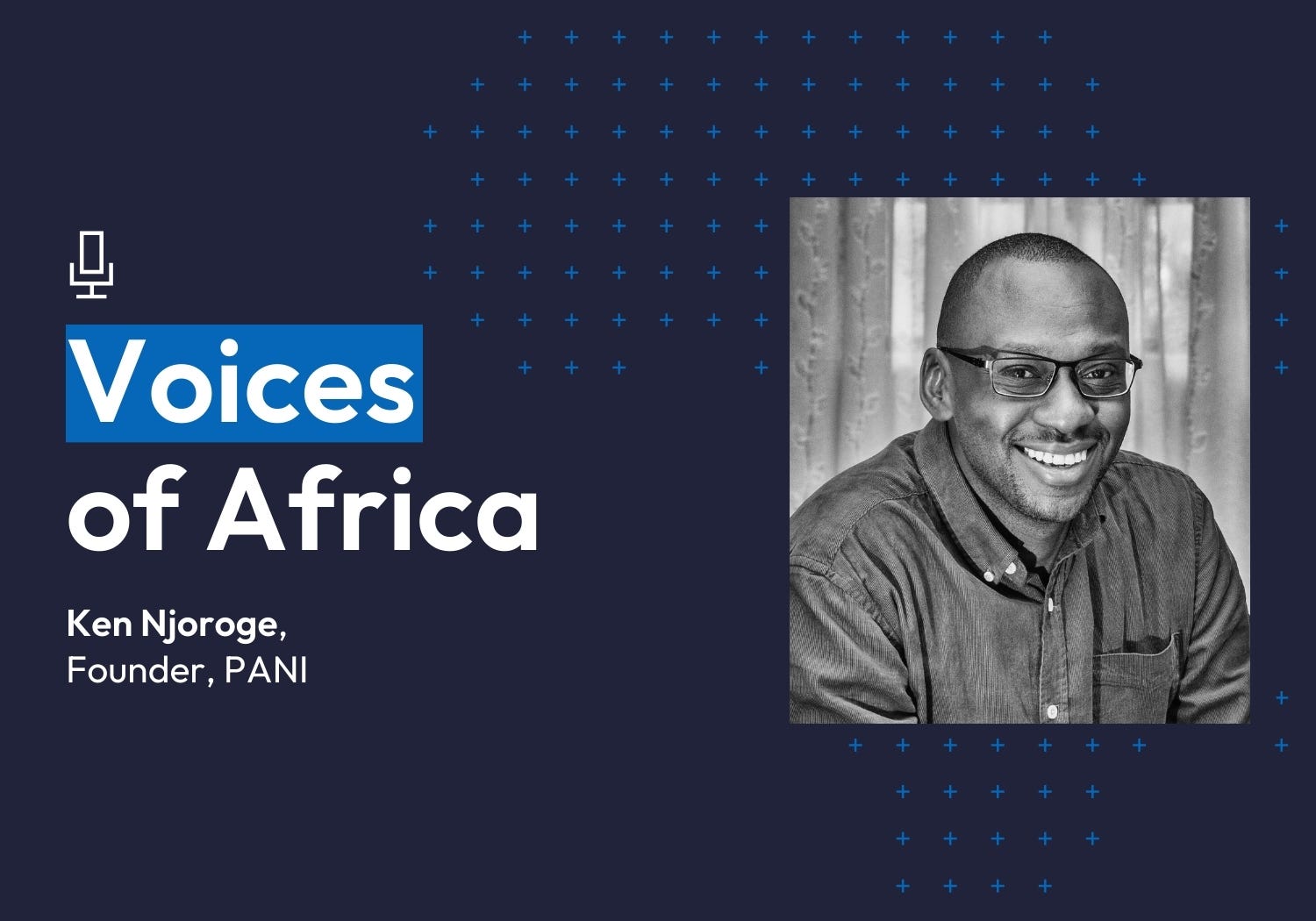
Following his departure from Cellulant, Ken Njoroge co-founded Pany, a boutique investment firm and syndicate designed to provide angel capital and hands-on strategic guidance to the next generation of tech entrepreneurs in Africa. Born out of Njoroge’s own experiences with the isolation and expensive operational mistakes of building early tech startups on the continent, Pany serves as a highly involved partner rather than a passive investor. Operating with a strict selection model, the firm evaluates companies once they establish product-market fit and approach a $1 million run rate, explicitly screening founders for critical traits like grit, coachability, and the willingness to hire above themselves. Pany specializes across ten digital economy sub-sectors—including fintech, agtech, e-commerce, and e-logistics—with the overarching goal of anchoring more African capital into these ventures and scaling a curated portfolio from early stages to $100 million in revenue within seven to ten years.
You can watch the full interview detailing this venture on YouTube: S02: Entrepreneurship and innovation in Africa with Ken Njoroge.
Having spent nearly two decades as an “architect of infrastructure,” Njoroge began leveraging his expertise and capital to nurture the next generation of founders. His transition into angel investing is driven by a desire to “replicate his DNA”—instilling the same lessons of resilience, infrastructure-first thinking, and market-led innovation in emerging ventures.
His portfolio reflects a strategic bet on companies that, much like early-stage Cellulant, are attempting to solve fundamental, unglamorous friction points in African commerce:
Targeting “Structural Bottlenecks”: Njoroge has directed capital toward ventures like Leta, chpter, and MarketForce, all of which are focused on digitizing fragmented supply chains and retail operations.
Beyond the Capital: As an investor, he provides more than just funds; he acts as a mentor, guiding founders through the “wilderness years” of fundraising and institutional scaling—a challenge he understands intimately from his own decade-long struggle.
The “Coaching” Philosophy
This phase of his career reveals a deeper aspect of his “philosopher-king” persona. By stepping away from the spotlight of the CEO role, Njoroge has assumed the mantle of an ecosystem builder. He emphasizes that the “next 100 leaders” who will shape African markets need not be carbon copies of his own journey, but must share his fundamental commitment to solving real-world, local problems.
For Njoroge, the transition to angel investing serves as a closing loop on his original ambition: to prove that world-class systems can be built locally. By grooming the next cohort of entrepreneurs, he ensures that the “plumbing” he helped install across 35 countries will continue to be maintained and expanded by a new generation, effectively cementing his legacy as a foundational figure in African tech.
VI. Conclusion: The “Local-First” Icon
Ken Njoroge’s journey from a 2002 serviette sketch to the architect of a billion-dollar pan-African payment infrastructure is more than a success story; it is a blueprint for the next 100 leaders shaping the continent’s markets. He succeeded not by imitating the models of Silicon Valley or relying on external patronage, but by treating the continent’s structural inefficiencies—the fragmented payment networks and the lack of financial trust—as a mandate for innovation.
As he navigates his “Cellulant 3.0” era, Njoroge stands as a rare figure in the African tech ecosystem: a founder who successfully transitioned from the frantic, high-stakes role of CEO to an introspective mentor and ecosystem builder. His move into angel investing is a deliberate effort to replicate his “infrastructure-first” DNA in the next generation of founders.
Ultimately, Njoroge’s legacy is defined by a philosophical duality. He is the man who mastered the “hyper-kinetic” mechanics of fintech, yet he remains an anthropological observer who grounds his work in the belief that while our instruments of commerce evolve, human nature remains constant. By bridging this human constancy with world-class digital systems, he has proven that African markets can be shaped by local visionaries who do not just build companies, but build the very foundations upon which the continent’s digital dignity rests. He remains, in every sense, the architect of Africa’s invisible infrastructure—a foundational icon for the next century of African market leaders.
Cellulant after Ken Njoroge
Following the departure of co-founder and long-serving CEO Ken Njoroge (who announced his exit in January 2021 and officially transitioned out in June 2021), Cellulant entered a intense multi-year period of restructuring.
Faced with a tightening global funding market and internal shifts, the company transformed from a venture-backed startup chasing aggressive expansion into a leaner, product-focused, and profitable pan-African enterprise.
2021: Leadership Handover & The “Cellulant 3.0” Vision
January 2021: Co-founder and CEO Ken Njoroge announces his decision to step down to hand the reins over to an “enterprise runner.” Concurrently, Akshay Grover joins the company as Chief Financial Officer (CFO).
May 2021: Following the departure of co-founder Bolaji Akinboro, Akshay Grover is appointed Acting CEO (later confirmed as permanent CEO) to lead Cellulant into its “Cellulant 3.0” phase—shifting focus toward digital banking, B2B payments, and regional expansion.
2023: Financial Tightening & Headcount Restructuring
After plans for a $100 million Series D funding round were shelved due to a harsh macroeconomic environment, Cellulant initiated strict cost-cutting measures:
Early 2023 (First Wave): Cellulant lays off 27 employees to begin streamlining operations.
August 2023 (Second Wave): The company reduces its headcount by 20%. It begins transitioning toward a “leaner, product-led business model” to boost efficiency across its operating markets.
December 2023 (Third Wave & Reorganization): Cellulant quietly carries out another round of staff and senior executive departures. Concurrently, it consolidates its entire business into three core business units: Banking, Collections, and Payouts.
2024: CEO Exit, Pivot to Profitability, and New Leadership
January 2024: CEO Akshay Grover abruptly resigns to “focus on personal matters.” Peter O’Toole (who joined as Group CFO in June 2023) is appointed Acting CEO.
March 2024: Cellulant achieves overall business profitability. This marks a major turning point, proving that the aggressive 2023 restructuring succeeded in shifting the firm from VC dependency to self-sustainability.
July 2024: Peter O’Toole is officially confirmed as the permanent Chief Executive Officer (CEO) of Cellulant.
2025 – 2026: Executive Rebuild & Scaling Growth
With profitability secured, the company spent late 2025 and early 2026 rebuilding a high-caliber leadership team:
December 2025: Freddie Oduro is appointed as the Country Manager for Ghana to drive localized enterprise merchant growth.
February 2026: Long-time technology leader Michael Muriuki is promoted to Chief Product & Technology Officer (CPTO), combining product and technology engineering into one unified division.
March 2026: Cellulant completes its executive overhaul by appointing Darren Makarem (former Global CFO of Agoda and regional CFO at Binance) as its new Chief Financial Officer (CFO).
April 2026: Anthony Hernandez is brought on board as Chief Operating Officer (COO) to streamline day-to-day pan-African operations.
Summary of the Restructuring Impact:
Cellulant’s post-founder transition was highly turbulent, characterized by three distinct rounds of layoffs in 2023 and the departure of Ken Njoroge’s handpicked successor. However, by consolidating its product lines and installing a seasoned corporate executive team under Peter O’Toole, Cellulant successfully emerged as a profitable entity processing over 4.5 million daily transactions across Africa.
About Boardlot Africa Research
Boardlot Africa is a premier financial intelligence and corporate governance publication dedicated to unpacking the mechanics of capital, market strategies, and structural shifts across East Africa’s corporate landscape. By bridging the gap between raw economic data and actionable market intelligence, we deliver deep-dive research, independent corporate analysis, and policy insights designed for institutional investors, boardrooms, and sharp market observers.
Get in Touch
Email: boardlot.research@gmail.com
Phone: +254 753 133 901
Substack: Subscribe to Boardlot Africa
X (Twitter): BoardLotSultan