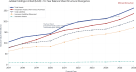

A deep dive into the 1960–2024 chronology of Kenya’s ultimate value investor, and why retail panic is his ultimate buying signal.
The Patel Blueprint: Decoding the NSE’s Ultimate Value Investing Playbook
For long-term investors looking at the Nairobi Securities Exchange (NSE), there is noisy speculation, and then there is blueprint wealth creation. If you want to understand how real wealth is compounded on the local exchange, look no further than the legendary playbook of billionaire investor Baloobhai Patel.
While others chase volatile day-trading gains, the “Patel Approach” has quietly built one of the most resilient and high-yielding private portfolios in East Africa.
The Anatomy of a KSh 10 Billion Portfolio Patel’s style is the opposite of retail FOMO. No over-diversification. No speculative punts. Just massive, concentrated bets on deeply moated, cash-generating businesses — primarily in tier-1 banking, manufacturing, and industrial gases. He buys quality and holds for decades. When the market panics, he buys more.
Here is his visible core portfolio (reportable blocks):
Here is the breakdown of Baloobhai Patel’s visible core NSE holdings, including the total portfolio value, as of May 2026:
Carbacid Investments Plc (CARB): Holds approximately 127,250,000 shares, representing a 49.90% ownership stake, with an estimated position value of KSh 3,766,600,000.
Co-operative Bank of Kenya (COOP): Holds 100,000,000 shares, representing a 1.70% ownership stake, with an estimated position value of KSh 3,180,000,000.
Absa Bank Kenya Plc (ABSA): Holds 93,400,000 shares, representing a 1.72% ownership stake, with an estimated position value of KSh 2,755,300,000.
Sanlam Kenya Plc (SLAM): Holds approximately 29,200,000 shares, representing a 20.30% ownership stake, with an estimated position value of KSh 243,528,000.
Total Visible Core Portfolio Value: The combined value of these reportable top-10 regulatory blocks stands at approximately KSh 9.945 Billion.
Note: This accounts strictly for major reportable blocks and excludes free-float allocations below regulatory thresholds in companies like Safaricom, Bamburi Cement, Diamond Trust Bank (DTB), and Williamson Tea. If fully counted, his total liquid net worth on the exchange easily breaches the KSh 10 Billion mark.
Baloobhai Patel: 86-year-old Kenyan Tycoon building a multi-billion empire from the shadows https://businessempires.africa/baloobhai-patel-86-year-old-kenyan-tycoon-building-a-multi-billion-empire-from-the-shadows/
The Multi-Decade Accumulation Timeline
1960s – 1990s: The Operational Engine
Patel builds Transworld Safaris Limited, a successful high-end tour operator. Instead of wasting retained profits on flashy assets, he systematically channels excess cash into the NSE — buying early blue chips like Barclays (now Absa), Carbacid, and Bamburi Cement.
2000s – 2013: Becoming an Institutional Blockholder
He steps up from quiet accumulator to major player. Takes a non-executive directorship at Pan Africa Insurance (now Sanlam Kenya) as its largest individual shareholder. By July 2013, his public holdings hit KSh 2.4 Billion.
2015: Aksaya Investment Holdings is Born
Patel and his wife incorporate Aksaya — 99% family-controlled. This becomes the main vehicle for strategic buying, tax efficiency, and generational wealth preservation.
November 2021: Carbacid Consolidation
He formally registers his largest single asset jointly with his wife — over 127 million shares — pushing them to the edge of 49.9% control in East Africa’s dominant CO₂ player.
Carbacid Shareholder Baloo Patel Ups stake to 127.2 Million Shareshttps://kenyanwallstreet.com/carbacid-yet-to-finalize-bid-for-boc-kenya
2023: KSh 2 Billion Generational Transfer
Masterful estate planning: off-market transfer of a massive Carbacid block (valued ~KSh 2B) into Aksaya without disrupting the market.
2024 – 2025: Banking Sector Bargain Hunting
As foreign investors fled on global tightening, Patel deployed aggressively:
Added 20.5M+ shares in Co-op Bank
Added 28.4M shares in Absa (including 8.8M in Feb 2025 alone)
Total banking deployment in this period: hundreds of millions of shillings at deeply discounted prices.
The Anatomy of a KSh 10 Billion Portfolio Patel’s style is the opposite of retail FOMO. No over-diversification. No speculative punts. Just massive, concentrated bets on deeply moated, cash-generating businesses — primarily in tier-1 banking, manufacturing, and industrial gases. He buys quality and holds for decades. When the market panics, he buys more. Here is his visible core portfolio (reportable blocks):
Here is a breakdown of the core pillars that define this legendary strategy, and why it remains the gold standard for navigating the Kenyan market.
1. High-Conviction Blue Chips Only
The foundation of the strategy is deceptively simple: invest heavily in fundamentally sound, dominant market leaders. We are talking about companies with wide economic moats—the structural advantages that prevent competitors from easily stealing market share.
Rather than gambling on speculative penny stocks, the focus stays locked on institutional pillars across diversified sectors:
Banking & Insurance: Steady cash generators like DTB, Absa Kenya, and Sanlam.
Manufacturing & Infrastructure: Essential economic drivers like Bamburi Cement and Carbacid Investments.
Telecommunications: Digital monopolies like Safaricom.
2. The Dividend Compounding Machine
The Patel approach treats dividends not just as a “bonus,” but as a primary engine of total return. By targeting companies with robust, reliable dividend payout traditions, the portfolio generates an independent stream of liquidity.
During market downturns, these cash payouts act as a defensive cushion. In bull markets, they provide the fuel to acquire more shares without injecting fresh external capital.
3. Exploiting Market Inefficiencies (The “Buy the Dip” Rule)
The NSE is notorious for macro-driven sell-offs where good companies get dragged down by foreign capital flight or broader economic anxiety.
Where retail investors see panic, the Patel playbook sees a discount. The strategy relies on extreme patience—holding significant positions for decades and aggressively buying more shares when temporary market dips detach a stock’s price from its true intrinsic value.
The Strategic Takeaway
[Strong Fundamentals] + [Consistent Dividends] + [Infinite Horizon] = Multigenerational Wealth
The Golden Rule of the NSE: Real wealth on the local exchange isn’t about timing the market; it’s about time in the market. When you buy a stock, you aren’t buying a ticker symbol—you are buying a piece of a living, breathing Kenyan enterprise.
What are your thoughts?
Which part of the Patel approach resonates most with your own portfolio strategy? Are you prioritizing high dividend yields, or actively accumulating blue chips during current market corrections?
Drop your comments below! Let’s talk strategy.👇
#NSE #ValueInvesting #KenyaStocks #LongTermWealth #DividendInvesting #InvestingKe
The Dividend Moat Built on Gas: Unpacking Carbacid Investments PLC’s 10-Year Corporate Journey

Accumulation Zone: CARB at KES 28 - KES 31.