
As Kenya faces a critical turning point in its multi-billion dollar agricultural sector, a groundbreaking partnership in Murang’a County offers a premium, origin-driven blueprint to finally break free from the low-value commodity trap.
1. The Commodity Trap: Analysis of Kenya’s current $1.4B bulk tea exports and the need for value retention.
2. Dr. James Mwangi’s Shift: How Equity Group is moving from financial inclusion to agricultural transformation.
3. Murang’a Purple TeaThe unique attributes of this rare varietal and the journey toward Geographical Indication (GI) status.
4. The Power of Partnership: The strategic collaboration between private enterprise and Governor Irungu Kang’ata’s administration.
5. The Paris Breakthrough: Premium positioning and retail shelf capture at France’s Palais des Thés.
6. Quantifying the Value Gain: A financial breakdown comparing bulk export pricing against specialty retail margins.
7. Scaling the Playbook: Practical trade, policy, and financial recommendations to replicate this success across other sectors.
Kenya is one of the world’s leading agricultural producers, yet too much of its export success remains trapped in low-value commodity cycles. Tea, the country’s top agricultural export, generates around $1.4 billion annually — but often as bulk black tea sold at modest prices on international auctions.
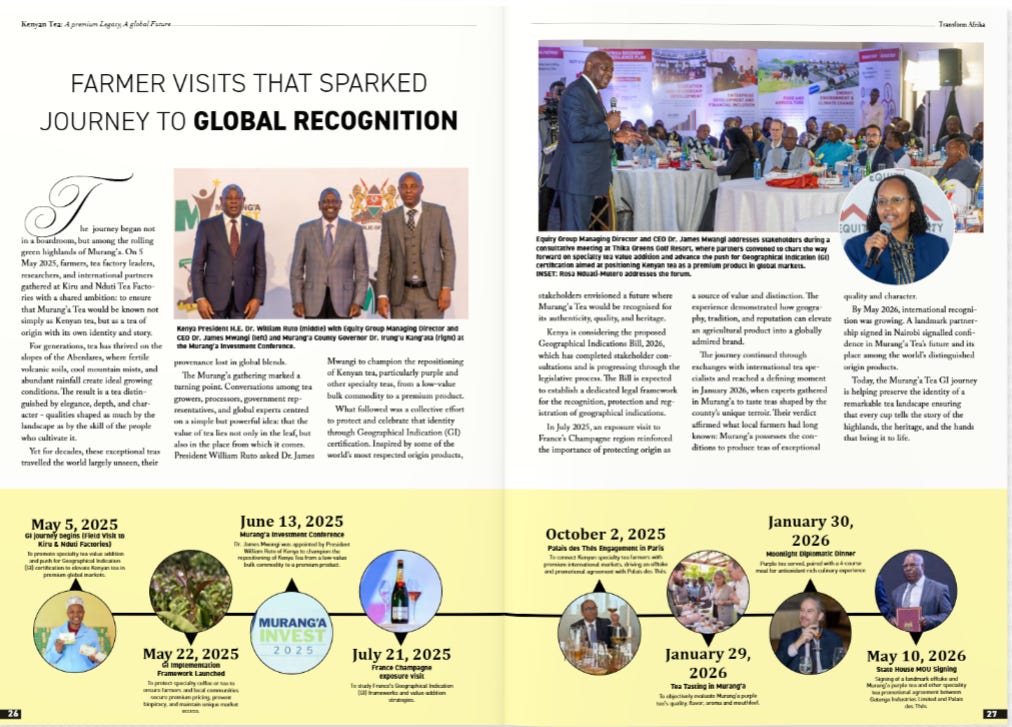
In June 2026, a different story unfolded in Paris. At the iconic Hôtel de Crillon, Murang’a Purple Tea made its premium debut, packaged and sold through the respected French retailer Palais des Thés. Equity Group CEO Dr. James Mwangi was at the forefront of this milestone, championing a shift from commodity trading to origin-led, high-value branding. This is more than a single product launch — it is a blueprint for re-imagining Kenya’s agricultural exports.

James Mwangi: From Financial Inclusion to Agricultural Transformation:
Dr. James Mwangi built Equity Group into a pan-African financial powerhouse focused on serving everyday Kenyans. His latest efforts extend beyond banking into direct support for agricultural value chains — connecting farmers to finance, processing, and premium international markets.In the purple tea project, Mwangi helped forge a partnership between Gatanga Industries (local processing), Equity Group, and Palais des Thés. The collaboration aims to give Kenyan tea a distinct identity and deliver higher returns to producers. As Mwangi stated during the launch: “Kenyan tea needs a distinct sub-identity and strong geographical identity. What we are witnessing is the beginning of a journey to transform tea from a commodity into a premium product.”
This approach reflects a broader vision: agriculture as a driver of household prosperity, not just national export statistics.
Murang’a Purple Tea: A Truly Unique Kenyan Product:
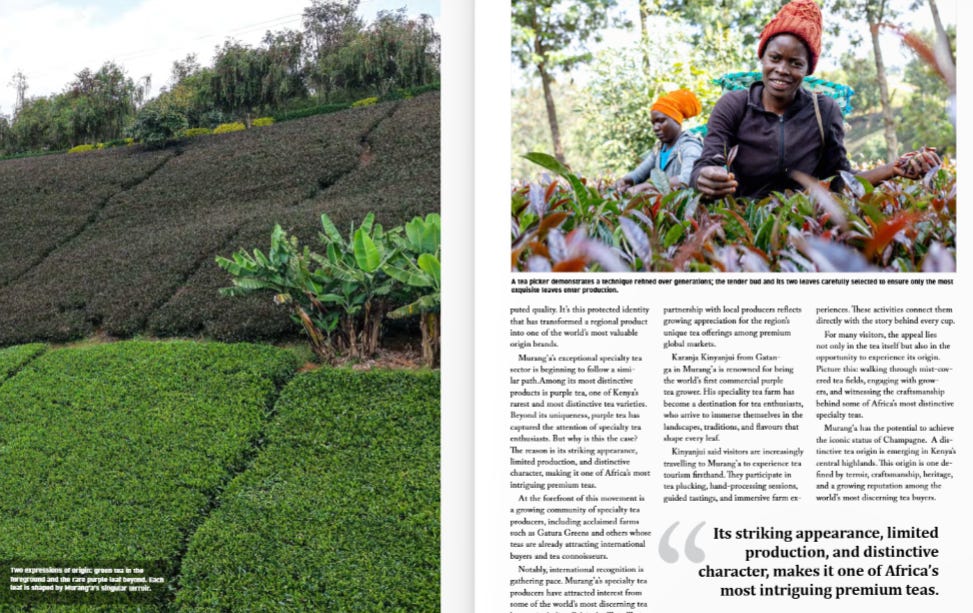
Purple tea is a rare varietal cultivated on the fertile volcanic highlands of Murang’a County. Grown at high altitudes, it stands out with vibrant character, floral aromas, subtle fruit notes, and exceptionally high antioxidant levels (particularly anthocyanins, which give it a striking purple hue when prepared with lemon).
Unlike standard Kenyan black tea — produced in high volumes for blending — purple tea lends itself to specialty processing and storytelling. Efforts are underway for Geographical Indication (GI) status, which would protect its origin-linked qualities and enhance its premium appeal, similar to Champagne or Darjeeling.

The Paris Breakthrough and Premium Positioning:
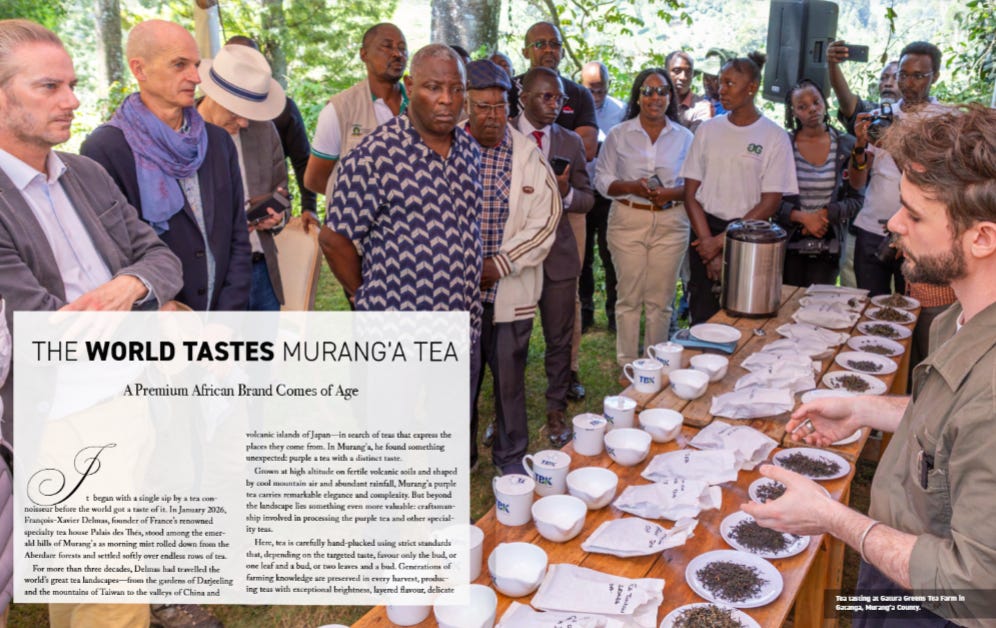
The June 2026 launch introduced the tea to French consumers and experts as a traceable, provenance-driven product. Palais des Thés is now packaging and distributing it across Europe, moving Kenyan tea up the value chain from raw export to finished retail shelf. This model captures more value domestically through processing, branding, and direct buyer relationships. Mwangi described it as “a change in how Kenya approaches agriculture, a transformation of farming practices, and a new way of creating value for farmers and the country. This is the new Kenya.”

Quantifying the Value Gain:
Conventional Kenyan tea exports average roughly $2.20–$2.35 per kg in bulk form. Purple tea commands a clear premium — often 2–4 times higher (and potentially more in specialty retail channels), with some premium Kenyan varieties reaching $30–45 per kg in targeted markets.
The multiplier comes from several factors:
Branding and packaging — Finished consumer products versus loose bulk.
Origin story and traceability — GI protection and direct partnerships.
Target markets — European specialty buyers willing to pay for quality, uniqueness, and sustainability.
For farmers, the difference translates into meaningfully higher incomes, supporting better access to education, healthcare, and household investment. Nationally, it means retaining more foreign exchange and building resilient rural economies.
The Power of Partnership: Aligning Local Governance with Global Vision
Crucial to the realization of this global vision is the close alignment between private enterprise and local governance. Dr. James Mwangi forged a strategic collaboration with the Murang’a County Government under the leadership of Governor Irungu Kang’ata to build a robust local ecosystem capable of sustaining premium export standards. Recognizing that a luxury global launch demands flawless quality control and structural support at the grassroots level, Governor Kang’ata’s administration has actively backed the initiative by mobilizing smallholder farmers, enhancing extension services for specialty tea husbandry, and spearheading the administrative push for Geographical Indication (GI) status. This public-private partnership bridges the gap between rural farms and Parisian retail shelves, proving that when financial institutions, local leadership, and agricultural processors pool their resources, they can successfully shield local farmers from volatile commodity cycles and anchor real wealth right within the county.
Kenya’s Current Agricultural Export Landscape:
According to data from the Kenya National Bureau of Statistics (KNBS) and aligned trade reports, Kenya’s agricultural exports remain impressive in volume but concentrated in commodities. Leading categories include:
Tea — ~$1.4 billion (world’s largest exporter, predominantly bulk).
Cut flowers — ~$780 million.
Coffee — ~$313 million.
Tropical fruits (including avocados) — ~$320 million.
Nuts and related products — significant and growing within the fruits/nuts category (~$290+ million combined for fruits and nuts).
Vegetables — ~$280+ million.
Combined categories like coffee, tea, and spices often exceed $1.7 billion. Horticulture (flowers, fruits including avocados, vegetables, and nuts) performs strongly in Europe, yet many products still face the same challenges: price volatility, competition from lower-cost producers, and limited value addition within Kenya (per KNBS sectoral reports). Tea dominates but exemplifies the commodity trap — high volume, lower per-unit returns, and much of the final consumer value captured abroad by blenders and retailers. Avocados (particularly Hass varieties) and nuts represent promising growth areas within fruits and nuts, with potential for further premium branding and processing.
Purple Tea as a Model: Comparison and Potential:
The purple tea approach contrasts sharply with the traditional model:
Commodity path (bulk tea, basic flowers, standard coffee, raw avocados/nuts): High volume, exposed to auction or spot prices, limited differentiation.
Premium path (purple tea example): Niche focus, strong branding, origin protection, higher margins, and greater farmer share.
Applying this to other exports could yield dramatic results. Imagine specialty coffee with clear Kenyan farm origins, premium branded avocado oils or ready-to-eat avocado products, value-added nuts (e.g., flavoured or packaged for health markets), or unique herbal products leveraging Kenya’s biodiversity. Each could command multiples of current commodity prices while creating local processing jobs.
Scaling the Model: Practical Recommendations:
To replicate and expand this success, Kenya should pursue:
Policy support — Faster GI registrations, targeted incentives for value-added processing, and export promotion for premium/niche products.
Private sector leadership — More Equity-style partnerships (banks + processors + international brands), with tailored finance for quality upgrades and market entry.
Farmer empowerment — Cooperatives focused on consistent quality, traceability, and sustainable practices that appeal to premium buyers.
Diversification — Identify “purple tea equivalents” across fruits (including avocados), nuts, vegetables, spices, and herbs with unique Kenyan attributes.
Market access — Deepen ties with Europe and other high-value regions through trade diplomacy and branding campaigns.
Challenges such as scaling supply, maintaining quality, and initial marketing investment are real, but the Paris launch demonstrates they are surmountable with coordinated effort.
A New Chapter for Kenyan Exports:
James Mwangi’s championing of Murang’a Purple Tea is not an isolated success — it is a proof of concept. By moving beyond raw commodities toward premium, story-rich, origin-protected products, Kenya can capture far more value from its agricultural strengths — including tea, flowers, coffee, fruits like avocados, nuts, and vegetables — raise farmer incomes, create jobs, and strengthen its global brand.The journey from Murang’a’s highlands to Paris shelves shows what is possible. The question now is how quickly and widely Kenya can apply this playbook. Policymakers, entrepreneurs, financiers, and farmers all have roles to play in building the “new Kenya” of high-value exports.
What are your thoughts? Which Kenyan product — tea, avocado, nuts, coffee, or another — do you believe has the greatest premium potential? Share in the comments — and let’s discuss how to turn more of our agricultural riches into prosperity for producers and the nation.
Sources: official Equity Group announcements, OEC trade data aligned with KNBS statistics, and Kenyan industry reports. Export figures are approximate based on recent KNBS and trade statistics.

Grounding the Vision: Gatura Greens and the Roots of Purple Tea Tourism
If Dr. James Mwangi provided the institutional capital and Governor Irungu Kang’ata provided the political framework, Gatura Greens represents the vital third pillar of this initiative: the agricultural pioneers who mastered the crop itself. Located in the Gatanga Constituency of Murang’a County, at the foot of the Aberdare Ranges, this family-owned estate holds a historic position in Kenya’s agricultural narrative. Founded by the Kinyanjui family—whose lineage in tea dates back to 1959—the farm became the world’s very first commercial grower of purple tea in 2008 and established a specialized cottage processing factory in 2016. Today, under the direction of founder Cathryn Karanja, Gatura Greens anchors the initiative’s identity through an award-winning agro-tourism model that bridges the gap between rural production and global premium positioning.
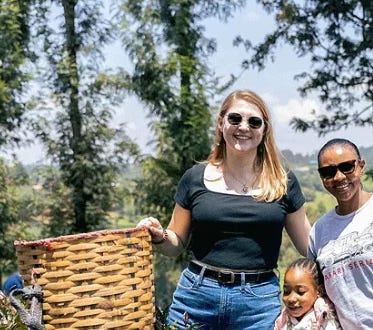
The Gatura Greens Farm Tour Experience
Gatura Greens operates full-day educational and sensory experiences designed to transform visitors from passive consumers into connoisseurs of specialty Kenyan orthodox teas.
1.Arrival & Welcome Briefing:09:30 AM.
The day begins at the farmhouse with a warm welcome featuring freshly brewed hot purple tea paired with homemade, tea-infused scones. Guests receive an introduction to the history of the estate and the unique science behind the anthocyanin-rich purple varietal.
2.Therapeutic Tea Picking: Late Morning.
Guided by estate experts, visitors head into the lush, rolling fields to learn the artisan “two leaves and a bud” hand-picking technique. This hands-on harvesting grounds guests in the meticulous labor required for high-value specialty tea.
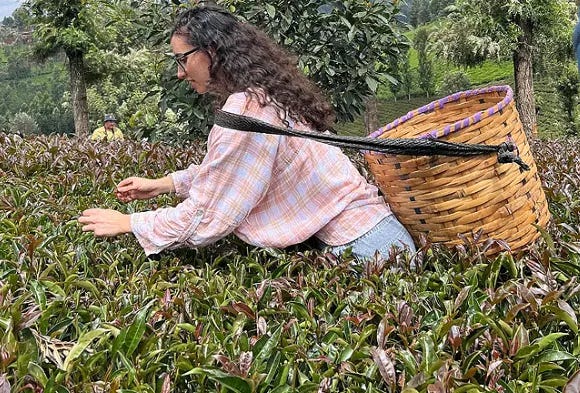
3.Cottage Factory & Processing Demo: Midday.
Guests move to the farm’s artisanal cottage factory to participate in the traditional processing stages—roasting, hand-rolling, and drying the leaves. Visitors create, roll, and package their own custom artisanal blend as a personal keepsake.
4.The 3-Style Tasting Ceremony: Early Afternoon.
An intimate, expert-led cupping session where guests taste over 10 distinct specialty variants crafted on-site, including premium Purple Tips, Golden Tips, Oolong, Green, and artisanal Yellow teas.
5.Bamboo Forest Walk & Waterfall Trek: Pre-Lunch.
A scenic hike through a tranquil bamboo forest located on the family land, leading down to the hidden Kimakia waterfall where guests can take a refreshing dip in the mountain waters.
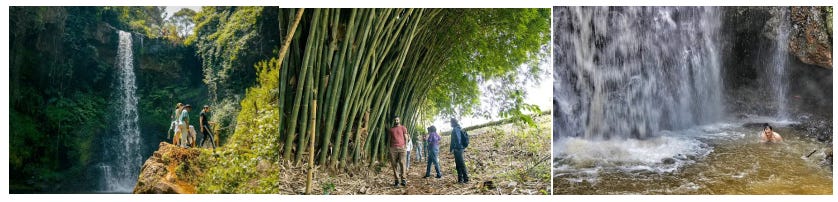
6.Farm-to-Table Culinary Finale: Late Afternoon.
The day concludes back at the farmhouse with a farm-fresh, three-course meal prepared by the in-house chef using locally sourced ingredients, followed by relaxation around an open bonfire.
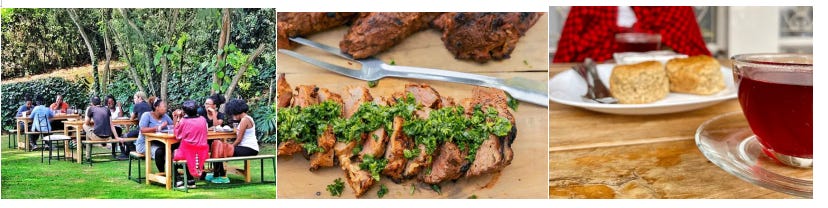
Here are the booking and reservation options for the Purple Tea Farm Tour at Gatura Greens Farm, Muranga County:
Mobile: +254-721-242-711
WhatsApp: +254-721-242-711
Reservations: +254 718-179-967
Email: info@africanspicesafaris.com
By turning a working plantation into a luxury educational destination, Gatura Greens demonstrates the ultimate extension of the Mwangi playbook. They are not just selling processed leaves; they are selling the provenance, the narrative, and the soil profile of Murang’a—capturing premium hospitality margins right at the farm gate.
About Boardlot Africa Research
Boardlot Africa is a premier financial intelligence and corporate governance publication dedicated to unpacking the mechanics of capital, market strategies, and structural shifts across East Africa’s corporate landscape. By bridging the gap between raw economic data and actionable market intelligence, we deliver deep-dive research, independent corporate analysis, and policy insights designed for institutional investors, boardrooms, and sharp market observers.
Get in Touch
Email: boardlot.research@gmail.com
Phone: +254 753 133 901
Substack: Subscribe to Boardlot Africa
X (Twitter): @BoardlotSultan