
The Duke of Kabeteshire: The Life and Reign of Charles Mugane Njonjo
Prologue: The Boy on Horseback
The Duke of Kabeteshire: In the dust-laden ridges of Kabete in the 1920s, class was not merely a matter of wealth; it was a matter of gravity. While the children of peasant smallholders walked barefoot along the red-dirt paths to local mission schoolrooms, one boy moved through a completely different orbit. Charles Mugane Njonjo did not walk to school. He rode.
Perched atop a sleek, well-groomed horse provided by his father, flanked by a family servant carrying his slate and books, the young Njonjo looked down on his peers—both literally and figuratively. This was not an accident of history; it was a deliberate statement of status.
His father, Josiah Njonjo, was a Paramount Chief. Under the British colonial administration, chiefs were the vital, steel joints of the imperial skeleton. They collected taxes, maintained order, and in return, were granted vast tracts of land, colonial patronage, and proximity to white power. In the Njonjo household, tea was served in fine bone china, meals were eaten with silver cutlery, and English was spoken with the precise cadence of the colonial masters. From his earliest years, Charles was socialized to believe that he was not just different from the ordinary native—he was superior. The horse was his first throne, and it established a psychological barrier between himself and the rest of Kenya that he would spend the next nine decades reinforcing.

Act I: The Imperial Education & The “Black European”
To shape a colonial elite, one had to send them through the crucible of imperial education. Njonjo’s journey was a tour of the finest institutions the British Empire had designed for its favored subjects.
Alliance and the Ugandan Royalty
Charles Njonjo was sent to Alliance High School, then under the legendary and iron-fisted rule of Carey Francis. Francis sought to build “Christian gentlemen” who would be useful to the colony. But even Alliance was not exclusive enough for Njonjo’s taste. He proceeded to King’s College Budo in Uganda—an elite institution specifically designed for the sons of East African royalty. There, surrounded by Kabakas and future kings, Njonjo’s aloof, aristocratic temperament solidified. He was not merely a student; he was an aristocrat in training.
The South African Irony
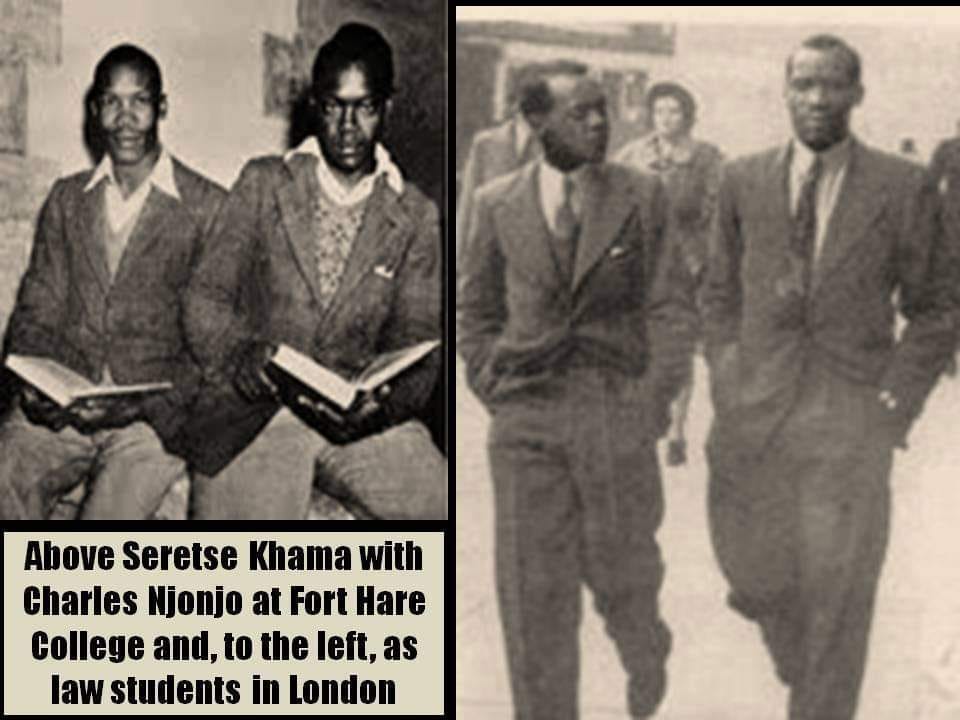
In the 1940s, Charles Njonjo traveled to the University of Fort Hare in South Africa to study administration. It was a bizarre, contradictory chapter. He arrived just as the scaffolding of Apartheid was being erected. Yet, while contemporaries like Nelson Mandela and Robert Mugabe emerged from Fort Hare as radicalized pan-Africanists, Njonjo remained largely unmoved by nationalist fervor. He viewed political agitation with disdain. His loyalty lay with institutional order, legal structures, and the crown.

Becoming the “Sir Charles” of Savile Row
Desperate to escape South Africa’s racial claustrophobia and fulfill his ambition of practicing law, Charles Njonjo sailed for England in 1947. Though the colonial administration originally sponsored him to study Public Administration at Exeter University to prepare him to succeed his father as a colonial chief, Njonjo had vastly different, grander designs. After completing his studies at Exeter and the London School of Economics (LSE), he defiantly pivoted to law, enrolling at Gray’s Inn—a move that prompted an irritated colonial state to immediately cut off his stipend. To survive, he waited tables, ultimately being taken in by a friendly Welsh solicitor, Elwyn Jones, who trained him in his chambers until he was called to the Bar.
It was in the vibrant, politically charged atmosphere of post-war London that Charles Njonjo navigated life alongside a fascinating circle of future African leaders. While serving as the chair of the East African Students’ Union, he shared a London flat with Harry Nkumbula—who would later become a foundational Zambian nationalist. In the lecture halls, libraries, and student forums of the era, he crossed paths with future Zimbabwean President Robert Mugabe (his former classmate from Fort Hare), future Kenyan top diplomat Dr. Munyua Waiyaki, and iconic pan-African intellectual George Padmore. Yet, while his peers used London as a launchpad for radical anti-colonialism, Njonjo took a different path. It was in London that the caricature became the man:
The Wardrobe: He abandoned standard off-the-rack clothing for bespoke, three-piece pinstriped suits from Savile Row, complete with a fresh red carnation pinned to his lapel and a classic watch chain looped across his waistcoat.
The Palate: He developed a taste for fine English tea, imported Stilton cheese, and prime cuts of beef.
The Persona: He perfected an upper-class British accent, complete with the dry, biting wit of an English lord.
When he finally returned to Kenya at the end of 1954 to join the State Law Office, he was, for all practical purposes, a black Englishman. The local press would later dub him “Sir Charles” and “The Duke of Kabeteshire”. He did not wear the nickname as an insult; he wore it as an absolute badge of honor. The historical profile Charles Njonjo | He made President Moi a dictator offers deep context on how these early elite associations shaped his ultimate strategy for capturing state power.
"I am a creature of the British system. I do not deny it, nor am I embarrassed by it."
— Charles Njonjo
Act II: The Indispensable Guardian of the Transition
When Njonjo returned to Kenya in 1954, the colony was on fire. The Mau Mau Emergency was at its peak. Native intellectuals were either in detention camps or fighting in the forests of the Aberdares. Njonjo, untouched by the chaos, quietly walked into the colonial civil service as an Assistant Registrar-General. He did not join the independence struggle; he watched it from the mahogany-paneled offices of the State Law Department.
The Bridge Between Two Worlds
As independence neared in 1963, both the departing British and the incoming President, Jomo Kenyatta, faced a crisis. The British wanted to ensure their massive corporate investments, land holdings, and white settlers would be protected under the new black government. Kenyatta, on the other hand, needed a brilliant, loyal legal mind who understood the colonial machinery but had deep roots in the Kikuyu establishment. Njonjo was the perfect bridge:
The British Trusted Him: They knew he despised radical African socialism and would preserve the capitalist, pro-Western status quo.
Kenyatta Trusted Him: Njonjo’s father, Chief Josiah, had been a key ally. Furthermore, Njonjo lacked a grassroots political base of his own, meaning he posed no immediate threat to Kenyatta’s presidency.
On the eve of independence in 1963, Charles Njonjo was appointed Kenya’s first African Attorney General. He did not win his power through a popular vote or by kissing babies on the campaign trail. He captured the state by making himself the sole, indispensable custodian of the law.
The Bachelor, the Founder, and the Starehe Soft Spot
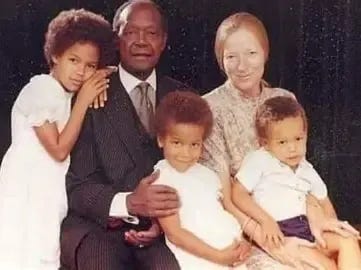
Yet, while Njonjo ran the state with an iron, unyielding hand, his personal life remained a subject of intense national fascination. He was Kenya’s most notorious elite bachelor, famously refusing to marry until late in life. When he finally walked down the aisle in 1972 at the age of 52, he did so in typical aristocratic fashion, marrying Margaret Bryson, a British expatriate. The marriage carried a quiet, fascinating backstory. Margaret had previously been the girlfriend of Dr. Geoffrey Griffin, the legendary, strict founder of the Starehe Boys’ Centre. In a political arena defined by bitter rivalries, one might have expected an enduring enmity between the two men. Instead, Njonjo and Griffin forged an iron-clad, lifelong friendship built on a shared obsession with British order, impeccable discipline, and institutional excellence. Njonjo became one of Starehe’s most influential and enduring patrons. To honor his immense legal and financial backing, the school named one of its premium residential dormitories Njonjo House.
The Duke of Kabeteshire did not just leave his name on the brickwork; he treated the house as his personal ward. He regularly broke away from the high-stakes chess board of State House to visit the school, inspecting the neatness of the dorms with the same sharp, intimidating eye he applied to the cabinet. He loved to surprise the students of Njonjo House with personal gifts, ensuring that the boys under his namesake banner had access to the finest amenities and mentorship. It was a rare glimpse into the softer, paternal side of a man who otherwise wore a shield of absolute arrogance.
This video highlights the deep historical ties between the AG and the school by showcasing the major renovation project of the Njonjo House dormitory at Starehe Boys' Centre.

Act III: The Ultimate Kingmaker (Power in the State Law Office)
As Attorney General, Charles Njonjo did not merely interpret the law; he weaponized it. Operating from the dark-wood confines of the State Law Office, he turned the constitution into a chess board where he was the grandmaster.
The GEMA Threat and the 1976 Constitutional Crisis
By the mid-1970s, President Jomo Kenyatta’s health was visibly failing. A powerful faction of the Kikuyu elite—operating under the banner of the Gikuyu, Embu, and Meru Association (GEMA) and led by heavyweights like Kihika Kimani, Njenga Karume, and Dr. Njoroge Mungai—panicked at the prospect of power leaving the house of Mumbi. The constitution dictated that upon the president’s death, the Vice President, Daniel arap Moi (a Kalenjin), would automatically assume power for 90 days. To the GEMA oligarchs, the idea of a non-Kikuyu holding the presidency, even temporarily, was unthinkable. They launched the aggressive “Change the Constitution” movement to alter the succession clause. Njonjo viewed these populist rallies with absolute aristocratic disdain. More importantly, he saw them as a threat to institutional order. In a move of calculated legal brilliance and sheer political audacity, Njonjo issued a stern, public decree:
“It is a treasonable offense to imagine, devise, or intend the death or deposition of the President. The penalty for treason is death.”
With a single press statement, Njonjo criminalized the entire GEMA campaign. He effectively told the most powerful men in Central Kenya that if they so much as discussed the succession at a public rally, he would have them arrested and marched to the gallows. The movement collapsed overnight. Njonjo had single-handedly protected the constitutional path for Daniel arap Moi.
The Security State and the Contempt for Africanization
Beyond crushing elite political dissent, Njonjo used his dark-wood fiefdom at the State Law Office to engineer a draconian legal framework designed to protect privileged capital at the direct expense of the black majority. His legal architecture birthed Kenya’s modern, paranoid fixation with state security—a system built on an open, deep-seated disdain for ordinary Africans. At a time when the continent was aggressively Africanizing its public institutions, Njonjo fiercely resisted. He fought to keep British policemen, soldiers, and judges in power, notoriously questioning whether institutional standards should be lowered “just because a man has a black face.” He treated local heritage with absolute contempt, publicly scoffing at making Swahili the official language of parliament, demanding instead that the republic stick strictly to English. This ideological aversion to the native populace drove an obsessive fixation on security and containment. Njonjo weaponized the state apparatus to enforce a regime of fear, aggressively defending preventative detention without trial and throwing dissidents like novelist Ngũgĩ wa Thiong’o into maximum security cells to maintain “order.”
To Njonjo, the African poor were not citizens; they were a dangerous threat to property. He pushed through laws to forcibly round up urban beggars and sex workers, branding them as “lazy,” while instituting brutal, disproportionate punishments for property crimes. The modern Kenyan landscape—where the wealthy hide behind massive security walls while heavily weaponized police forces sweep through poor urban slums—is the direct corporate and social legacy of Njonjo’s classist architecture of power.

The Uncomfortable Alliance of Njonjo & Kibaki
During this era of transition, Njonjo operated alongside another towering Kikuyu intellectual: Finance Minister Mwai Kibaki. To the outside world, they were the twin pillars of Kenyatta’s inner circle, but behind the scenes, they were oil and water.
Mwai Kibaki was the quiet, pipe-smoking academic. His focus was on economic Africanization—gradually systematic dismantling colonial monopolies to empower a new class of indigenous black businessmen and technocrats.
Charles Njonjo was the unyielding protector of British conglomerates, crown agents, and multinational corporations. He believed Africanization was a recipe for chaotic inefficiency.
They formed a temporary, highly cynical alliance of convenience to ensure a smooth transition to Moi in 1978. But it was an alliance built on a fault line. Njonjo supported Moi because he believed Moi was a simple, short-term placeholder whom he could easily control from the shadows. Kibaki supported Moi because it was the constitutionally correct path that preserved national stability. Neither man anticipated how the new president would rewrite the rules of the game.

Act IV: The Transition to Sunlight & The Traitor Trap
In 1980, Njonjo made the most critical miscalculation of his career: he decided he was tired of being the kingmaker behind the curtain. He wanted to be the king.
Stepping into the Light
Believing his position as a technocrat capped his political ceiling, Njonjo abruptly resigned as Attorney General. Within days, the Member of Parliament for Kikuyu constituency conveniently resigned his seat. Njonjo ran unopposed in the subsequent by-election, stepping into the chamber not as an unelected ex-officio member, but as an elected politician. Moi promptly appointed him Minister for Constitutional Affairs.
Njonjo’s strategy was clear to everyone in the corridors of power: he was positioning himself to succeed Moi. He openly treated other politicians as mere schoolboys, maintaining his haughty aura and treating the cabinet as his personal court.
The Post-1982 Atmosphere
Then came August 1, 1982. The failed air force coup rocked the Kenyan state to its foundation. The absolute vulnerability of the regime shattered Moi’s trust in the old elite. Moi no longer wanted sophisticated kingmakers who thought they had put him in State House; he demanded absolute, obsequious loyalty. Njonjo’s immense influence, his deep connections with the British intelligence apparatus, and his independent wealth suddenly made him the most dangerous man in Kenya in the eyes of a paranoid presidency.

The Miller Inquiry (The Traitor Case)
The trap was sprung in mid-1983. At a public rally in Kisii, Moi cryptically announced that foreign powers were grooming a “traitor” (msaliti) to overthrow his government. He didn’t name Njonjo, but the state machinery knew its cue. A meticulously orchestrated smear campaign erupted in parliament and the press. Njonjo was suspended from the cabinet, and Moi established the Judicial Commission of Inquiry, led by Justice Cecil Miller, to investigate his alleged treasonous activities. The inquiry was a masterpiece of political public theater. For months, the man who had commanded the Kenyan legal system for nearly two decades was subjected to daily humiliation. Witnesses accused him of:
Amassing illegal caches of firearms.
Conspiring with South African mercenaries to stage a coup.
Siphoning state secrets to Western embassies.
Njonjo sat in the hot seat day after day, his signature pinstriped suits looking increasingly out of place in a room designed for his destruction. The inquiry ultimately concluded that he was indeed guilty of abuse of office and conspiracy against the state.

The Anti-Climax
On Jamhuri Day in December 1984, President Moi delivered the final, devastating stroke of genius. Instead of ordering a criminal trial that could lead to imprisonment or the gallows, Moi publicly “pardoned” him. Moi cited Njonjo’s advanced age and his “prior excellent service to the nation.” But behind this public display of magnanimity lay an intense, quiet geopolitical scramble. In the corridors of diplomacy, it was widely understood that Moi’s hands had been forced by the highest authority in the British Empire: Queen Elizabeth II. Njonjo wasn’t just an Anglophile in wardrobe; he was deeply, intimately connected to the British throne and the royal family. He had been a guest in royal circles, rubbed shoulders with British aristocracy, and was viewed by London as the ultimate guarantor of UK interests in East Africa.
Furthermore, whispers had long swirled around Njonjo and his close confidant, the powerful former Agriculture Minister Bruce MacKenzie. For years, intelligence circles were rife with unconfirmed rumors that both Njonjo and MacKenzie were British spies—or at the very least, high-level MI6 and Mossad assets deeply embedded within the Kenyan state. While these claims remained firmly in the realm of historical speculation, the sheer perception of his intelligence ties made Njonjo untouchable in a conventional court. For Moi to put “The Duke of Kabeteshire” on trial—or worse, hand him a death sentence—would have caused catastrophic diplomatic fallout and deeply embarrassed the British Crown. Palace intermediaries and British diplomats made it quietly but unequivocally clear to State House that executing or jailing the Queen’s trusted man was a line Moi could not cross.
Moi, a master tactical survivalist, pivoted brilliantly. By granting a presidential pardon before a criminal trial could even begin, he appeased Buckingham Palace while simultaneously executing a flawless political execution of his own:
He Denied Njonjo a Defense: By pardoning him without a trial, Moi stripped Njonjo of the platform to legally defend himself, cross-examine his accusers, or clear his name.
He Avoided Martyrdom: He kept Njonjo out of a jail cell, avoiding a Western diplomatic backlash and preventing Njonjo from becoming a rallying symbol for the opposition.
He Achieved Absolute Humiliation: In the theater of Kenyan politics, Njonjo was left completely castrated—stripped of his parliamentary seat, banned from public life, and publicly branded a traitor, all while his adversary looked merciful.
The Duke of Kabeteshire was spared the gallows by royal intervention, but he was forced into a permanent, golden exile within his own country.

Act V: The Corporate Bastion (The Sabbatical Years)
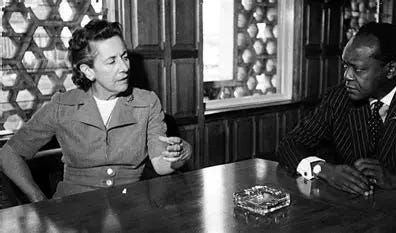
Exiled from the marbled corridors of the State Law Office and State House, Charles Njonjo retreated to his sprawling estate in the leafy, quiet enclave of Old Muthaiga. To the casual observer, the “Traitor” had been entirely defeated. But while Daniel arap Moi had successfully dismantled Njonjo’s political patronage networks, he had left his financial foundations completely untouched.
Njonjo understood a fundamental truth about power in Kenya: regimes are temporary, but capital is permanent.

The Old Money Empire
During his decades-long political sabbatical, Njonjo systematically transformed himself from a political kingmaker into an untouchable corporate titan. He did not build this empire in a vacuum; he sat at the apex of an oligarchic alliance, partnering with a select group of powerful local tycoons and influential white settlers who quietly controlled the spine of the Kenyan economy.
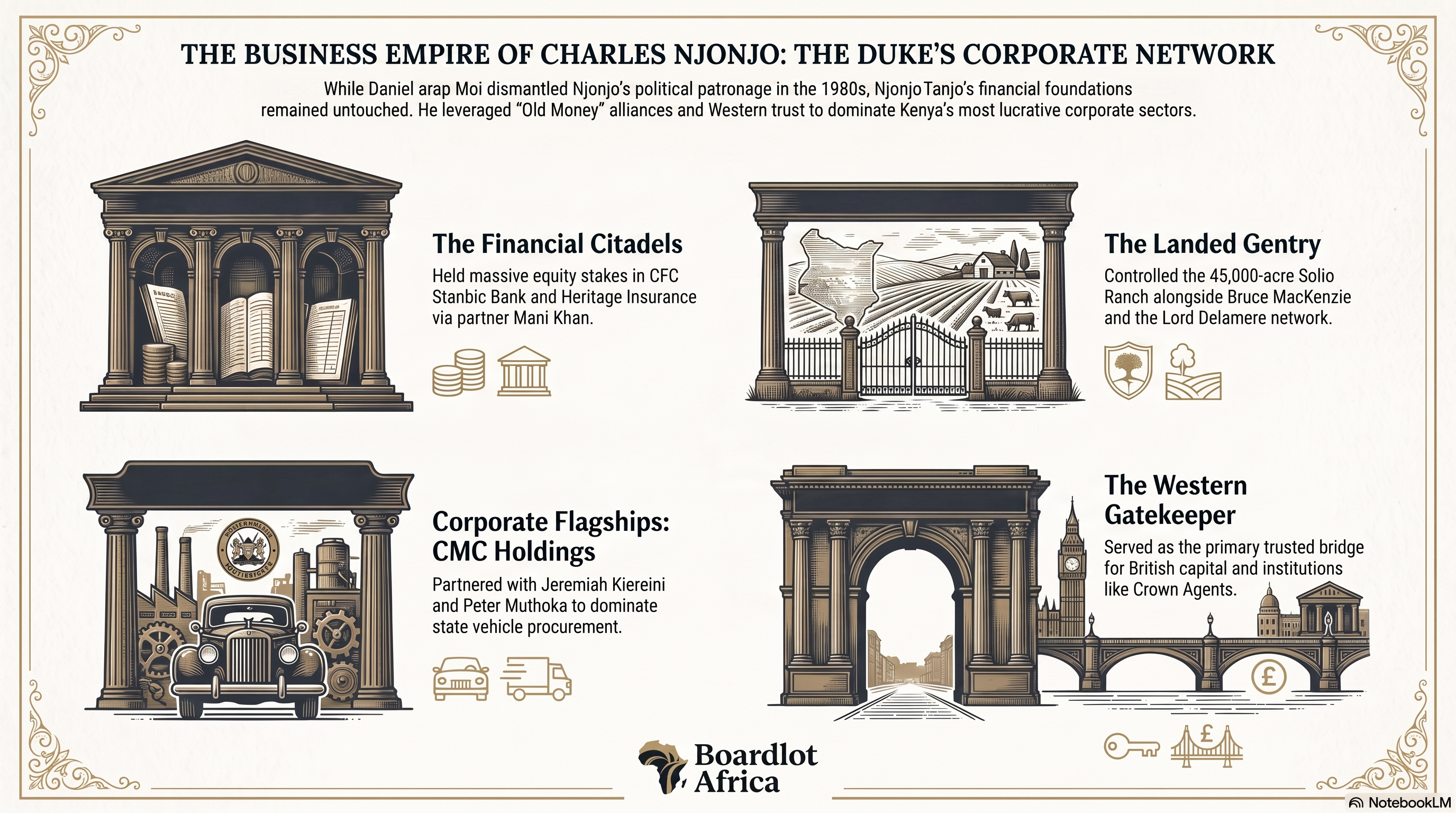
His boardroom dominance and financial footprint spanned across the most lucrative sectors of the republic:
The Financial Citadels: Alongside his brilliant financial partner, the corporate mastermind Mani Khan, Njonjo held massive, quiet equity stakes in major commercial banks and insurance conglomerates. Together, they controlled a vast chunk of CFC Stanbic Bank and Heritage Insurance. Njonjo wasn’t just an investor; he and Khan pulled the ultimate strings behind executive leadership and corporate mergers.
The Landed Gentry: Mirroring his white settler contemporaries, Njonjo controlled immense tracts of real estate. His crowning agricultural achievement was his substantial interest in Solio Ranch—a massive, 45,000-acre private livestock and wildlife sanctuary in Laikipia. In these vast agricultural and real estate plays, Njonjo was deeply aligned with powerful settler-era figures, most notably his close confidant and former Agriculture Minister, Bruce MacKenzie, and the aristocratic Lord Delamere network. This stood as a testament to his feudal-scale wealth.
The Western Gatekeeper
Even in political isolation, Njonjo remained the primary, trusted gatekeeper for British and Western capital in East Africa. Foreign investors, suspicious of Moi’s unpredictable and increasingly corrupt state machinery, viewed Njonjo and his elite inner circle—men like Jeremiah Kiereini, Khan, and MacKenzie—as a reassuring symbol of stability. If a major multinational corporation wanted to navigate the East African market safely, their first stop was often a quiet, private audience with the Duke of Kabeteshire in Muthaiga. Moi could control the civil service, but Njonjo and his partners controlled the boardroom.
The Corporate Flagships & The CMC Boardroom War
At the peak of his commercial influence, Njonjo dominated the board of CMC Holdings, the logistics and automotive franchise that held a lucrative monopoly on state vehicle procurement for decades. In the CMC boardroom, Njonjo partnered with the billionaire businessman Jeremiah Kiereini—his long-time ally and fellow elitist who had served as Head of Civil Service. Together with the wealthy investor Peter Muthoka, they initially formed an impenetrable corporate voting bloc that dictated the terms of Kenya’s automotive and logistics sectors.
However, this elite alignment eventually fractured into one of the most explosive and scandalous corporate wars in Kenyan history. A vicious boardroom coup erupted when new leadership exposed massive, illegal offshore slush funds in Jersey, hidden secret commissions, and decades of illegal overcharging on state tenders. The falling out pitted Njonjo and Kiereini against Peter Muthoka in a high-stakes, public battle for control that led to trading suspensions, regulatory interventions, and the eventual dismantling of the old guard’s grip on the automotive giant.
Read our deep dive into the secret offshore accounts and the dramatic boardroom coup that shattered Kenya’s premier automotive franchise here.
Act VI: The Muthaiga Feud & The Ultimate Spite
By the turn of the millennium, a new political landscape was taking shape. Daniel arap Moi was stepping down, and in 2002, Mwai Kibaki ascended to the presidency. For many in Central Kenya, this was a moment of supreme ethnic and regional triumph.
For Charles Njonjo, it was the beginning of an intensely personal, ideological cold war.
The Genesis of the Dislike
The animosity between Njonjo and Kibaki was deep-seated, generational, and intimately local. They were wealthy neighbors in Muthaiga who utterly despised each other’s vision for Kenya. Njonjo viewed Kibaki as an unprincipled populist who had abandoned the institutional rigor of the old guard. Kibaki, conversely, viewed Njonjo as an outdated colonial relic who had spent his career protecting British monopolies at the expense of local African enterprise.
When Kibaki took power, his administration aggressively pursued economic nationalism. They began bypassing traditional British procurement networks—such as the Crown Agents—and opened up massive state infrastructure tenders to competitive global bidding, looking increasingly toward China and other alternative markets.
To Njonjo, this wasn’t just bad economic policy; it was an direct assault on the Eurocentric commercial order he had spent his life protecting.
The 2007 Masterstroke
The feud reached its dramatic, public climax during the volatile 2007 presidential election. In a move that completely stunned the GEMA political establishment, Charles Njonjo broke ranks with the Mount Kenya elite. He became the most high-profile Central Kenya oligarch to cross the floor and openly endorse Kibaki’s fiercest rival: Raila Odinga.
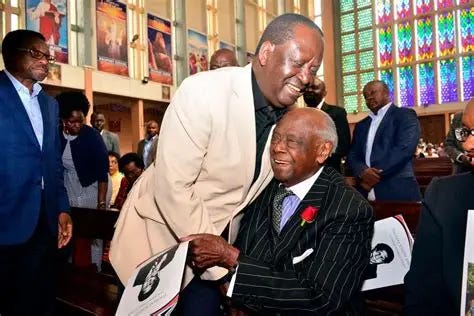
To the public, Njonjo framed his endorsement with the lofty rhetoric of a detached elder statesman:
“We must look beyond our tribal enclaves. Power cannot permanently reside in one region if we want a unified nation.”
But behind the statesmanlike posture lay a dual-layered reality of pure political spite and sharp commercial calculus:
The Private Spite: Supporting Raila was the ultimate weapon to humiliate Kibaki on the national stage. Njonjo was using his immense historical gravitas to dent Kibaki’s re-election narrative.
The Commercial Counter-Strike: Raila’s political platform at the time promised a return to structured, institutional governance that aligned cleanly with the interests of traditional Western diplomats and old-money corporate factions. By backing the opposition, Njonjo was attempting to reassert European capital’s leverage over a state machinery that Kibaki had drifted away from.

Act VII: The Centenarian’s Last Laugh
In his twilight years, Charles Njonjo achieved the ultimate victory available to a historical figure: he simply outlived everyone else.

He witnessed the political exit and eventual passing of his bitter rival, Mwai Kibaki. He stood by as the Kanu regime that had branded him a traitor crumbled into irrelevance. He watched as the children of his contemporaries rose to power, while he remained an immovable, singular monument to Kenya’s founding history.
On January 2, 2022, when Charles Mugane Njonjo finally passed away at the extraordinary age of 101, he did so entirely on his own terms. In a final, characteristic act of aristocratic defiance that stunned a nation obsessed with lavish, multi-day state funerals, Njonjo had left strict instructions for his final send-off.
Within hours of his passing on that Sunday morning, his body was quietly moved to the Kariokor Crematorium. There were no weeping political delegations, no lengthy hypocritical eulogies from the state, and no grand public displays. By the time the public fully grasped that the Duke of Kabeteshire was gone, his ashes had already been scattered.
It was his final, biting joke on the Kenyan political arena. He had entered the world on horseback, looked down on the shifting tides of politics from the secure fortress of his boardroom, settled his historical scores out of pure spite, and exited the stage swiftly in a puff of smoke—untouchable, unapologetic, and dressed to the very end in his immaculate, pinstriped Savile Row suit.
The Polarized Valedictions
The passing of the centenarian exposed a deep, unresolved ideological rift in the collective memory of the nation, prompting sharply conflicting final verdicts on his legacy. While the anti-corruption activist John Githongo warmly remembered him as a “steadfast friend and a man of his word,” and the state elite offered polished, diplomatic grief, the fiery opposition politician and lawyer Miguna Miguna delivered a blistering, unvarnished counter-narrative. In a viral, dark valedictory, Miguna openly declared, “Rot in hell, Charles Njonjo,” adding that the former Attorney General represented “all the problems Kenyans want and must rid themselves of.” This stark contrast perfectly illustrated Njonjo’s enduring status: a man who, even in death, remained either a sophisticated pillar of foundational order or the ultimate architect of systemic inequality and historical oppression.
Remembering Charles Njonjo is a video compilation capturing his key public pronouncements and the diverse national reactions immediately following his death at 101.
The activist John Githongo warmly remembered Njonjo as a ‘steadfast friend and a man of his word’.
About Boardlot Africa Research
Boardlot Africa is a premier financial intelligence and corporate governance publication dedicated to unpacking the mechanics of capital, market strategies, and structural shifts across East Africa’s corporate landscape. By bridging the gap between raw economic data and actionable market intelligence, we deliver deep-dive research, independent corporate analysis, and policy insights designed for institutional investors, boardrooms, and sharp market observers.
Get in Touch
Email: boardlot.research@gmail.com
Phone: +254 753 133 901
Substack: Subscribe to Boardlot Africa
X (Twitter): BoardLotSultan
I've been interested of late in Kenyan history and I really appreciate articles like this. I love hearing about historical figures like Nicholas Biwott and Robert Ouko. Now I've added another historical Kenyan figure to the list: Charles Njonjo.
Thank you for this article. Keep it up!
Impeccable