
The Anglo Leasing FINANCIAL Scandal stands as a landmark case study in state capture, illustrating how 'national security' procurement was weaponized to turn the Kenyan Treasury into a permanent, involuntary financier for a network of phantom entities
The Anglo Leasing FINANCIAL Scandal
Introduction: The Architecture of Ghost Contracts
1. The Origin: Weaponizing “Suppliers’ Credit” and National Security.
2. The Mechanics: Phantom entities, inflated pricing, and the subcontracting racket.
3. The Portfolio: Passport systems, Satspace, and the naval vessel heists.
4. Whistleblowing: The Githongo Dossier and the “Fish in the Pan” paradox.
5. The Architects: State officials, the Kamani network, and private facilitators.
6. Legal Warfare: Litigation stalls, debt traps, and the pivot to unexplained wealth.
7. Impact & Legacy: Institutional capture and the sovereign debt burden.
Conclusion: The enduring blueprint for state-level financial crime.1. The Origin: A Tool for Concealment

The genesis of the Anglo Leasing FINANCIAL Scandal was not a singular act of theft, but the installation of a deliberate, parallel procurement architecture. While corruption in Kenya had historically relied on direct bribery or blatant diversion of funds, Anglo Leasing introduced a more sophisticated mechanism: the weaponization of “suppliers’ credit.”
By the late 1990s, architects of this scheme identified a critical vulnerability in the government’s fiscal controls: the classification of security and defense-related projects. These contracts were granted an aura of untouchability, shielding them from the oversight of the Auditor General, the scrutiny of Parliament, and the transparency requirements of the Public Procurement and Disposal Act.
The mechanics of the operation were threefold:
Classification as National Security: By tagging high-value infrastructure projects—ranging from passport issuance to police communications—as “strategic security investments,” the executive branch bypassed competitive bidding. This allowed for single-sourcing, enabling officials to hand-pick contractors who were, in reality, entities of their own creation.
The Suppliers’ Credit Trap: Rather than seeking traditional, transparent budgetary allocations, the state opted for “suppliers’ credit.” In this model, the contractor finances the project upfront, and the government agrees to repay the capital plus interest over an agreed period. This transformed a procurement process into a legally binding debt obligation. It effectively turned the government into a debtor to phantom firms, ensuring that even when the fraud was eventually exposed, the state was contractually obligated to continue payments to avoid international default.
Institutional Camouflage: The contracts were structured to be “non-revocable.” By embedding these obligations into the national debt registry, the perpetrators ensured that these debts would survive the end of an administration, the death of a whistleblower, and the change of a regime.
This was the structural genius of Anglo Leasing: it did not just steal money; it created a self-sustaining financial parasite that fed on the national budget for decades, hiding behind the impenetrable veil of state secrecy and the legal enforceability of international debt instruments. It transformed the Kenyan Treasury from a public protector into a silent, involuntary partner in its own plunder.

2. The Mechanics: Phantom Entities and Overpricing
The true elegance—and destruction—of the Anglo Leasing FINANCIAL Scandal lay in the creation of a “middleman tax” on national development. The strategy was to insert a layer of invisible, foreign-registered shell companies between the Kenyan taxpayer and the actual service providers.
The Blueprint of the Invisible Middleman: The operation relied on the exploitation of information asymmetry. When the government identified a need—such as the modernization of the passport issuance system—the market value of such an upgrade was generally understood by industry professionals. However, the perpetrators would ignore competitive, transparent bids from established, credible firms. Instead, they would award the contract to a “phantom” entity, typically registered in jurisdictions with opaque corporate registries, such as the United Kingdom, Switzerland, or offshore tax havens like the British Virgin Islands.
These shell companies had no technical staff, no manufacturing facilities, and no track record in security infrastructure. They were essentially “letterbox” firms, existing solely to serve as a conduit for state funds. The contract awarded to these entities was often inflated to a staggering 5x to 10x the actual market value of the project, effectively laundering the excess capital under the guise of legitimate procurement costs.
The Subcontracting Racket: Once the contract was secured by the phantom firm at the hyper-inflated price, the mechanics of the theft reached their final stage: the silent subcontract.
The Technical Delivery: The shell company, lacking any capability to execute the project, would quietly subcontract the technical work to a legitimate, reputable firm—often the very same company that had previously been rejected by the government for being “too expensive.”
The Extraction: The legitimate firm would perform the work at its original, competitive price. The Kenyan government would then release the massive, inflated payment to the phantom entity.
The Profit Premium: The phantom entity would pay the legitimate subcontractor their modest fee and retain the difference—the “premium”—as pure, untaxed profit.
This model allowed the perpetrators to extract millions of dollars from the Kenyan economy while maintaining the facade that a “foreign investment” was taking place. By the time the equipment or software was installed, the public was left with a functioning system, but one that had cost the national treasury a fortune to acquire. The difference between the real cost and the contract price vanished into a labyrinth of offshore accounts, effectively financing the lavish lifestyles and political operations of the scandal’s architects.
This process did not just inflate costs; it institutionalized corruption as a standard business cost, turning public procurement into a high-yield extraction engine.

3. Mentioned Projects: The Portfolio of Phantom Assets
The Anglo Leasing FINANCIAL Scandal was not limited to a single failure; it was a broad-based capture of the state’s security budget. By utilizing the “security” classification, the architects of this scheme curated a portfolio of at least 18 high-value contracts. These projects were not chosen for their operational necessity, but for their complexity and the technical opacity that made them difficult for Parliament to audit.
The following projects serve as the primary case studies in this systematic drain on national resources:
The Passport Issuing System: This was the “Patient Zero” of the scandal. It brought the entire operation into the light when a contract worth millions of dollars was awarded to a foreign firm to replace the country’s passport production system. The audit revealed that a local firm could have delivered the same system at a fraction of the cost, exposing the fact that the government was paying a massive premium for a service that was already available locally.
Forensic Science Laboratories: Under the guise of modernizing the Kenya Police’s investigative capabilities, this contract involved the procurement of forensic lab equipment. Investigations later revealed that the project was a shell-game; the equipment was grossly overpriced, and the intermediaries involved had no expertise in forensic science or the supply of laboratory infrastructure.
Police Security Systems: This contract was aimed at modernizing police communications and security infrastructure. Given the critical nature of the sector, it was shielded from intense public scrutiny. It functioned as a black box where funds were diverted into various offshore accounts under the pretense of “modernization,” while the actual police force on the ground remained under-equipped.
The Universal Satspace Project: Perhaps the most egregious example of “phantom delivery,” this project involved the procurement of satellite bandwidth services. The government committed to paying millions of dollars for high-tech satellite capacity that was never actually utilized. It was a classic case of paying for a service that did not exist—a pure financial extraction where the “vendor” collected fees for bandwidth that remained entirely theoretical.
Oceanographic/Naval Vessels: This contract involved the procurement of specialized naval equipment and oceanographic research vessels. Similar to the other security projects, these vessels were either never delivered, or they were sourced through intermediaries at prices that defied market logic. The project served as a conduit for moving large sums of capital out of the treasury and into private hands, with the “vessels” acting as little more than paper assets in a government ledger.
These projects collectively illustrate the FINANCIAL Scandal’s core strategy: selecting “technical” and “security” projects that were sufficiently complex to discourage auditors, yet simple enough to be executed via a shell company. By locking these into long-term, non-revocable debt contracts, the perpetrators ensured that the Kenyan taxpayer would be paying for these “ghost assets” long after the initial architects had moved on.
4. Whistleblowing and the Githongo Dossier: Frying the Fish in the Pan
The transition of the Anglo Leasing FINANCIAL Scandal from a clandestine administrative operation to a national crisis was triggered by the professional integrity and systematic documentation of John Githongo. As the Permanent Secretary for Ethics and Governance in the Mwai Kibaki administration, Githongo was positioned at the very center of the state’s decision-making machinery, tasked with the mandate to clean up the corruption that had plagued the previous era.
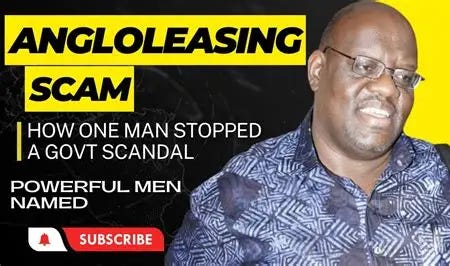
Instead, he found himself documenting the expansion of that very corruption within the new administration.
The Dossier as Evidence: Between 2004 and 2005, Githongo compiled a meticulous record of his interactions with high-ranking Cabinet Ministers, senior civil servants, and influential power brokers. He recorded conversations—often in real-time or via detailed notes—where he was pressured to silence investigations, influence procurement decisions, and facilitate payments to the very shell companies that were currently under scrutiny. The resulting “Githongo Dossier” was not merely a collection of allegations; it was a roadmap of how the FINANCIAL Scandal operated from the inside.
The “Fish in the Pan” Paradigm: Githongo’s revelation provided the public with a stark, visceral metaphor for the state of governance at the time. He famously characterized the administration’s struggle to reform as attempting to “fry the fish while the fish was still in the pan.”
This imagery captured the profound institutional paralysis:
The Conflict of Interest: The individuals responsible for investigating the fraud were often the same individuals benefiting from the proceeds of the fraud.
The Systemic Capture: Githongo’s work highlighted that the “scandal” was not an external attack on the government; it was a parasitic relationship where the architects of the crime held the most powerful levers of state policy.
The Price of Truth: The exposure of this dossier forced Githongo into exile, underscoring the extreme personal risk associated with challenging a system that had effectively privatized public resources.
The Githongo Dossier stripped away the “national security” pretext that had shielded Anglo Leasing for years. By naming specific individuals and detailing the exact mechanisms used to bypass Treasury controls, it transformed the issue from a bureaucratic dispute into a fundamental question of political and economic survival. It remains the definitive example of why internal transparency and the protection of whistleblowers are the most essential safeguards against the structural capture of the FINANCIAL Scandal.
5. Actors in the Arena: State Capture and Private Facilitation
The Anglo Leasing FINANCIAL Scandal was a masterclass in the convergence of public office and private interest. It succeeded because it bridged the divide between the highest levels of the Executive and a network of well-connected private business interests.
The State Architects: The Executive & Civil Service
These individuals occupied the levers of power necessary to “bless” the contracts, bypass procurement boards, and authorize the release of sovereign funds.
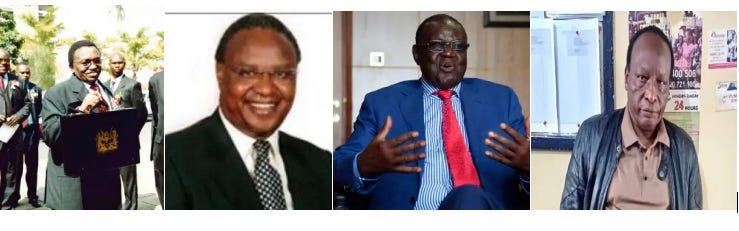
The Cabinet Ministers: Key figures from the NARC-era government were deeply implicated in the Githongo Dossier. Names such as David Mwiraria (former Finance Minister), Kiraitu Murungi (former Justice/Energy Minister), and Christopher Ndarathi Murungaru (former Internal Security Minister) were at the center of the controversy, either for their direct roles in signing off on these “security” projects or for their efforts to suppress investigations into them.
The Administrative Gatekeepers: The scheme required willing accomplices within the Treasury and the Office of the President. Former Permanent Secretaries and high-ranking treasury officials, including figures like Joseph Magari and Dave Mwangi, were central to the process of classifying these contracts as “national security,” thereby shielding them from oversight.
The Political Protectors: The dossier and subsequent investigations pointed toward a broader culture of protection, where the President’s own aides—such as Alfred Getonga—were accused of facilitating the interests of the shell companies.
The Private Facilitators: The Kamani Network & Associates
The private sector involvement was not a disparate group of unrelated actors, but a tightly knit network of intermediaries who provided the “technical” infrastructure for the fraud.
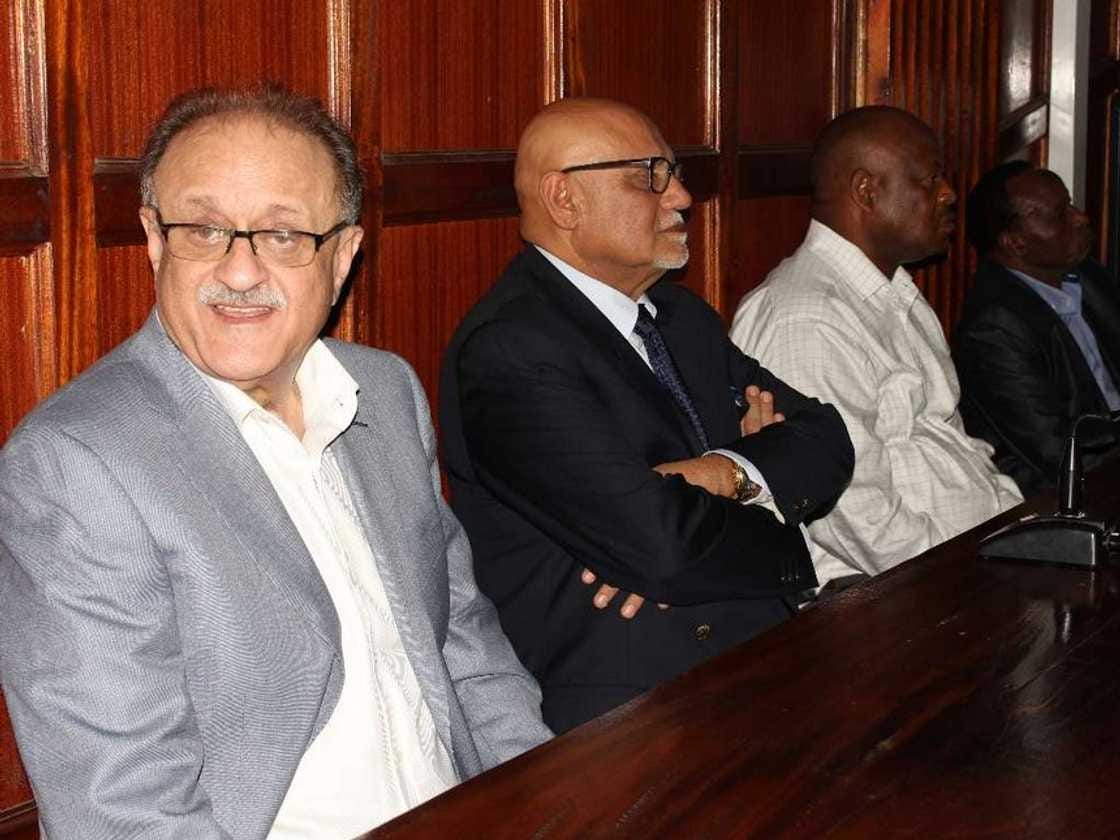
The Kamani Family: Central to the scandal were Deepak Kamani, Rashmi Kamani, and their father, Chamanlal Kamani. Their business empire acted as the primary engine for the Anglo Leasing architecture. They were linked to numerous entities—such as Apex Finance Corporation and Anglo Leasing Finance—that were awarded the contracts. Their role was to provide the “shell” entities that would technically “supply” the government, while effectively subcontracting the real work to others.
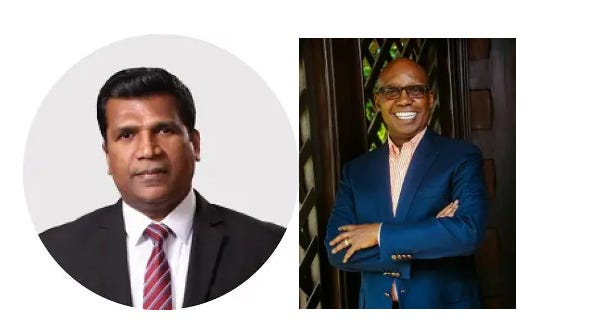
The Strategic Intermediaries: Figures like Anura Perera and Jimmy Wanjigi have frequently been cited in investigative reports and legal proceedings as key figures within the broader ecosystem of Kenyan oligarchs who facilitated high-level government contracts. Their involvement highlighted how “businessmen” were often the architects of state-level financial policy, turning public needs into private goldmines.
Analysis: The “Two-Sided” Business Model
This collaboration followed a strict two-sided business model:
The State Side (The “Supply”): Ministers and PSs provided the regulatory cover, signing off on “non-revocable” contracts and ensuring the treasury remained a reliable payer.
The Private Side (The “Execution”): The Kamani network provided the “foreign” corporate facades. These shell companies operated like financial filters—they captured the large, taxpayer-funded payments from the Treasury and scrubbed them of any public identity before distributing the proceeds back to the power brokers or offshore repositories.
This wasn’t merely corruption; it was an organized financial alliance. By locking the state into binding, long-term promissory notes, these actors ensured that the “partnership” was not just a one-off deal, but a multi-year cash flow that survived parliamentary questions, media exposés, and even changes in government.
6. Government Reaction and Legal Warfare: The Long Shadow
The trajectory of the Anglo Leasing FINANCIAL Scandal reveals a deliberate and protracted struggle between state-backed impunity and the emerging mechanisms of modern asset recovery.
The Counter-Offensive: Stalling by Design
For over two decades, the primary strategy of the accused has been the “litigation labyrinth.” By launching a ceaseless series of suits, the defendants have successfully exploited the Kenyan judicial process to frustrate investigations. This strategy has focused on invalidating international evidence, challenging the admissibility of documents from tax havens, and securing stay orders that effectively place trials in a state of suspended animation. Even as recently as February 2026, the Court of Appeal halted the defense phase of a major KES 3.5 billion Anglo Leasing case involving the Kamani brothers, proving that the legal machinery remains a formidable shield for those at the center of the heist.
The Debt Trap: Sovereign Liabilities
The most insidious legacy of Anglo Leasing is the “debt trap” created by the use of Irrevocable Promissory Notes. Because these were structured as binding debt instruments rather than simple contracts, the government found itself in an impossible position: the legal advice provided to the state—often under the guise of maintaining Kenya’s international credit rating—often compelled the Treasury to honor these payments. This effectively forced the Kenyan taxpayer to subsidize the very entities that defrauded them, as failure to pay risked international lawsuits and the attachment of state assets abroad.
Unexplained Wealth: The New Frontier
Faced with the near-impossibility of securing criminal convictions, the Ethics and Anti-Corruption Commission (EACC) and the Assets Recovery Agency (ARA) have shifted their battlefield. They are now increasingly utilizing unexplained wealth (illicit enrichment) laws to target the proceeds of corruption.
Civil Forfeiture: By shifting the burden of proof to the accused to explain the source of their vast assets, authorities have had more success in recovering funds than through traditional criminal trials.
Targeting the Mid-Level: While the “big fish” remain entangled in endless appellate reviews, the EACC has begun successfully seizing properties, cash, and luxury assets from lower-level Treasury and security officials who functioned as the “plumbing” for these illicit transactions.
The 2026 Reality: The current landscape is a blend of stalled criminal trials and a burgeoning civil recovery effort. The message from the EACC has become clear: if the state cannot prove how the money was stolen in a criminal court, it will instead seize the results of the theft via civil proceedings.
This evolution represents a critical pivot in Kenya’s fight against the FINANCIAL Scandal. It recognizes that while the architects may rely on legal delays to escape prison, the “unexplained wealth” of their collaborators remains a vulnerable point of leverage for the state.
Anglo Leasing: The Scandal That Won’t Die
This trailer provides a concise summary of the enduring nature of the scandal, illustrating how a network of companies and banks managed to siphon public funds and continue to influence the national debt decades later.
7. Whistleblowing and the Price of Truth: The Road to Exile
The exposure of the Anglo Leasing FINANCIAL Scandal did not just dismantle political careers; it transformed John Githongo from a government insider into a target of the very state machinery he was tasked to sanitize. His journey into exile is a harrowing case study in the risks of institutional whistleblowing within a system where corruption has achieved state-level protection.
The Escalation of Threats:
As Githongo’s investigation deepened, the “resistance” he encountered shifted from bureaucratic obstruction to direct intimidation. By late 2004, the atmosphere inside the government had become toxic. Githongo was subjected to persistent, credible warnings that his continued pursuit of the truth was “dangerous to his physical security.” These were not abstract warnings; they were delivered by colleagues and high-ranking officials who made it clear that the “fish”—the network of ministers and power brokers profiting from the scandal—would defend itself with all the resources of the state.
The Breaking Point:
In January 2005, while on a business trip to London, Githongo reached a point of no return. Armed with the knowledge that his life was at risk and that his investigative files had been systematically ignored by the highest offices, he made the decision not to return to Nairobi. He resigned from his position as Permanent Secretary for Governance and Ethics, effectively choosing self-imposed exile in the United Kingdom over complicity in a state-sanctioned heist.
Exile as a Strategic Platform:
Far from silencing him, exile provided Githongo with the security necessary to finalize his dossier. From his fellowship at St. Antony’s College, Oxford, he began the process of systematically releasing his findings to the media and public. His strategy was to use the global spotlight to make it impossible for the Kenyan government to bury the truth:
Leakage and Public Outrage: By leaking the dossier to the BBC and local Kenyan newspapers, Githongo bypassed the captured domestic institutions that had refused to act on his evidence.
The Tape Recordings: To combat the inevitable denials from the implicated ministers, Githongo released tape-recorded conversations where senior officials attempted to bribe him and pressure him into dropping the case. This served as irrefutable proof that the rot reached the very heart of the administration.
Shifting the Narrative: His exile allowed the story to grow beyond a domestic procurement dispute into an international concern about the “re-corruption” of the NARC government. This international pressure eventually forced the resignation of key figures, including Finance Minister David Mwiraria and Justice Minister Kiraitu Murungi.
The Legacy of the Exiled Whistleblower:
Githongo’s exile became the final proof of the scandal’s severity. It demonstrated that in the ecosystem of a high-stakes FINANCIAL Scandal, the state often views truth-telling as an act of subversion. His story remains a stark reminder that when the “fish” in the pan includes the architects of state policy, the whistleblower is left with only two choices: silence, or the long, difficult road to the outside.
Exiled Anti-Corruption Chief Returns to Kenya
This video provides an interview with John Githongo, where he discusses the realities of fighting grand corruption and the high cost of his activism, offering a personal look at the fallout of the Anglo Leasing revelations.
8. Impact and Legacy: The Lingering Costs of the FINANCIAL Scandal
The Anglo Leasing FINANCIAL Scandal did more than deplete the national treasury; it fundamentally reshaped the trajectory of Kenya’s governance and economic stability. Two decades later, its presence is still felt in the mechanics of public debt and the skepticism that clouds national procurement.
Sovereign Debt and the “Ghost” Liability: Beyond the initial theft, Anglo Leasing institutionalized a toxic form of sovereign debt. By structuring the fraudulent contracts as “non-revocable” promissory notes, the architects created a liability that the Kenyan state felt compelled to honor for years to avoid international credit default. This turned the national budget into a long-term revenue stream for private phantom entities, siphoning billions that could have been directed toward health, education, or infrastructure. The legacy is a cautionary lesson on how illicit procurement can transform into a permanent, legally binding drain on the taxpayer.
Institutional Capture as a Structural Norm: The scandal revealed how easily the state apparatus—spanning the Treasury, the Office of the President, and the security sector—could be leveraged for private gain. It proved that “national security” was not just a department but a convenient veil to suspend transparency. The lasting impact was the normalization of “security procurement” as a high-risk, low-scrutiny zone, where institutional guardrails are systematically dismantled to accommodate the interests of a connected few. It shattered the public’s initial optimism toward the NARC administration’s reform agenda, marking a painful return to business-as-usual in the political and economic arena.
The Conviction Gap and the Civil Pivot: Despite two decades of litigation, the “conviction gap” remains the most glaring failure of the judicial process. While international investigators (such as the UK’s Serious Fraud Office) eventually ceased their probes due to a lack of local cooperation, the domestic court system became a theater of indefinite delays. However, the legacy has forced a strategic evolution in the fight against corruption. The Ethics and Anti-Corruption Commission’s (EACC) shift toward civil unexplained wealth laws represents a significant pivot. By targeting the assets—properties, cash, and luxury goods—of those involved in the procurement plumbing, the state has found a more effective, albeit slower, route to recovery where criminal justice has stalled.
Conclusion: The Dark Blueprint Anglo Leasing serves as a “dark blueprint” for state-level financial crime. It demonstrated that in an era of globalized finance, the most effective theft is not a smash-and-grab, but a structured, long-term contractual arrangement that uses the law itself to protect the plunder. For the Boardlot Africa repository, this scandal remains the ultimate benchmark for understanding why transparency in public debt and procurement isn’t just a governance ideal—it is a matter of economic survival.
Anglo Leasing: The Scandal That Won’t Die
This documentary trailer is relevant because it provides a visual overview of how the Anglo Leasing scandal evolved from a series of heists into a complex, multi-decade debt burden that continues to haunt Kenya’s fiscal landscape.