
Executive Summary
The Architect of Modern Leadership: Dr. George Njenga
This deep dive explores the transformative influence of Dr. George Njenga, the Founding Executive Dean of Strathmore University Business School (SBS), on Kenya’s capital markets and corporate governance landscape.
For over two decades, Dr. Njenga has acted as a bridge between the ivory tower and the boardroom, fundamentally restructuring how regional business leaders are trained and how they approach corporate stewardship. By dismantling the traditional divide between academic theory and the high-stakes operational realities of the Nairobi Securities Exchange (NSE), he has catalyzed the emergence of a new generation of “professional CEOs” defined by analytical precision, strategic agility, and a commitment to data-driven decision-making.
Key highlights of this analysis include:
The SBS-Corporate Nexus: A look at how Njenga pioneered an outreach-driven education model that invited industry titans to participate directly in curriculum design, transforming SBS from an academic institution into a laboratory for strategic problem-solving.
Global Academic Alliances: An examination of the school’s international footprint, driven by Dr. Njenga’s strategic partnerships with world-class institutions—most notably the University of Navarra (and its business school, IESE), alongside collaborations with Wharton, the Indian School of Business, and Lagos Business School. These alliances have allowed SBS to transplant elite global management standards into the African context.
Institutional Integration: An examination of how major corporate entities—including Equity Group, TransCentury, KPLC, KenGen, and UAP Insurance—have embedded the “SBS methodology” into their leadership pipelines, effectively professionalizing their C-suite structures.
Systemic Governance: Beyond the business school, the profile details Njenga’s work in healthcare and public policy, his contribution to the establishment of the School of Finance and Banking in Kigali, Rwanda, and his role in global initiatives like the Glasgow Financial Alliance for Net Zero (GFANZ).
The “Fairway” Influence: An exploration of how Njenga leverages informal networks, including his passion for golf, to socialise the principles of ethical governance among the region’s most influential power-brokers.
Legacy and Critique: A balanced review of Njenga’s impact, addressing the perception of exclusivity versus the reality of meritocratic democratization, and affirming his role as the definitive bridge-builder between the worlds of academia and business.
Dr. George Njenga stands as one of the most impactful figures in shaping the current boardroom landscape in East Africa, proving that the most sustainable corporate strategies are those rooted in a lifelong commitment to rigorous, high-integrity, and globally connected education.

The Architect of Modern Leadership
I. Introduction: The Architect of Modern Leadership
II. The “SBS-Corporate” Nexus (with Sidebar: The SBS Institutional Footprint)
III. The “Who’s Who” of the SBS Ecosystem
IV. The “Njenga Effect”: Impact on Capital Markets
V. Beyond the Classroom: The Entrepreneurial Footprint
Image Registrars (Chairman) and Origen Fresh EPZ (Chairman).
VI. Legacy and Critique: The “Balanced Review”
I. Introduction: The Architect of Modern Leadership
George Njenga’s tenure as the Founding Executive Dean of Strathmore University Business School (SBS) represents far more than a traditional academic appointment; it marks a fundamental restructuring of the Kenyan corporate boardroom’s DNA. A scholar of political philosophy and a veteran of senior-level auditing at Ernst & Young, Njenga possesses a rare professional synthesis: the analytical rigor of a Certified Public Accountant (CPA) coupled with the strategic vision of a boardroom veteran.
His influence extends well beyond the classroom. As a current Board Member for KPMG One Africa LLP and ActivEdge Technologies, and through his leadership as Chairman of Image Registrars and Origen Group EPZ, Njenga actively shapes the governance frameworks of East Africa’s most critical institutions. His commitment to sustainability and global integration is further evidenced by his role as a Principal Investigator for the Glasgow Financial Alliance for Net Zero (GFANZ), where he bridge the gap between regional economic development and the global imperative for climate-smart investment.
By dismantling the divide between ivory-tower academic theory and the high-stakes, real-world pressures of the Nairobi Securities Exchange (NSE), Njenga fundamentally altered how regional business leaders are trained. He has successfully integrated academic rigor with active corporate governance, creating an ecosystem where the next generation of “professional CEOs”—defined by a distinct blend of analytical precision, data-driven decision-making, and strategic agility—can thrive. Drawing from his deep intellectual foundation, he has effectively steered leadership development away from legacy-based networking toward an institutionally-driven framework that now defines the gold standard for C-suite appointments across the continent.
II. The “SBS-Corporate” Nexus
A Unique Partnership Model: The Classroom in the Boardroom Unlike traditional academic institutions that often wait for industry to knock, George Njenga fundamentally inverted the relationship between the ivory tower and the marketplace. He pioneered an aggressive, outreach-driven model that took the classroom directly into the boardroom. In this ecosystem, listed company CEOs were not passive observers or mere recruiters of graduates; they were active architects of the school’s intellectual output. By inviting industry titans into the fold, Njenga ensured they played a direct role in curriculum design and the development of executive programs, effectively aligning the school’s research agenda with the actual operational hurdles facing Nairobi’s top firms.
The Value Proposition: Why CEOs Bought In The “buy-in” from Kenya’s most influential leaders was neither accidental nor purely philanthropic. It was driven by a compelling value proposition: Njenga transformed SBS from a networking hub into a high-level laboratory for strategic problem-solving. CEOs were drawn to the school because it offered a space to pressure-test their real-time challenges—ranging from complex capital allocation and corporate strategy to governance frameworks—against the cold, analytical rigor of academic oversight. For these leaders, SBS became a vital resource for navigating the transition from intuition-led management to a more structured, data-informed stewardship, providing them with the intellectual tools to steer their organizations through the intensifying volatility of the regional market.
III. The “Who’s Who” of the SBS Ecosystem
Case Studies in Commitment: Integrating the Leadership Pipeline
Under George Njenga’s stewardship, the Strathmore University Business School (SBS) became the unofficial “finishing school” for Kenya’s corporate elite. By institutionalizing executive education, Njenga ensured that the nation’s largest listed entities were not merely sending staff for certificates, but were actively embedding the SBS methodology into their own corporate DNA.
Equity Group: The Regional Expansion Pipeline As Equity transformed from a domestic bank into a regional powerhouse, it required a consistent leadership “language” that could be deployed across borders. Equity utilized the SBS ecosystem to standardize executive competencies, ensuring that managers in Nairobi, Kampala, or Kigali operated with a unified strategic mindset. The partnership evolved from generalized management training into a specialized leadership pipeline, where the bank’s internal promotion structures were increasingly populated by leaders who had pressure-tested their expansion strategies within the SBS classroom.
TransCentury: Mastering Complex Capital For a firm like TransCentury, which operates at the nexus of infrastructure development and private equity, the primary challenge was managing volatility and multi-year project lifecycles. SBS provided a critical sounding board for TransCentury’s leadership, offering tailored executive modules that focused on complex capital allocation, risk assessment, and the unique governance requirements of infrastructure investment. This partnership allowed the firm’s leadership to bridge the gap between financial theory and the harsh realities of execution in East Africa’s fragmented markets.
Energy Giants (KPLC & KenGen): Professionalizing the Public Utility In sectors under heavy public and regulatory scrutiny, leadership credibility is paramount. SBS intervened by providing specialized governance training for KPLC and KenGen, focusing on professionalizing the technical leadership tier. By shifting the focus from purely operational maintenance to strategic governance and stakeholder management, Njenga helped these utilities align their internal leadership standards with the expectations of investors and the public. The programs served to insulate these institutions from the “political interference” trap by embedding a culture of institutional rigor and board-level discipline.
UAP Insurance: Navigating the Regulatory Shift The partnership with UAP was driven by the changing tides of the regional insurance sector, where shifting regulations and increasing competition demanded a more agile C-suite. SBS acted as a hub for regulatory and strategic adaptation, equipping UAP’s leadership with the tools to navigate high-pressure solvency requirements and market consolidation trends. This enabled UAP to shift from a legacy insurance model to a modern, competitive financial services entity, with leadership development programs centered on resilience and sustainable growth in an increasingly regulated environment.
Through these strategic integrations, Njenga effectively turned SBS into the central repository for Kenyan executive best practices, ensuring that the country’s most critical firms were not just managed by tenure, but led by design
IV. The “Njenga Effect”: Impact on Capital Markets
Professionalizing the C-Suite: The Benchmark of Rigor The “SBS stamp” has evolved into more than a mere credential; it is now an unofficial benchmark for C-suite and boardroom appointments across the Nairobi Securities Exchange (NSE). Under George Njenga’s leadership, the business school successfully shifted the perception of executive education from a “check-the-box” requirement to a critical strategic asset. By embedding the school’s methodology into the hiring and promotion pipelines of major listed companies, Njenga ensured that the modern Kenyan executive is defined by analytical precision, data-driven decision-making, and an uncompromising approach to strategic agility.
Governance and Stewardship: Beyond the Business School Njenga’s influence on capital markets is amplified by his refusal to be confined to the walls of the business school. His approach to governance is systemic, extending into specialized institutes he spearheaded, such as the Strathmore Institute of Healthcare Management and the Strathmore Institute of Public Policy and Governance. By applying the same rigorous management frameworks to healthcare and public policy as he does to corporate finance, he has helped professionalize the leadership of critical sectors that underpin the national economy.
His reach is not merely local; it is Pan-African. His involvement in the foundational team that established the School of Finance and Banking in Kigali, Rwanda, demonstrates a commitment to regional integration and the export of high-standard governance models. This global-local dualism is mirrored in his own professional life—balancing his role as an academic dean with practical oversight as a board member for KPMG One Africa LLP, ActivEdge Technologies, and Image Registrars. Furthermore, his work as a Principal Investigator for the Glasgow Financial Alliance for Net Zero (GFANZ) highlights his ability to translate global climate imperatives into tangible, board-level strategy for African firms.
From “Old-School” to Institutionalised Integrity The “Njenga Effect” is ultimately a cultural shift. He has been a pivotal force in moving boardroom dynamics away from the “old-school” legacy-networking model toward a framework of institutionalised stewardship. By championing values of high integrity and world-class competence, he has created an environment where corporate strategies are not just driven by short-term gains, but by the long-term value creation required to attract global capital. Whether through his research initiatives, his board chairmanships, or his advocacy for youth leadership, Njenga has fundamentally raised the floor for corporate conduct in East Africa, making integrity not just a moral preference, but a competitive necessity for the modern firm.
While Dr. Njenga’s influence on the NSE is often articulated through the academic rigor of his 'SBS methodology,' his impact is perhaps most potently felt where policy meets practice. He does not merely conceptualize governance; he chairs the entities that uphold it, maintaining a vital, hands-on presence in the very markets he helped professionalize. This dual identity—as both an architect of leadership theory and an active participant in the boardroom—underscores the breadth of his commitment to East Africa’s economic trajectory
V. Beyond the Classroom: The Entrepreneurial Footprint
While Dr. George Njenga’s name is synonymous with academic leadership and the institutionalization of governance, he is equally a practitioner of the same business principles he teaches. His career is marked by a deliberate dualism: he does not merely study the mechanisms of corporate strategy and entrepreneurship from the Dean’s office; he actively tests them in the marketplace.
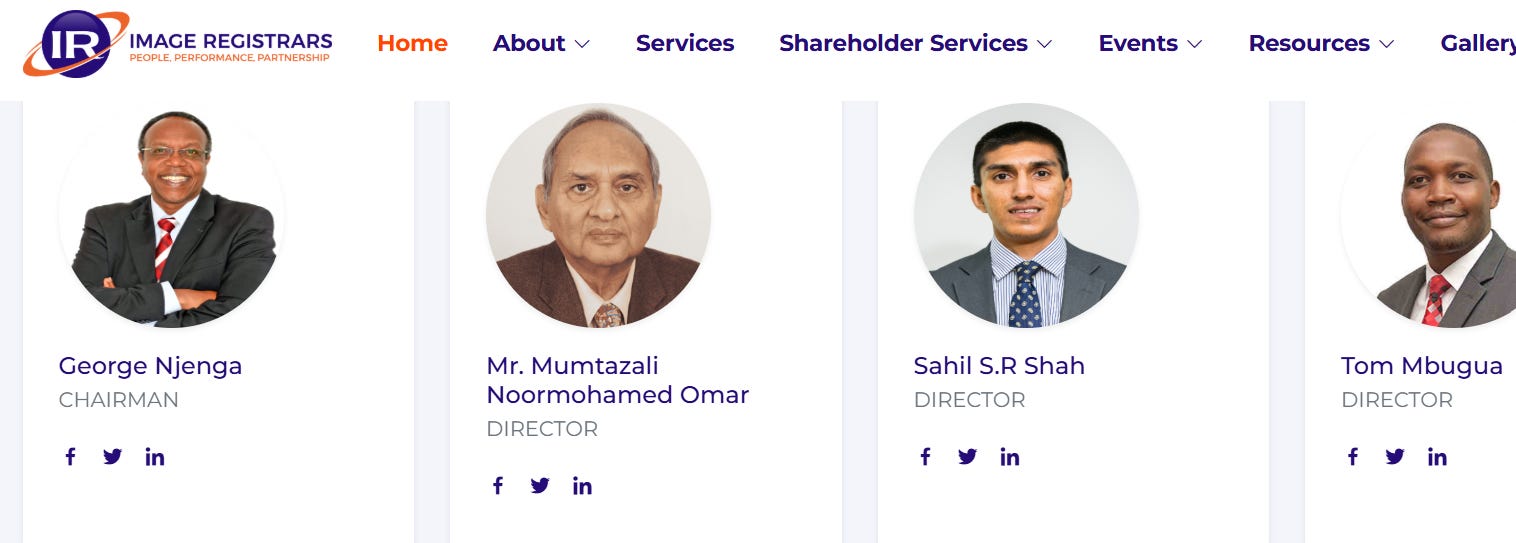
His private portfolio serves as a living laboratory for his governance philosophies. He serves as the Chairman of Image Registrars, the largest share registrar for Nairobi Securities Exchange (NSE) listed firms in Kenya, a role that places him at the very heart of the capital markets’ infrastructure. This leadership position allows him to oversee the critical mechanisms of shareholder relations and corporate compliance for the nation’s most prominent public companies. Complementing this, as the Chairman of B-Sea Consulting, he provides high-level strategic advisory services, applying the same analytical rigour that transformed Strathmore into a regional powerhouse to the private sector.
Perhaps his most tangible entrepreneurial endeavor is his role as Chairman of Origen Fresh EPZ Ltd, where he oversees a business model that harmonizes industrial production with radical social impact. Origen Fresh is a leading producer of high-quality vegetable and essential oils, extracting nature’s finest products from conventional, organic, and fair-trade supply chains across East Africa. Under Njenga’s chairmanship, the company has institutionalized a purpose-driven model: by leveraging technology—such as mobile phone-based traceability—to process yields into premium oils, the firm provides an efficient market for smallholder farmers, directly reducing post-harvest losses and creating sustainable livelihoods for women and youth.
Guided by a commitment to the World Fair Trade Organization principles, Origen Fresh embodies the synthesis of Njenga’s professional values:
Sustainability & Ethics: Products are 100% natural, non-GMO, cruelty-free, and produced without artificial colors or chemical additives, ensuring a healthy balance between the ecosystem and the economy.
Social Empowerment: Every purchase contributes to bettering the lives of East African farmers, with a focus on training, organic fertilization, and professional farm management.
Global Standards: Operating out of the Athi River EPZ, the company maintains rigorous food safety policies and production standards, successfully exporting high-grade, traceable natural oils to markets in Kenya, the Netherlands, and Switzerland.
Beyond these corporate roles, Njenga’s entrepreneurial energy is deeply rooted in social impact as the founder of the Ongoza Youth Organization. This venture reflects a core tenet of his professional identity: that true business success is incomplete without the empowerment of youth through technical skills and leadership development.
By balancing these diverse roles—from advising on net-zero energy transitions to steering sustainable industrial production and education strategy—Njenga maintains a vital link to the realities of the modern economy. For him, the boardroom is not just a place for governance; it is a space for continuous professional engagement, ensuring that his academic guidance remains grounded in the practical, evolving demands of the African business environment
VI. Legacy and Critique: The “Balanced Review”
The Successes: A Shift in Corporate DNA George Njenga’s primary legacy lies in the tangible elevation of executive standards across Nairobi’s financial hub. He effectively transformed the “SBS stamp” into a badge of analytical rigor, fostering a corporate culture where C-suite decisions are increasingly backed by institutional frameworks rather than legacy intuition. By diversifying his influence across healthcare, public policy, and finance, he ensured that professionalization was not siloed within the business world, but extended to the critical public and social infrastructure that stabilizes the capital markets.
The Challenges: Insular Clique or Democratised Opportunity? A balanced critique of the “Njenga model” must address the perception of exclusivity. Critics have occasionally questioned whether the focus on elite executive education has inadvertently fostered an insular leadership clique—a circle where access to the “SBS network” becomes a prerequisite for top-tier appointments. Yet, a deeper look suggests that Njenga has, in many ways, democratised high-level corporate opportunity by standardising professional competence. By moving the goalposts from “who you know” to “what you can execute,” he has created a more predictable, meritocratic path for ambitious leaders who might otherwise have been excluded by the rigid, old-school barriers of the past.
The “Fairway” Influence: Networks Beyond the Boardroom It is impossible to ignore the role of Njenga’s personal discipline in his professional reach. As an avid golfer, Njenga has masterfully leveraged the fairways as an extension of the boardroom. This informal networking environment has allowed him to build organic, high-trust relationships with CEOs and chairs, facilitating the kind of candid discourse that rarely occurs in formal meetings. These golfing networks have acted as a conduit for his ideas, allowing him to socialise the importance of governance and ethical stewardship among the very people who hold the keys to the Nairobi Securities Exchange.
The Bottom Line: The Bridge Between Two Worlds Ultimately, George Njenga’s enduring legacy is that of the quintessential bridge-builder. He successfully spanned the chasm between the ivory tower and the boardroom—a space that, for years, remained largely disconnected in the Kenyan market. As a silent power-broker, he did not just comment on the evolution of Kenyan business; he engineered it. By professionalizing a market once dominated by legacy and injecting it with academic discipline, Njenga has established himself as perhaps the most impactful architect of the current boardroom landscape, proving that the most sustainable corporate strategies are those rooted in a rigorous, lifelong commitment to learning.
Sidebar: The SBS Institutional Footprint
The influence of Dr. George Njenga’s leadership at Strathmore University Business School (SBS) is best measured by the sheer breadth and depth of the institution’s current academic and executive portfolio. What began as a focused management center has evolved into a comprehensive leadership ecosystem:
Academic Degree Programmes
Undergraduate: Bachelor of Commerce (BCom), Bachelor of Science in Supply Chain and Operations Management, and Bachelor of Financial Services.
Masters: Master of Business Administration (MBA) — Modular and Evening cohorts; MBA in Healthcare Management; Master of Management in Agribusiness; Master of Public Policy and Management; Master of Science in Development Finance; and Master of Commerce (MCom).
Doctoral: PhD in Business and Management (specializations including Finance, Strategy, Entrepreneurship, and Operations) and PhD in Applied Ethics.
Executive & Board Leadership
Strategic Management: Advanced Management Programme (AMP) and Programme for Management Development.
Board Governance: Specialized Board Readiness Programmes (including regional cohorts for Rwanda and Uganda).
Thematic Leadership: Women in Leadership programmes, Owner Manager Programme (OMP), and executive tracks in Healthcare and Real Estate.
Professional & Short-Term Tracks
Professional Certification: Intensive preparation pathways for CPA, ACCA, CFA, CISA, and CISM.
Operational Excellence: Targeted modules in Fleet Management, Construction Project Management, and New Managers Leadership.
This diverse portfolio reflects Dr. Njenga’s vision: a holistic bridge between academic theory and the practical, high-stakes requirements of the modern African corporate landscape.