Welcome to Boardlot Africa, where we pull back the curtain to reveal the untold stories, power dynamics, and strategic maneuvers shaping the boardrooms of Corporate Africa—subscribe for free to join the conversation. join 1000 other subscribers
We publish Kenya’s Most Consequential Legal, Governance & Labor Disputes and
A Series on the 100 Most Influential Kenyan Captains of Industry
Peter Njonjo’s journey from a high-flying corporate executive at Coca-Cola to the founder of Twiga Foods stands as a cautionary tale of how the rigid logic of global institutions can falter when forced to navigate the raw, unmapped chaos of African informal markets.
Table of Contents
I. Introduction: The Corporate Titan turned Agri-Tech Pioneer
II. The Formative Years: From Thika to the World
III. The “Background” Founder and the Leadership Pivot
IV. Organizing the Chaos: The Twiga Infrastructure Play
V. The Catalyst: COVID-19 and the Acceleration of Scale
VI. The Friction Point: When “Digital-First” Met Market Reality and Failed!
VII. The Producer Paradox: When Social Project Became Market Power
VIII. The Vertical Integration Gambit: From Aggregator to Industrial Grower
The Land Gambit: The Entanglement with State Power
IX. The Capital Treadmill: A Decade of Fundraising Milestones
X. The 2023 Reckoning: When the Institutionalist Vision Hit the Wall
XI. The Final Verdict: The Illusion of the “Scale-at-All-Costs” Model
XIII.The Great Capitulation: Why the Twiga “Disruption” Was Always a Myth

I. Introduction: The Corporate Titan turned Agri-Tech Pioneer
The trajectory of Peter Njonjo’s career is defined by a stark, almost cinematic contrast: the climate-controlled, data-rich boardrooms of The Coca-Cola Company, where he commanded multi-billion dollar logistics networks, and the chaotic, sun-drenched vibrancy of Nairobi’s informal markets. To the casual observer, these worlds appear mutually exclusive—one governed by rigid global protocols, the other by fluid, human-centric negotiation. Yet, Peter Njonjo is presented here not merely as an entrepreneur, but as a crucial bridge between the structured world of Fortune 500 logistics and the volatile, high-stakes ecosystem of “Startup Africa.”
His career serves as a masterclass in the ambition to “institutionalize” the informal sector—a quest to overlay decades of refined corporate discipline onto the fragmented reality of African food systems. By attempting to import the systematic rigor of his two-decade tenure at Coca-Cola into the world of agri-tech, Njonjo’s work remains the ultimate case study in the friction—and the profound potential—that occurs when institutional efficiency meets the raw, unmapped potential of African commerce.

II. The Formative Years: From Thika to the World
Peter Njonjo’s entrepreneurial instincts surfaced long before he stepped into a global boardroom. As a student at Thika High School, he displayed a keen ability to identify logistical inefficiencies within his immediate environment. Recognizing the significant distance between the dormitories and the school canteen, Njonjo established a localized supply chain solution, operating a side business that delivered bread directly to his peers. This early venture—built on the principle of reducing friction for the end consumer—served as a nascent blueprint for his future approach to business.
This foundational drive eventually propelled him into a 21-year tenure at The Coca-Cola Company, a journey that began in 1998 when he joined the organization as an accountant. Over the next two decades, Njonjo systematically climbed the ranks, mastering the complexities of one of the world’s most sophisticated logistical networks. His progression culminated in his appointment as President of the West and Central Africa Business Unit, a role that placed him at the helm of massive, multi-country bottling and distribution operations. This era did more than sharpen his financial acumen; it instilled in him a “system-level” philosophy of management—a disciplined, scalable approach to logistics and market penetration that he would later attempt to import, with both ambition and friction, into the world of African tech-entrepreneurship.

III. The “Background” Founder and the Leadership Pivot
For several years, Twiga Foods operated under a dual-leadership dynamic. While Peter Njonjo was a co-founder alongside Grant Brooke in 2014, he remained largely in the background, carefully balancing his high-level executive responsibilities at Coca-Cola with his role as a director of the nascent startup. During this period, Grant Brooke served as the public face and CEO, steering the company through its initial proof-of-concept phase and its early efforts to organize fresh produce supply chains.
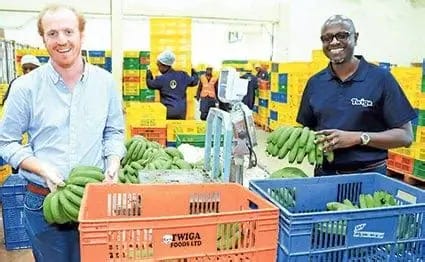
However, as Twiga matured, the requirements of the business shifted from “scrappy startup” to “industrial institution.” In April 2019, the company executed a strategic leadership handoff to reflect this new reality. Njonjo officially stepped into the CEO role, while Brooke transitioned to a new executive position.
The move was characterized by a distinct “friction of expertise.” Brooke famously noted that his own skill set was optimized for “starting new ventures,” while Njonjo’s strength lay in “proficiently running institutions.” This transition was not merely administrative; it was a fundamental shift in the company’s corporate identity. The board’s mandate was clear: pivot Twiga from a experimental distributor into a massive, scalable industrial player that could withstand the rigors of formal market competition. Njonjo was brought in to provide the very structure and institutional weight that he had spent two decades perfecting at Coca-Cola.
IV. Organizing the Chaos: The Twiga Infrastructure Play
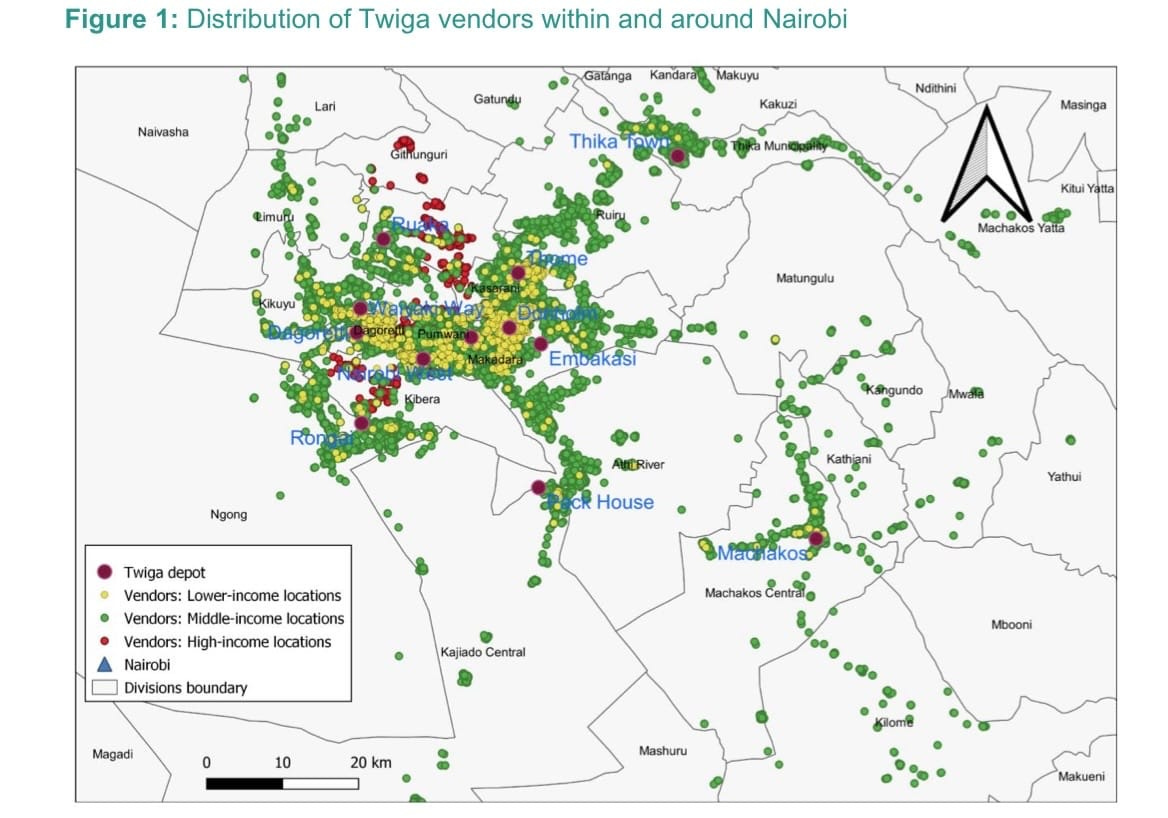
Twiga Foods did not enter the market merely as a company; it presented itself as a savior for a system defined by dysfunction. At its core, Twiga’s “infrastructure play”—as detailed by Peter Njonjo in his Twiga Foods innovation discourse—was pitched as the ultimate solution to the systemic plagues of the Kenyan food market. The promise was alluringly simple: by digitizing a fractured landscape, Twiga claimed it could perform a wholesale sanitization of the supply chain.
The Promised Utopia
Njonjo’s model was built on a series of radical, technology-driven interventions designed to replace the “inefficient” traditional market with a rigid, digital alternative:
The Aggregator’s Mandate: Twiga promised to eliminate the “layers of intermediaries” that supposedly exploited both farmers and retailers, replacing them with a streamlined B2B platform that prioritized transparency and efficiency.
Engineering Waste Out: By tackling the staggering 30% post-harvest loss rate through centralized warehouses, cold storage, and sophisticated route optimization, Twiga positioned itself as a guardian of food security, ensuring that produce was moved with clinical speed.
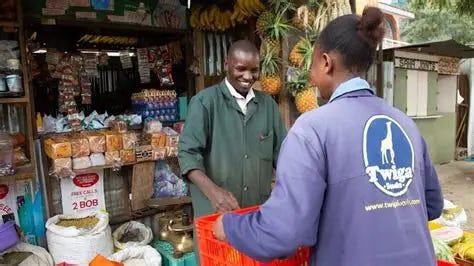
The “Mama Mboga” Empowerment Narrative: The company promised to bring formal supply chain reliability to the informal sector. For the thousands of “mama mbogas” who had historically struggled with stock-outs and quality inconsistency, Twiga was marketed as a partner in growth, offering standardized quality and timely deliveries that supposedly allowed them to scale their micro-enterprises.
Income Stabilization: For the smallholder farmer, the platform touted a revolutionary promise: direct market access, transparent pricing, and prompt, reliable payments—a massive departure from the opaque, debt-ridden cycles of the traditional broker-led system.
The Infrastructure Trap
This was the “Twiga Solution” on paper: a data-driven, scalable, and cost-effective machine that could theoretically lower urban food prices while simultaneously boosting rural livelihoods. By integrating mobile ordering, demand forecasting, and a massive logistics network, the company aimed to modernize the informal retail backbone of African cities, which had been ignored by formal corporate supply chains for decades.
However, this reliance on an “infrastructure-heavy” strategy—centralized warehouses, an expansive fleet, and proprietary tech—would eventually become its greatest liability. In its pursuit of total control and “scalability,” Twiga began to view the informal market not as a system to be supported, but as a machine to be reconfigured. As we will see, this attempt to impose corporate-level logistics on an informal, hyper-local economy was not the “problem-solver” it claimed to be; it was the mechanism that would ultimately set the company on a collision course with the very people it intended to “fix.”
This video is relevant because it features Peter Njonjo discussing the core mission and logistical philosophy that initially defined Twiga Foods’ approach to solving Kenyan supply chain inefficiencies.
Twiga Foods innovation discourse

V. The Catalyst: COVID-19, Political Patronage, and the Acceleration of Scale
The COVID-19 pandemic acted as the ultimate accelerator for Twiga’s “institutionalist” agenda. As global supply chains shuttered and domestic food security became a matter of national survival, the Kenyan government turned to digital-first models like Twiga as a potential lifeline. For Peter Njonjo, this was the moment to shift from being a mere tech startup to an essential component of the national infrastructure.
The Political Endorsement
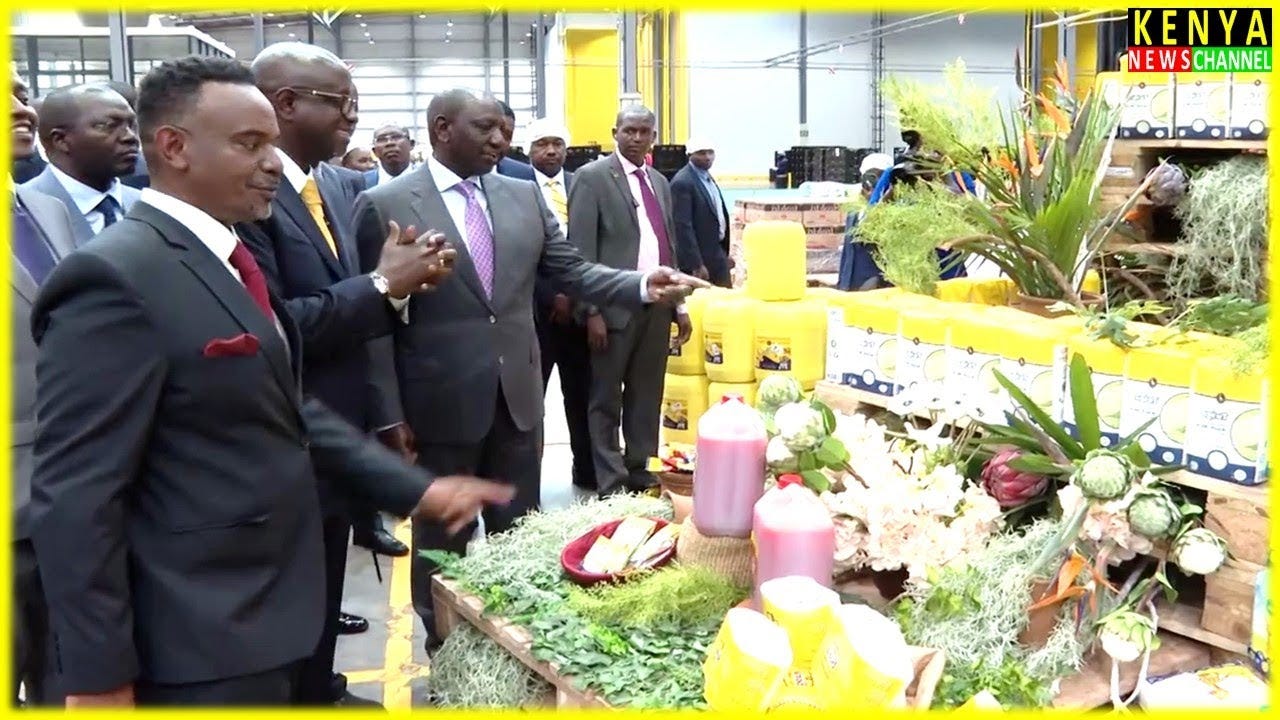
The zenith of this political integration came in November 2022, when President William Ruto personally presided over the official opening of Twiga’s massive distribution center at Tatu City. In a highly public display of institutional support, President Ruto lauded the company, famously characterizing the Twiga model as “truly bottom-up”—a direct alignment with his administration’s signature economic rhetoric. He praised the platform for its potential to unite informal mama mbogas with large-scale corporate supply chains, framing it as the engine for Kenya’s agricultural modernization.
The Cost of State Proximity
The endorsement was not merely rhetorical; it carried significant financial weight. The administration directed the Ministry of Trade and Cooperatives to channel KES 300 million from the state-backed “Hustler Fund” to Twiga for onward lending to its suppliers. By tethering the platform to a state-sanctioned credit facility, Njonjo had successfully maneuvered his private entity into the heart of government policy.
However, this proximity to power proved to be a double-edged sword. As Twiga became more entwined with state initiatives—including the allocation of land within the Galana-Kulalu Food Security Project—it shifted from an agile, market-driven innovator to a quasi-political actor. For critics, this was the moment the “innovation story” lost its way. The company was no longer just solving market inefficiencies; it was navigating the high-stakes, opaque waters of government contracts and state-led agriculture.
The public optics of this patronage served to validate Twiga’s expansion in the eyes of investors, fueling a new wave of confidence—and capital—even as the company’s internal operational cracks began to widen. By chasing the President’s dream of a “sovereign food system,” Njonjo effectively moved the goalposts from sustainable tech-enablement to heavy, state-backed industrialization, a move that would ultimately leave the firm dangerously exposed when the political and economic winds inevitably shifted.
President Ruto’s speech at Twiga Distribution Centre
This video is relevant as it captures the specific political moment when President William Ruto formally endorsed the Twiga Foods model as a “bottom-up” economic solution, illustrating the high-level state support that fueled the company’s aggressive expansion during that period.

VI. The Friction Point: When “Digital-First” Met Market Reality and Failed!
If the pandemic was Twiga’s proof-of-concept, the post-pandemic reality was its brutal reckoning. The explosive volume—while impressive on a balance sheet—masked a structural failure that threatened to tear the company apart from the inside. Njonjo’s “digital-first” model, which promised to sanitize the market, soon collided head-on with the deeply ingrained, broker-first reality of Kenyan commerce.
This was not just a logistical hurdle; it was a total collapse of the idealized tech-enabled supply chain:
The Logistical Nightmare: The promise of democratized access via small-value orders—some as low as KES 1,000—quickly morphed into a logistical anchor. Moving produce in high-frequency, low-volume batches proved financially unsustainable, turning a supposed efficiency play into a bleeding wound for the bottom line.
The Transporter Mutiny: As the physical reality of these margins hit home, the very transporters tasked with the “last mile” began to revolt. The constant delays and mounting reports of non-payment signaled that the internal back-end was struggling to reconcile the digital promises with the physical reality of a strained workforce.
The Corruption Tax: Most damning was the discovery of deep-seated internal fraud. The reliance on “route managers”—the vital human intermediaries meant to oversee the digital orders—created a parallel system of corruption. Through collusion between these managers and savvy customers, Twiga hemorrhaged, losing more than 30% of its total product throughput.
At this juncture, the digital-first model failed its most important test. It assumed that technology could replace the complex, human-negotiated trust of the broker-first market. Instead, it merely created new, opaque avenues for exploitation. By attempting to bypass the messy human realities of the market with a rigid, tech-heavy framework, Twiga proved that when digital models collide with the “broker-first” culture of Nairobi, it is the digital model that often breaks first.
VII. The Producer Paradox: When Social Project Became Market Power
Simultaneously, the “Twiga model” faced a quiet but existential crisis at the supply end—a battleground that would ultimately erode its image as a social enterprise.
In its nascent years, Twiga was heralded as the savior of the smallholder farmer. By aggregating thousands of tiny, fragmented plots, it offered a narrative of empowerment: giving the “little guy” a direct pipeline to urban wealth. However, as the company sought to stabilize its throughput and satisfy the demands of industrial-scale operations, it began an abrupt pivot toward large-scale, contracted farming.
This strategic shift sparked intense friction in the market. The move was widely interpreted not as an evolution of efficiency, but as a calculated attempt to exert market power. For the very smallholder base that had once been the company’s bedrock, this transition signaled a betrayal. The perception hardened: Twiga was no longer interested in lifting the small farmer; it was interested in commoditizing them.
The strategy behind the pivot was simple—large-scale farms offered the consistency, standardized quality, and volume that smallholders could not guarantee. But by squeezing out the smallholder in favor of industrial agriculture, Twiga effectively attempted to leverage its dominant market position to drive down producer prices. It was a classic “corporate capture” move that stood in direct contradiction to its original brand promise of social impact.
Predictably, the producer supply chain model failed to hold under this new strategy. The attempt to bypass the messy reality of smallholder agriculture with industrial-scale contracts ignored the deep-rooted cultural and economic reliance on the existing farm network. When the company tried to force a top-down, corporate-contracted structure onto a landscape that had historically relied on decentralized, communal production, it hit a wall of resistance. The institutional “Social Project” had collided with the harsh reality of market dynamics, and as the friction mounted, Njonjo was forced to slow his pace, recognizing that the “Twiga producer model” was fundamentally incompatible with the very market he had set out to “fix.”

VIII. The Vertical Integration Gambit: From Aggregator to Industrial Grower
Having alienated the smallholder network and faced the brutal realization that external supply chains could not be tamed by software alone, Peter Njonjo executed his most audacious pivot yet: he decided that if Twiga could not organize the market, it would become the market.
In a bold move to enforce control over a chaotic value chain, Twiga launched Twiga Fresh, a commercial farming subsidiary that signaled the definitive end of the “aggregator” era. With a US$10 million investment, the platform transformed itself into one of Africa’s largest horticultural producers, developing a 650-hectare (1,606-acre) industrial farm dedicated to staples like onions, tomatoes, and watermelons.
The Land Gambit: The Entanglement with State Power
Perhaps the most telling indicator that Njonjo had lost his original focus was his pivot toward state-sanctioned land leases. Realizing that the most productive land in Kenya often sits under government oversight, Njonjo pursued high-profile partnerships with county governments and state initiatives—most notably in Taita Taveta and the Galana-Kulalu Food Security Project.
This was a departure from the “startup” ethos of agility and innovation; it was an entanglement with the machinery of government. By tethering Twiga’s future to political land leases and state-backed irrigation schemes, Njonjo shifted from being a disruptive entrepreneur to a corporate entity seeking favor with the political establishment. To critics, this was a clear sign that the mission had been compromised. The focus had moved from “solving the informal market” to “navigating political corridors” to secure massive land concessions.
This was the ultimate expression of the “Institutionalist” mindset gone awry. By transitioning to a vertically integrated model—where Twiga controlled production, aggregation, and distribution—Njonjo aimed to solve the twin demons of traceability and price volatility. The logic was internally sound: by farming its own produce, Twiga could guarantee supply and bypass the “broker tax.”
To justify this massive shift, Njonjo leaned into the rhetoric of food security and anti-inflationary heroism. Amidst global commodity shocks and economic scars, the launch of the Twiga Fresh line was framed as a necessary intervention. Yet, beneath the press releases about “modernizing food production,” the launch felt like a concession of failure. By moving from a platform that enabled local farmers to an industrial giant that competed with them, and by relying on political land leases to do so, Twiga inadvertently confirmed the critics’ worst fears: it had abandoned its roots as an inclusive social project in favor of a centralized, asset-heavy industrial complex. It was a $50 million Series C-funded bet that the only way to “fix” the market was to dominate it from the soil up—a gamble that would soon be tested by the harsh, unyielding realities of the 2023 economic downturn.

IX. The Capital Treadmill: A Decade of Fundraising Milestones
The evolution of Twiga Foods was defined not just by its operational pivots, but by a relentless pursuit of venture capital to bridge the gap between “tech startup” and “industrial giant.” Each funding milestone provided the fuel to scale, yet paradoxically, it also intensified the pressure to achieve the impossible: standardizing a market that resisted formalization at every turn.
Series A July 2017US$10.3M Expanding vendor network and B2B marketplace.
Growth Round Nov 2018US$10M Scaling operations and supporting small retailers.
Series B Oct 2019US$30M Strengthening warehousing, logistics, and tech.
IFC Financing2020 US$29.4M Enhancing supply consistency via contract farming.
Series C Nov 2021US$50M Scaling logistics, traceability, and private-label products.
Twiga Fresh May 2022 US$10M Vertical integration into large-scale commercial farming.
FMCG Expansion April 2025 N/A (Acquisition)Shifting to a full-service FMCG platform via key acquisitions.
The Cost of Scale
Since its founding in 2014, Twiga’s trajectory mirrored the ambitions of the “Pan-African tech” wave. The early rounds were defined by a mission to connect smallholders to retailers—a social project that gained significant investor interest. However, as the company moved from the US$10 million Series A to the US$50 million Series C, the strategy shifted from “empowerment” to “infrastructure dominance.”
The launch of Twiga Fresh in 2022, fueled by a US$10 million investment for a 650-hectare project in Taita-Taveta, marked the transition to a capital-intensive, vertically integrated model. By 2025, the company attempted to pivot yet again, acquiring local distributors (Jumra, Sojpar, and Raisons) to break into the FMCG sector. This final phase—characterizing a shift toward a “NewCo” holding structure and a renewed “asset-light” promise—highlighted the volatility of a business that had spent a decade reinventing itself to satisfy the expectations of global capital.
What began as a mission to organize the informal market ended as a complex, multi-layered corporation that, by the time of Njonjo’s departure, remained a testament to the immense difficulty of scaling a digital-first model in a market defined by physical and informal friction.
X. The Diversification Mirage: The Shara Inc. Connection
As the core Twiga Foods model began to show signs of structural fatigue under the weight of its own infrastructure, Peter Njonjo—alongside co-founder Grant Brooke—sought to expand his influence through the fintech vehicle, Shara Inc.
The Maisha MFB Acquisition
In a move that signaled an attempt to pivot into financial services, the Delaware-based Shara Inc. acquired a controlling 55.8% stake in Maisha Microfinance Bank Limited (Maisha MFB), effective May 1, 2023. Approved by the Central Bank of Kenya (CBK) and the National Treasury, this acquisition through the Kenyan entity Cactus Cantina Investments Limited was framed as a strategic necessity to inject capital into Maisha MFB and transform its business model.
A Mismatched Ambition
Maisha MFB, which received its nationwide license in 2016, primarily served SMEs, insurance agents, and salaried individuals, holding a modest 1.4% market share as of late 2022. For Njonjo and Brooke, the bank was meant to provide the credit-delivery infrastructure that the Twiga ecosystem so desperately lacked.
Yet, like the Twiga Fresh farming initiative, this was another classic case of “institutionalist” overreach. By attempting to bolt a banking operation onto a logistics-heavy agri-tech firm, Njonjo was once again chasing the promise of vertical integration. The acquisition illustrated a fundamental misunderstanding of the Kenyan market: that financial services could be “scaled” by buying a struggling microfinance bank rather than building deep, organic trust with the informal actors it intended to serve. Ultimately, this move into fintech served only to add a layer of regulatory and operational complexity to an already teetering empire, further distracting from the core mission as the 2023 funding crisis loomed.

XI. The 2023 Reckoning: When the Institutionalist Vision Hit the Wall
If the launch of Twiga Fresh was Njonjo’s attempt to manufacture stability, 2023 was the year the market reminded him that stability cannot be purchased with venture capital. As the global economic landscape darkened, the company’s reliance on capital-intensive infrastructure—once viewed as a competitive moat—suddenly transformed into a suffocating liability.
The reckoning was swift and unforgiving:
The Funding Winter: The massive appetite for “African tech” that had fueled Twiga’s $160 million raise evaporated. With interest rates climbing and investors shifting their focus from growth-at-all-costs to hard-nosed profitability, Twiga’s bloated operational structure became unsustainable.
The Cost of Complexity: The very infrastructure that was meant to create an efficient, “institutional” supply chain—the massive farms, the specialized cold storage, and the complex logistics fleet—required constant, heavy capital infusions. When the cheap credit dried up, the company found itself running on fumes.
The Human Toll: In an effort to align expenses with the harsh reality of stagnant revenue, the company was forced to undergo a series of painful, large-scale layoffs, cutting between 30% and 40% of its workforce. For a company that had marketed itself as a social project—a creator of jobs and an empowerer of retailers—the optics were devastating.
The Governance Crisis: The operational strain bled into the boardroom and the courts. Strained relationships with vendors and service providers, including high-profile disputes with cloud infrastructure suppliers, surfaced in the public eye, turning what was once a darling of the investor community into a cautionary tale of over-expansion.
By late 2023, the vision of Twiga as the “Coca-Cola of African Agri-tech” had largely collapsed. The institutional weight that Njonjo had sought to project had instead become an anchor, preventing the company from pivoting with the speed required to survive the downturn.
For Peter Njonjo, this was the end of the road at Twiga. His resignation was more than just a leadership change; it was an admission that the grand experiment of “institutionalizing” the informal sector through top-down, capital-heavy corporate structures had failed to navigate the complex, often unpredictable reality of the Kenyan market. He left behind a legacy that was, in equal parts, visionary and hubristic—a towering example of what happens when the logic of the global boardroom attempts to rewrite the rules of the streets.

XII. The Final Verdict: The Illusion of the “Scale-at-All-Costs” Model
The collapse of Twiga Foods was not merely a result of the 2023 macroeconomic downturn; it was an indictment of an entire generation of “disruption” startups that prioritized market dominance over fundamental economic viability.
Twiga’s rapid disintegration when venture capital markets dried up proves that its core business model was never self-sustaining. The company existed in a perpetual state of “subsidized survival,” financed by the belief that if they could grow large enough, fast enough, they would eventually achieve the market dominance necessary to dictate pricing and squeeze out inefficiencies. It was a massive, high-stakes wager that the market would bend to the logic of the algorithm before the cash ran out.
The Reckoning: When the Hope of Monopoly Met the Reality of Cash
The “Twiga experiment” operated on a fundamental fallacy: that scale would naturally lead to pricing power. Instead, the company found itself caught in a “capital treadmill.” Every dollar raised was funneled into physical infrastructure and operational subsidies that failed to generate an independent, profitable ecosystem. When the global venture capital taps were turned off, the company’s internal financial engines were exposed as incapable of powering the machine on their own.
Peter Njonjo’s Legacy: A Spectacular Failure of Vision
Peter Njonjo’s legacy will be remembered as that of a high-flying architect who attempted to build an industrial empire on the shifting sands of an informal economy. He was a leader who believed that with enough capital and enough technology, he could force the messy, broker-led reality of Kenyan commerce into a clean, corporate box.
Ultimately, his tenure is a cautionary tale of hubris. He tried to “scale his way” into a monopoly, but he faced insurmountable financing headwinds that proved his model was built on sand. When the cheap capital evaporated, the illusion of his success evaporated with it. Njonjo leaves behind a legacy of a spectacular failure—a reminder that in the unforgiving world of African retail, no amount of venture capital can successfully institutionalize a market that does not want to be “saved.”
XIII.The Great Capitulation: Why the Twiga “Disruption” Was Always a Myth
For years, the narrative surrounding Twiga Foods was one of revolutionary disruption. The promise was seductive: by owning warehouses, managing proprietary fleets, and cutting out the “middlemen,” Twiga would drag Kenya’s informal food supply chain into the 21st century. It was the quintessential venture capital fairytale—a high-tech bulldozer intended to flatten the messy, fragmented network of market stalls and kiosks that have fed Nairobi for decades.
But today, the dust has settled, and the reality is far more humbling. Twiga is not disrupting the status quo; it is actively re-entering it.

The Four-Point Pivot: From Bulldozer to Nervous System
Under the leadership of CEO Charles Ballard, Twiga’s survival strategy represents a stunning reversal. The company has moved away from trying to replace the existing supply chain, opting instead to become a tech-enabled overlay. This shift is defined by four core pillars:
The Asset-Light Transition: Twiga has abandoned the fantasy of total infrastructure ownership. By divesting from massive, high-cost warehouses and owned vehicle fleets, the company is finally shedding the structural weight that nearly sank it during the Njonjo era.
Third-Party Logistics (3PL): Recognizing that they are software developers, not fleet managers, they are increasingly outsourcing core logistics to third-party providers. This allows the business to scale without the crippling capital expenditures that nearly led to insolvency.
Acquisition as Integration: In a move that completes the irony, Twiga has acquired majority stakes in three established FMCG distributors—Jumra Limited (Nairobi & Central), Sojpar Limited (Western), and Raisons Distributors Limited (Coast). Rather than replacing these entities, Twiga is now absorbing these traditional networks into its fold.
Tech-Centric Centralization: The final act is the deployment of their proprietary software stack—warehouse management, route optimization, and data analytics—across these acquired traditional networks, effectively “plugging” into the existing distribution infrastructure.
When the Pavement Beats the Pitch Deck: Twiga Foods is Placed Under Administration Sept 2026
As argued throughout this piece, whenever Silicon Valley-style disruption crashes into the granular, unglamorous reality of African trade, the streets always win. Logistics on the ground cannot be coded away, disrupted away, or subsidized indefinitely by foreign venture capital. The final proof of that friction has now arrived. The formal entry of key ecosystem entities into statutory administration signals more than just a corporate restructuring; it is the definitive closing ledger of an era. According to reports tracking the collapse, the timeline of distress culminated in distinct milestones:
March: A high-stakes liquidation petition was filed at the High Court against Twiga Tatu SEZ Limited over mounting, unpaid supplier debts.
Capital FM
August 17: GT Flow Limited (formerly operating as Twiga Foods One Limited) was officially placed under statutory administration to recover outstanding liabilities, with Mohamed Mohamed appointed as the administrator to take full control of company assets and management.
Launch Base Africa
For years, successive cash crunches, asset sales, and deep workforce cuts were repackaged by leadership as clever “strategic pivots” toward a leaner model. But with court-appointed administrators freezing director powers and sorting through mountains of unpaid supplier debt, that illusion has completely punctured.
Launch Base Africa
The traditional logistics players—the messy, relationship-driven, margin-conscious informal networks that the tech model branded as “inefficient”—didn’t just survive the siege; they outlasted it. They understood what the pitch decks chose to ignore: that moving tomatoes, maize, and fast-moving consumer goods across Nairobi and its environs isn’t primarily a software problem. It is a grueling exercise in trust, cash-flow discipline, and physical endurance.
Ultimately, the market rendered its verdict. The algorithms blinked, the cheap capital dried up, and the physical pavement reclaimed the trade.
The Lesson of the Supply Chain
This strategy confirms what traditional distributors have known for generations: the informal supply chain did not need to be broken; it needed to be tech-enabled. Twiga’s current pivot proves that the fragmented, multi-layered distribution network in Kenya exists for a reason: it is resilient, deeply personal, and hyper-efficient at the margins.
Twiga’s failure to scale its original, capital-heavy model exposed the arrogance of imported retail assumptions. By attempting to centralize everything, they created a behemoth that was too slow and too divorced from the ground-level realities of the mama mboga.
Today, Twiga is no longer trying to be the machine. Instead, it is acting as the nervous system—a tech layer providing visibility, inventory management, and financing to the very ecosystem it once tried to destroy. The “middleman” remains, and the “disruption” has been replaced by the quiet, pragmatic work of integration. In the end, the Kenyan market did not need to be saved from itself; it just needed the right tools to do what it has always done, only with a bit more digital oversight.
About Boardlot Africa Research
Boardlot Africa is a premier financial intelligence and corporate governance publication dedicated to unpacking the mechanics of capital, market strategies, and structural shifts across East Africa’s corporate landscape. By bridging the gap between raw economic data and actionable market intelligence, we deliver deep-dive research, independent corporate analysis, and policy insights designed for institutional investors, boardrooms, and sharp market observers.
Get in Touch
Email: boardlot.research@gmail.com
Phone: +254 753 133 901
Substack: Subscribe to Boardlot Africa
X (Twitter): BoardLotSultan