
By coining the term "the peculiar Kenyan," Michael Joseph didn't just label his customers; he weaponized a deep, data-driven understanding of local behavior to win market battles against entrenched interests and redefine the very nature of competition in East Africa.
Below is the roadmap of the strategic decisions, operational challenges, and philosophical shifts that defined the Michael Joseph era and fundamentally architected the modern Kenyan corporate landscape.
Table of Contents
I. Humble Origins: Norfolk Towers to Market Leader
II. The License Wars: Fighting for Survival (1999–2000)
III. Strategic Philosophy: The “Peculiar Kenyan” & Per-Second Billing
IV. Financing the Frontier: The Bond that Built a Network
V. The M-Pesa Revolution: Innovation & The “Michuki Firewall”
VI. The Dealer Wars: Controlling the Ecosystem
VII. Operational Grit: Power, Logistics, & Conservation
VIII. The Steward of Continuity: Transitioning the Board
IX. The KQ Chapter: The Turbulence of a National Icon
X. Conclusion: The Foundation of Modern Kenyan Capital
How Michael Joseph Built an Empire and Changed Kenya Forever
I. Introduction: The Man Who Transformed a “Monopoly Department”
In the late 1990s, if you were looking for the future of the Kenyan economy, you certainly wouldn’t have found it in the bureaucratic, sluggish corridors of the Kenya Posts and Telecommunications Corporation (KPTC). There, treated as little more than a side-project within the lumbering state monopoly, sat the nascent “mobile department”—an experimental, underfunded, and largely ignored entity. Mobile telephony was then widely dismissed by the establishment as a plaything for the Nairobi elite, a prohibitively expensive luxury in a market where basic connectivity was still a pipe dream.
Yet, from that unlikely starting point, a corporate revolution was born. The man at the helm was Michael Joseph, an expatriate who arrived in Nairobi with little more than a technical blueprint and a singular, often abrasive, refusal to accept “no” as an answer.
Michael Joseph did not merely build a telecommunications company; he architected the foundational infrastructure of modern Kenyan capitalism. While others saw the Kenyan market through the lens of limitations, Joseph saw it through the lens of sheer, untapped scale. He was the “relentless expatriate”—a leader whose uncompromising grit, technical perfectionism, and iron-willed demand for network reliability mirrored the hustling spirit of the Kenyan public he sought to serve. In the decades that followed, Joseph would maneuver through license wars, battle regulatory gatekeepers, and eventually force the Central Bank to greenlight a financial revolution that would put a bank in the pocket of every Kenyan. This is the story of the man who took a neglected department of the KPTC and transformed it into the bedrock upon which the nation’s digital and financial future was built.
The “Basement” Origins: A Start-Up in a Flat
To understand the scale of the institution Safaricom eventually became, one must first confront its incredibly humble—almost chaotic—beginnings. The company did not launch from a gleaming glass office, but from a cramped, three-bedroom apartment in Norfolk Towers. The team was a makeshift assembly of 55 employees inherited from the state-run Telkom Kenya and a small cohort of 5 Vodafone technical staff.
This was not a curated “dream team” selected for their prowess; it was a deployment that Joseph had to work with, regardless of their readiness. With a total start-up capital of $20 million from Vodafone.
II. The License Wars: Fighting for Survival (1999–2000)
The birth of Safaricom was not an act of state benevolence; it was a trench war fought in the dying days of the Moi era. The regulatory environment of 1999 was a fortress of bureaucratic inertia, dominated by a KPTC establishment that viewed mobile telephony with profound suspicion, if not outright hostility. To the political and administrative gatekeepers of the time, the mobile phone was a frivolous, high-end toy—a symbol of vanity for the city’s upper crust—rather than a tool of national development.
Securing the initial license was a baptism of fire for Joseph and his nascent team. They were operating in an era where the state’s monopoly was not just a business structure but a pillar of political patronage. The struggle to move from a departmental appendage of the KPTC to an independent licensed entity required navigating a labyrinth of red tape and entrenched interests that were deeply invested in the status quo of fixed-line telephony.
Skepticism was the default setting of the establishment. The prevailing consensus was that the average Kenyan would never afford the cost of a mobile handset, let alone the airtime to sustain a network. Joseph, however, viewed this skepticism as a fundamental misreading of the Kenyan character. He recognized that the “elite-only” narrative was a failure of imagination. While his opponents saw a market with limited purchasing power, Joseph saw a desperate, unmet hunger for connectivity. Winning that license was more than just a bureaucratic checkbox; it was the first skirmish in a campaign to prove that mobile telephony was not a luxury for the few, but the essential infrastructure for the many. It was here, in the smoke-filled rooms of late-nineties Nairobi, that Joseph first demonstrated the uncompromising tenacity that would define his tenure: he didn’t just want a seat at the table; he wanted to build a new one entirely.
The Lobbying: A Masterclass in Tenacity
Winning the license was only the first gate; the real test lay in holding it while surrounded by hostile regulatory forces. The early lobbying effort was a brutal exercise in high-stakes diplomacy. Joseph wasn’t just dealing with technical constraints; he was navigating a political ecosystem where the “KPTC way of doing things” was the only accepted reality.
Every move to expand the network or secure favorable terms was met with bureaucratic friction that seemed designed to exhaust him into submission. Joseph’s strategy was simple, if deeply un-Kenyan at the time: he chose to be everywhere. He made it his mission to be a persistent, inconvenient presence in the corridors of power. Whether it was lobbying regulators at the Communications Commission of Kenya (CCK) or engaging with the skeptical architects of the Ministry of Information, he bypassed the traditional, passive “wait-and-see” approach of other parastatal heads.
He understood that in an environment defined by patronage, you couldn’t afford to be just another executive; you had to be a force of nature. He utilized the support of his strategic partners, effectively leveraging the weight of Vodafone to press the argument that a modernizing Kenya needed modern infrastructure. He spent countless hours deconstructing the myths surrounding mobile telephony, armed with nothing but data and a sheer, relentless belief that he was building something permanent.
It was during these tense, formative months that Joseph refined the “Joseph Style”—a blend of intellectual arrogance and operational obsession. He didn’t lobby for favors; he lobbied for the right to build a company that would render the old monopoly irrelevant. He forced the regulators to look past the “luxury” narrative and recognize the economic necessity of the network. It was a high-risk gamble: had he failed, he would have been remembered as the expatriate who couldn’t navigate the complex web of Kenyan bureaucracy. Instead, he forced the bureaucracy to evolve, proving that with enough pressure, even the most rigid state institutions could be bent toward the future.
III. The Battle of the Billing: The War of Per-Minute vs. Per-Second
Once the regulatory gates were open, the real battlefield shifted from the corridors of power to the streets, where Joseph found himself in a bruising confrontation with Kencell (now Airtel). If the license wars were about survival, the billing wars were about defining the identity of the Kenyan consumer.
At the time, Kencell—backed by the aggressive branding of Vivendi—was the market darling. They understood the local market’s price sensitivity better than anyone and introduced “per-second billing,” a revolutionary concept that allowed users to pay only for the exact duration of their calls. It was a masterstroke of marketing that painted Safaricom, with its standard “per-minute” billing, as the expensive, arrogant giant of the industry.
The public perception was hardening: Kencell was the “people’s network,” while Safaricom was the network of the well-off.
The Strategic Sacrifice: The Economics of the Mwananchi
In a move that defied conventional corporate logic, Michael Joseph implemented per-second billing despite knowing it would immediately suppress revenue per call by 20–25% compared to the industry-standard per-minute model. While internal pressure to maximize margins was intense, Joseph prioritized long-term market penetration over short-term financial gains.
Joseph, however, refused to blink. He viewed the per-second billing model as a marketing gimmick that could compromise the network’s long-term sustainability and quality. He stubbornly stuck to the per-minute model, arguing that network integrity, broad coverage, and reliability were worth more to the consumer than the fraction of a cent saved on a short call. It was a deeply unpopular stance, and internally, some of his own lieutenants urged him to capitulate.
The pressure on Joseph was immense. Safaricom was losing market share, and the media was relentless in labeling the firm as out-of-touch. But Joseph’s strategy was rooted in a different type of long-term vision. He doubled down on infrastructure—pouring capital into base stations in areas Kencell wouldn’t dare touch. He gambled that a Kenyan living in a remote village or a bustling informal settlement would eventually choose a signal that always connected over a cheaper billing model that frequently dropped calls.
This was the defining clash of philosophies: Kencell was fighting for the customer’s wallet today, while Joseph was fighting for the customer’s reliability tomorrow. He turned the billing war into a referendum on quality. By relentlessly emphasizing that “the network that works” was the only metric that mattered, he eventually forced the market to recognize that price was secondary to connectivity. He won the war not by matching his competitor’s tactics, but by systematically making those tactics irrelevant through the sheer dominance of his network’s footprint
The “Peculiar Kenyan”: Innovation Through Observation
One of the most defining aspects of Michael Joseph’s tenure was his rejection of the “copy-paste” model of telecommunications prevalent in Europe. He did not lead by looking at international manuals; he led by observing the reality of the Kenyan consumer. Joseph famously coined the term “the peculiar Kenyan” to describe a market that defied standard global projections. This philosophy—that the customer knows their reality better than the consultant—became the bedrock of Safaricom’s market dominance.
V. Financing the Frontier: The Bond that Built a Network
If the billing war was a tactical skirmish, the race to build infrastructure was a strategic mobilization. Michael Joseph understood a fundamental truth that many of his contemporaries failed to grasp: coverage was not just a service—it was the moat that would protect Safaricom from all future competition. However, building a national network in the early 2000s, across Kenya’s diverse and often challenging terrain, required capital on a scale that local banks, still skittish and accustomed to lending against tangible collateral rather than digital promise, were unwilling to provide.
Facing a massive funding gap that threatened to stall the rollout, Joseph did the unthinkable: he bypassed the traditional banking gatekeepers and turned directly to the Kenyan capital markets. In a move that would define the financial trajectory of the Nairobi Securities Exchange (NSE), Joseph turned to the unparalleled expertise of John Ngumi, the legendary fixed-income banker whose influence in the market was, and remains, formidable.

Ngumi recognized the seismic opportunity in Joseph’s vision and became the architect of a historic corporate bond, navigating the complex regulatory and investor landscape to bring the deal to fruition. This wasn’t merely a fundraising exercise; it was an act of extreme confidence that forced the Kenyan investor community to bet on the future of telecommunications. With Ngumi’s deep market knowledge ensuring the bond’s structure was both attractive and viable, Joseph successfully democratized the ability for Safaricom to grow, allowing the Kenyan public and institutional investors to fund the very masts and base stations that would eventually connect the nation.
The bond was a resounding success, providing the war chest needed to accelerate the rollout at a pace Kencell simply could not match. While competitors were forced to grow incrementally based on cash flow, Safaricom sprinted on the back of market-driven capital. Joseph utilized these funds to blanket the country in signal, transforming the landscape from an underserved market into a connected economy. By leveraging Ngumi’s fixed-income mastery, Joseph had turned the capital markets into a tool for corporate hegemony, establishing Safaricom as the permanent bedrock of the NSE and proving that the Kenyan public was eager to invest in their own technological future.
The Logistics of Grit: Beyond Radio Waves
Safaricom’s reputation for nationwide network coverage was built on more than just telecommunications engineering—it was forged through a massive, relentless logistics operation. In an environment defined by frequent KPLC power instability, Michael Joseph’s team had to manage a fleet of 5,000 generators to keep base stations running, transforming the company into a de facto power utility. This reality highlights the “grit” inherent in Joseph’s leadership: he was not merely managing radio waves in a sterile office, but was deeply involved in the messy, high-stakes coordination of fuel, security, and power infrastructure to keep the nation connected against all odds.
VI. The Dealer Wars: Controlling the Ecosystem
As Safaricom’s footprint expanded, a new, volatile front opened: the “Dealer Wars.” To survive the early years, Michael Joseph had relied on independent distributors—small-scale entrepreneurs and wholesalers—to get scratch cards and SIM kits into the hands of Kenyans in remote areas. However, as Safaricom’s brand power surged, these dealers began to exert their own influence, often holding the telco to ransom with demands for higher margins or threatening to push competitor products.
Joseph, ever the micromanager of his own vision, saw these dealers not as partners, but as a potential point of failure. He recognized that if he allowed the distribution network to become a “siloed fiefdom,” he would lose control over the customer experience and the brand’s pricing integrity. The “war” was a classic power struggle: dealers wanted a larger slice of the revenue pie, while Joseph wanted a lean, efficient distribution pipeline that prioritized Safaricom’s growth above the middleman’s profit.
His response was characteristically blunt and uncompromising. He moved to dismantle the power of the larger, more defiant dealers by aggressively broadening the distribution base. Instead of relying on a few massive, powerful distributors, he incentivized thousands of smaller “duka” owners and independent agents, effectively diluting the influence of the “dealer barons.” He famously championed the “every street corner” strategy, ensuring that Safaricom’s presence was ubiquitous and that no single dealer had the leverage to cripple the network’s access to the market.
This was a high-stakes chess game. Joseph was essentially forcing a transition from a dealer-led model to a company-controlled retail ecosystem. When dealers pushed back, he did not negotiate from a position of weakness; he threatened to cut them out entirely, leveraging the sheer demand for Safaricom’s services as his ultimate weapon. By turning the distribution network into a commodity-driven model where loyalty was rewarded with volume, he tamed the “Dealer Wars” and ensured that the heartbeat of his empire—its distribution—remained firmly under his command. It was yet another chapter in the Joseph playbook: build the infrastructure, control the distribution, and never, under any circumstances, let the middleman dictate the terms of the revolution.
Michael Joseph & Safaricom Ltd
This video features early reflections from Michael Joseph and his long-time communications partner Gina Din-Kariuki on the foundational years of building the Safaricom brand.

V. The M-Pesa Gamble: The “Camp at the Ministry” Days
If the infrastructure bond proved Safaricom’s financial viability, M-Pesa was the existential gamble that would define its social purpose. By the mid-2000s, Joseph had conquered the airwaves, but he had a more radical vision: he wanted to turn the mobile phone into a wallet. The concept was as brilliant as it was legally and operationally terrifying to the establishment. In an era where the financial sector was a fortress of traditional banking, the idea of a telco “moving money” was treated as a dangerous heresy.
The M-Pesa Pivot: Innovation Through Observation
Initially, the project was designed with a narrow scope: to create a system for the disbursement and repayment of microfinance loans. However, after six months of rigorous testing in Thika, the leadership team realized the product’s true potential lay far beyond its original intent—it was, at its heart, a revolutionary tool for general money transfer.
To make M-Pesa a reality, Joseph knew he had to break the spirit of the regulators. He didn’t just submit applications and wait for the slow, paper-pushing cycle of the civil service. He launched a campaign of sheer, relentless physical presence. He famously turned the offices of the Ministry of Finance and the Central Bank of Kenya (CBK) into his secondary headquarters.
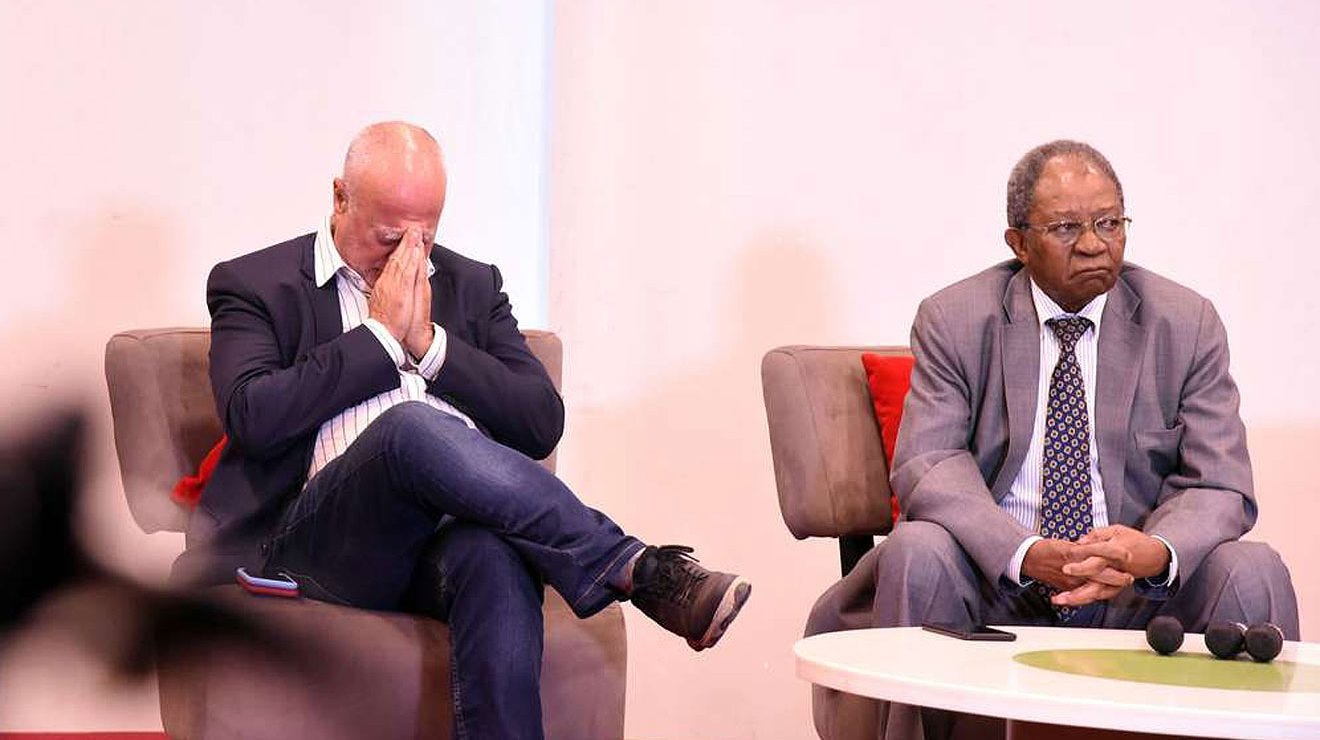
This was a high-stakes standoff with the ultimate gatekeeper, Finance Minister John Michuki. Michuki, a man known for his own iron-fisted, no-nonsense approach to governance, was initially deeply skeptical of an unregulated “mobile bank.” Joseph’s strategy was to “camp out”—he made himself a fixture in the corridors, an omnipresent force that refused to be dismissed. He brought in technical experts, lobbied the technocrats, and presented case after case of how this would bring the unbanked into the formal economy.
It was a clash of titans. Joseph needed Michuki’s political cover to override the conservative banking establishment, and Michuki needed to be convinced that this wasn’t a reckless risk that would collapse the nation’s monetary system. The pressure was suffocating. There were moments when it seemed the regulators would shut the experiment down before it even launched. But Joseph’s persistence paid off. By refusing to leave, by forcing the discussion into the light of day, and by presenting M-Pesa as a tool of national development rather than just a corporate product, he managed to wear down the opposition.
When the green light finally came, it was arguably the most significant regulatory pivot in Kenyan history. Joseph had successfully navigated the “Michuki firewall,” proving that if you were persistent enough, you could rewrite the rules of the financial system. M-Pesa launched not just as a service, but as a triumph of sheer, stubborn will against the monolithic rigidity of the Kenyan state.
The Michuki Firewall: A Victory Against the Banking Establishment
Multinational banks, which had long ago abandoned rural Kenyans by closing their branches, viewed mobile money as a threat and mobilized in parliament and government to stifle it. Recognizing that the project would be strangled in red tape without top-level support, Michael Joseph personally intervened, lobbying and eventually persuading Acting Finance Minister John Michuki to greenlight the project. By securing this “Michuki firewall,” Joseph bypassed the industry gatekeepers, proving that transformative innovation in Kenya often requires the courage to navigate—and overcome—the rigid political and regulatory barriers of the state.
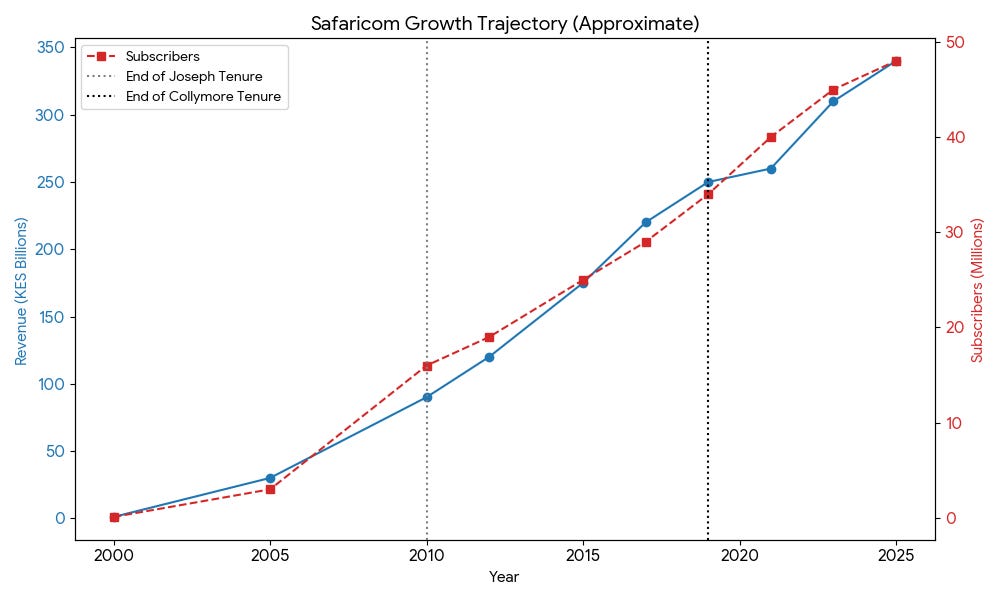
Key Phases of the Growth Trajectory
The Michael Joseph Era (2000–2010): The Foundation
This period established Safaricom from a departmental appendage into the market leader. The rapid climb in both subscribers and revenue during these early years reflects the infrastructure rollout, the battle for billing dominance, and the successful lobby for M-Pesa.
The Bob Collymore Era (2010–2019): The Scaling
Following Joseph, Collymore’s tenure saw the transformation of the company from a traditional telco into a digital and financial services ecosystem. This phase is characterized by sustained revenue growth as M-Pesa matured from an experiment into the backbone of Kenya’s financial economy.
The Current Tenure (Peter Ndegwa, 2020–Present): The Expansion
The post-2020 phase has been defined by further diversification, including the expansion of M-Pesa’s digital lending products, data growth, and regional expansion, maintaining the company’s trajectory as a central pillar of the Nairobi Securities Exchange.
Michael Joseph’s tenure as the founding CEO of Safaricom was marked by a constant navigation of regulatory minefields, primarily because his aggressive growth strategies frequently outpaced existing legislation.
Timeline of Key Regulatory Battles
2000–2003: The Monopoly Stigma As the incumbent/dominant player, Safaricom faced constant pressure from the government and competitors to justify its market share. Joseph spent these years fighting to retain independence while building infrastructure that the state-owned Telkom Kenya had failed to deploy.
2005–2006: The “Dealer Wars” To secure the market, Joseph bypassed traditional corporate structures to build an aggressive, decentralized dealer network. Regulators frequently scrutinized these exclusive arrangements, seeing them as anti-competitive barriers to entry for smaller players.
2007: M-Pesa Launch Hurdles While regulators were initially supportive of mobile money for financial inclusion, the banking sector immediately pressured the Central Bank of Kenya (CBK) to treat M-Pesa as a bank, which would have imposed prohibitive capital requirements and oversight.
2008–2009: M-Pesa vs. The Banks As M-Pesa’s volumes exploded, the banking lobby intensified its campaign, arguing that Safaricom was operating an unregulated “shadow bank.” Joseph famously secured the “Michuki Firewall”—political backing from the late John Michuki—which shielded the platform from being shut down by conservative regulators.
2009–2010: Dominance & Interconnect Rates Toward the end of his first tenure, the Communications Commission of Kenya (now CA) pressured Safaricom to lower mobile termination rates (MTRs). This was a direct attempt to redistribute Safaricom’s revenue to smaller competitors by forcing them to charge less for cross-network calls.

VII. The Recall: The Anchor in the Storm
The death of Bob Collymore on July 1, 2019, sent a tremor through the foundations of corporate Kenya. Safaricom was no longer the scrappy, insurgent startup Joseph had birthed; it had become a multi-billion dollar national institution, an anchor of the Nairobi Securities Exchange, and the primary engine of the Kenyan economy. In the immediate, grief-stricken aftermath, the company faced a potential vacuum of leadership that threatened to unsettle investors and destabilize the firm’s delicate cultural balance.

The board’s decision to recall Michael Joseph was not a move driven by nostalgia; it was a cold, calculated necessity. The company needed a “steadying hand”—a figure who carried the institutional memory of the firm’s founding DNA and the authority to reassure a nervous market.
Joseph, who had remained on the board since his 2010 retirement, was the only person with the stature to walk back into the corner office without needing a “settling-in” period. His return was a tactical pivot to ensure continuity during one of the most precarious transition periods in the company’s history. For the board and the shareholders, he represented an insurance policy against uncertainty; for the staff, he was the original architect returning to guard the blueprints of the “purpose-led” culture he and Collymore had cultivated.
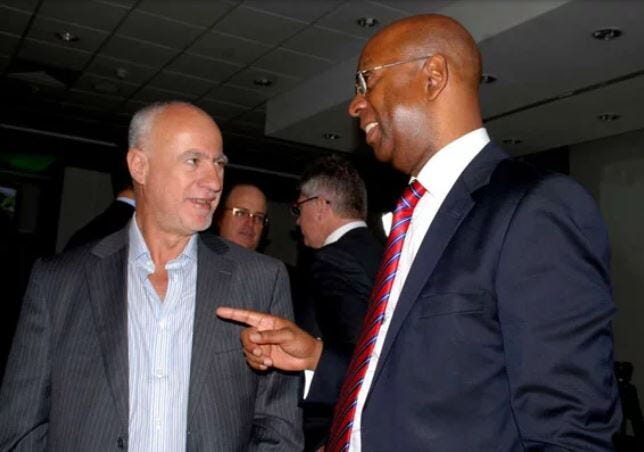
His interim tenure was marked by a singular focus: keeping the “ship stable” while the board conducted a search for a permanent successor. It was a role he played with his characteristic stoicism, ensuring that the momentum Collymore had built—particularly in M-Pesa’s expansion and the company’s social impact initiatives—did not stall. When he eventually handed the baton to Peter Ndegwa in 2020 and transitioned into the role of Chairman, it completed the cycle of his involvement: from the founder who built the foundation to the interim leader who protected the legacy, and finally, the Chairman who helped shepherd the next generation of leadership
The Steward of Continuity: Michael Joseph’s Final Act at Safaricom
The transition of the Safaricom Board in August 2022, which saw the appointment of John Ngumi as Chairman, marked the end of a profound era of stewardship. For Michael Joseph, this shift was not merely a change in personnel; it was the final stage in the long, methodical process of institutionalizing the company he had built from a department within the KPTC into an East African titan.
The Chairman’s Mandate: Stability and Cultural Governance
Following his interim role as CEO after Bob Collymore’s passing, Michael Joseph transitioned back to the role of Chairman. His tenure in this position was defined by a commitment to the “Joseph Style”—a focus on operational excellence, customer obsession, and, crucially, a seamless leadership transition. Joseph understood that for Safaricom to remain a national institution rather than a company reliant on a single visionary, the board needed to evolve into a diverse, high-caliber body capable of navigating a more complex, digital-first regulatory landscape.
Under his chairmanship, Joseph worked to shift the board from its startup-style decision-making to a more institutionalized structure. This meant recruiting leaders who understood the intersection of global capital, local infrastructure, and public policy. The goal was simple but difficult: to ensure that the “purpose-led” ethos instilled during the Collymore years remained the company’s North Star, even as it aggressively pivoted into financial services and digital ecosystems.
The Transition: Handing the Reins to John Ngumi
The appointment of John Ngumi in August 2022 was a calculated evolution of the Board’s strategy. By bringing in a veteran of the Kenyan financial markets—someone who had navigated the corridors of the Central Bank, state-owned enterprises, and the corporate investment world—the board was signaling its future.
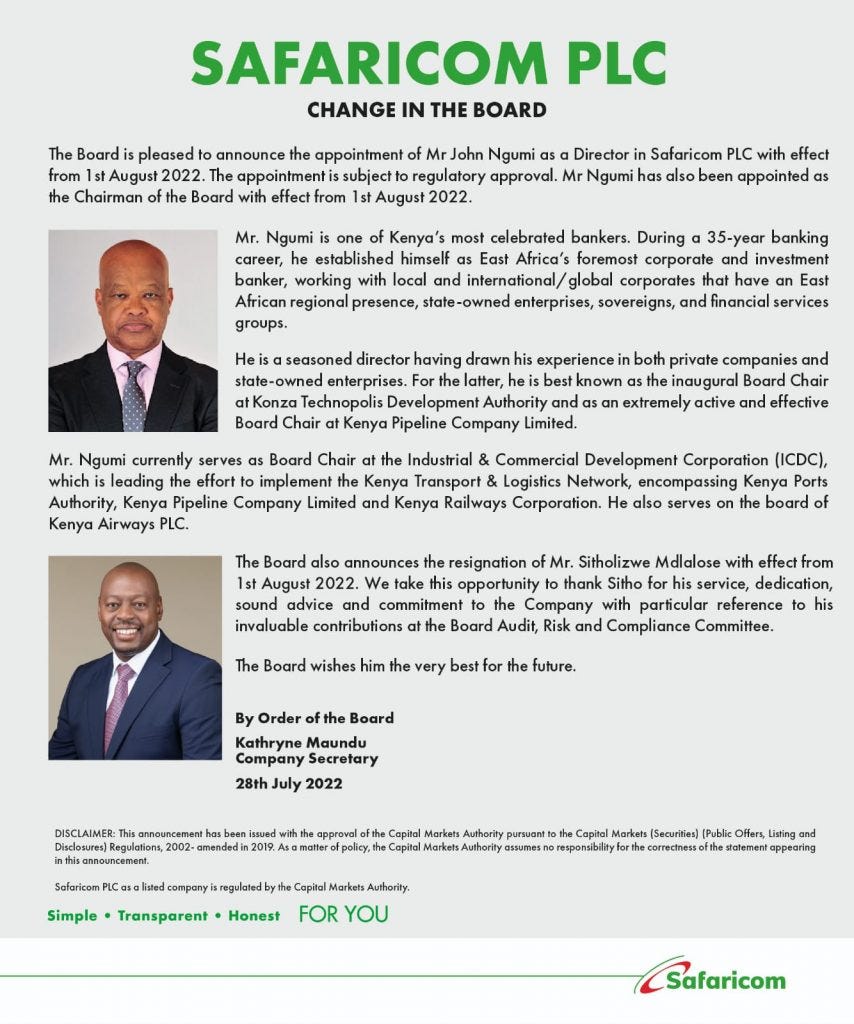
The transition represented a bridge between two worlds:
Joseph’s Legacy: The era of the “Founder-Chairman,” where institutional memory and personal authority provided the stability the firm needed during times of internal and external crisis.
Ngumi’s Mandate: The era of the “Financial-Diplomatic Board,” where deep expertise in public-private partnerships, regional logistics, and complex capital structures would be required to scale Safaricom into its next life cycle as a tech-co.
For Michael Joseph, stepping back from the chairmanship was the ultimate sign of success. A founder’s true test is not just what they build, but what survives them. By overseeing this transition, Joseph ensured that the company he started as a marginal department within the state monopoly was now governed by the very top tier of the nation’s professional elite. He had successfully midwifed the transformation of Safaricom from a personal vision into a durable, self-sustaining pillar of the Kenyan economy.
VII. The KQ Chapter: The Turbulence of a National Icon
If Safaricom was a startup Joseph built from the ground up, Kenya Airways (KQ) was a national institution in a tailspin. When Joseph took the helm as Chairman in October 2016, he walked into a corporate disaster zone. The airline was hemorrhaging billions, plagued by a mounting debt crisis, and suffering from a profound loss of public and investor confidence. The “Project Kifaru” turnaround plan would become the final major challenge of his executive career.
Taking the chair of a national carrier was a stark departure from the controlled, high-growth environment of his Safaricom years. At Safaricom, he had the luxury of building systems from scratch; at KQ, he inherited a bloated, politically charged, and operationally fractured legacy. The job was not about innovation—it was about survival.
His tenure was marked by a series of high-stakes interventions:
The Financial Surgery: Joseph spearheaded a complex capital restructuring, most notably the 2017 deal that converted significant government loans into equity. It was a painful, necessary dilution that gave the state a majority stake but provided the breathing room needed to stave off bankruptcy.
The Pandemic Crucible: Just as the recovery efforts were gaining momentum, the COVID-19 pandemic arrived, effectively grounding the entire fleet and erasing years of progress. Joseph had to lead the board through the most hostile environment in the history of global aviation, navigating delicate negotiations for state bailouts to keep the airline afloat.
The Long Turnaround: He served nine years (2016–2025), a period defined by route optimization, fleet rationalization, and a relentless push for operational efficiency. It was a slow, grueling climb out of the red, culminating in the historic 2024 net profit announcement—a milestone that validated his strategy after nearly a decade of struggle.
For Joseph, the KQ chapter was a test of a different kind of endurance. It lacked the M-Pesa “magic” and the explosive growth of the early Safaricom days. Instead, it was an exercise in crisis management, regulatory diplomacy, and the difficult art of corporate repair. By the time he retired in June 2025, having overseen the resumption of trading at the NSE, he had successfully steered the “Pride of Africa” through its most turbulent decade. He left behind a leaner, more disciplined entity, proving that his “Joseph Style”—stoic, decisive, and uncompromising—could be applied just as effectively to a legacy state-linked firm as it could to a digital insurgent.
Safaricom began sponsoring the Lewa Marathon during Michael Joseph's tenure.
Michael Joseph’s commitment to the Lewa Marathon, which began at the inception of the event in 2000, was a cornerstone of his strategy to deeply embed Safaricom into the Kenyan social fabric. By serving as the title sponsor for over two decades, Joseph ensured that the company was not merely seen as a utility provider, but as an active participant in conservation and community welfare. This long-standing partnership also highlights the symbiotic relationship between corporate leadership and visionaries like Ian Craig, the founder of the Lewa Wildlife Conservancy. Much like Joseph navigated the complexities of telecommunications to connect the nation, Ian Craig’s pioneering approach to wildlife conservation and community-based land management fundamentally reshaped the environmental landscape of Northern Kenya. Together, their respective tenures represent a broader movement of institutionalizing impact-driven initiatives that have become inseparable from the country's national identity.
