
The rapid ascent of Aliko Dangote from a regional industrialist to a continent-wide “Corporate Sovereign” demands a critical interrogation of power. We are not merely witnessing an economic success story; we are observing the structural redesign of African economies around the interests and reach of one private entity. This outline deconstructs the rise, the reach, and the dangerous dependency inherent in the Dangote model.
Table of Contents
Part 1: The New Sovereign – How a private entity became more influential than the borders it traverses.
Part 2: The Architect of Daily Life – Dangote’s total control over the pantry, the construction site, and the fuel pump.
Part 3: The Anatomy of Dependency – Decoding the $45B expansion: Chinese credit, multilateral backing, and “too-big-to-fail” risk.
Part 3b: The Sovereign vs. The Regulator – When the corporation fights back: The refinery wars and the erosion of state oversight.
Part 4: The Pan-African IPO – Unifying the continent’s capital to secure a private treasury.
Part 5: The Modern Colonizer? – Reframing monopoly as “Market Colonialism.”
Part 6: The Mirror We Must Face – Confronting the uncomfortable truth that we have built this king through our own apathy.
Does this structure provide the punchy, provocative flow you need for the piece, or would you like to tighten the focus on any specific section?
Part 1: The New Sovereign
Aliko Dangote is no longer just a billionaire; he is a cross-continental force. From the sprawling cement plants in Zambia and Ethiopia to the monumental refinery complex in Nigeria, he is physically stitching the continent together. In an era where many African governments struggle to provide the most basic national infrastructure, Dangote operates on a scale that ignores borders, bypasses bureaucratic inertia, and commands resources that dwarf the national budgets of the very countries he enters.
The clearest demonstration of this newfound corporate hegemony played out in the East African Community this year.
When Dangote visited Nairobi to propose a $17 billion regional refinery, the announcement ignited a weeks-long diplomatic spectacle. Kenya and Tanzania—two sovereign nations—found themselves effectively pitted against one another, squabbling over which coastline should host the “blessing” of his infrastructure. The spectacle was, to put it mildly, embarrassing. It was as if the regional heads of state were no longer the primary actors in their own geography; instead, they were suitors vying for the favor of a corporate monarch who could choose to plant his flag—and his billions—wherever the logistics suited his ledger best.
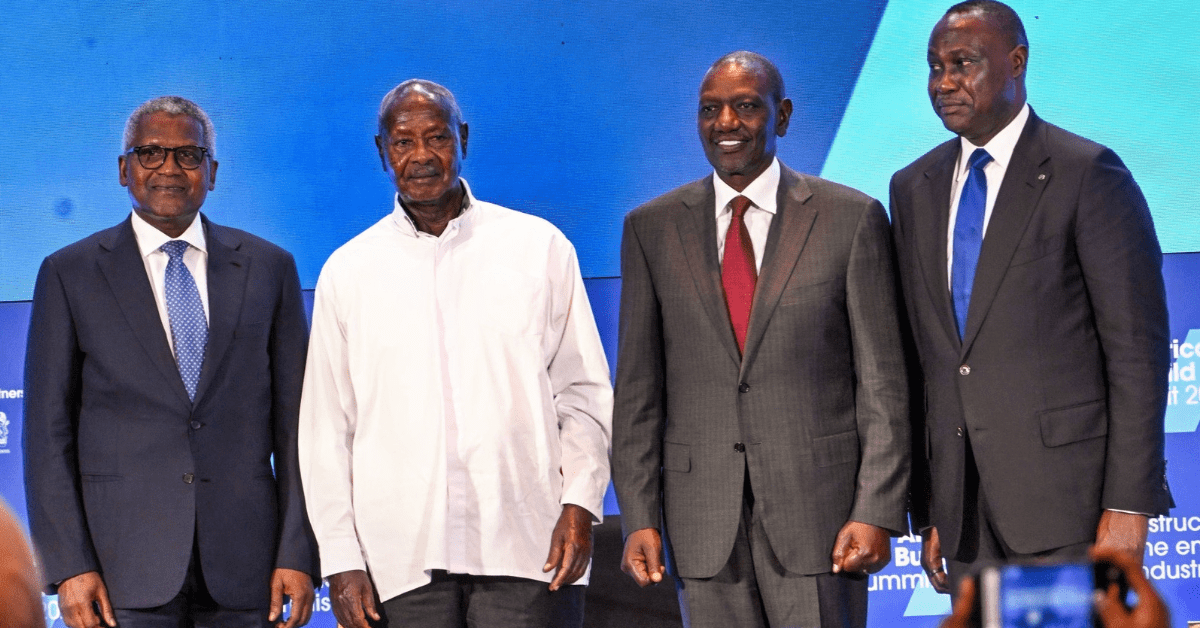
When one private entity can command the attention and split the unity of an entire regional bloc, we must ask: have we witnessed the birth of the “Corporate Sovereign”?
We are observing a shift where the traditional authority of the state is being hollowed out, replaced by the strategic calculus of a single conglomerate. Dangote possesses a level of long-term planning, logistical reach, and international capital access that makes traditional heads of state look like temporary tenants of their own territories. He is effectively building a “private” African Union, one factory at a time. But this dominance raises a cold, urgent question: When the prosperity of a nation becomes synonymous with the profit margins of one man, where does the state end and the corporation begin? Are we witnessing industrial progress, or have we allowed the architect of our future to become its sole owner?
The Dangote Refinery Revolution
This video provides context on the scale of Dangote’s refinery operations and the broader debate regarding African economic sovereignty versus dependency.

Part 2: In Nigeria - The Architect of Daily Life
To be an average Nigerian today is to live, quite literally, within the ecosystem of one man’s ambition. Aliko Dangote has transcended the role of a traditional industrialist; he has become the “silent infrastructure” of the Nigerian existence. His influence is not merely a headline in the business section—it is a physical, daily encounter that touches the kitchen, the construction site, and the road.
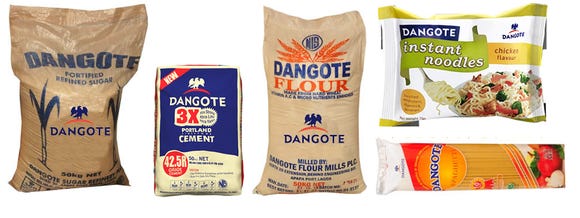

In Kenya, to find a rival to the Dangote model, you would have to put together KPLC, Devki Group, Chandaria and J.S. Rai—and even then, you would still lack the vertical integration of one man’s balance sheet."
The Pantry: Gatekeeper of the Plate
For the average household, the day often begins with Dangote. He has successfully integrated himself into the core of the national diet, transforming his conglomerate into the gatekeeper of basic sustenance. Whether it is the flour used for bread, the salt that seasons the pot, or the sugar that sweetens the morning tea, his subsidiaries—such as the Dangote Sugar Refinery and NASCON Allied Industries—ensure that his brand is a near-permanent resident on the Nigerian table. When you consume these essentials, you are not just buying commodities; you are tethered to a single, monolithic supply chain that dictates availability and price for millions.
The Foundation: The Skeleton of the Nation
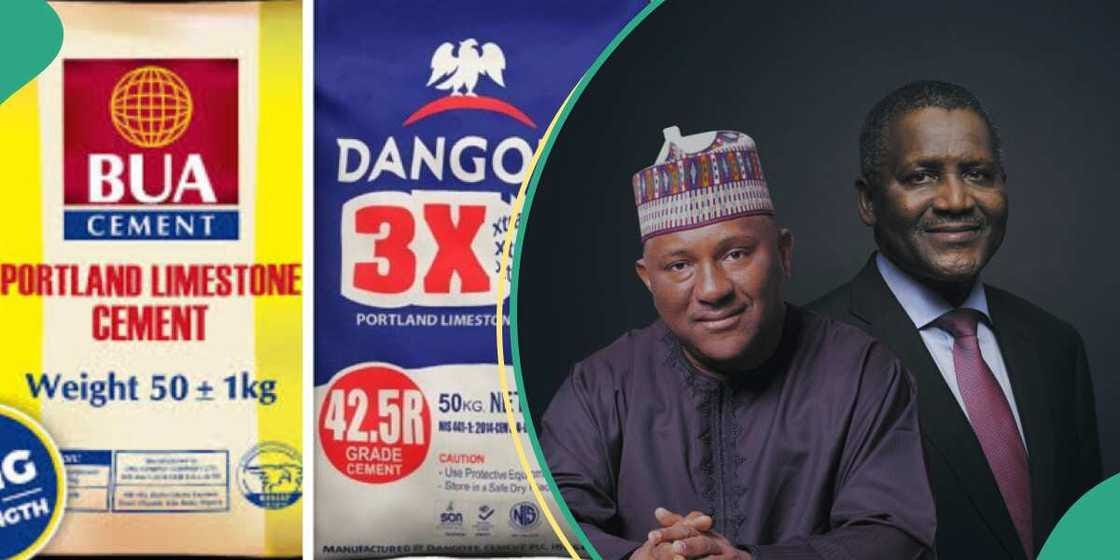
If the Nigerian economy has a frame, it is built with Dangote Cement. As the undisputed titan of the construction sector, his influence dictates the pace and the cost of the country’s physical expansion. From the rural home being built brick-by-brick to the massive state-funded highways and bridges, Dangote Cement provides the literal skeleton of Nigeria’s built environment. By controlling such a vast share of the cement market, his pricing models effectively determine the threshold of affordability for housing and infrastructure, effectively acting as the silent arbiter of national development.
The Pulse: The Energy Lifeblood
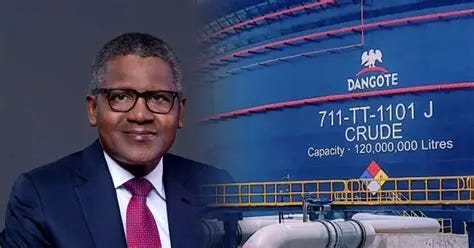
Perhaps most pivotally, the landscape of Nigerian mobility and industry has been fundamentally reshaped by the Dangote Petroleum Refinery. For decades, the average citizen lived at the mercy of a “dysfunctional” downstream sector, plagued by imported fuel dependence, chronic scarcity, and the economic paralysis of subsidy politics. With the refinery now at scale, Dangote has effectively seized the pulse of the nation. By controlling the refining capacity that powers everything from transport fares to the electricity generators that keep small businesses alive, he has positioned himself as the primary guarantor of Nigeria’s energy security.
In this “Dangote-ified” existence, the line between a private corporation and a public utility has all but evaporated. He is no longer just a participant in the market—he is the market’s primary infrastructure. For the ordinary Nigerian, his conglomerate is the provider of the bread they eat, the roof over their heads, and the fuel that moves them forward. This is the profound, inescapable reality of his power: he is the architect of the daily life of a nation
Part 3: The Anatomy of “Developmental Dependency”
If Aliko Dangote is truly the messiah of African industrialization, why does the global financial establishment—the very institutions that have historically dictated the terms of African economic policy—seem so perfectly aligned with his expansion?
The skepticism is mounting. We are witnessing a curious convergence between the “African-led” narrative of self-sufficiency and the strategic objectives of the Bretton Woods institutions. While the World Bank and IMF do not act as direct “investors” in the traditional sense, their influence is woven into the fabric of the Dangote Group’s ascent. During the April 2026 Spring Meetings in Washington, D.C., Dangote was not merely a guest; he was a keynote participant, rubbing shoulders with Ajay Banga of the World Bank and Kristalina Georgieva of the IMF. These institutions are increasingly positioning Dangote’s projects—such as the massive refinery and his new “Water Forward” initiatives—as models for private sector-led development. This alignment is not accidental; it is a calculated bet by global capital that “de-risking” Africa is best achieved through private titans who can navigate the bureaucratic chaos of the continent where states have failed.
The Financial Anatomy: A Tapestry of Debt and Credit
Dangote’s $45 billion “Vision 2030” expansion is a high-wire act of financial engineering that relies on a diverse, often opaque, mix of capital:
The Chinese Credit Lifeline: Dangote has been candid about his reliance on Chinese equipment financing. By utilizing Chinese state-backed credit insurance and long-term supply agreements, the Group manages to scale massive industrial plants while minimizing immediate cash outflows. This creates a structural dependency: the continent’s industrial foundation is literally bolted to Chinese credit lines.
The Multilateral and Private Synergies: The group has pivoted aggressively toward international debt markets to sustain its momentum. From the Afreximbank’s $650 million loan for the refinery to recent private debt placements targeting foreign investors—including a planned $1 billion debt raise—Dangote is successfully transitioning from a local tycoon to a global capital market player.
The “De-Risking” Strategy: The World Bank’s Private Sector Investment Lab, of which the Dangote Group is a member, actively advocates for using multilateral balance sheets to “de-risk” private investments. Essentially, the global establishment is providing the implicit comfort (and sometimes hedging instruments) that allows private investors to view his debt as a safe haven, effectively socializing the risk while privatizing the industrial dominance.
The “Too-Big-To-Fail” Trap
The tension here is profound. These projects are marketed as “bottom-up” African development, but they function as debt-heavy vehicles that consolidate regional markets into a single point of failure. When an entire region’s fuel security, cement supply, and fertilizer output are tied to the debt-servicing capability of one man’s balance sheet, the risk is no longer corporate—it is existential.
We are drifting into a system of “developmental dependency.” By outsourcing our infrastructure to a private titan, African nations are trading their policy autonomy for the reliability of a single, monolithic ledger. When a state relies on a single conglomerate to stabilize its currency, feed its farmers, and keep its cities powered, that state ceases to be sovereign and becomes a client. We have effectively replaced the colonial district officer with a corporate board, and the “salvation” we are seeking may ultimately come with a price tag that undermines the very self-sufficiency we claim to chase. Are we truly building an independent Africa, or are we just making ourselves “too big to fail” under a new kind of corporate master?
Part 3b: The Sovereign vs. The Regulator
Beyond his role as the architect of daily life, Aliko Dangote has emerged as a combative titan, frequently locking horns with the very regulatory bodies designed to oversee his empire. In his worldview, regulatory hurdles are often interpreted as “economic sabotage,” while the regulators view his aggressive expansion as a direct challenge to the state’s oversight.
The Refinery Wars: A Battle for the Downstream
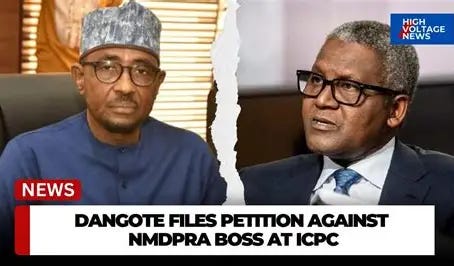
The most defining recent struggle is the ongoing legal and rhetorical battle with the Nigerian Midstream and Downstream Petroleum Regulatory Authority (NMDPRA) and the Nigerian National Petroleum Company (NNPC). This is not a mere commercial spat; it is a fundamental clash over who governs the nation’s energy sector.
The Monopoly Accusation: In 2026, the dispute reached the Federal High Court. The NNPC, in a bold move, accused the Dangote Refinery of seeking to establish a “fuel monopoly” by challenging the government’s right to issue import licenses to rival marketers. The NNPC argues that while the refinery is a strategic asset, it cannot guarantee 100% of national supply, and therefore, import licenses remain essential for energy security.
Demarketing Allegations: The refinery has historically accused regulatory officials of “demarketing”—intentionally spreading claims that its products, particularly diesel, are of inferior quality to imports. This led to public exchanges where the refinery’s management challenged the expertise and impartiality of regulators, framing them as tools for international fuel traders who benefit from the status quo of Nigerian fuel dependence.
The Crude Feedstock Tug-of-War: A recurring flashpoint is the supply of crude oil. Dangote has repeatedly accused regulators and the NNPC of failing to provide the 13 cargoes of crude needed for optimal operation, often receiving only a fraction of that. The state oil firm maintains that allocations are based on commercial and logistical realities, not sabotage.
The IPO Intervention
The friction extends into the capital markets. In June 2026, the Securities and Exchange Commission (SEC) stepped in to halt unauthorized promotional campaigns for a “purported” Dangote Refinery IPO. The regulator explicitly warned investors to ignore solicitations for advance subscriptions, characterizing them as market manipulation. While the refinery publicly disavowed these campaigns, the incident underscored the tension: the market’s “Dangote-mania” is so intense that it now operates ahead of—and sometimes in defiance of—regulatory clearance.
The Takeaway: A Titan Unbound
These battles highlight a dangerous precedent. Whether it is oil unions threatening the refinery’s operations, or state agencies resisting his push for an import ban, the Dangote Group increasingly acts as a “parallel state.” When a private entity is so powerful that it can force the Attorney General, the NNPC, and the NMDPRA into the courtroom, the traditional boundaries of regulation disappear. The government is no longer the regulator of the market; it is a participant in a high-stakes standoff with its own most important industrialist.
Part 4: The Pan-African IPO—The Ultimate Sovereignty
If the refinery is his industrial masterpiece, the proposed Pan-African IPO is his geopolitical endgame. This is not just a standard stock market listing; it is an unprecedented attempt to rewire how African capital moves across the continent. By aiming to list the Dangote Refinery—and potentially his fertilizer and cement units—simultaneously across multiple African exchanges, Dangote is doing what the African Union has struggled to achieve for decades: the integration of Africa’s fragmented capital markets.
The Power to Summon
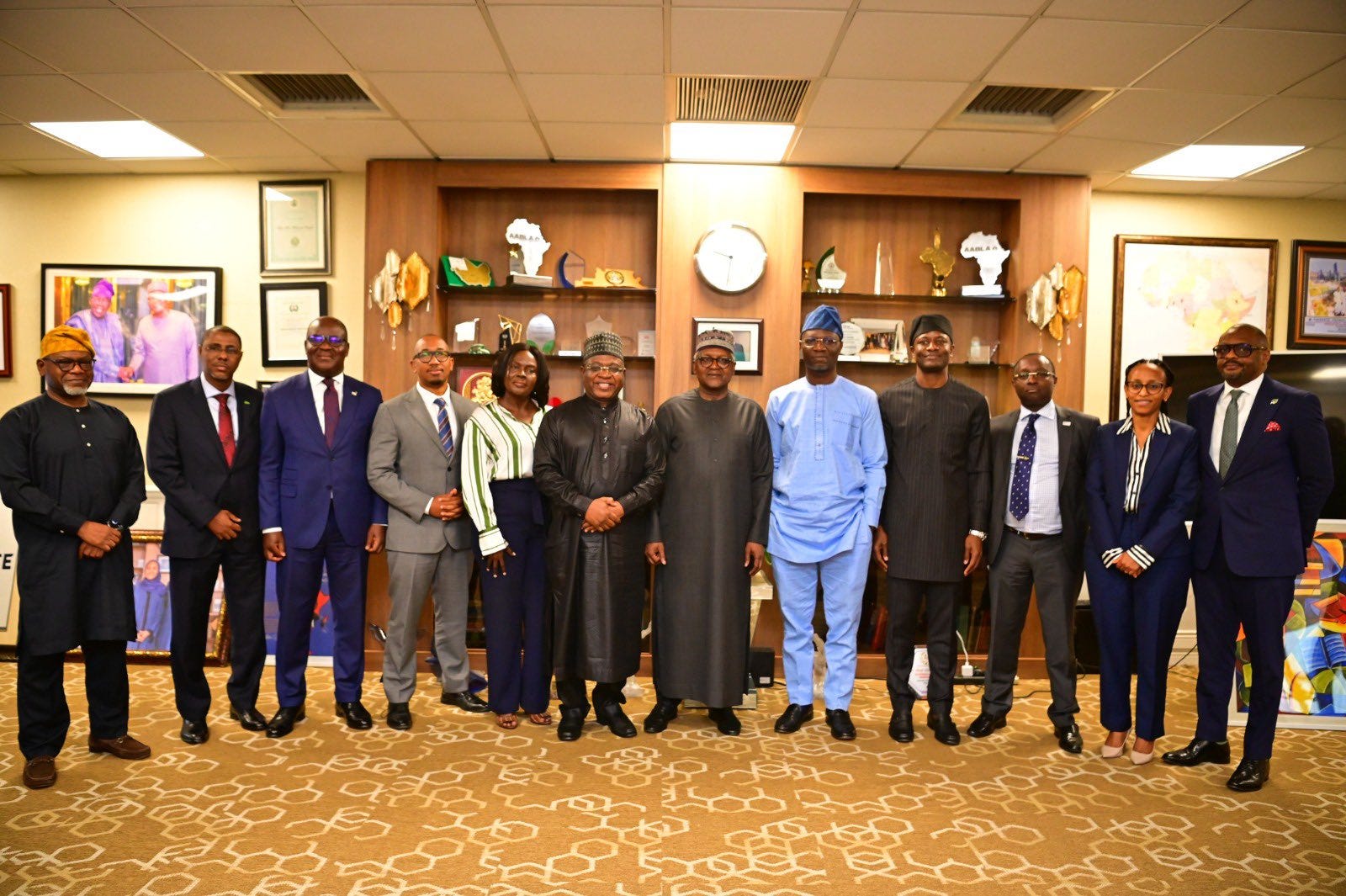
The sheer weight of this ambition is evidenced by how he approaches the continent’s financial gatekeepers. Reports of Dangote “summoning” or gathering the heads of major African stock exchanges to his office aren’t just anecdotes of corporate hubris; they are indicators of a shifting hierarchy. When a private citizen can set the agenda for the regional bourses of Nigeria, and potentially others, he is essentially acting as a supranational regulator. He is not asking the markets to accommodate his listing; he is challenging the markets to modernize to deserve his assets.
Harnessing the Continent’s “Hidden” Wealth
The Pan-African IPO is designed to achieve two goals that no government has successfully mastered:
Monetizing the Diaspora and Local Wealth: By opening the door to retail investors across Africa and the diaspora—and offering dividends in hard currency—he is effectively creating a “private treasury” that is arguably more liquid and reliable than the national budgets of the countries he operates in.
Forcing Market Integration: By insisting on a cross-border listing, he is forcing African exchanges to address their own “shallowness.” He is effectively telling the continent: If you want to own a piece of Africa’s most strategic industrial asset, you must align your settlement infrastructure, your regulatory frameworks, and your liquidity pools.
The Sovereignty Paradox
This move highlights the final, most provocative dimension of his power. A sovereign state uses taxes to fund infrastructure; Dangote uses equity. While a government relies on the volatile flow of tax revenue, Dangote taps directly into the collective savings of a continent. When he raises billions through an IPO, he is not just securing capital—he is securing a constituency of millions of Africans who are now personally, financially invested in his success.
If your retirement savings, your diaspora remittances, and your pension funds are all tied to the share price of the “Dangote Conglomerate,” is he still just a businessman? Or has he become the silent guarantor of your future, a position historically reserved for the state? By the time this IPO is finalized, the question of whether he is “too big to fail” will be moot; he will be “too big to ignore”—the true Sovereign of the new African industrial order.

Part 5: The Modern Colonizer?
When we look beyond the industrial triumph, we are forced to confront a darker reality: the rise of “Market Colonialism.” If traditional colonialism was defined by territorial conquest and the extraction of raw materials for the benefit of an overseas metropole, this new era is defined by the consolidation of essential infrastructure and the capture of regional markets for the benefit of a private ledger.
The Monopoly Trap: When “Efficiency” Becomes Hegemony
The argument that Dangote is a “national champion” is increasingly wearing thin across the continent. What we are witnessing is not just healthy industrialization, but the aggressive pursuit of market dominance that threatens to stifle the very competition African nations need to grow. Whether in Nigeria or the emerging markets he enters, the strategy is consistent: by pushing to restrict imports—despite regulatory warnings that his infrastructure may not meet total national demand—he effectively lobbies for a closed-loop system. When a player has the power to define the rules of the game to ensure they are the only ones playing, that is not a free market; it is a corporate fiefdom.
The danger of this model is systemic and borderless. If a host nation anchors its entire energy security, construction sector, and food supply to a single entity, it creates a “too-big-to-fail” scenario that paralyzes government oversight. Regulators—whether in Lagos, Lusaka, or Addis Ababa—become afraid to enforce competition laws for fear of triggering a nationwide supply collapse. In this environment, the interest of shareholders in Lagos or London—who demand consistent returns and market protection—will inevitably clash with the basic needs of a citizen in Ethiopia, Zambia, or Nigeria who simply needs affordable fuel and food.
The Colonizer’s Ledger
We must ask: if the state is the only entity with the mandate to protect the citizen, what happens when that state surrenders its leverage to a private titan?
Price-Setting Power: By vertically integrating everything from production to transport, Dangote can dictate the cost of living for millions across borders.
Political Influence: The ability to influence national policy through legal pressure and “strategic importance” is a form of power that bypasses the democratic process in every country he enters.
The Zombie Economy: As smaller, local players in the logistics, retail, and transport sectors are squeezed out or forced into submission, the economy loses the vibrant, diverse “middle” that fuels true long-term innovation.
The “colonizer” label is provocative because it suggests a loss of agency. We are not being conquered by a foreign army, but by the relentless logic of a monopoly that has made itself the indispensable backbone of our lives. If we accept a system where our survival is a corporate product, we haven’t achieved “economic independence”—we have simply traded our state-led stagnation for a private-sector cage. The ultimate test of this “industrial savior” won’t be in how many factories he builds, but in whether he allows a competitive environment to survive alongside him, or if he ultimately consumes the very markets he claims to be building.

This video explores the intensifying legal and regulatory friction between Nigeria’s state oil firm and the Dangote refinery, highlighting the risks of centralizing the country’s energy infrastructure under a single private entity.
Part 6: The Mirror We Must Face
We return to the question that defines our current era: Is Aliko Dangote the architect of our problem, or is he merely the only one who grasped a fundamental truth—that where the state defaults on its duty, the market will inevitably crown a King?
If we label him a “colonizer,” we must be honest about our own role in his rise. He did not seize this ground by force; he occupied a vacuum left by our collective apathy. From the streets of Lagos to the boardrooms of Nairobi, we have watched our governments abandon the drafting table, leaving it empty for a single private hand to fill. The tragedy isn’t that he has amassed this power; it is that he is the only one who possessed the ambition to pursue it while our states remained paralyzed by inertia.
We now stand at a continental crossroads. Whether you are a citizen in Ethiopia, Zambia, Nigeria, or Kenya, the stakes are identical: will we continue to applaud the “Corporate Sovereign” who provides what our leaders cannot, or will we finally demand the return of a state capable of genuine competition, firm regulation, and selfless public service?
Until our states learn to build, the King will continue to reign by default. The real question is no longer what move Dangote will make next—it is what we will do, now that we have finally seen the face of the master we helped create.

About Boardlot Africa Research
Boardlot Africa is a premier financial intelligence and corporate governance publication dedicated to unpacking the mechanics of capital, market strategies, and structural shifts across East Africa’s corporate landscape. By bridging the gap between raw economic data and actionable market intelligence, we deliver deep-dive research, independent corporate analysis, and policy insights designed for institutional investors, boardrooms, and sharp market observers.
Get in Touch
Email: boardlot.research@gmail.com
Phone: +254 753 133 901
Substack: Subscribe to Boardlot Africa
X (Twitter): BoardLotSultan