
Welcome to Boardlot Africa, where we pull back the curtain to reveal the untold stories, power dynamics, and strategic maneuvers shaping the boardrooms of Corporate Africa—subscribe for free to join the conversation. join 1000 other subscribers
We publish Kenya’s Most Consequential Legal, Governance & Labor Disputes and A Series on the 100 Most Influential Kenyan Captains of Industry
This profile traces the trajectory of a man whose career has become synonymous with the institutional stability of Kenya’s capital markets and state-led enterprises.
Table of Contents
1. The Foundation: The “Legacy of Power” — Exploring the influence of the Kittony dynasty and the Moi-era political architecture.
2. The Identity Matrix: Beyond the Boardroom — Analyzing the distinction between the “industrialist” and the “institutional architect.”
3. From the Media Room to the Trading Floor — The Radio Africa Group legacy and the pivot to the Nairobi Securities Exchange.
4. The Last Resort: The Kenya Airways Appointment — Why the state turned to Kittony to navigate the airline’s turbulence.
5. The Soil and the Soul: The Sirwo Legacy — Uncovering the personal, agricultural side of a corporate titan.
6. The Final Gambit: Aviation, Influence, and the KQ Crucible — Assessing whether this high-stakes board composition can truly rescue the “Pride of Africa.”
1. The Foundation: The “Legacy of Power”
To understand Kiprono Kittony’s position at the helm of the Nairobi Securities Exchange (NSE), one must first look past the boardroom and into the corridors of 20th-century Kenyan history. Kiprono is not merely a product of the boardroom; he is the scion of the “Kittony Dynasty.” He is the son of the legendary Zipporah Kittony—a woman who was not just a political figure, but a central pillar of the Moi era. As the long-serving national chairperson of the Maendeleo ya Wanawake Organization (MYWO) and a nominated Member of Parliament for nineteen years, Zipporah was a gatekeeper of social and political influence, deeply intertwined with the State House of the 80s and 90s.

Growing up in this environment, Kiprono was raised in the epicenter of the Kenyan elite. He was a constant presence in the circles where the nation’s political and economic trajectory was mapped out, often side-by-side with the children of the country’s most powerful figures. This upbringing gifted him something that no business school or MBA program can replicate: an expansive, high-stakes “Rolodex” and an instinctive understanding of how power—both visible and invisible—flows in Kenya.

For Kittony, his current role as the Chairman of the NSE is the natural evolution of this heritage. While many of his contemporaries had to spend decades fighting to build their networks from scratch, Kittony’s career has been an exercise in institutional continuity. He represents the bridge between the old-guard political structures of the post-independence era and the modern financial architecture of today’s capital markets. His influence is rooted in this dual capacity: he is both a creature of the political establishment and a modernized business titan who has masterfully transitioned from his family’s legacy into the high-frequency, algorithm-driven world of the modern securities exchange. He doesn’t just occupy a seat at the table; he occupies a lineage of influence that has shaped Kenya’s boardrooms for over half a century.

Zipporah Kittony’s journey to leadership
This video offers a firsthand account of Zipporah Kittony’s rise to leadership, providing the essential historical context on the political and social influence she held during the Moi era, which serves as the foundation for the Kittony family’s legacy.
2. The Identity Matrix: Beyond the Boardroom
If Vimal Shah is the archetype of the post-colonial industrialist—a man who built his empire by turning oilseeds and soap bars into a continental manufacturing powerhouse—Kiprono Kittony represents something altogether different. He is the institutional survival of the political-business class, a figure whose power is derived not just from building factories, but from managing the very machinery of the state and the market.
While the Shahs rose by disrupting the status quo, Kittony has mastered the art of being the status quo.

The Guardian of Two Eras Contrast his lineage with his current mandates. His mother, Zipporah, stood as the matriarch of the “Old Guard,” a time when social influence was cemented through loyalty to the center and the careful maintenance of the political-social fabric. Kiprono has successfully modernized this heritage. He traded the grassroots political organizing of the Maendeleo ya Wanawake era for the boardroom governance of the Nairobi Securities Exchange (NSE). He is a “guardian of structure,” operating in the spaces where the government’s interests meet the private sector’s bottom line.
The Provocative Question: The Face of the Same Old Power? This leads to the central tension of the Kittony identity: Is he truly a modern business titan, or merely the sophisticated evolution of the same power structures that have dominated Kenya since the 1980s?
The Shahs represent a “manufacturing” reality—one that creates tangible goods, employs thousands in factory settings, and lives or dies by the razor-thin margins of the consumer shelf. Kittony, by contrast, thrives in the realm of “access.” His influence is soft, structural, and institutional. He moves with ease between the media (Radio Africa Group), the regulators (NSE), and the state-level strategic entities (Kenya Airways).

For the Boardlot Africa observer, the question is not whether he is successful—his track record of stabilizing entities like the KNCCI and building Radio Africa is indisputable—but whether his presence is a catalyst for new competition or a shield for the existing elite. While Bidco and their peers are out in the “arena of giants,” fighting for every percentage point of market share against local rivals, Kittony is the one sitting in the chair at the exchange, setting the rules and managing the transitions for the very giants that hold the market together.
In this light, Kittony is not a disruptor; he is the ultimate stabilizer. But in an economy that is screaming for radical change and the inclusion of new, digital-first players, one has to ask: can the institutional architect of the old world lead the transition into the new one, or is he destined to be the final gatekeeper of a system that is quickly being outpaced by the digital age?

3. From the Media Room to the Trading Floor: The Architect of Influence
If the Kittony legacy provided the foundation, Radio Africa Group provided the megaphone. For twenty-seven years, Kiprono Kittony served as the steady hand behind one of Kenya’s most influential media conglomerates. Joining the firm at 34—a young man with more ambition than corporate experience—he quickly found himself in the crosshairs of the “massive power plays” that define Kenyan media.
The Stabilizer in the Storm: Patrick Quarcoo, the founder of Radio Africa, famously credited Kittony with the company’s survival. In an industry where editorial independence is often besieged by political interests and commercial pressure, Kittony wasn’t just a director; he was the primary shield. He navigated the group through volatile political transitions, shielding his editorial teams from the raw, often dangerous, pushback of those uncomfortable with the truth. By 2026, as he stepped down from his 27-year tenure, Radio Africa stood as a testament to his “quiet power”—the ability to build a stable institution without succumbing to the noise of the headlines he helped create.
The NSE Pivot: From Content to Capital: His move to the Nairobi Securities Exchange (NSE) in 2020 was not a departure from his core competencies; it was an escalation. Kittony realized early that while media shapes the public perception of value, the exchange codifies it. His tenure at the NSE has been defined by a pivot toward modernization and institutional discipline. Having successfully revitalized the Kenya National Chamber of Commerce & Industry (KNCCI), he brought a similar “revivalist” energy to the exchange.
The Institutional Bridge: Kittony’s pivot from the newsroom to the trading floor marks his evolution into Kenya’s ultimate systemic operator. He hasn’t just presided over the NSE; he has been its primary advocate in the “Captains of Industry” roundtables, pushing for policy reforms that bring the exchange into the digital age—from robo-advisors to high-frequency trading.

The Kittony Era: Architect of a Market Revolution
Kiprono Kittony’s six-year tenure as the Chairman of the Nairobi Securities Exchange (NSE), which concluded in July 2026, is widely regarded as one of the most transformative periods in the Exchange’s history. Taking the helm in 2020 after the departure of Samuel Kimani, Kittony inherited a bourse in need of fresh momentum. His leadership—defined by aggressive digitization and a push for retail inclusivity—has set a benchmark that distinguishes his tenure from his predecessors.
Key Milestones and Structural Shifts
Kittony’s chairmanship was marked by the dismantling of long-standing barriers to entry, most notably through his “local-first” philosophy. His primary achievements include:
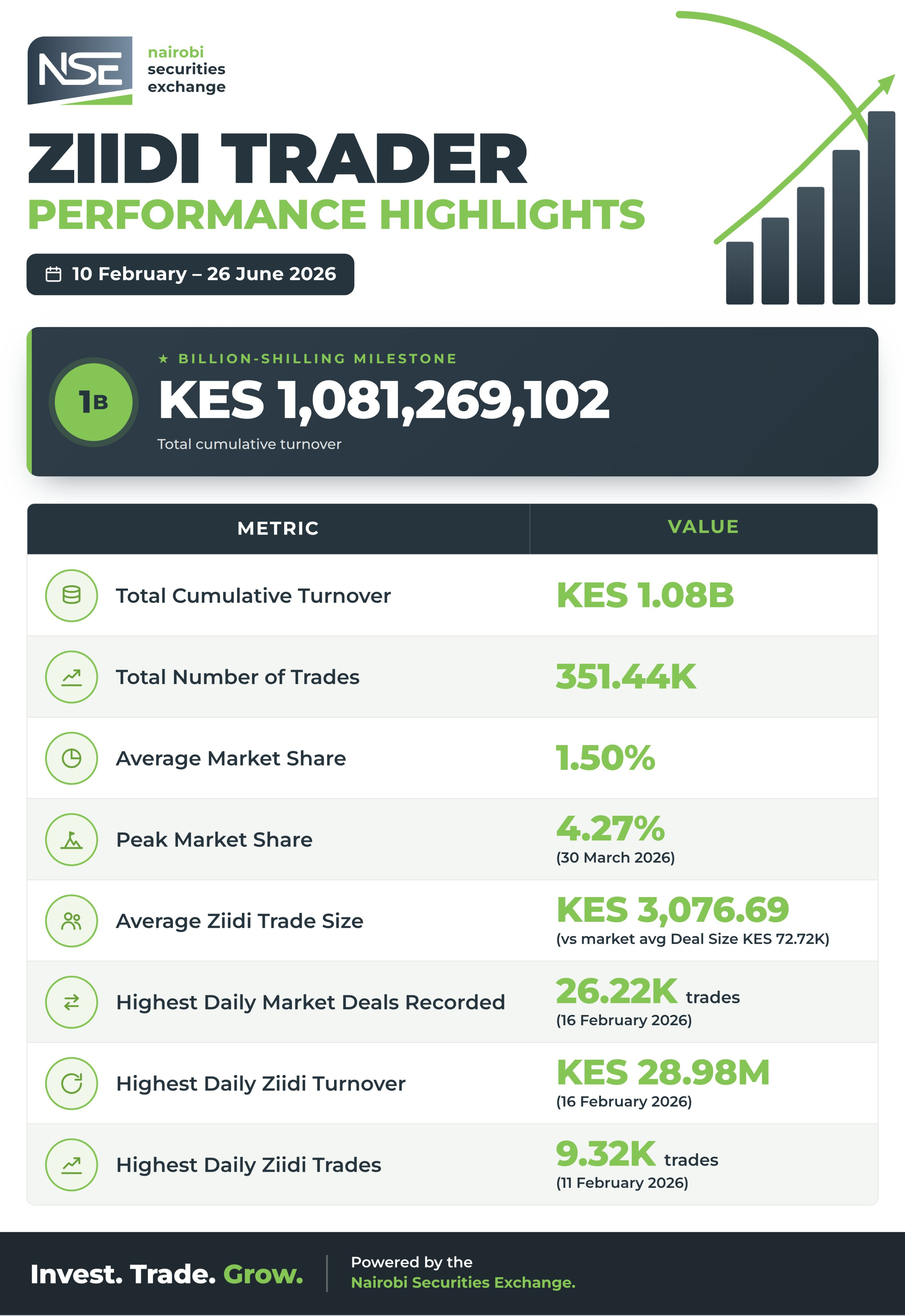
The Ziidi Trader Revolution: Kittony oversaw the launch of the Ziidi Trader platform, integrated directly into M-PESA. By bringing equity trading to the mobile wallet, the platform removed the traditional psychological and practical hurdles that kept retail investors at bay, leading to record-breaking retail trade volumes.
Ending the IPO Drought: Perhaps his most significant institutional legacy was ending an 11-year drought in major listings. Under his guidance, the NSE saw the landmark Initial Public Offering (IPO) of the Kenya Pipeline Company (KPC) and the listing of Family Bank, which reinvigorated investor confidence and expanded the market’s depth.
Market Liberalization: He successfully championed the liberalization of the market, including the introduction of single-share trading, which further lowered the barrier for the “common mwananchi” to participate in wealth creation.
Fees and Resilience: Amidst pressures to increase costs, Kittony consistently resisted attempts to raise trading fees, maintaining a pro-investor stance that focused on driving volumes through affordability rather than higher margins.

A Comparative Assessment
When compared to the tenure of his predecessor, Samuel Kimani (2012–2020), Kittony’s era is defined by a distinct “hyper-kinetic” approach to innovation. While Kimani provided stability, Kittony shifted the focus toward a systemic overhaul of the exchange’s interface with the average Kenyan. By prioritizing the 2025–2029 strategy—which emphasized resilience, sustainable finance, and technological acceleration—Kittony positioned the NSE as Africa’s best-performing stock exchange during his final years.
Is he the most effective chair in recent times? The data suggests yes. By transforming the NSE from an exclusive club into a digital-first marketplace accessible through the same interface as daily utility payments, Kittony did not just chair an exchange; he redefined it as a public utility for economic participation. His ability to navigate high-level government policy while simultaneously implementing grassroots financial inclusion tools makes his tenure a masterclass in modern corporate stewardship.
Revisit the moment that signaled a new era for Kenya’s capital markets: President Ruto launches Kenya Pipeline Company trading at NSE. This video captures the official listing of the KPC shares at the NSE, a key milestone that occurred under Kittony’s chairmanship and helped end the long-standing IPO drought.

The Boardlot Africa Insight: Kittony is currently the only figure in the Kenyan market who effectively bridges the information sector and the capital sector. He spent decades managing the flow of public opinion at Radio Africa, and he now manages the flow of public capital at the NSE. For the keen observer of Boardlot Africa, this trajectory is not accidental. It is the hallmark of a man who understands that in modern Kenya, true power lies in controlling both the narrative of the market and the mechanism of the trade. As he steps back from his media duties to focus on “new responsibilities,” the market is left watching: will he now focus his “architectural” skills on a more direct role in the country’s economic policy, or is this merely the next phase in the long-term consolidation of his influence?
Opportunities & Developments at the NSE with Kiprono Kittony
This presentation offers an insightful look into Kittony’s strategic vision for the Nairobi Securities Exchange, highlighting the modernization and capital allocation projects he championed during his tenure as Chairman.

4. The Last Resort: The Kenya Airways Appointment
If Kiprono Kittony’s career had been a steady climb toward institutional gravity, his 2026 appointment as the Chairman of Kenya Airways (KQ) was the ultimate test of his influence. The national carrier had become the “tomb of reputations”—a struggling giant weighed down by chronic financial turbulence, repeated losses, and the heavy shadow of government bailouts. When the presidency looked for someone to steady the ship, they didn’t turn to a turnaround specialist from the aviation world; they turned to Kittony.
The President’s Choice: This appointment was more than a board seat; it was a profound testament to how deeply Kittony’s influence flows through the veins of the Kenyan establishment. By placing the Chairman of the Nairobi Securities Exchange (NSE) at the helm of the national carrier, the administration was signaling that the era of “aviation as a political plaything” was over. They needed an architect who understood capital markets, someone who could translate the airline’s complex financial distress into a language that local investors and creditors could trust.
The “Kenyan Money” Doctrine: Kittony’s immediate approach to the KQ crisis was characteristic of his “insider” philosophy. Rather than chasing elusive international venture capital or waiting on foreign state bailouts, he pivoted toward domestic markets. “We have not gone outside our jurisdiction to find this money,” he famously noted. “It is Kenyan money in Kenya, solving Kenya Airways’ problems.” This strategy—demonstrating absolute confidence in local capital—was a masterstroke that aligned the airline’s survival with the interests of the domestic financial players he had spent years cultivating at the NSE.
The Ultimate Burden: Stepping into the KQ role forced Kittony to navigate the most complex mandate of his life. He was tasked with simultaneously managing the airline’s maintenance cycles, pacifying restless lessors, and re-earning the trust of the Kenyan public. For the Boardlot Africa analyst, this appointment is the final piece of the puzzle. It cements his status as the “emergency responder” for the state’s most critical institutions.
The Provocation: If he succeeds in reviving KQ, he will be immortalized as the man who saved the national pride from total collapse. If he fails, it will prove that even the most “untouchable” figures in the Kenyan establishment have limits when they step into the cockpit of an institution that is structurally broken. For now, the market is betting on his pedigree. Kittony is no longer just the chairman of an exchange or a media group; he is now the man responsible for the “safety, reliability, and professionalism” of the nation’s gateway to the world.
Kiprono Kittony named Kenya Airways board chair
This video provides the formal announcement of Kiprono Kittony’s appointment as the Chairman of Kenya Airways, highlighting the strategic shift in the airline’s leadership and the significant corporate shake-up that accompanied his arrival.

5. The Soil and the Soul: The Sirwo Legacy
Beyond the high-pressure boardrooms of Nairobi and the complex financial restructuring of Kenya Airways, Kiprono Kittony maintains a grounded, deeply personal connection to the land. In the fertile highlands of Trans Nzoia, he has cultivated more than just crops; he has built Sirwo Farm, an agricultural venture that reflects a different side of his leadership—one defined by patience, sustainability, and a long-term vision for rural development.
From Heritage to Harvest: The name “Sirwo” translates to “original home” in Kalenjin, a moniker that anchors Kittony’s industrial ambitions in the soil of his roots. While his professional life is spent navigating the volatile currents of international capital and media conglomerates, Sirwo Farm is his sanctuary. It is here that he has applied the same rigorous standards of excellence that he demands from the NSE or Radio Africa. Whether through state-of-the-art avocado orchards—recently crowned the “Best Mid-Sized Orchard in Kenya” at the 2025 Excellence Awards—or the cultivation of premium coffee, his farming interests are a testament to a man who believes in the value of value-addition.
The Aggressive Push for Quality: Kittony has not been a “gentleman farmer” in the passive sense. He has aggressively pushed the Sirwo Coffee brand, moving it from the farm gate to the high-end retail space in Nairobi. By establishing the Sirwo Coffee bistro at Lavington Mall, he closed the loop on the commodity chain, ensuring that the crop grown in the North Rift reaches the consumer with the brand’s identity intact. This initiative mirrors his broader philosophy: it is not enough to produce; one must control the narrative and the quality from source to shelf.
A Balanced Titan: This agricultural side of Kittony provides a necessary counter-narrative to his public persona as an “institutional stabilizer.” It reveals a man who understands that for all the complexities of capital markets and aviation rescue missions, the bedrock of Kenya’s prosperity remains the land. His farming interests in Kitale show he is deeply invested in the “hustler” reality of rural productivity, bridging the gap between the boardroom elite and the agricultural backbone of the country.
Sirwo Coffee anniversary celebration
This video highlights the broader agricultural transformation in Trans Nzoia, illustrating the kind of commercial coffee production landscape that Kiprono Kittony has actively shaped with his own ventures.

6. The Final Gambit: Aviation, Influence, and the KQ Crucible
Ultimately, the question of Kiprono Kittony’s legacy will not be defined by his past triumphs or the stability of the boards he already governs. It will be decided in the high-stakes, turbulence-filled hangar of Kenya Airways (KQ). Having been tapped to lead the national carrier during its most precarious hour, Kittony now occupies the most visible—and vulnerable—seat in the country’s corporate landscape.
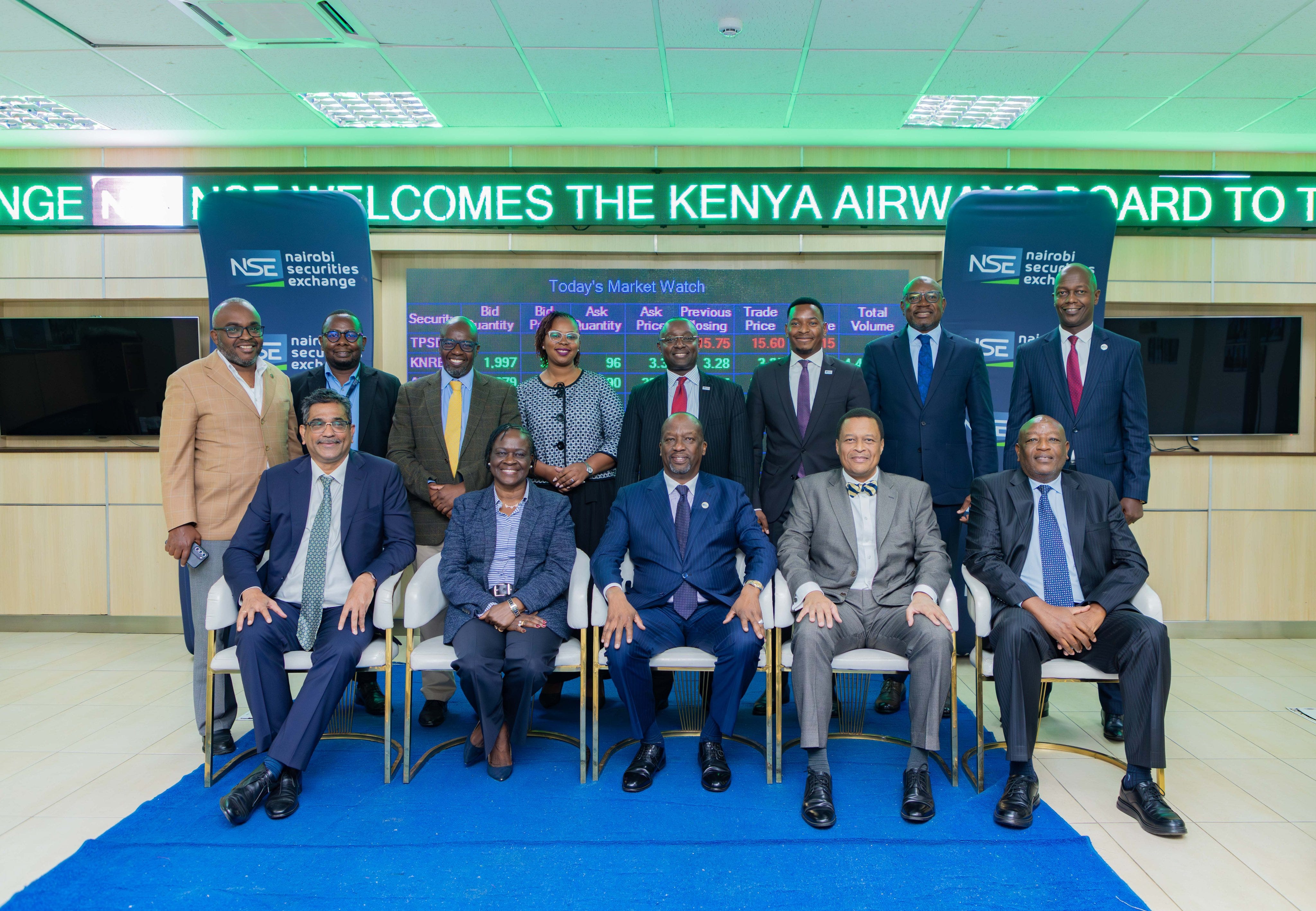
The Power Trio: The appointment of Kittony as Chairman, alongside the President’s principal economic architect, Dr. David Ndii, and global strategy veteran Chris Diaz, is a clear signal from the state: this is no longer a standard corporate board. It is an emergency command center. By aligning the NSE’s regulatory heavyweight, the President’s chief policy advisor, and a seasoned strategist with deep ties to the Bidco empire, the government has essentially “bundled” the nation’s most powerful institutional levers into a single effort to rescue the Pride of Africa.
The Weight of Access: Kittony’s true power lies in his proximity to the ear of the President. In the past, KQ has been crippled by the disconnect between its operational needs and political interference. Today, that barrier is effectively removed. With Ndii providing the economic scaffolding for a turnaround and Kittony leveraging his network to secure the necessary “Kenyan money,” the board is uniquely positioned to bypass the usual bureaucratic gridlock. This is a rare, perhaps singular, alignment of influence that places the fate of the national carrier squarely in Kittony’s hands.
The Boardlot Africa Verdict: This is the ultimate test of the “Kittony Doctrine.” If he can translate his ability to stabilize institutions into a tangible, profitable, and reliable turnaround for KQ, he will move beyond being just a “bridge-builder” or a “guardian of structure.” He will cement his status as the architect of a new, self-reliant Kenyan economy. If, however, the weight of the airline’s legacy debt and structural failures proves too heavy even for this power-stacked board, the failure will be viewed not just as a bad business outcome, but as a symbolic collapse of the very establishment he represents.
For the reader, the mission is clear: watch the flight path of Kenya Airways. In the success or failure of this final gambit lies the answer to whether Kiprono Kittony is merely the custodian of the old elite’s power, or a true visionary capable of engineering a future that is, finally, independent of the past.
About Boardlot Africa Research
Boardlot Africa is a premier financial intelligence and corporate governance publication dedicated to unpacking the mechanics of capital, market strategies, and structural shifts across East Africa’s corporate landscape. By bridging the gap between raw economic data and actionable market intelligence, we deliver deep-dive research, independent corporate analysis, and policy insights designed for institutional investors, boardrooms, and sharp market observers.
Get in Touch
Email: boardlot.research@gmail.com
Phone: +254 753 133 901
Substack: Subscribe to Boardlot Africa
X (Twitter): BoardLotSultan