
The Great Transition: Succession and Reinvention in Kenya’s Investment Banking Sector
Kenya’s capital markets are witnessing a profound structural metamorphosis. For three decades, the Nairobi Securities Exchange (NSE) has been the domain of a pioneering “old guard”—the visionary founders who established the regulatory and operational foundations of East Africa’s financial ecosystem. As these architects approach retirement, the sector is entering a defining era of transition.
This transformation is not merely about boardroom personnel; it is a macro-economic shift in how financial institutions are governed. Notably, the industry is heavily concentrated, with these five dominant firms collectively controlling nearly 50% of total equities trading at the NSE. As they navigate this transition, the sector is diverging into two distinct models of survival and evolution: the path of structured family succession and the path of professionalized management buyouts (MBOs).
The Family Succession Strategy: Honoring Legacy
For many of Kenya’s legacy firms, the priority is to bridge the gap between historical influence and modern operational demands. By integrating the next generation into the heart of the business, these firms aim to preserve their cultural DNA while injecting the digital agility required for the 2030s.
Standard Investment Bank (SIB): Founded by James Wangunyu, SIB has implemented a definitive blueprint for institutionalized family success. James has strategically appointed his sons, Donald Wangunyu and Nickay Wangunyu, to steward the firm’s future. Donald, who pioneered the firm’s fintech transformation through FourFront Management, and Nickay, who spearheads Strategy and Operations, are successfully balancing the firm’s traditional market pedigree with a relentless push into digital finance.

Dyer & Blair: One of Kenya’s oldest brokerages is evolving through the leadership of Cynthia Mbaru. As a key figure in the firm’s corporate finance division, Mbaru has been groomed to carry the torch. Her dual focus on high-level corporate advisory and industry-wide policy advocacy through the Kenya Association of Stockbrokers and Investment Banks (KASIB) ensures that Dyer & Blair remains anchored in the firm’s historical strengths while adapting to a modern regulatory environment.

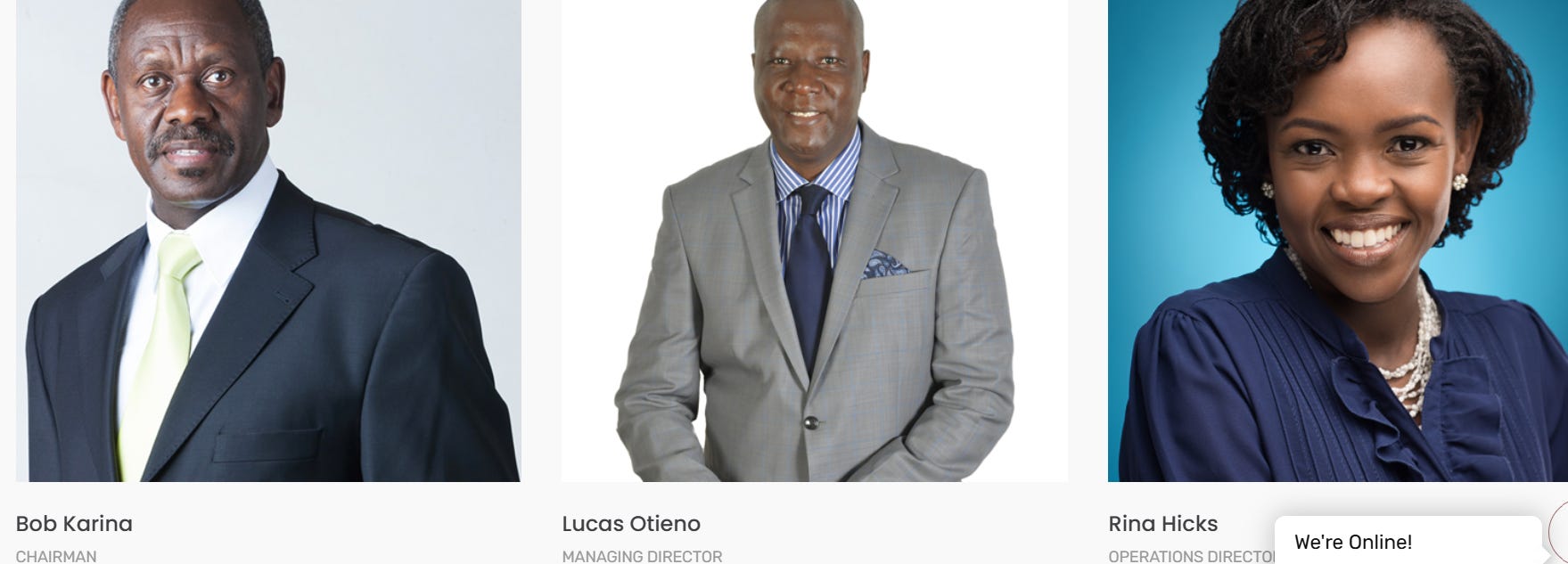
Faida Investment Bank: The firm’s succession is centered on Rina Hicks, the Operations Director and Head of Corporate Finance Advisory. Hicks has successfully transitioned the Faida brand into the digital age, most notably through her “Money-Wise” platform. By blending institutional-grade advisory with a mass-market financial literacy mission, she has positioned Faida as a leader in the retail-accessible, “democratized” capital market.


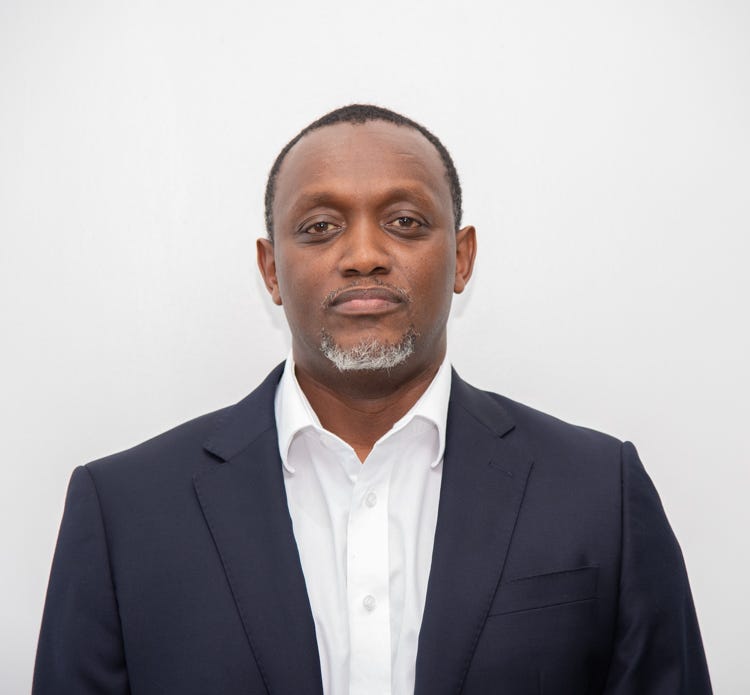
Sterling Capital: Under the stewardship of David Ngaine, son of founder Ernest Ngaine, Sterling Capital is undergoing a strategic renewal. With 18 years of experience across African capital markets and an engineering background from the University of Cape Town, Ngaine has redefined Sterling’s remit. Beyond traditional brokerage, he is driving the firm’s expansion into complex instruments like REITs and derivatives, while his role as Chairman of Afvest reinforces a growth-oriented, diversified investment philosophy.
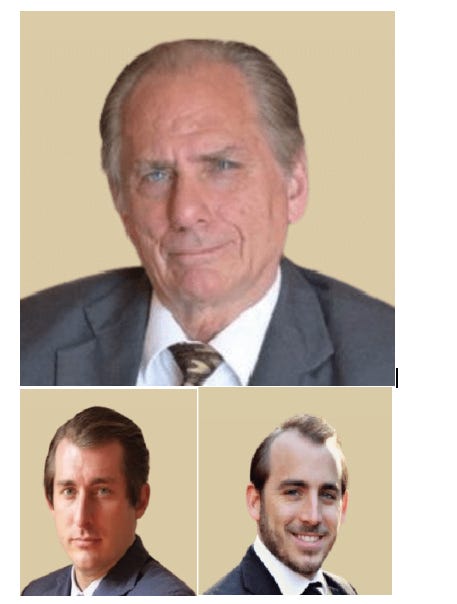
Dry Associates: The firm is managing its next chapter with a leadership team featuring Spence M. Dry (General Manager) and Converse R. Dry (Head of Securities & Trading). By embedding the second generation into these critical operational roles, the firm ensures that the boutique, high-touch philosophy established by founder James R. Dry—focused on long-term wealth preservation and corporate debt origination—remains the bedrock of its future operations.
The Management Buyout (MBO) Path: Kestrel Capital
In a sharp departure from family stewardship, Kestrel Capital recently concluded a historic management buyout (MBO) with Theo Capital Holdings. This represents the first such transition in the Kenyan investment banking sector, effectively prioritizing institutional continuity over family legacy.

The Philosophy: Spearheaded by CEO Francis Mwangi and Chairman Eric Ruenji, this strategy operates on the premise that the professionals who have navigated the firm’s daily operations are the most qualified to own and direct its future.
The Impact: By transitioning ownership to an executive consortium of eight, Kestrel has systematically eliminated “founder-dependency.” This professionalized model is designed to reassure institutional clients, tying the firm’s future to a broad base of technical expertise rather than the influence of a single founding household. It is a tactical consolidation of talent that modernizes the firm’s heritage for an aggressive, innovation-driven era.
Transition Models at a Glance
Standard Investment Bank: Family Succession Donald & Nickay Wangunyu
Dyer & Blair: Family Succession -Cynthia Mbaru
Faida Investment Bank: Family Succession Rina Hicks
Sterling Capital: Family Succession David Ngaine
Dry Associates: Family-led Management -Spence & Converse Dry
Kestrel CapitalManagement BuyoutExecutive Management Team
The Verdict: A Market in Maturity
The divergence in these approaches—between family-led continuity and management-led ownership—is the clearest indicator yet that the Kenyan financial sector is coming of age. As firms controlling nearly half the market’s trading volume undergo this evolution, the focus remains clear: leveraging the trust and relationships built by the “old guard” to drive the next wave of innovation in East African capital markets. As these successors step into the spotlight, they are not just inheriting businesses; they are becoming the primary architects of Kenya’s financial future.