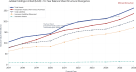

Introduction The Kenyan capital markets are at a tipping point. As of Q1 2026, we are witnessing a fundamental shift in how retail capital is being deployed. While Money Market Funds (MMFs) remain a staple, the latest data from the CMA CISReportQ1-2026 reveals a seismic movement: in the first quarter of this year alone, investors poured KES 2.3 billion into MMFs, while a staggering KES 41 billion flowed into Special Funds. This is no longer a niche trend; Special Funds have officially become the “new favorite” for Kenyan investors.
The Transparency Gap and Public Frustration This rapid transition brings us to an uncomfortable reality: our appetite for high-yield innovation has outpaced our institutional safety nets. The public discourse on platforms like X has reached a boiling point, with investors increasingly vocal about the gap between aggressive marketing and actual investor outcomes.
As seen on x and other social media platforms, recent public critiques highlight growing investor frustration regarding how returns are presented. Investors are questioning the ethics of highlighting headline-grabbing yield percentages that may not align with a clearer “net” reality, urging funds to balance their marketing with transparent, investor-focused information. This is not merely “noise”; it is a clear demand for more responsible financial communication.
The Governance Standard 2.0 We are not advocating for a return to stagnation. However, for this market to survive a period of volatility, we need an immediate “Governance Reset.” I am calling for three pillars of reform:
Standardized Performance Reporting: Mandating a “Net-of-Everything” dashboard for all Special CIS to ensure true comparability, specifically addressing the current confusion where some funds report net of fees and others net of taxes.
Explicit Risk Education: Moving beyond boilerplate disclaimers to provide simplified, scenario-based disclosures for derivative-based exposure.
Liquidity Clarity: Establishing a defined “liquidity waterfall” so that investors understand exactly how their capital is protected during market stress.
An Open Call to the Industry To facilitate this conversation, I am putting forward the following questions to both the Capital Markets Authority and the leading fund managers in this space:
On Performance: Can the industry commit to a standardized “Net-of-Everything” reporting format to eliminate the current confusion caused by disparate fee and tax deduction reporting?
On Risk: In the face of extreme market dislocation, what specific ‘stop-loss’ frameworks protect the principal in derivative-heavy portfolios?
On Concentration: Given the high market concentration—where a few players control over 65% of the Special Funds sector—what systemic safeguards are in place to prevent contagion?
On Stress Testing: Will managers commit to publishing independent, third-party stress test results to demonstrate fund resilience?
Conclusion The growth of our capital markets is a success story we all share. However, success without accountability is merely a precursor to a crisis. As we move toward a more sophisticated financial future, let us ensure that transparency is not a luxury, but the foundation upon which we build.
For more data-driven market intelligence, follow the ongoing conversation at Boardlot.africa.
cc: @CMAKenya @CentralBank_KE
