
Table of Contents: The Boardlot Sultan—Patrick Quarcoo
I. The Outsider’s Edge: From Reuters to Westlands
II. Building the Empire: The Innovation Multiplier
III. The Talent Factory: Standardizing the Kenyan Airwaves
IV. The Ink Revolution: Breaking the Print Monopoly
V. The Capital Architect: Funding the Frequency
VI. The Urban Acquisition: Folding in the Culture
VII. The Pragmatic Pivot: The Government Printing Strategy
VIII. The Boardlot Verdict: Why He Matters
IX. The Pragmatic Pivot: The Government Printing Strategy
X. A Good Dancer Knows When to Exit the Stage
XI. The Quarcoo Calculus: Compassion, Coldness, and the “Whisky Exit”
I. Introduction: The Frequency of Influence
In the history of Kenyan entrepreneurship, few success stories are as purely tactical as that of Patrick Quarcoo. Long before he became the architect behind the Radio Africa Group, Quarcoo was a man in search of the right terrain. A Ghanaian by birth, his journey was defined by a restless search for a market that could translate his vision into scalable growth. He took his bets to Uganda first, maneuvering through the challenges of an emerging economy, but it was Nairobi that ultimately provided the oxygen his vision required.
Quarcoo arrived in Kenya not just as a media entrepreneur, but as a seasoned operator who had analyzed the regional landscape and realized that Kenya was the ultimate amplifier for his ambitions. His story is that of an outsider who understood the pulse of the local market better than the incumbents who had been here for generations. By successfully identifying that Kenyan consumers were starving for a new frequency—one that blended high-octane entertainment with accessible news—he turned the “invisible economy” of airtime and audience sentiment into a media conglomerate.
His trajectory proves a vital point for our 100 Men and Women series: Kenya’s capital markets and media landscape were not shaped merely by local players, but by those with the pan-African perspective to recognize the sheer commercial velocity of the Kenyan market. Quarcoo didn’t just build a media house; he built the platforms that gave the Kenyan middle class their voice, proving that if you can capture the attention of Nairobi, you can command the direction of the region.
II. The Outsider’s Edge: From Reuters to Westlands
Patrick Quarcoo’s ascent began not in a boardroom, but in the newsrooms of the world. As a journalist for Reuters, he cut his teeth on the rigorous, objective demands of international reporting. This background provided him with a structural advantage: he understood how information moved, how it was valued, and, more importantly, how it could be commoditized. After testing his hand at business ventures in Uganda, Quarcoo looked south to Nairobi. In 2000, he arrived in a city that was rapidly modernizing but still heavily tethered to stale, state-influenced broadcasting norms.
His strategic bet—co-founding Radio Africa Group—was perfectly timed with the deregulation of Kenya’s airwaves. While legacy media houses were busy maintaining the status quo, Quarcoo saw an opening. He wasn’t interested in being another voice in the choir; he was interested in changing the melody entirely. By establishing operations in Westlands, he positioned himself at the nexus of the city’s emerging urban professional class.
This period taught him a lesson that would become the cornerstone of his empire: the “Journalist’s Insight.” Quarcoo possessed an uncanny ability to distill complex social trends into a format that the common listener found irresistible. He didn’t just broadcast news; he understood the psychology of “what the people want”—the specific mix of high-energy music, blunt talk-radio, and cultural relevance. While his competitors focused on institutional pedigree, Quarcoo focused on audience retention. He monetized the “ear” of the Kenyan consumer, turning what was essentially a niche experiment into the most formidable commercial media platform in the region.

III. Building the Empire: The Innovation Multiplier
Patrick Quarcoo did not just enter the market; he disrupted its sensibilities. He famously announced his arrival in Nairobi with a provocative billboard on Uhuru Highway featuring a naked individual, an act that sent shockwaves through the conservative advertising and corporate establishment. The immediate reaction was one of skepticism; critics argued that such a “gimmick” would alienate high-value corporate clients and that no serious advertiser would risk their brand by associating with a station that operated with such unfiltered audacity.

They were wrong. That billboard was a masterstroke of guerrilla marketing that served a dual purpose: it grabbed the attention of the youth demographic overnight and signaled that Radio Africa was a brand that would play by its own rules.
From that provocative start, the empire scaled rapidly:
Radio Dominance: Through the launch of Kiss 100 and Classic 105, Quarcoo captured the urban professional and youth segments—the most coveted demographics for advertisers. He shifted radio from a static broadcast tool to a vibrant, interactive community space.
Horizontal Integration: With the launch of The Star newspaper in 2007, he moved aggressively into print, successfully challenging the long-standing hegemony of legacy broadsheets. This was followed by the push into television with Bamba TV, effectively transforming Radio Africa from a radio specialist into a comprehensive, cross-platform media conglomerate.
The “Boardlot” Angle: Quarcoo challenged the media monopolies of his day by refusing to adopt their heavy, bureaucratic structures. Instead, he championed a lean, tech-forward, and ruthlessly audience-centric model. By prioritizing high-velocity digital engagement and targeted content over legacy prestige, he proved that in the media business, agility beats longevity. His ability to turn a “scandalous” billboard into a long-term commercial juggernaut remains the defining example of his capacity to read—and lead—the Kenyan market’s appetite for disruption.

IV. The Digital Pivot & Cultural Standardization
Patrick Quarcoo’s most enduring legacy is perhaps the “professionalization” of the Kenyan airwaves. Before his arrival, the industry was often characterized by low wages and a lack of structured career progression. Quarcoo dismantled this by introducing professional salary standards that significantly outpaced the market average, luring top-tier talent and treating them as the primary capital of his business.
He turned broadcasting into a high-stakes, high-reward profession. By aggressively poaching and nurturing iconic voices—such as Caroline Mutoko, whose sharp, conversational style defined the morning drive for a generation, and Maina Kageni, whose uncanny ability to tap into the private frustrations of urban Kenyans made his show a mandatory morning ritual—Quarcoo turned radio presenters into national celebrities. This “star system” wasn’t accidental; it was a deliberate strategy to create brand loyalty that was inseparable from the individuals on the mic.
However, Quarcoo’s greatest challenge arrived as the analog era waned. His pivot to digital was early, if not always easy. Long before the industry-wide scramble for streaming, he was pushing for convergence, experimenting with platforms like Songaplay and Nikoplay to capture the audience that was migrating from terrestrial radio to digital on-demand content. Even when these ventures faced the brutal headwinds of a market still struggling with data costs and advertising fragmentation, they demonstrated his refusal to be a “legacy player.”
His “audience-first” strategy forced the entire Kenyan corporate sector to rethink its advertising spend. He moved the goalposts from traditional “reach” to “engagement,” proving to agencies and boards that an emotional connection with a listener was worth far more than a simple headcount. By standardizing the quality of broadcast content and forcing the market to value niche, highly-engaged demographics, Quarcoo didn’t just build a media house; he defined the modern commercial language of Kenyan media. He transitioned the industry from a collection of stations into a sophisticated, metrics-driven ecosystem, ensuring that Radio Africa Group remained the benchmark by which all other media houses measured their own success.
The blueprint? Target the faces and voices that defined the competition and bring them home to Westlands. Here’s the “transfers” that shook Kenyan radio:
Caroline Mutoko: Poached from Capital FM to anchor Kiss 100, where she became the face of urban morning radio.
Maina Kageni: Also came from the Capital FM ranks, joining Classic 105 to redefine the “Morning Show” format.
Cess Mutungi: A massive capture from Capital FM, bringing her irreverent, high-energy style to the Kiss 100 lineup.
Daniel “Churchill” Ndambuki: Brought his unique brand of comedy to the airwaves, partnering with Maina Kageni on Classic 105.
Other Heavy Hitters: Names like Kalekye Mumo and many others followed, as Radio Africa turned poaching into an art form.
They didn’t just hire presenters; they systematically stripped Capital FM and Nation FM of their listener-retention machines. It was ruthless, expensive, and undeniably effective. 📈🔥
Caroline Mutoko
Caroline Mutoko began her career in humble roles, working as a messenger and waitress before transitioning into media. She started her radio journey at Capital FM, initially providing traffic updates. She eventually joined Kiss 100, where her “Big Breakfast” show established her as a preeminent voice in Kenyan media. Throughout her tenure, she held various leadership roles, including Programmes Controller and Group Marketing Manager, before becoming the Chief Operations Officer at Radio Africa. She is a graduate of the University of Nairobi, Harvard Business School, and the UCLA Anderson School of Management.


Maina Kageni
Maina Kageni entered the job market immediately after high school, starting at his uncle’s credit card company, Royal Card. His radio career began by chance at Capital FM when, unable to pay for a voice-over recording, he offered to do it himself; the management was impressed, and he was hired. He was later poached by Nation FM before joining Radio Africa, where his breakfast show on Classic 105 became a long-running, highly rated staple of Kenyan morning radio. He is known for his massive influence and longevity in the industry.

Cess Mutungi
Often referred to as the “Radio Queen,” Cess Mutungi graduated from Kenyatta University with a degree in Home Economics. Inspired to become a journalist, a chance meeting with Bob Kioko led her into radio. Her career spanned several major stations, including Nation FM, Kiss FM (where she partnered with Maina Kageni), Hot 96, and Smooth FM. She spent a decade hosting “The Jam” at Capital FM before joining Classic 105. Known for her distinctive husky voice and sharp humor, she stepped back from daily broadcasting in 2024 to focus on independent projects.

Edward Kwach
The late Edward Kwach (1973–2025) was a versatile media personality who initially studied law before pivoting to broadcasting in the early 2000s. He became a fixture on the Kenyan airwaves, working at several top stations including Capital FM, Kiss 100, Homeboyz Radio, Nation FM, and finally Spice FM. He was recognized for his “golden voice” and his ability to command both radio and TV audiences, though he was also candid about the personal and professional challenges he faced during his career.

Edward Kwach Biography & Tribute
This video provides a comprehensive tribute to the life and career of Edward Kwach, detailing his significant contributions to the Kenyan media industry.
Daniel “Churchill” Ndambuki
Daniel Ndambuki, better known as “Churchill,” has been a central figure in the Kenyan comedy and entertainment industry since 1996. He rose to prominence through the hit comedy show Redykyulass. In 2008, he launched the Churchill Live (later renamed Churchill Show), which became a massive success and served as a vital platform for nurturing new comedic talent in Kenya. His work has spanned radio, television, and live events, making him one of the most recognizable names in East African entertainment.

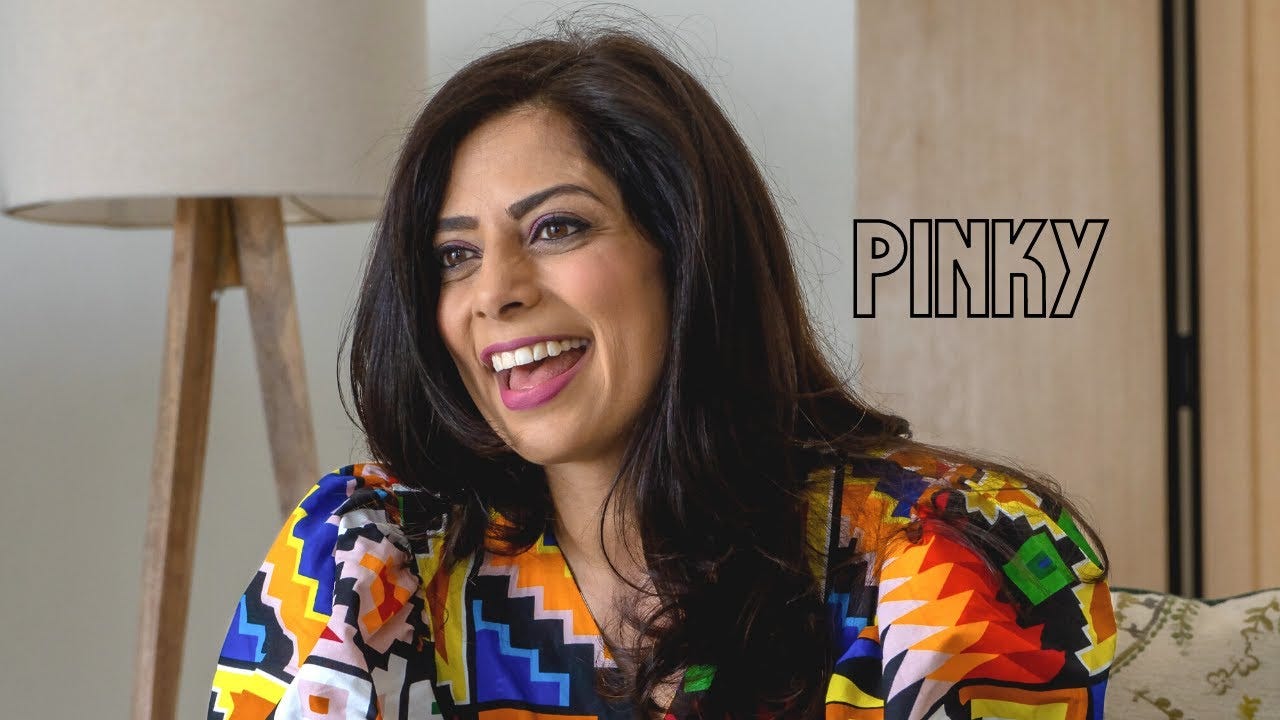
Pinky Ghelani
Pinky Ghelani is a trained media professional with over 15 years of experience as a radio and TV personality. She established herself as a formidable voice in the media industry through her work on air and as a public speaker. Beyond her broadcasting career, she has ventured into content creation and advocacy, launching platforms like “What Women Want” and serving as an influencer for the UNHCR to champion initiatives for refugee women.
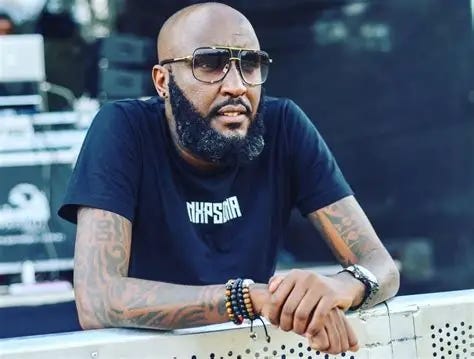
Shaffie Weru
Known as “The Raverend,” Shaffie Weru began his broadcasting career in the early 2000s at Kiss 100, where his high-energy, vibrant personality made him an instant hit with the urban youth demographic. He became a fixture at Radio Africa for nearly two decades, hosting various shows alongside talent like Kalekye Mumo and Adelle Onyango. Beyond radio, he has built a massive profile as an events host, MC, and influencer. Known for his unapologetic style and ability to drive social conversation, he transitioned from traditional radio to broader digital media ventures, continuing to maintain a significant presence in the Nairobi entertainment and lifestyle scene.
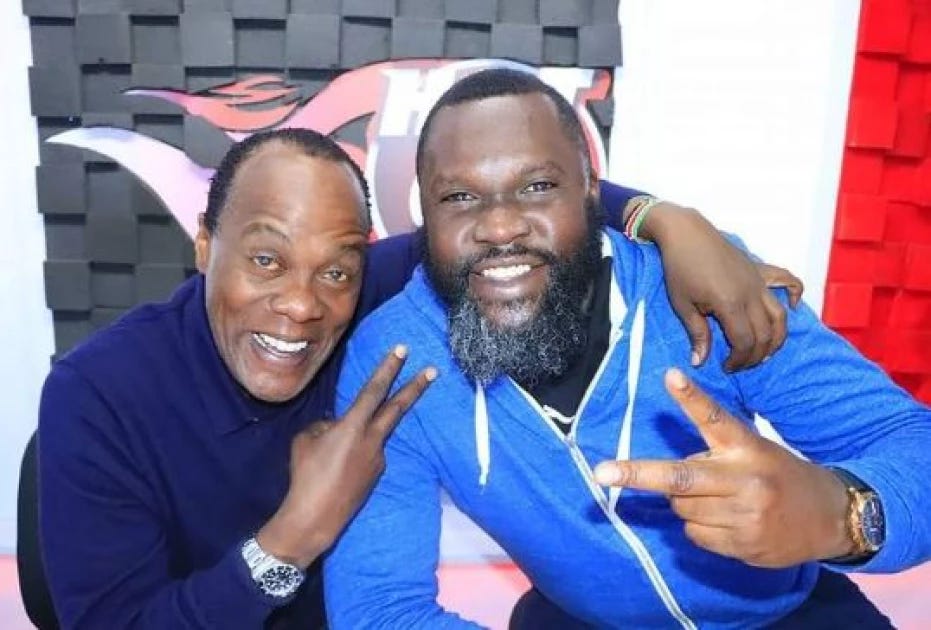
Nick Odhiambo
Nick Odhiambo is a multi-talented voice artist and radio host whose career is defined by his incredible versatility and his signature “radio voice.” He started his radio journey at classic 105 and moved through several major stations, including Kiss 100, where he became well-known for his character voices and improvisational humor. He has also been a major player in the advertising world as a high-demand voice-over artist for major national campaigns. Currently a key voice at Radio Africa (notably on Radio Jambo), he is widely respected for his ability to adapt his style—from serious news-adjacent commentary to comedic character work—making him one of the most reliable and recognizable talents in the industry.
The Internal Talent Factory
While the “poaching” strategy was Radio Africa’s tactical hammer, PQ’s true genius—and the reason his media empire outlasted many—was his talent factory. He didn’t just buy stars; he built them from the ground up, identifying raw, untested potential and giving them a platform to define the Kenyan zeitgeist.
Radio Africa became the ultimate finishing school for the next generation of Kenyan media icons.
Quarcoo’s approach was simple: find individuals with “star quality” who were hungry, mentor them through the Radio Africa ecosystem, and watch them become household names.
Adelle Onyango: Initially a fresh face in the industry, Radio Africa saw her potential and eventually positioned her to take over the prestigious Kiss FM breakfast show. She went from an emerging talent to a brand synonymous with youth culture under PQ’s mentorship.
Shaffie Weru: While he became a “bad boy” of radio, Shaffie’s professional foundation was solidified within the Radio Africa walls. Over his 15+ years at the group, he was groomed into one of the most bankable personalities in the country, effectively becoming a brand unto himself.
Martin Khafafa: Moving from the operational side of the business (COO) to the very top as CEO, Khafafa is the ultimate proof of Quarcoo’s “grooming” philosophy. He wasn’t poached; he was cultivated through years of internal leadership roles, learning the Quarcoo playbook from the inside out.
Diverse Pipeline: Through internal training and a culture that rewarded innovation, RAG became a breeding ground for producers, digital strategists, and sports anchors who moved up the ranks rather than coming in from legacy rivals.
The “Grooming” Philosophy
Quarcoo understood that while poaching gives you an immediate audience, internal grooming gives you brand longevity. By investing in fresh talent—like the recent MoU signed with USIU-Africa to bridge the gap between classroom theory and the fast-paced reality of the newsroom—he ensured that Radio Africa was always ahead of the curve, replenishing its own talent pool without relying solely on the “transfer market.”
Radio Africa Group (RAG) operates a diverse portfolio of radio stations in Kenya, targeting various demographics through a mix of English, Swahili, and vernacular programming.
The group’s key national radio stations include:
Kiss 100 FM: The group’s flagship contemporary hit radio station, known for its focus on pop, hip-hop, and urban entertainment.
Classic 105: An adult contemporary station targeting urban professionals, famous for its high-engagement talk shows and “yester-music.”
Radio Jambo: A mass-market, Swahili-language station with a heavy focus on sports, news, and entertainment.
East FM: A specialized station serving the Asian community with Bollywood hits and cultural programming.
Gukena FM: A vernacular station broadcasting primarily in Kikuyu, featuring local music and community-focused content.
Homeboyz Radio: An urban-oriented station focused on youth culture, hip-hop, and modern entertainment (acquired by the group).
Smooth FM: A station featuring relaxed, adult contemporary, and smooth jazz music.
X FM: A station previously oriented toward urban youth and alternative/rock music.
Beyond these Kenyan properties, the group has also held interests in regional media assets, including co-ownership of stations like Capital FM and Beat FM in Uganda.
Note: While the group’s portfolio has evolved over time through acquisitions and rebranding, these brands represent the core of their influence in the East African media landscape.
VI. The Ink Revolution: Breaking the Print Monopoly
The Launch: Disrupting the Duopoly
In July 2007, Radio Africa launched the publication as The Nairobi Star. At the time, Kenya’s print market was a rigid duopoly dominated by the Daily Nation and The Standard. Quarcoo’s entry strategy was specifically designed to be disruptive:
The Format: It was launched as a 32-page, tabloid-style publication. While the incumbents leaned toward traditional broadsheet formats, The Nairobi Star was built to feel like a “magazine in a newspaper body”—visually dynamic, easy to digest, and focused on human-interest stories rather than the dry, formal reporting typical of the era.
The Target: It aimed squarely at the “thinking” urban professional—the same demographic that was already consuming Kiss 100 and Classic 105. By leveraging his radio brand equity, Quarcoo essentially cross-pollinated his audiences, bringing his radio listeners into the print fold.
The Pivot: From Local Tabloid to National Voice
The paper faced a baptism of fire almost immediately. The launch coincided with the 2007/2008 post-election violence, a period of intense national upheaval. This forced the publication to undergo a swift editorial evolution:
The Content Shift: It moved quickly from light, entertainment-heavy features to substantive, hard-hitting political reporting. This pivot proved vital; it earned the paper credibility during a time of crisis and forced the establishment to take the “new kid on the block” seriously.
The Rebrand: In 2009, having proven its viability, the paper rebranded from The Nairobi Star to simply The Star. This signaled its ambition to move beyond city-specific news and capture the national consciousness.
The “Boardlot” Insight: Why It Succeeded
The most impressive part of the story is how quickly the project became a commercial entity rather than a loss-making vanity project.
Financial Velocity: Despite a modest initial circulation of 5,000–8,000 copies, the paper achieved profitability by September 2009—just over two years after its launch.
The “PQ” Factor: Quarcoo brought on William Pike as the founding CEO and Catherine Gicheru as the founding editor. This leadership team combined Pike’s experience in the Kenyan media landscape with Gicheru’s editorial rigor, creating a product that was commercially lean and editorially bold.
By building The Star, Quarcoo effectively “closed the loop” on his media empire. He realized that to truly dictate the frequency of the Kenyan market, he needed to own the news cycle both in the morning (radio) and in the print/digital cycle throughout the day. It was an audacious play that permanently broke the print media monopoly in Kenya.
VII. The Capital Architect: Funding the Frequency
To understand Patrick Quarcoo’s fundraising strategy, one must look at him not as a conventional corporate CEO, but as a bootstrapper who mastered the art of “Strategic Alliances.”
Unlike many media moguls who relied on state patronage or massive initial equity injections from legacy conglomerates, Quarcoo’s capital strategy was defined by agility and phased equity dilution.
The Early Years: Bootstrapping and Lean Operations
When Quarcoo and William Pike founded Radio Africa in 2000, they didn’t have the backing of a major bank or a pre-existing industrial fortune. Their startup capital was built on the efficiency of their model—they identified that the Kenyan airwaves were “inefficient” and used this gap to generate quick cash flow.
The “Pike” Partnership: Partnering with William Pike—a seasoned journalist and former editor—was a masterstroke in social capital. Pike provided the local institutional credibility and network that a new entrant from Ghana lacked, acting as a “shield” against the skepticism of the old guard.
Reinvested Velocity: The early success of Kiss 100 wasn’t just about ratings; it was about cash conversion. By selling airtime to advertisers who were tired of the “stodgy” state-run stations, Quarcoo created a self-funding loop. The revenue from the first station fueled the launch of the next.

The Scaling Phase: Strategic Equity and “Smart Money”
As the business moved from radio into print (The Star) and TV (Bamba TV), Quarcoo needed to pivot from operational cash flow to long-term capital.
Kiprono Kittony’s Role: Bringing on Kiprono Kittony as a chairperson and partner was the ultimate move in “investor management.” Kittony provided the political and business stature that allowed Radio Africa to operate at the highest levels of Kenyan commerce. This wasn’t just about raising money; it was about institutionalizing the brand.
Stakeholder Diversification: Quarcoo utilized strategic equity sales to grow. Notably, for years, the South African media giant Kagiso Media held a significant stake in the group. This provided the “patient capital” required to fund the Star newspaper and the digital infrastructure for Bamba TV, while also bringing international technical expertise to their boardroom.
The “Boardlot” Insight: Managing the Room
Quarcoo’s brilliance was in never giving away too much. He maintained operational control even while inviting large players into the fold. He treated his investors as partners in growth rather than just check-writers:
Advertising as Capital: He effectively “pre-sold” the value of his platforms to advertisers, getting them to invest in the medium before it was even fully proven. In a sense, the advertising community was his largest non-equity investor.
Operational Control: Even as the company grew to employ over 500 people, the board remained tightly focused on his vision. He managed the shift from Kagiso Media’s departure in 2019 by effectively transitioning control to local interests, ensuring that the company’s destiny remained anchored in Nairobi rather than being dictated by distant headquarters.
VIII. The Urban Acquisition: Folding in the Culture
If Radio Africa was the polished, professionalized heart of Kenyan media, Homeboyz Radio was its wild, untamed nervous system. Founded by the Rabar brothers—Myke, Alph, and John—Homeboyz didn’t just play music; they lived the culture. They were the architects of Nairobi’s nightlife, concert scenes, and DJ circuits, holding a monopoly on “cool” that Patrick Quarcoo’s corporate boardroom desperately needed to access.
The Hostile Integration
The acquisition was never going to be a simple hand-off; it was a collision of two vastly different philosophies. For Quarcoo, the purchase was a strategic necessity to prevent the “youth market” from slipping into the hands of independent digital creators. He wanted the brand, the street-level data, and the pipeline of talent. However, the Rabar brothers operated on a maverick frequency, and forcing that culture to bow to the rigid, compliance-heavy governance of Radio Africa created immediate, friction-filled tension.
This reached a breaking point in 2021. When a controversy involving inflammatory remarks by Homeboyz presenters ignited a national firestorm, the “Quarcoo Method” was laid bare. Quarcoo did not hesitate; he enforced a swift, ruthless corporate purge, firing high-profile talent to sanitize the brand. It was a direct signal to the market: Radio Africa’s reputation with blue-chip advertisers was non-negotiable. The “street” could be bought, but it would have to play by the rules of the boardroom.
The Capital Markets Link: From Street to Script
The most critical takeaway from this acquisition isn’t just the cultural consolidation; it is the bridge to the Nairobi Securities Exchange (NSE). The Homeboyz venture was not merely a private play; it was later listed on the Growth Enterprise Market Segment (GEMS) of the NSE, becoming one of the few media-related entities to navigate the rigors of public listing.
For Quarcoo, the listing of Homeboyz served as the ultimate proof-of-concept for his broader financial strategy:
Institutionalizing the “Cool”: By taking a brand born in a DJ booth to the public exchange, Quarcoo signaled to the financial markets that youth culture was an investable, audited asset class.
The Capital Markets Synergy: This established a clear pipeline between the street-level audience he captured via Homeboyz and the institutional investor base he courted in the capital markets. It proved that a media asset—provided it had the right oversight—could satisfy the transparency demands of public shareholders.
By folding Homeboyz into his orbit and exposing its valuation to the NSE, Quarcoo didn’t just grow an empire; he showed the market that media entrepreneurship in Kenya had come of age. He turned the “rebel” brand into a public corporate asset, cementing his role not just as a media mogul, but as a master strategist at the intersection of culture and capital.
IX. The Pragmatic Pivot: The Government Printing Strategy
In the final evolution of his empire, Patrick Quarcoo executed a maneuver that earned him both intense criticism and immense commercial stability. As the traditional print industry faced an existential crisis, Quarcoo moved to secure the most coveted—and controversial—revenue stream in the country: government printing contracts.
The Mouthpiece Dilemma
To his critics, the move was the ultimate betrayal of journalistic independence. By positioning The Star as a primary channel for state notices, tenders, and legislative mandates, Quarcoo was accused of turning his publication into a government mouthpiece. The perception that he had traded his editorial edge for state-backed financial security rippled through the media fraternity. Pundits argued that the “watchdog” had been effectively neutralized, swapping the adversarial role of a free press for the safety of a government contract.
The Pragmatic Reality
Quarcoo, however, remained characteristically unmoved. He viewed the critique as the luxury of those who did not have to balance a payroll of hundreds. While the Daily Nation and The Standard—the self-proclaimed bastions of independent journalism—bled out, suffering through catastrophic drops in retail circulation and vanishing private-sector advertising, Quarcoo was busy securing his bottom line.
His strategy was pure, unadulterated pragmatism:
The Cashflow Hedge: While his competitors were crippled by declining cash flows and the drying up of legacy advertising budgets, Quarcoo had secured a consistent, high-volume revenue stream. He wasn’t interested in the vanity of being “the voice of the people” if that voice meant insolvency.
Insulation from Market Shifts: By tethering a portion of his revenue to the state’s mandatory printing requirements, he insulated The Star from the erratic nature of private sector ad spend and the “cancel culture” that often targets independent media.
The “Boardlot” Verdict
Patrick Quarcoo proved that in the business of media, the only thing more dangerous than being a government mouthpiece is being an irrelevant, bankrupt martyr. While the industry titans struggled to pay their staff, Quarcoo’s pragmatic pivot ensured that The Star remained a going concern.
He didn’t care about the labels; he cared about the survival of the enterprise. By choosing state-backed utility over the prestige of “independent” decline, Quarcoo solidified his reputation as a ruthless capitalist. He demonstrated that for a true entrepreneur, the mission is not to win the public’s applause, but to ensure the business outlives its peers. He chose the hard, profitable path of the pragmatist, leaving the moralizing to those who couldn’t balance their own books.
X. A Good Dancer Knows When to Exit the Stage
Patrick Quarcoo, the visionary Ghanaian-Kenyan media entrepreneur who built Radio Africa Group into a regional powerhouse, has once again demonstrated impeccable timing in his business journey. Having already stepped down as CEO of his Kenyan operations in 2024—a move that marked the end of a transformative 24-year tenure at the helm—Quarcoo has now completed his final act by exiting his long-standing investment in Uganda’s Capital FM Group.
This full withdrawal signals a definitive shift in his portfolio. By relinquishing his stake in the Ugandan media landscape he helped pioneer, Quarcoo is effectively closing the curtain on his direct operational and ownership footprint across both Kenya and Uganda. As the strategic partnership and subsequent transition with Kin Kariisa’s Next Media takes hold in Kampala, Quarcoo gracefully bows out of the markets he spent decades cultivating. In an industry where egos often outlast relevance, he proves that a true visionary knows when to exit the stage—leaving behind a legacy of innovation, iconic brands, and a blueprint for regional expansion that redefined the East African media landscape. He leaves not in retreat, but in a well-timed departure, having successfully transitioned his life’s work from the hands of a founder to the promise of a new era.
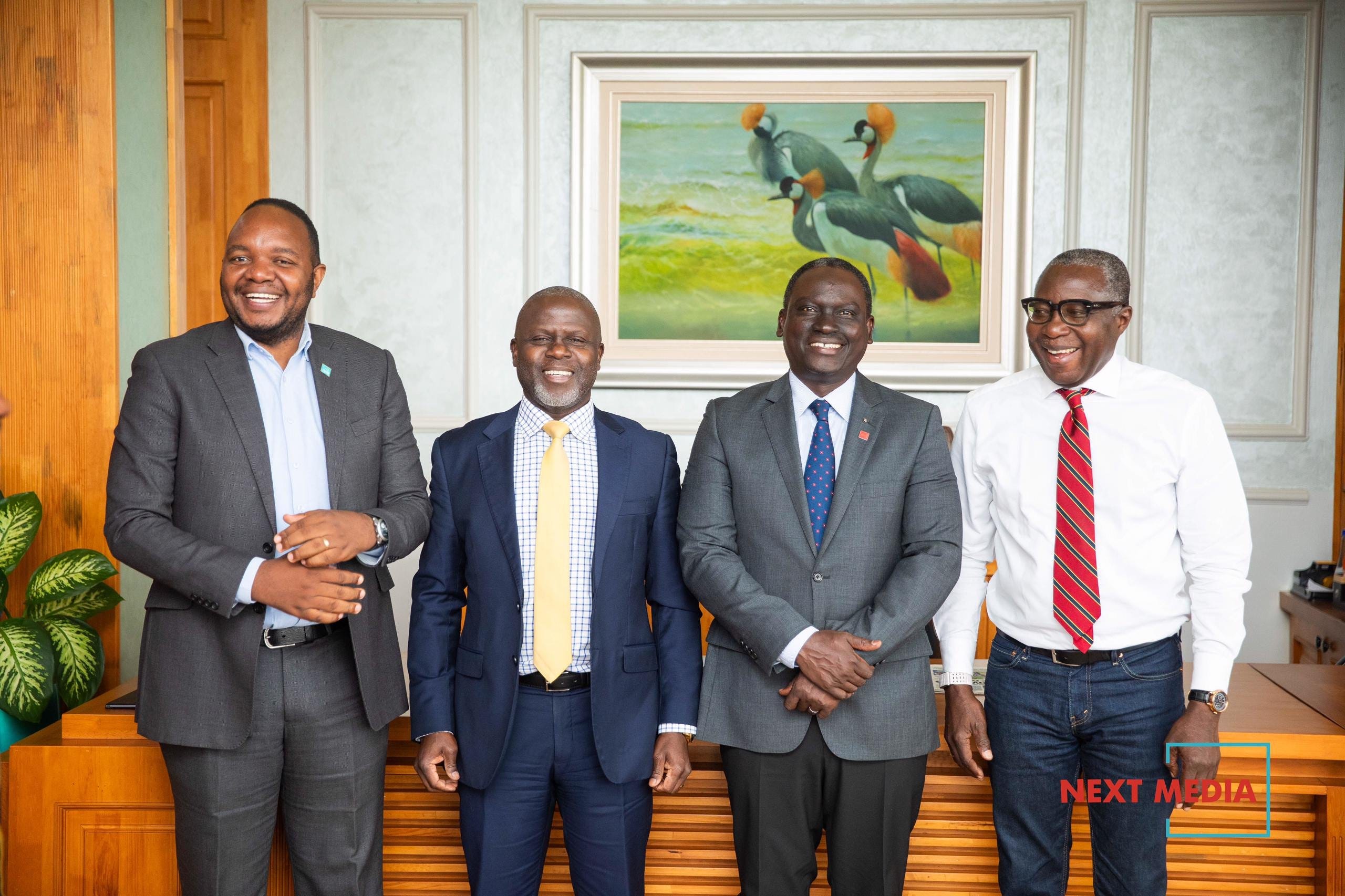
Patrick Quarcoo sold his stake in the Ugandan media entity Capital FM Group to Next Media Services, a prominent Ugandan multimedia conglomerate.
Next Media is owned and led by Kin Kariisa, a highly influential Ugandan media proprietor, entrepreneur, and philanthropist. Kariisa founded Next Media in 2008 and has since built it into a multimedia powerhouse that operates a diverse portfolio of brands, including NBS Television, Next Radio, Sanyuka TV, and the digital news platform Nile Post. Beyond his role at Next Media, Kariisa is a significant figure in the East African corporate landscape, serving in various leadership capacities, including as the Chairman of the National Association of Broadcasters (NAB) in Uganda and as a director at Stanbic Bank Uganda. His leadership is widely credited with modernizing Uganda’s media sector through significant investments in digital transformation and innovative content production.
This video provides an overview of Kin Kariisa’s background and his journey in building Next Media into a powerhouse.
XI. The Quarcoo Calculus: Compassion, Coldness, and the “Whisky Exit”
The legend of Patrick Quarcoo’s management style is perhaps best encapsulated by a story often whispered in the corridors of Radio Africa: the “whisky-fueled exit.” In an industry where departures are typically marked by legal threats, PR battles, and bitter HR disputes, Quarcoo developed a signature, if unorthodox, method of managing the end of a professional relationship.
As Maina Kageni, one of the group’s most enduring stars, has often alluded to in recounting the high-pressure culture of the Radio Africa newsroom, Quarcoo treated his talent like high-performance athletes in a war room. When he deemed that an employee—even a high-level star—had reached the end of their utility to the business, Quarcoo was known to bypass the cold, administrative formality of standard termination. Instead, he would invite the staffer to a private, one-on-one meeting. There, he would deliver the news with clinical, unshakable directness, only to follow it immediately with a high-end bottle of whisky.
It was more than a gift; it was a parting ritual. It was Quarcoo’s way of saying: “The business case for you has closed, but the personal respect remains.”
The Philosophy of the Transaction
This gesture was not merely eccentric; it was profoundly pragmatic. Quarcoo understood that in the high-stakes, gossip-heavy world of Nairobi media, the narrative of how you treat those who leave is just as important as how you treat those who stay. By settling the account with a gesture of “generous finality,” he managed to prevent the bruised egos of former employees from turning into long-term vendettas.
This duality—the ability to be a ruthless operator who fires talent without hesitation, and a patron who ensures they walk out the door with their head held high—is the core of the “Quarcoo Method.” It mirrored his famous recruitment tactics; Maina Kageni himself once shared how Quarcoo offered him a two-month salary advance upon joining just to help him “detox” and prepare for the new role. Whether it was giving money to start a job or whisky to finish one, Quarcoo always sought to control the emotional frequency of the transition. He understood that in the ruthless economy of media, a well-managed exit was the ultimate insurance policy against future friction