
The Reluctant Reformer: Frank Mwiti and the Battle for the Soul of the NSE
I. The Initiation by Fire
When Frank Mwiti walked into the glass-walled offices overlooking the Nairobi skyline to take the reins as Chief Executive Officer of the Nairobi Securities Exchange (NSE) in May 2024, he was not walking into a quiet boardroom. He was walking into a crossfire.
The exchange was at a multi-year inflection point. Plagued by low liquidity, sluggish trading volumes, and a drought of initial public offerings (IPOs), the institution was desperate for radical surgery. But radical surgery disturbs the comfort of entrenched interests. Almost immediately, a faction of stockbrokers—accustomed to the old ways of doing business and threatened by a modernizing, data-driven mandate—mobilized a quiet rebellion. Whispers turned into boardroom maneuvers, and maneuvers nearly turned into an unceremonious ouster, with murmurs of a push to show the new outsider the door.
They miscalculated their man.
Having cut his teeth advising global financial giants at Deutsche Bank and leading multi-jurisdictional strategy as an East Africa Partner at Ernst & Young, Mwiti was built for high-stakes corporate warfare. He didn’t blink, he didn’t pander, and he certainly didn’t resign. Instead, he leaned entirely into his blueprint: institutional rigor, structural efficiency, and unwavering data discipline.
Today, those same brokers who once plotted an early exit strategy are looking at a transformed market landscape—and quietly counting their blessings that their coup failed.
II. Early Life and Education: Foundations of Rigor
To understand how Frank Mwiti developed the intellectual armor required to stare down institutional resistance, one must trace his path back to the foundational environments that shaped his discipline. His academic trajectory was forged in some of the country’s most demanding environments, beginning with his formative years at Mang’u High School—an institution legendary for producing Kenya’s sharpest mathematical, scientific, and corporate minds through unrelenting rigor. Moving from the highlands of Kenya into the professional and academic tracks, he pursued rigorous professional accountancy training, qualifying as a Certified Public Accountant (CPA) through Strathmore University.
Rather than stopping at traditional accounting and finance, Mwiti expanded his cognitive toolkit horizontally by pursuing a Bachelor of Laws (LLB) degree from the University of Nairobi. This dual mastery of quantitative accounting and structural law provided a rare, formidable hybrid skillset: the ability to read a balance sheet down to its microscopic liabilities while simultaneously understanding the regulatory frameworks and legal mechanisms that govern corporate ownership and trade.
This educational foundation ensured that when he eventually stepped into elite global banking halls and domestic boardrooms, he was never merely a participant—he was structurally equipped to decode, design, and dismantle complex market systems.
III. From Mang’u to Global Capital Markets: The Making of a Strategist
To understand Mwiti’s unyielding approach, one has to look backward. Born in Meru and shaped by the legendary academic discipline of Mang’u High School, his ascent was anchored in numbers. He pursued a Bachelor of Laws (LLB) from the University of Nairobi while concurrently mastering finance through professional certifications, building a rare hybrid toolkit of legal literacy and quantitative mastery.
The Global Crucible: The London Years and Institutional Mastery
Frank Mwiti’s career skipped the conventional local tracks, launching straight into the deep end of global investment banking. In London, he founded Afrika Kapital, advising behemoths like Deutsche Bank and Lloyds Banking Group across complex asset classes—from fixed income and commodities to synthetic structures and listed derivatives. When he returned to East Africa as the Eastern Africa Markets Leader for EY, he wasn’t just an auditor; he was a master architect of corporate transactions, mergers, and market strategy.Before commanding an exchange floor in Nairobi, Frank Mwiti spent a decade and a half immersed in the hyper-competitive financial ecosystem of London. His global pedigree was forged through senior executive and advisory roles at top-tier global powerhouses, including UBS Investment Bank, Deutsche Bank, and PwC.
Operating at the epicenter of international finance, he advised global multinationals, private equity funds, hedge funds, and investment banks spanning the UK, the US, Europe, Russia, and Asia. During this tenure, he founded and served as CEO and Managing Director of Afrika Kapital in the UK, where he specialized in high-complexity asset classes—guiding market makers across foreign exchange, equities, fixed income, commodities, synthetics, and listed derivatives.
This international crucible did more than build a resume; it hardwired a global standard of corporate governance and operational execution into his leadership style. By the time he completed executive management strategy training at the Massachusetts Institute of Technology (MIT), Mwiti possessed a rare, macro-level grasp of how international capital flows, structured products, and modern market infrastructures actually function.
The Regional Command: Returning Home to Transform East Africa
Armed with world-class execution capabilities, Mwiti returned to the continent to bridge international best practices with local market opportunities. Prior to taking the helm at the Nairobi Securities Exchange, he served as a Partner and Eastern Africa Markets Leader at EY (Ernst & Young). In that role, he directed strategy, mergers and acquisitions (M&A), and business development across Kenya, Uganda, Tanzania, Rwanda, Ethiopia, and South Sudan. He routinely advised sovereign governments, executive boards, and institutional shareholders on complex economic transformations.
When the NSE called upon him to step into the chief executive chair, it was a natural evolution of his career trajectory. He wasn’t simply entering a local brokerage environment; he was bringing institutional-grade transformation to the country’s financial core. By leveraging his background from the world’s most sophisticated financial hubs, Mwiti positioned himself to drag the Nairobi bourse into a new era of digital readiness, deep liquidity, and regional integration.
IV. The Blueprint in Action: Modernizing the Bourse
With the initial resistance neutralized, Frank Mwiti shifted the exchange from defense to offense. Rather than managing a slow decline, his administration rolled out an aggressive modernization agenda designed to overhaul market infrastructure and restore liquidity.
The execution strategy was built on removing structural barriers that had kept retail participation stagnant for decades. Under his direction, the exchange implemented sweeping reforms, including the elimination of the mandatory 100-share board lot rule, finally opening the floodgates for single-share trading and democratizing access for a younger, digital-native generation of investors.
Simultaneously, the bourse accelerated its digital transformation. Initiatives like the Kenya Digital Exchange (KDX) framework and a deliberate push into tokenization and advanced trading infrastructure positioned the institution to compete on a global scale. By fostering strategic technology partnerships and establishing innovation pipelines, Mwiti transformed the Nairobi trading floor from an archaic, broker-dominated club into an agile, tech-forward financial marketplace.
V. Measuring the Pulse: Data-Driven Performance and Market Transparency
Under Frank Mwiti’s leadership, tracking market performance shifted from opaque market rumors to rigorous, transparent data intelligence. Recognizing that modern institutional investors demand clear visibility, the NSE institutionalized comprehensive weekly metrics to measure the true pulse of the Kenyan capital markets.
As captured in the exchange’s executive performance updates, tracking capital market health requires monitoring interconnected macroeconomic and institutional levers:
Market Capitalization & Index Momentum: Tracking headline milestones—such as reclaiming the historic KSh 4 trillion capitalization threshold—alongside flagship benchmarks like the NSE 20, NSE 10, and the Nairobi All Share Index (NASI) to gauge immediate investor wealth creation and paper value recovery.
Macroeconomic Buffers: Evaluating vital stability metrics, including the exchange rate stability of the Kenyan Shilling against the US Dollar, foreign exchange reserves providing import cover, and inflation control tied to the Central Bank Rate (CBR).
Policy, Funding, & Debt Dynamics: Analyzing primary market performance through Treasury bill and bond subscription rates (such as tracking 91-day, 182-day, and 364-day yields), alongside secondary market debt turnover to measure domestic liquidity.
Strategic Corporate Moves & Sector Depth: Quantifying major cross-border transactions, such as multi-billion-shilling strategic corporate deals (e.g., EABL transactions), alongside digital economy expansions like mobile-data subscriptions and M-Pesa volume dominance.
By consistently publishing these data-rich dashboards, Mwiti institutionalized a culture of radical transparency. The exchange is no longer a closed black box; it operates as an open, data-driven financial ecosystem where investors can evaluate risk and opportunity with absolute clarity.
Market Dynamics and Kenya’s Capital Markets.
This video provides additional context on how market leadership and economic analysis shape public discourse around the Nairobi Securities Exchange.
The Market Has Grown Up: Frank Mwiti’s Blueprint for Kenya’s Capital Markets (Featuring Direct Quotes)
In his analysis of the Nairobi Securities Exchange (NSE), Frank Mwiti frames a defining moment for Kenya’s capital markets, arguing that the exchange has matured into a globally competitive arena that is finally accessible to everyday investors. Below is a detailed breakdown of his blueprint incorporating his exact words:
1. Three Defining Numbers of Modernized Capital
To gauge where Kenya’s capital market stands today, Mwiti highlights three key metrics that demonstrate its immense growth:
Sh204.3 Billion: Reflects the massive volume that changed hands on the Block Trade Platform, which he notes as “the amount of money, in billions of shillings, that changed hands on our Block Trade Platform this year as Vodacom increased its stake in Safaricom to 55%.”
One Share: Representing unprecedented retail inclusion, this is “the number of shares you need today to become a shareholder in any listed company on this exchange.”
20% Return: Highlighting elite asset class performance, equities delivered “the return delivered by NSE equities in the first half of 2026, outperforming Treasury bonds, Treasury bills, fixed deposits, money market funds, property and land.” Summarizing this milestone, Mwiti emphasizes that “A market that can carry a Sh204.3 billion strategic transaction, welcome an investor with a single share, and deliver the strongest half-year return across major asset classes has truly grown up.”
2. Proof of Global and Regional Scale
The market’s structural evolution has been tested and proven through high-stakes transactions:
The Safaricom Block Trade: Pushing through a Sh204.3 billion deal required multi-layered coordination—surviving parliamentary debates, regulatory clearances from the CMA, the Communications Authority, the Central Bank, and regional bodies like Comesa and the EAC, alongside a journey through the Court of Appeal. Mwiti notes that this transaction was a “seismic moment” proving that Nairobi can host regional and global significance, “not as a spectator market but as the arena where serious capital takes its seat.”
The KPC IPO: Marking Kenya’s first Initial Public Offering in 17 years, Mwiti points out that the Kenya Pipeline Company success story succeeded “through our own institutions, not through foreign rescue,” backed by the National Social Security Fund (NSSF), Uganda’s state oil company, and over 70,000 ordinary Kenyans as “a distinctly East African success story, and we should say so plainly and proudly.”
Pending Mega-Deals: Multi-billion-shilling transactions—such as Asahi’s acquisition of Diageo’s stake in East African Breweries ($2.3 billion) and Nedbank’s proposed entry into the NCBA Group—demonstrate sustained international confidence, even as they work through regulatory channels.
3. Unmatched Asset Class Performance
According to MSCI metrics cited by Mwiti, the NSE’s trajectory has been extraordinary:
Continental Dominance: The NSE ranked as Africa’s best-performing stock market in USD terms in 2024 with a 65.3% gain, followed by a stellar 52.2% return in 2025, proving that “Kenya is no longer merely a frontier market with promise. It is a market delivering globally competitive returns.”
Beating Traditional Categories: In H1 2026, equities outpaced Treasury bonds (12% to 14.18%), Treasury bills (7.4% to 9.2%), money market funds (7.03%), property (5.2% to 14%), land (1.1% to 1.3%), and fixed deposits (6.8%). As Mwiti puts it, “The scoreboard is not whispering. It is ringing the bell.”
4. Institutional Reform and the Retail Call to Action
While celebrating these milestones, Mwiti issues a firm call for regulatory efficiency. He argues that while regulatory rigor builds market trust, bureaucratic “drift” penalizes national competitiveness:
On Regulatory Timelines: “Four institutions reviewing a deal one after another does not multiply the rigour. It multiplies the wait. If Kenya wants to be trusted with the next transaction of this size—and there will be a next one—the standard must be higher: a published timeline and institutions willing to be held to it.”
The Retail Call to Action: Drawing a powerful parallel between institutional giants and ordinary citizens, Mwiti notes: “A matatu sacco depositing its Friday collections, a teachers’ sacco topping up monthly savings, or a chama built around three siblings and their parents, none of them needs billions to sit at that same table.”
Concluding his blueprint, Mwiti extends a definitive invitation to the public: “Sixty years on, that market is attracting global strategic investors, delivering some of the strongest investment returns on the continent, and opening its doors wider than ever before... The invitation has never been wider or more compelling. This is your table. Come and take your place.”
Delivering Value: The Shareholder Darling and Zidi Trader
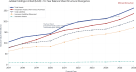
To NSE PLC shareholders, Frank Mwiti has quickly become the ultimate darling of investors, embodying a golden era of value creation and decisive leadership. Under his watch, the exchange has achieved massive multi-year rallies—driving a 237% surge in NSE stock price performance alongside record market index growth, including a 34% jump in the All-Share Index (NASI) and an overall market capitalisation expansion pushing toward the KSh 3 trillion threshold. Reinforcing this stellar growth, the company rewarded investors with a boosted annual dividend payout of KSh 1.00 per share (a striking 213% increase from the previous year), instilling deep confidence that even greater milestones lie ahead. Beyond traditional financial returns, his tenure has been defined by aggressive modernization—most notably spearheading the removal of market friction to successfully launch platforms like Zidi Trader, ensuring the bourse continues to innovate, widen access, and streamline active trading for the modern investor.
Conclusion: A Transformative Era and the Horizon of East African Capital
Under the visionary stewardship of Frank Mwiti, the Nairobi Securities Exchange (NSE) has cemented its status as the most transformative period in the modern history of East Africa’s capital markets. By dismantling structural barriers, championing aggressive digital accessibility, and positioning the bourse as an institutional arena capable of orchestrating multi-billion-shilling landmark transactions—such as the historic Kenya Pipeline Company IPO and monumental block trades—Mwiti has fundamentally redefined what a regional exchange can achieve. His tenure has bridged the gap between global institutional heavyweights and everyday retail investors, proving that elite market performance can coexist with broad-based economic empowerment.
Painting the Future of the NSE
Looking ahead, the Nairobi Securities Exchange is poised at an exhilarating inflection point, driven by a robust pipeline of transformative corporate actions and cross-border financial architectures:
The Quickmart IPO: Signaling a massive wave of private equity maturity moving into public ownership, the anticipated retail and institutional listing of Quickmart is set to deepen consumer-facing asset depth on the bourse.
Corporate Debt Innovations (Safaricom and KCB MTNs): Medium Term Note (MTN) programmes by corporate giants like Safaricom and KCB Group continue to revolutionize fixed-income liquidity, offering structured, high-yield avenues for institutional and retail portfolios alike.
Emerging Listings and Regional Horizons: With ongoing developments around AAA listings and strategic discussions surrounding continental mega-offerings—such as the initial debates and regional aspirations tied to Dangote’s petroleum refinery expansion—the NSE is aggressively expanding its footprint as Africa’s strategic gateway.
As these capital instruments mature and technology compresses trade entry points to mere minutes, the exchange is no longer just a regional indicator—it is the definitive engine of wealth creation for East Africa’s future.
To watch a deep-dive discussion on these market expansions and the strategic roadmap for retail inclusion, check out this interview on Inside KSh100B Kenya Pipeline Company IPO and Strategy.
About Boardlot Africa Research
Boardlot Africa is a premier financial intelligence and corporate governance publication dedicated to unpacking the mechanics of capital, market strategies, and structural shifts across East Africa’s corporate landscape. By bridging the gap between raw economic data and actionable market intelligence, we deliver deep-dive research, independent corporate analysis, and policy insights designed for institutional investors, boardrooms, and sharp market observers.
Get in Touch
Email: sultan@boardlot.africa
Phone: +254 753 133 901
Substack: Subscribe to Boardlot Africa
X (Twitter): BoardLotSultan
Linkedn:): BoardLot Sultan