
The Retreat of the Crown: Why Multinationals Are Losing Their Grip on Tier 1 Kenyan Banking
Section 1: The Anatomy of the Fall — Size, Share, and Status
For decades, foreign-owned multinational subsidiaries stood comfortably at the undisputed summit of Kenya’s financial ecosystem. They set the benchmark for institutional prestige, balance-sheet safety, and corporate banking dominance. Today, data released in the Central Bank of Kenya’s (CBK) Bank Supervision Annual Report 2025 confirms that the era of automatic multinational supremacy at the apex of the market is officially drawing to a close.
The 2025 Reality Check: The Shrinking Tier 1 Elite
The most striking structural casualty of this shift is Standard Chartered Bank Kenya. According to the 2025 supervisory data, StanChart officially exited the Large (Tier I) peer group after its composite market-size index slipped to 4.5%, falling beneath the strict 5.0% threshold required to maintain top-tier classification. Sinking to 9th overall, StanChart’s demotion into the Medium (Tier II) category contracted the elite Tier 1 club from nine institutions down to just eight.
The bank’s audited metrics underline this relative compression:
Asset Contraction: Total net assets contracted by roughly 5% to settle at Ksh. 364.5 billion (representing 4.4% of total market assets).
Deposit Slowdown: Total customer deposits dipped 4.1% to Ksh. 284.7 billion.
These figures stand in sharp contrast to a broader banking sector that expanded aggressively, growing total net assets by 10.3% to Ksh. 8.35 trillion and customer deposits by 11.6% to Ksh. 6.12 trillion.
A Decade of Divergence
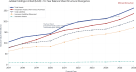
This recent demotion is not an isolated anomaly, but rather the culmination of a decade-long structural divergence. Ten years ago, legacy multinational heavyweights routinely commanded the absolute top three slots by size, leveraging conservative capital models and elite corporate networks.
However, as agile local and regional powerhouses—such as KCB Bank Kenya (holding a dominant 17.3% market-size index) and Equity Bank Kenya (11.8%)—scaled their balance sheets past the trillion-shilling mark, the relative weight of traditional foreign subsidiaries began to dilute. Driven by aggressive regional integration across East and Central Africa and massive digital retail ecosystems, domestic institutions outpaced the organic growth ceilings of their multinational counterparts. Consequently, the combined market share of the large peer group compressed from 75.6% down to 69.7% in a single reporting cycle, signaling a permanent realignment in who dictates the terms of Kenyan capital allocation.
Section 2: The Myth of the Multinational Monopoly — How Local Titans Shattered the Specialized Banking Moat
For generations, the upper echelons of Kenyan banking operated under an unwritten, ironclad orthodoxy: that high-end institutional complexity was the exclusive domain of foreign-owned multinationals. Whether it was structuring multi-billion-shilling loan syndications, executing complex cross-border foreign exchange transactions, or providing sophisticated corporate and investment banking (CIB) advisory, the conventional wisdom held that only legacy institutions—Absa, Standard Chartered, Stanbic, and Citibank—possessed the institutional depth, global correspondent networks, and balance-sheet gravitas required to manage elite capital.
For domestic banks, the prevailing market perception was that they were confined to retail mass markets, SME trade finance, and domestic consumer lending.
The Turning Point: When Local Titans Proved Superior Execution
That perception shattered the moment homegrown Tier 1 giants systematically proved they could execute complex corporate and investment banking mandates not just as effectively as multinationals, but often with greater speed, balance-sheet flexibility, and local risk appetite.
The turning point wasn’t a sudden regulatory shock; it was a demonstration of absolute operational supremacy:
The G2G Precedent: When strategic multi-billion-shilling national transactions like the Government-to-Government (G2G) oil import financing arrangement—the ultimate test of large-scale foreign exchange and trade execution—were wrestled away from multinational dominance and awarded exclusively to KCB Bank, the writing was permanently on the wall.
Syndication and Corporate Scale: Local powerhouses like KCB, Equity Bank, and Co-operative Bank aggressively built out robust corporate and investment banking divisions, offering end-to-end advisory, infrastructure financing, and regional trade corridors that spanned East and Central Africa.
The Gradual Transfer of Corporate Dominance
Once the monopoly on expertise was broken, the floodgates opened. What followed over the last decade has not been a random market fluctuation, but a calculated, systemic transfer of corporate and investment banking portfolios away from foreign subsidiaries and directly into the balance sheets of domestic giants—led decisively by KCB.
Multinational subsidiaries found themselves caught in a structural trap: bound by conservative parent mandates and rigid global compliance frameworks, they could not match the aggressive, localized agility of Kenyan banks. As institutional clients realized that local titans offered deeper liquidity pools and faster decision-making without the bureaucratic drag of foreign head offices, the foundation of multinational supremacy crumbled. StanChart’s demotion out of Tier 1 is merely the visible symptom of an ecosystem where the domestic banking crown has permanently changed hands.
Section 3: The Core Metric — Multinational Deposit Share (2015 vs. 2025)
To truly measure how multinational grip has loosened, one must look beyond headline marketing and examine the ultimate barometer of banking dominance: core deposit capture.
The Dilution of Foreign Deposit Power
A decade ago, legacy foreign-owned institutions—anchored by Standard Chartered, Absa (then Barclays), and Stanbic—commanded a disproportionately heavy share of Kenya’s institutional, corporate, and high-net-worth deposit pools relative to a much smaller total industry asset base (which hovered around Ksh. 3.5 trillion in 2015).
Fast-forward to the close of 2025, and the Central Bank of Kenya’s supervisory data illustrates a stark structural dilution:
Total System Scale: Total commercial bank customer deposits across the entire sector surged to Ksh. 6.12 trillion (with total deposits reaching Ksh. 6.38 trillion inclusive of other accounts).
The Large-Peer Compression: The collective market share index of the entire Large (Tier I) peer group contracted from 75.6% in December 2024 to 69.7% at the close of 2025.
The Multinational Realignment: Within this compressed top tier, homegrown giants like KCB Bank Kenya (holding Ksh. 1.15 trillion in deposits, or 18.0% of the market) and Equity Bank Kenya (Ksh. 849.2 billion, or 13.3%) command massive retail and transactional liquidity pools that dwarf the individual deposit capture of legacy foreign subsidiaries.
Why the Deposit Gap Widened
The Mass Retail & Agency Revolution: Domestic institutions leveraged aggressive agency banking networks and mobile-integrated accounts to sweep up millions of retail and SME accounts. This created low-cost, sticky deposit streams that traditional foreign banks—historically optimized for high-net-worth corporate boutiques—failed to match at scale.
Regional Cross-Border Flows: Local giants tapped into lucrative cross-border trade corridors across East and Central Africa (such as the DRC, Uganda, and South Sudan), funneling foreign currency and regional trade deposits back to their Nairobi headquarters. Multinationals, bound by rigid global balance-sheet allocation rules from parent companies in London or Johannesburg, lacked the geographic appetite to match this expansion.
Section 4: Structural Drivers Behind the Multinational Squeeze
The relative contraction of multinational banks at the apex of Kenya’s financial sector is not an accidental byproduct of market cycles; it is the direct result of strategic choices, parental mandates, and changing macroeconomic realities. Three core drivers explain why legacy foreign-owned institutions are losing their grip on top-tier dominance.
1. Deliberate De-Risking, Branch Rationalization, and Elite Selectivity
Rather than competing for broad-based retail and mass-market deposits, multinational banks have increasingly pivoted toward a defensive, highly selective operational model.
Branch Footprint Rationalization: Institutions like Standard Chartered and Absa have aggressively closed physical branches over the years, opting for digital-only migration. While efficient for overheads, this stripped them of the localized grassroots deposit mobilization enjoyed by domestic giants with extensive rural and peri-urban branch networks.
The “Top Cream” Strategy: Standard Chartered, in particular, has leaned heavily into affluent and ultra-high-net-worth customer segments, actively shedding or ignoring lower-tier retail accounts. While this preserves asset quality, it severely caps aggregate deposit volume growth compared to local banks capturing millions of mass-market and SME accounts.
2. Ultra-Conservative Lending Driven by Parent Mandates
Multitude legacy subsidiaries operate under the heavy shadow of rigid global capital allocation and risk frameworks dictated by London, Johannesburg, or other foreign parent headquarters.
Global vs. Local Realities: Bound by stringent international compliance standards (such as Basel IV implementation) and risk-averse group mandates, foreign-backed banks often exhibit ultra-conservative lending behavior.
Missed Domestic Opportunities: When local macroeconomic conditions fluctuate or non-performing loans rise, parent mandates force these subsidiaries to pull back sharply on credit creation. Meanwhile, agile homegrown banks leverage localized risk intelligence to expand their loan books and capture lucrative commercial yields.
3. The Erosion of Foreign Exchange Dominance
Historically, foreign exchange (FX) trading and international trade finance were the unassailable fortress and primary revenue drivers for multinational banks, leveraging their global correspondent banking networks. That moat has steadily drained.
The Shift in State-Backed Deals: A textbook illustration of this erosion occurred when major strategic national transactions shifted away from foreign banks. For instance, the multi-billion-shilling Government-to-Government (G2G) oil import financing arrangement—which historically drove massive FX and transactional volumes—was awarded exclusively to KCB Bank, routing monumental liquidity and foreign exchange flows directly away from multinational balance sheets.
Conclusion & Outlook
The changing guard at the summit of Kenya’s financial sector marks the end of an era where Western and legacy multinational banks could effortlessly command top-tier status. As homegrown regional giants aggressively scale their balance sheets, digital ecosystems, and cross-border corridors, the traditional multinational playbook is facing an unprecedented structural squeeze.
Recent market events underscore a starkly divergent reality. Even as institutions like Citibank Kenya signal deep contractions—highlighted by a sharp drop in half-year net profit and the closure of its historic Mombasa branch after 37 years—others are executing drastic physical retreats. Most notably, Standard Chartered Bank Kenya placed its iconic Chiromo regional headquarters up for sale to transition into an asset-light model, fueling market speculation regarding the extent of its long-term footprint amid a slump in full-year net earnings and a demotion out of Tier 1.
The Absa Play: Doubling Down on Local Stakes
In sharp contrast to the asset-light retreat seen among some Western players, Absa Group has moved to tighten its grip on the local market. The South African financial giant pushed forward with strategic moves to increase its stake in Absa Bank Kenya, raising its ownership from 68.5% to approximately 72% through a corporate tender offer. This move signals strong group-level confidence in the long-term profitability and structural resilience of its Kenyan subsidiary, which remains a core pillar of Absa’s broader Africa Regions portfolio.
The Surge of South African Capital Interest in Kenya
Beyond Absa, the broader landscape is witnessing an intense wave of capital deployment and acquisition tracking by deep-pocketed South African banking powerhouses looking to anchor themselves in East Africa’s primary financial hub:
Stanbic’s Expansion Power: Backed by the Standard Bank Group—which holds a substantial capital pool of roughly R21 billion (approx. KSh 166.7 billion) earmarked for strategic flexibility—Stanbic Bank Kenya continues to solidify its Tier 1 footing and pursue long-term regional growth.
FirstRand’s Hunt for an Acquisition: South Africa’s FirstRand has intensified its regional strategy, actively scouting for an acquisition target in Kenya to establish a full commercial banking footprint. While maintaining a representative office, FirstRand’s leadership has signaled patience—waiting for the right valuation to deploy its FNB, RMB, and WesBank brands into East Africa’s high-growth ecosystem.
Ultimately, the Kenyan banking landscape is splitting into two distinct camps: foreign legacy players retreating into passive, asset-light boutique models, and aggressive, well-capitalized institutions leveraging South African and regional capital to dictate the future of East African capital allocation.
About Boardlot Africa Research
Boardlot Africa is a premier financial intelligence and corporate governance publication dedicated to unpacking the mechanics of capital, market strategies, and structural shifts across East Africa’s corporate landscape. By bridging the gap between raw economic data and actionable market intelligence, we deliver deep-dive research, independent corporate analysis, and policy insights designed for institutional investors, boardrooms, and sharp market observers.
Get in Touch
Email: boardlot.research@gmail.com
Phone: +254 753 133 901
Substack: Subscribe to Boardlot Africa
X (Twitter): BoardLotSultan
Linkedn:): BoardLot Sultan