
The Silicon Savannah: A Vision Still Finding Its Pace
At the heart of Kenya’s ambitious economic agenda lies Konza Technopolis, a flagship project under Kenya Vision 2030. Envisioned as a 5,000-acre, purpose-built smart city, its fundamental mission was to catalyze Kenya’s transition into a high-functioning, middle-income, and knowledge-based economy. While the project has made significant strides in completing its foundational horizontal infrastructure, the transition from a construction site to a bustling, self-sustaining economic engine remains a challenge that sparks ongoing debate about its implementation speed.
Infrastructure: From Blueprint to Reality
Unlike earlier phases where development struggled to gain traction, the “on-the-ground” reality at Konza today reflects a project that has cleared major hurdles. Much of the primary infrastructure—the “wet and dry” facilities—is now largely complete and operational. This includes:
Essential Utilities: Fully functional sewer, water, and power networks are in place, alongside advanced data and telecommunications infrastructure.
Smart Systems: The city has deployed high-tech innovations like an automated pneumatic solid waste management system, managed via a centralized SCADA platform.
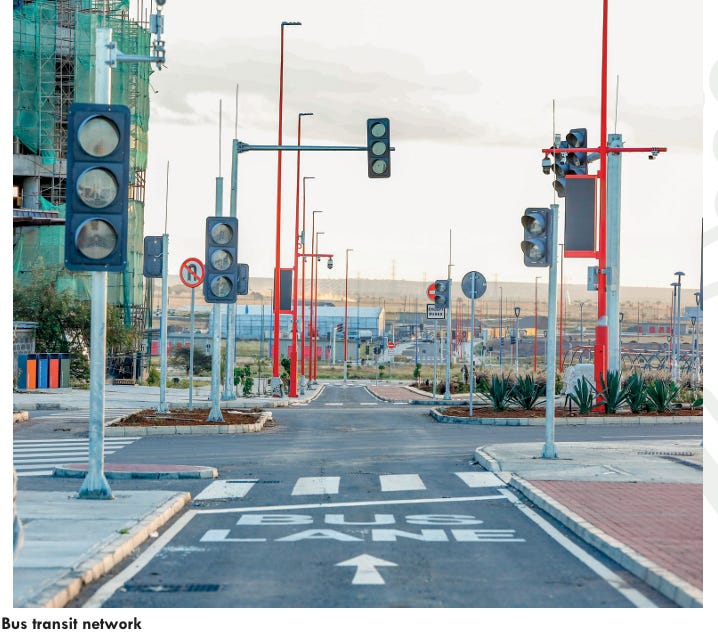
Physical Connectivity: Approximately 80% of the planned area is appropriately tarmacked with clearly marked bus lanes, bicycle lanes, and walking paths, turning the site into a “plug-and-play” environment for developers.
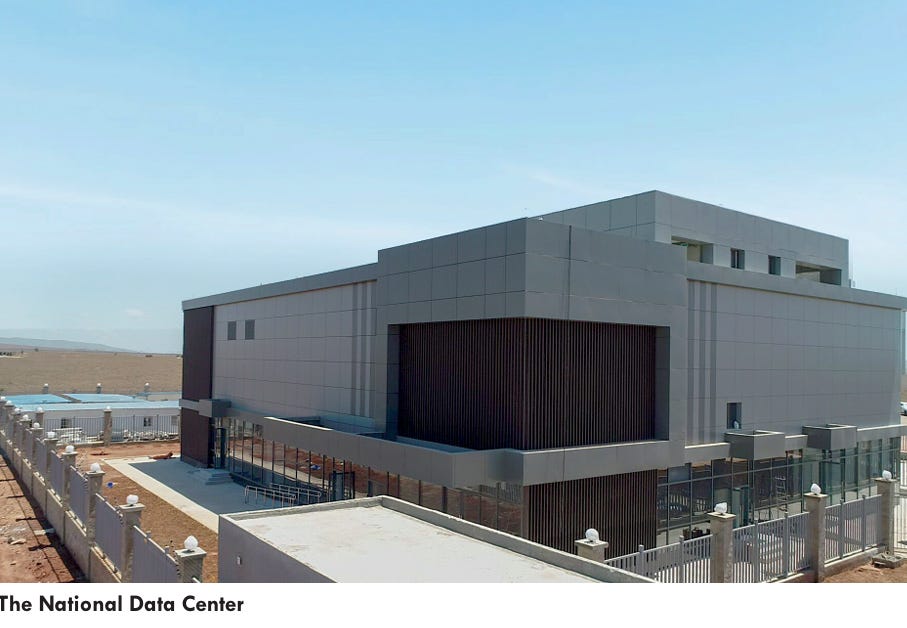
Institutional Anchors: The National Data Centre is fully operational, and significant progress has been made on the Kenya Advanced Institute of Science and Technology (Kenya-AIST) campus, which is now integrating into the local industrial ecosystem.

The Implementation Gap: Konza vs. Tatu City
Despite this physical progress, the project’s ability to attract and retain private tenants remains a point of critique when compared to private-sector alternatives like Tatu City.
Tatu City, operating as a private “city-within-a-city,” has leveraged its autonomy to prioritize rapid commercialization, successfully hosting over 100+ businesses by bypassing many of the bureaucratic hurdles inherent in state-led developments. In contrast, Konza, as a government-anchored project, has followed a more deliberate path. While Konza’s new statutory foundation under the Technopolis Act (2026) is intended to provide the authority with more “teeth” and clearer governance, the market perception still contrasts Konza’s slow, institutional growth with the aggressive, market-driven velocity of private rivals. For investors, the question remains whether the government’s “Quadruple Helix” model can ultimately match the commercial agility of private developers who have arguably done a better job of turning land into a thriving, high-density business hub.

The Competitive Landscape: Konza vs. the Private Giants
While Konza Technopolis operates as a flagship government-anchored development, it exists within a competitive Nairobi Metropolitan landscape alongside prominent private-sector mega-projects like Tatu City and the emerging Northlands City. A comparative look at these developments reveals distinct philosophies regarding execution, tenant attraction, and economic positioning.
Strategic Framework: Public Vision vs. Private Agility
The fundamental difference between these projects lies in their “DNA.” Konza Technopolis is a public-sector project under Kenya Vision 2030, designed as a long-term, purpose-built “Smart City” to anchor the country’s knowledge-based economy. In contrast, Tatu City and Northlands represent private-sector ventures. Tatu City, in particular, operates as an integrated “city-within-a-city” that has successfully leveraged its independence to prioritize rapid commercialization, recycling capital into new phases to maintain momentum.
Infrastructure and Facility Maturity
Konza has moved significantly beyond the planning stage and into active operation. Its current status includes:
Horizontal Infrastructure: Phase 1, encompassing multilane boulevards, streetscaping, power distribution, and ICT conduits, is fully complete.
Core Facilities: The Tier III, Uptime-certified National Data Center is fully operational, as is the One-Stop Shop (OSS) facility, which consolidates government agencies to streamline investor licensing.
Operational Anchors: The Konza Cradle (headquarters) has been operational since March 2020, and critical utilities—including a water treatment plant and a recycling-capable sewerage treatment plant—are established.
Development Progress: While commercial leasing is ongoing, construction of the first 1,000+ affordable housing units is currently underway.
The Tenant “Moat”
A key differentiator is the composition of the tenant base:
Konza’s Institutional Focus: Konza has successfully attracted specialized institutional partners, including the Open University of Kenya, the Africa Center for Technology Studies, and Riara University, with the Kenya Advanced Institute of Science and Technology (Kenya-AIST) nearing completion. It has secured over 70 long-term leases from a diverse mix of local and foreign corporations, NGOs, and joint ventures.
Tatu City’s Market Velocity: Tatu City has adopted a different “tenant moat,” positioning itself as an industrial and logistics powerhouse. By operating as a mature, private SEZ, it has attracted over 100+ businesses, ranging from large-scale manufacturing and logistics firms to high-end residential investors.
The SEZ Incentive Environment
Both Konza and Tatu City leverage Special Economic Zone (SEZ) status to drive investment, offering fiscal incentives and simplified regulatory frameworks. However, while Konza uses the “Quadruple Helix” model to foster state-led collaboration between government and academia, Tatu City’s private-sector model allows it to respond more aggressively to immediate market demands, resulting in faster occupancy rates and more varied commercial activity.
Accessibility: The Geography of Convenience
For any “city-within-a-city,” location is not just a coordinate on a map—it is the primary determinant of commercial viability. When comparing the accessibility of Konza Technopolis to private-sector rivals like Tatu City and Northlands, a clear geographic divide emerges that complicates Konza’s ability to compete for immediate, high-volume tenant interest.
Proximity as a Competitive Advantage
Tatu City and Northlands are strategically positioned to leverage the existing urban fabric of the Nairobi Metropolitan Area.
Logistical Integration: Both developments enjoy immediate proximity to major industrial and commercial arteries, including the Thika Superhighway and existing bypasses, allowing for seamless connectivity to Nairobi’s central business district and the established industrial hubs of the region.
Reduced Transit Friction: Their placement is intentionally designed to minimize transit time—often just minutes—from key urban nodes, making them highly attractive to professionals, manufacturing firms, and logistics providers who prioritize efficiency and employee access.
The Konza Disadvantage
In stark contrast, Konza Technopolis faces a significant geographic hurdle. While it is designed as a standalone “Smart City,” its location on the periphery of the Nairobi Metropolitan Area places it at a disadvantage regarding the “lifestyle” and “service” ecosystem that tenants demand.
The Service Gap: Unlike its competitors, which are effectively extensions of existing suburban development, Konza is located further from the capital’s core. This distance creates a scarcity of the immediate “soft infrastructure”—such as established shopping centers, vibrant hospitality districts, and extensive private schooling networks—that residents and corporate tenants have come to expect.
The Reality of Competition: While Konza has made progress with its internal facilities—such as the Konza Cradle’s hotel block and educational institutions like the Open University of Kenya—it cannot realistically compete with Tatu City or Northlands on sheer convenience. For a business evaluating relocation, the “last-mile” accessibility and existing amenities of Tatu City offer a plug-and-play ease that Konza, currently operating as a remote, nascent hub, struggles to replicate
About Boardlot Africa Research
Boardlot Africa is a premier financial intelligence and corporate governance publication dedicated to unpacking the mechanics of capital, market strategies, and structural shifts across East Africa’s corporate landscape. By bridging the gap between raw economic data and actionable market intelligence, we deliver deep-dive research, independent corporate analysis, and policy insights designed for institutional investors, boardrooms, and sharp market observers.
Get in Touch
Email: boardlot.research@gmail.com
Phone: +254 753 133 901
Substack: Subscribe to Boardlot Africa
X (Twitter): BoardLotSultan