
Welcome to Boardlot Africa, where we pull back the curtain to reveal the untold stories, power dynamics, and strategic maneuvers shaping the boardrooms of Corporate Africa—subscribe for free to join the conversation. Join 1000 other subscribers.
We publish:
Sultans weekly NSE Stock Picks, every Friday at 5pm
Kenya’s Most Consequential Legal, Governance & Labor Disputes
A Series on the 100 Most Influential Kenyan Captains of Industry
The Queens of East Africa Boardrooms
The Silicon Savana Chronicles, every Wednesday at 5.00pm
Sultan’s Farming Diary, every Monday at 5.00pm
1. The Genesis: Churning Capital out of Hard Constraints
🏢 The Madaraka Foundation and Academic Excellence
Before she was an international tech policy icon or a formidable boardroom director, Ory Okolloh’s worldview was shaped by the distinct economic anxieties of a contracting Kenyan middle class during the Moi era. Raised in Nairobi’s Madaraka Estate, she grew up in an environment where economic stability was fragile and constantly under threat from structural macroeconomic shifts. Her father, a professional in the airline industry, faced the harsh realities of corporate downsizing when he was declared redundant twice during those tough economic years. Demonstrating classic Kenyan grit, he pivoted to the highly volatile informal public transport sector, purchasing and driving a matatu to keep the household afloat.
Her family’s trajectory was permanently disrupted when her father passed away from AIDS-related complications when she was young. This event stripped the family of financial stability and starkly illustrated how the lack of transparency, broken public health infrastructure, and inadequate medical access could devastate Kenyan households.
This exposure to structural hardship did not induce apathy; it ignited an aggressive drive for academic self-determination. Okolloh was an exceptionally brilliant student, earning admission to Moi Girls’ High School, Nairobi—a historic national academic powerhouse known for its competitive environment and elite performance. It was in the demanding trenches of Moi Nairobi Girls that she refined her sharp, analytical processing, intellectual resilience, and zero-tolerance approach to mediocrity.

The Ivy League Leap
Okolloh’s academic performance unlocked the ultimate global escape velocity. She relocated to the United States, working her way through the University of Pittsburgh, where she earned a Bachelor of Arts in Political Science in 2002.
Rather than settling into a comfortable corporate trajectory in the West, she immediately set her sights on the ultimate engine of global institutional power: Harvard Law School.
[Nairobi Public Constraints] -> [Precious Blood Grit] -> [Harvard Law Intellectual Moat]
Graduating with a Juris Doctor (J.D.) from Harvard in 2005, Okolloh didn’t just acquire an elite legal degree; she built an intellectual moat. She mastered the architecture of institutional governance, international law, and constitutional frameworks—the exact structural levers she would later use to dissect and challenge African state bureaucracies.
2. The Early Career Path: From Corporate Law to Digital Agitation
The Chafing of Corporate Legal Rails
With a Harvard Law degree, the standard, lucrative path was neatly laid out: a lifetime of billable hours at a prestigious white-shoe law firm in New York or Washington D.C. Okolloh briefly stepped onto this track, working as a corporate lawyer at the international firm Covington & Burling.
However, the sterile world of corporate mergers, acquisitions, and regulatory filings quickly chafed against her deep-seated desire for systemic African reform. She realized that advising multinational conglomerates on compliance was an inefficient use of her leverage.
The Birth of Kenyan Pundit and Citizen Journalism
In the mid-2000s, as the early internet began to democratize media production, Okolloh recognized a massive unmapped territory. Western media coverage of Africa was monolithically broken, and domestic Kenyan media was heavily self-censored, gatekept by political elites, and slow to react.
In 2003, while still at Harvard, she launched Kenyan Pundit, a pioneering blog that rapidly transformed into a vital, decentralized node for raw political analysis, civic critique, and real-time updates on Kenyan governance.
The Disruption: Kenyan Pundit wasn’t a lifestyle diary; it was an intellectual battleground. Okolloh used the platform to demystify complex legislative bills, track parliamentary corruption, and give a global voice to the frustrations of the ordinary Kenyan citizen.
The Operational Shift: By the time she returned to Kenya permanently in 2006, her digital footprint had bypassed traditional media gatekeepers. She co-founded Mzalendo (Swahili for “Patriot”) in 2006 alongside blogger Conrad Akunga. Mzalendo was Kenya’s first dedicated civic-tech platform—a digital scoreboard that forensically tracked the bills, attendance records, and performance of every single Member of Parliament.
Okolloh had effectively proved her core early-career thesis: before you can reform a broken system, you must first build the open-source infrastructure required to expose its cracks. This operational blueprint would face its ultimate, high-stakes test when Nairobi erupted into flames in December 2007.

Part 2. The Ushahidi Crucible: Unbundling Crisis Mapping on the Frontier
The 2007 Spark and the Information Blackout
By late December 2007, the fragile veneer of Kenya’s democratic stability shattered. Following a deeply contested presidential election, the country plunged into unprecedented post-election violence. As urban informal settlements and rural towns erupted into chaos, the state responded with a heavy-handed information chokehold, banning live TV broadcasts and imposing strict media censorship. Rumors, misinformation, and targeted ethnic violence spread through the dark, unmonitored corners of the country while the official media remained paralyzingly quiet.
From her vantage point as a leading voice of the nascent digital resistance, Ory Okolloh’s blog, Kenyan Pundit, became an essential, high-velocity clearinghouse for verified field reports. On December 30, 2007, overwhelmed by the sheer volume of desperate comments flooding her site detailing killings and displacements, Okolloh published a simple, historic call to arms: “Any techies out there willing to do a mashup of where the violence is occurring?”
Coding in the Trenches: The Founding Coalition
The response was immediate and kinetic. Within days, a ragtag coalition of local software engineers, bloggers, and digital activists answered the call. Working out of makeshift war rooms through sleepless, high-tension nights, Okolloh co-founded Ushahidi (Swahili for “Testimony”) alongside core ecosystem architects Erik Hersman, David Kobia, and Graeme Tremain. Each brought distinct, load-bearing expertise to the table: Okolloh provided the civic vision and immediate narrative engine; Hersman drove the community mobilization; Kobia took the lead as the primary software developer building the core architecture; and Tremain optimized the design and mapping interfaces.
[Crowdsourced SMS / Web Reports] -> [Decentralized Verification Team] -> [Live, Geo-Targeted Crisis Map]
Ushahidi unbundled the traditional top-down journalism model by putting the power of reporting directly into the hands of citizens on the ground. The premise was radically simple yet logistically profound:
The Pipeline: Ordinary citizens trapped in volatile hotspots sent real-time eyewitness accounts via SMS, emails, or web forms.
The Processing: A decentralized layer of volunteers rapidly triaged, cross-referenced, and verified the data.
The Output: The software mapped these incidents chronologically and geographically onto a public Google Maps interface, creating a stark, real-time visualization of the crisis.
For the first time on the African continent, raw crowdsourced data was weaponized against a state-enforced media blackout, showing humanitarian agencies exactly where to deploy medical aid and rescue operations.
The 2017 Ushahidi and iHub Workplace Misconduct Crisis
In 2017, the Nairobi technology community was deeply shaken by a high-profile sexual harassment scandal at Ushahidi, the crisis-mapping pioneer closely intertwined with the iHub’s foundational history.
The crisis erupted when Daudi Were, then the Executive Director of Ushahidi, was accused of sexual harassment by a female employee. The organization faced severe public backlash and internal turmoil over its initial handling of the complaint, which critics argued protected leadership at the expense of victim safety. Following an independent investigation, the board subsequently dismissed Daudi Were. Ory Okolloh, a prominent co-founder of Ushahidi who had transitioned to a board role, publicly confronted the crisis, emphasizing that the Kenyan tech ecosystem had outgrown its nascent stage and needed to urgently dismantle cultures of silence, address power imbalances, and enforce strict, transparent codes of corporate governance.

Scaling the Architecture: Expansion and Evolution
As Ushahidi transitioned from an ad-hoc emergency tool into a permanent non-profit tech enterprise, the organization required structured leadership to handle global scaling. Over its operational lifecycle, the leadership baton passed through several key figures:

The Executive Stewards: While Okolloh acted as the early public face and executive director, the operational leadership eventually transitioned to Daudi Were, who served as Executive Director during a period of heavy international non-profit expansion. Following a major governance crisis in 2017, the organization restructured, eventually tapping long-time tech ecosystem leader Natasha Fremont (and subsequently other regional directors) to stabilize its core product delivery.
The Technical Backbones: To keep the open-source software competitive on a global scale, the core engineering team expanded to include technical heavyweights like Linda Kamau (who rose to lead software engineering and later co-founded AkiraChix) and Heather Leson (who managed global community engagement), ensuring that the software could be easily cloned and deployed by non-technical operators anywhere on earth.

The Global Blueprint and the Limitations of Code
Whenever catastrophe struck globally over the next decade, Ushahidi became the default infrastructural framework for deployment, utilized in over 160 countries:
2010 Haiti Earthquake: Driven by volunteers like Patrick Meier, the platform tracked thousands of trapped survivors and mapped shifting infrastructure collapses under rubble to guide international rescue teams
Gaza Strip (2009): Repurposed by regional digital activists to crowdsource and monitor civilian casualties, medical shortages, and targeted geographic flashpoints during intense military conflict.
Washington D.C. Snowpocalypse: Deployed by local citizen groups to coordinate neighborhood snow removal, power outage tracking, and emergency food deliveries.
Yet, as Ushahidi scaled globally, it brought Okolloh face-to-face with a sobering frontier reality: software cannot fix structural human failure.
While the platform was an engineering masterpiece, its real-world efficacy was consistently bottlenecked by offline systemic friction. A perfectly accurate, geo-targeted pin on a digital map was completely useless if the local police force was corrupt, if emergency vehicles lacked fuel, or if state institutions intentionally ignored the data.
This realization marked a critical psychological pivot in Okolloh’s trajectory. She recognized that building beautiful, decentralized apps was merely a diagnostic tool—it exposed where the system was bleeding, but it didn’t hold the scalpel to heal it. To truly shift the power dynamics of the continent, she needed to step away from the keyboard and move directly into the macro-arenas where global policy was written and heavy institutional capital was allocated.

Part 3. The Institutional Leap: Bringing Global Scale to the Savannah
The Power Move: Trading the Trenches for the Tech Titan
By 2011, Ory Okolloh had firmly established her status as the high priestess of African civic tech. Yet, she recognized an invisible ceiling. Building decentralized crisis maps and watchdogging parliament from the outside was noble, but it was fundamentally a defensive strategy. The real rules of the African digital economy were being written behind closed doors by conservative state bureaucracies, legacy telecom monopolies, and global tech giants.
In a move that shocked the grassroots activist community, Okolloh executed a massive tactical pivot: she stepped inside the machine, accepting the role of Google’s Policy Manager for Sub-Saharan Africa.
This was not an isolated corporate anomaly. During this golden era of the Silicon Savannah, Google actively scouted and picked off Kenya’s top-tier intellectual elite to steer its continental expansion. By placing local operators into heavyweight institutional roles, the tech giant signaled that Nairobi was the undisputed intellectual capital of African tech. Okolloh joined a formidable cohort of local titans who transitioned from the trenches of local industry into Google’s upper echelons:
Joe Mucheru: Already a legendary figure in the regional internet landscape as the co-founder of Wananchi Online, Mucheru was tapped to become Google’s Sub-Saharan Africa Lead and Country Manager for Kenya. His hire anchored Google’s regional operations in raw, local enterprise credibility, long before he transitioned to state power as Kenya’s ICT Cabinet Secretary.
Isis Nyong’o: Tapped early on as Google’s Business Development Manager for Africa, Nyong’o brought elite operational strategy from the media sector to drive Google’s early monetization and content monetization playbooks across the continent.
Michael Murungi: An astute legal mind who later stepped in as Google’s Government Affairs and Public Policy Manager for East Africa, anchoring the regulatory frameworks required to protect open web architectures.
By trading the precarious, grant-to-grant existence of non-profit hacking for the infinite resources and diplomatic weight of Google, Okolloh shifted from a localized digital agitator to a continental power broker.
The Structural Impact: Weaponizing the Alphabet Balance Sheet
Okolloh’s entry into Google—alongside this powerhouse Kenyan cohort—provided a profound validation for the entire East African tech ecosystem. It signaled to global capital markets that Nairobi was no longer just a sandbox for humanitarian pilots, but a strategic beachhead for global big tech.
Once inside, she immediately began weaponizing Google’s immense institutional weight to force structural changes across sub-Saharan Africa, focusing on three load-bearing pillars:
Dismantling Regulatory Friction: Conservative African governments viewed the open internet with deep political paranoia. Okolloh stepped into boardroom battles from Accra to Nairobi, using Google’s economic leverage to push for progressive policy frameworks, open-spectrum access, and data privacy laws that forced states to treat the digital economy as a sovereign growth engine rather than a security threat.
The War for Infrastructure: Alongside country leads like Mucheru, she understood that beautiful consumer software was useless without cheap, high-velocity pipes. Her tenure overlapped with critical advocacy for undersea fiber-optic cables and terrestrial data infrastructure, lowering the cost of data and expanding the addressable market for every homegrown African startup.
Decentralizing Local Content: Okolloh championed the structural monetization of African content. By forcing Google to localize its products, map regional cities forensically, and invest in local language support, she laid the groundwork for African creators and businesses to capture value within global digital supply chains.

Part 4. The Sovereign Layer: Philanthropy, Boards, and Governance Realism
The Modern Play: The Boardroom Hegemony
By the mid-2010s, Ory Okolloh’s trajectory evolved past corporate execution for global tech monopolies. Recognizing that software and policy are hollow without direct control over resource allocation, she transitioned into the realm of heavy capital placement. She took the helm as the Managing Director for Omidyar Network and Luminate Group in Africa, directing philanthropic and impact investments into the continent’s most critical accountability, governance, and media initiatives.
This institutional weight naturally translated into unparalleled boardroom authority. Okolloh emerged as one of Africa’s most formidable corporate directors, navigating complex governance corridors and commanding the top tier of regional industry alongside other towering corporate heavyweights:
The Telecommunications Moat: Stepping onto the board of Safaricom as an Independent Director, she guarded the region’s most profitable infrastructure-heavy enterprise. Her tenure placed her on the exact rails shaped by legends like the late Bob Collymore, whose radical transparency blueprint redefined corporate leadership on the continent, and the iconic Michael Joseph, the founding “father” of Safaricom who steered M-Pesa’s phenomenal rise. In the boardroom, she navigated alongside prominent legal and corporate minds like Safaricom Chairman Adil Khawaja.

The Financial Rails: Serving as a non-executive director for Stanbic Holdings Plc and Stanbic Bank Kenya, alongside leading the strategic vision of the Stanbic Foundation as Chairperson. In this banking domain, her oversight aligned with the strategic direction of financial heavyweight Joshua Oigara, the regional Chief Executive for East Africa at Standard Bank Group and CEO of Stanbic Holdings, known for driving aggressive digital transformation and regional banking expansion across the continent.
Corporate and Public Strategy: Bending legacy industries toward transparency through board seats at blue-chip stalwarts like East African Breweries PLC (EABL). In this boardroom, she operated alongside exceptional executive leaders like EABL Group Managing Director and CEO Jane Karuku, who commands the region’s largest manufacturing footprint, and Group Chairman Dr. Martin Oduor-Otieno, an elite corporate governance expert and former Treasury Permanent Secretary. Her boardroom portfolio also extended to Deloitte Africa and the global Thomson Reuters Founders Share Company.
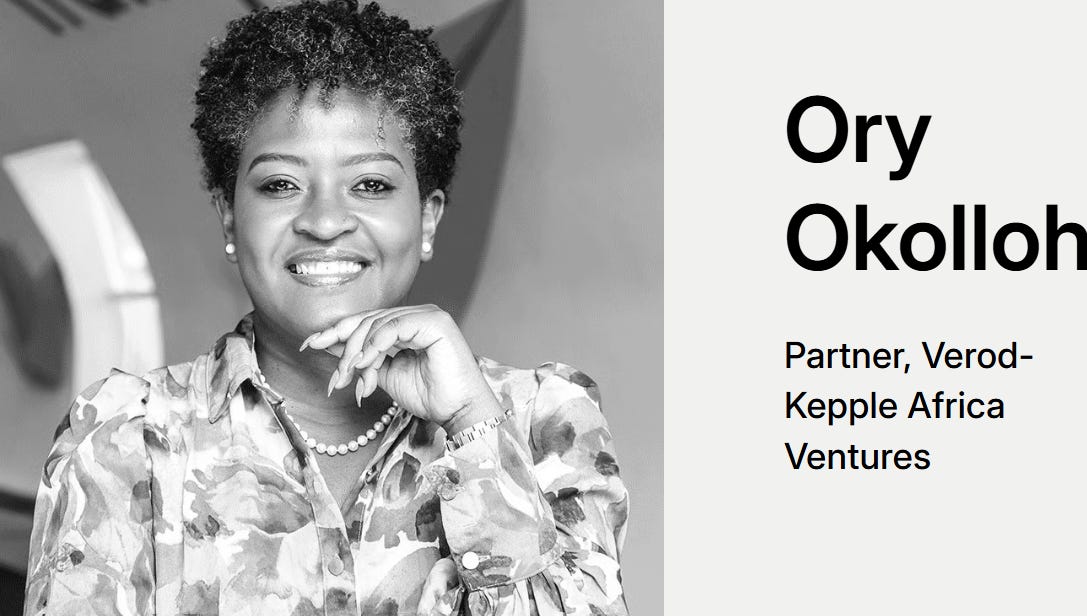
Her subsequent evolution into a Venture Capital Partner at Verod-Kepple Africa Ventures closed the loop, moving her entirely into a position where she controls the direct deployment of high-growth institutional capital across the continent.
The Hard-Asset Takeaway: The Death of Techno-Optimism
Okolloh’s professional maturation mirrors the broader structural evolution of the Silicon Savannah. The intoxicating, early-2010s techno-optimism—which falsely claimed that a clever app or a decentralized codebase could cleanly bypass state corruption and leapfrog institutional rot—has died a necessary death.
Okolloh’s current trajectory represents a profound, hard-nosed realization: technology is merely a diagnostic tool. An app can map a crisis, expose a bribe, or flag an inefficient government service, but the software itself cannot enforce accountability, heal a macro economy, or patch failing infrastructure. The true, systemic battles on the African continent are not won through elegant user interfaces; they are ground out in the unglamorous, highly resistant trenches of public governance, institutional integrity, macroeconomic policy, and board-level risk mitigation.
The Lasting Blueprint: Anchoring the Savannah
Okolloh’s legacy stands as a definitive blueprint for the next generation of African operators, builders, and investors. The most enduring architects of East Africa’s tech ecosystem were never the founders chasing speculative, venture-backed unicorn valuations or burning subsidized foreign capital on lifestyle consumer plays.
Instead, the true anchors are those who, like Okolloh, spent decades building the foundational, civic, and institutional rails that keep the wider ecosystem accountable. Her evolution from an open-source activist at Bishop Magua to a sovereign boardroom operator reminds us that true power on the frontier belongs to those who possess the elite legal, financial, and regulatory literacy required to command legacy infrastructure and dictate capital distribution at the highest levels.

Part 5. Intellectual Curations and Hard-Asset Realities: The “Sunday Reads” and Farming Chronicles
The Digital Salon: Curating the Macro Narrative
Even as she navigated the upper echelons of corporate boardrooms and institutional investment, Okolloh never truly abandoned her roots as a digital aggregator. Instead, her long-form commentary evolved into a highly influential, curated digital tradition known to her followers as “Sunday Reads.”
Bypassing the high-velocity outrage and ephemeral noise of mainstream social media, Okolloh uses this weekly ritual to unpack complex, load-bearing literature. From detailing the structural pitfalls of venture capital dependency to dissecting macroeconomic global policy, industrialization trends, and governance models, her reading lists serve as an intellectual compass for the continent’s builders.
Through these curations, she continuously hammers home her foundational thesis: Africa cannot simply consume foreign-engineered development templates; its intellectual class must actively read, process, and map out its own sovereign economic frameworks.
The Farming Chronicles: Anchoring to the Soil
In recent years, Okolloh’s operational focus has undergone an unglamorous, grounded expansion from purely digital and financial assets to the foundational layer of frontier survival: agribusiness. Documenting her journey through what she frames as her “farming chronicles,” she has stepped directly into the physical, high-friction world of agricultural production.
Part 6. The Architecture of Accountability: Mzalendo and the Radical Philosophy of Transparency
The Context and the Catalyst
Before the open-source mapping of Ushahidi revolutionized crisis response, Ory Okolloh was already engineering a structural assault on the deep-seated culture of government secrecy in Kenya. For decades, Kenyan state bureaucracy under repressive regimes operated under a de facto veil of anonymity—where the Swahili word for government (serikali) was colloquially subverted to sirikali, meaning “top secret.”
The catalyst arrived in 2005. Following a public uproar over controversial administrative maneuvers, the official parliament website was abruptly shut down by MPs angered that their resumes and professional details were publicly accessible. Recognizing this as an unacceptable retreat into institutional darkness, Okolloh decided that if the state would not provide transparency, citizens would have to build it themselves.
The Architecture: Founders and the Agenda
Within four months of the parliamentary web blackout, Okolloh partnered with fellow Kenyan technologist and experienced software architect Conrad Akunga to launch Mzalendo (Swahili for “Patriot”). Driven initially by pure volunteer effort, blood, sweat, and tears, the platform was built using open-source tools to aggressively open up the inner workings of the legislature.
The agenda was simple yet structurally revolutionary: “Keep an eye on the Kenyan Parliament.”
[Raw Hansard Transcripts] -> [Mzalendo Database Parsing] -> [Public MP Performance Scorecards]
Okolloh and Akunga initially spent grueling hours manually extracting verbatim transcripts from the official Parliamentary Hansard records, translating dense, opaque legislative jargon into digestible data. They established a clear operational pipeline:
Performance Scorecards: Tracking exactly how often individual Members of Parliament spoke, their attendance records, and their voting history on crucial national bills.
Constituency Tracking: Mapping out localized information, including how funds like the Constituency Development Fund (CDF) were being utilized or siphoned.
Public Participation: Introducing a commenting system and individual MP profile pages that allowed young Kenyans—the country’s largest voting bloc—to directly question their elected representatives.
As the trust grew, the board and leadership expanded to include regional intellectual heavyweights like public policy specialist Natasha Kimani, political scientist Dr. Ken Opalo, and legal expert Mugambi Laibuta, eventually transitioning Mzalendo into a formal independent trust backed by international organizations like mySociety and the Omidyar Network.

The Philosophy: Accountability Stemming from Demand
The guiding philosophy behind Mzalendo was rooted in a foundational civic thesis: Accountability is not a concession granted by the state; it is a concession extracted by the public.
Okolloh and Akunga rejected the prevailing notion that citizens should remain passive recipients of top-down governance. They argued that highly skilled, elite young Africans had a sovereign responsibility to use technology to lower the barrier to political engagement. By creating a digital scoreboard, they aimed to alter the risk-reward calculus of public office, moving parliament away from a playground of unmonitored political patronage toward a transparent institution answerable to its electorate.
A Global Comparison: The Parliamentary Monitoring Movement
Mzalendo was not an isolated project; it was Kenya’s entry into a sophisticated, emerging global movement of Parliamentary Monitoring Organizations (PMOs). It can be directly compared to prominent international pioneers:
TheyWorkForYou: United Kingdom The definitive framework built by mySociety that parses the UK Hansard to show exactly what MPs say and how they vote.
OpenCongress / GovTrack: United States Open-source platforms tracking bill progressions, lobbyist influence, and voting alignments in the US Congress.
Mzalendo: Kenya / East Africa Tailored specifically for a high-friction frontier market, overcoming state secrecy to build the continent’s first open public scorecards.
While Western platforms primarily focused on analyzing already digitized, accessible state data streams, Mzalendo’s battle was vastly more fundamental: it had to physically unearth records from a resistant state apparatus, digitizing and contextualizing information that authorities actively preferred to keep hidden.
The Impact: Shifting the Political Power Balance
The real-world impact of Mzalendo on the Kenyan political landscape was swift and kinetic. When the platform began publishing its annual parliamentary performance rankings and indexing poor attendance, it sparked a massive public outcry and media frenzy.
The fear of public exposure completely altered MP behavior:
The Boardroom Response: Parliamentarians grew deeply anxious about their Mzalendo profiles. MPs began aggressively contacting the organization to submit up-to-date CVs, professional photos, and corrections to ensure their public “ratings” wouldn’t doom their re-election campaigns.
The Campaign Moat: During successive general elections, top-performing MPs actively weaponized their high Mzalendo scorecards on social media and the campaign trail as definitive proof of their legislative work.
The African Blueprint: Mzalendo’s success shattered the regional myth that African electorates were indifferent to data. Its open-source approach served as the exact blueprint cloned to launch parliamentary monitoring tools across the continent, including platforms in Ghana, Nigeria, Zimbabwe, and South Africa, while forcing the Kenyan state to counter with its own Open Data Initiative.
Mzalendo proved that a lean, tech-driven platform, anchored by uncompromising civic architecture, could force an elite political class to bend to the realities of public scrutiny.
Part 7. The Technocratic Dilemma: Is Sovereign Independence the Ultimate Play?
Given her historical positioning as a prime candidate for high-level technocratic appointments within the state apparatus, Ory Okolloh’s career trajectory raises an essential question about the nature of public service. From her early days co-founding Mzalendo—Kenya’s first dedicated watchdog platform engineered specifically to track the attendance, voting records, and legislative performance of Members of Parliament—her commitment to institutional accountability has been unshakeable.
Yet, this exact history of monitoring state performance underscores her highly nuanced approach to public service. Okolloh has consistently maintained that true public service does not require a government paycheck or an official state appointment. Instead of absorbing herself into a bureaucratic machinery that often stifles agility, her trajectory suggests a deliberate choice: treating the absolute independence of the sovereign boardroom and venture capital as her ultimate theater of operation.
For an architect who proved her core early-career thesis by forcing transparency from the outside, the private sector and institutional funding rails offer an asymmetrical advantage. They provide the leverage required to challenge systemic inefficiencies and dictate capital distribution at the highest levels—allowing her to drive state accountability without ever compromising her operational autonomy.
About Boardlot Africa Research
Boardlot Africa is a premier financial intelligence and corporate governance publication dedicated to unpacking the mechanics of capital, market strategies, and structural shifts across East Africa’s corporate landscape. By bridging the gap between raw economic data and actionable market intelligence, we deliver deep-dive research, independent corporate analysis, and policy insights designed for institutional investors, boardrooms, and sharp market observers.
Get in Touch
Email: boardlot.research@gmail.com
Phone: +254 753 133 901
Substack: Subscribe to Boardlot Africa
X (Twitter): BoardLotSulta