
This comprehensive analysis examines the complex economic legacy of Raila Odinga, tracing his evolution from a political agitator to a pivotal architect of Kenya’s institutional reforms, while critically evaluating the paradoxes of his influence on the nation’s capital markets.
Table of Contents
I. Introduction: The Architect and the Market
II. The Reformist Catalyst: NARC and the 2002 Reset
III. The Investor-Minister Paradox: The Conflict of Interest
IV. The Grain Bulk Handler Saga: The “Upper Hill” Court
V. The Coalition Era: The Prime Minister as “Chief Coordinator”
VI. The Engine of Influence: Campaign Finance & The “Harambee” Economy
VII. The Architect of the New Order: The Fight for the 2010 Constitution
VIII. Devolution: The De-concentration of Economic Power
IX. The Judiciary: The Independent Arbiter
X. Constitutional Commissions: The Guardians of the New Order
XI. The Long Struggle for Transparency: Advocacy from Opposition
XII. The Investor’s Paradox: Wealth and the Legacy of “Spectre”
XIII. The Market Critic’s Perspective: Power, Patronage, and the “Interventionist” Trap
I. Introduction: The “Fish Market” Insult
In the hallowed, often stifling chambers of the Kenyan Parliament in 2008, a phrase was uttered that would define the era’s disconnect between the political establishment and the public’s aspiration for ownership. The context was the landmark Safaricom IPO—a moment that promised to be the “people’s float,” yet was mired in concerns about allotment transparency and the exclusion of the ordinary investor. When challenged by Raila Odinga and other MPs regarding the fairness of the share allocation process and the opaque mechanics behind the scenes, then-Finance Minister Amos Kimunya delivered a retort that was as dismissive as it was revealing: “The stock market is not a fish market.”
It was a statement delivered with the haughty cadence of the “Old Guard”—an establishment that viewed the capital markets as an exclusive, marble-floored clubhouse for the sophisticated elite, a space where the mechanics of wealth were far too complex for the common citizen to meddle in. To Kimunya, questioning the process of the Safaricom IPO was akin to a vulgar, uninformed interruption of high finance. He wanted the public to provide the capital, but he denied them the right to scrutinize the engine.
But standing on the other side of that divide was Raila Odinga, whose political life has been a relentless campaign against exactly that kind of institutional gatekeeping. Raila saw Kimunya’s remark for what it truly was: an attempt to maintain a monopoly on economic information. He understood that the “fish market” insult wasn’t just about stocks; it was about power. While the establishment saw the market as a private club shielded from the “noise” of the masses, Raila recognized it as the nation’s economic nervous system—one that had been artificially shackled to serve a connected few.
Raila didn’t just participate in the economy; he weaponized the struggle for economic reform to challenge the institutional status quo. By pushing for transparency in the Safaricom float, attacking cartel-like monopolies, and demanding that the halls of high finance be opened to the public eye, he transformed the NSE from an inaccessible vault into a theater of political accountability. This is the story of how Raila Odinga, through a blend of disruptive advocacy and calculated business interest, became the most consequential “market-shaper” in Kenyan history—a man who understood that in the new Kenya, the battle for the streets and the battle for the ticker tape were, ultimately, one and the same.

II. The Reformist Catalyst: NARC and the 2002 Reset
By the close of 2002, the Kenyan economy was not merely sluggish; it was a shell of its potential, suffocated by decades of state-led paralysis. The final years of the Moi administration had been defined by institutional decay, where the lines between public coffers and private patronage had all but vanished. Public-sector-led growth—the engine that was supposed to drive the nation—had instead become a vacuum, siphoning off resources to service a crony-capitalist apparatus that left the Nairobi Securities Exchange (NSE) looking like a graveyard of dormant value and stifled innovation.
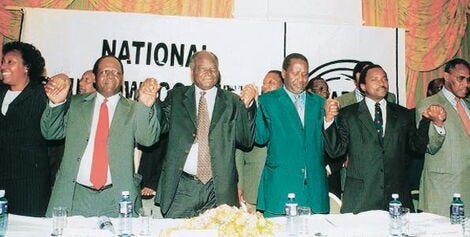
Enter the NARC (National Rainbow Coalition) mandate. Raila Odinga, operating as the strategic engine behind the LDP-NAK alliance, understood that the country was not just seeking a change in leadership; it was desperate for a structural reset. His role as the primary architect of this grand coalition was to synthesize the diverse grievances of a fractured nation into a singular, undeniable political tsunami.
The 2002 general election functioned as a massive market correction. It was a “market reset” in the truest sense, signaling the end of the impunity that had long deterred foreign capital and domestic investment. The new administration’s immediate commitment to uncovering the “Goldenberg-era rot”—the shadow-play of fake gold exports and siphoned treasury billions—did more than just satisfy the public’s thirst for justice. It provided the essential baseline of institutional credibility that the capital markets had lacked for a generation.
This shift was nowhere more visible than in Raila’s aggressive approach to infrastructure as the Minister of Roads. He recognized that for the NSE to flourish, the physical artery of the economy had to be unclogged. Under his tenure, the conceptualization and initiation of the ambitious modernization of Thika Road and Mbagathi Way were not merely engineering projects; they were economic signals. By initiating the transformation of these vital corridors, he was signaling to the market that the era of stagnant, decaying infrastructure was over. These roads were designed to drastically reduce the cost of doing business, enhance logistical efficiency, and expand the perimeter of Nairobi’s economic influence—all prerequisites for the capital-intensive growth that followed.
This restoration of trust and the bold investment in physical connectivity acted as the primary catalysts for the NSE’s legendary bull run of the mid-2000s. Investors, domestic and international alike, finally saw a shift in the “rules of the game.” As the new government dismantled the barriers to market participation and prioritized transparent fiscal policy, the exchange shed its reputation as a closed shop for the politically connected. For Raila, the NARC victory and the subsequent infrastructure drive were proof that political reform and physical development were two sides of the same coin: by clearing the rot from the halls of government and laying the concrete for a new, mobile economy, he had laid the foundation for the most vibrant period of capital accumulation in Kenya’s modern history.
II. The Investor-Minister Paradox
To analyze Raila Odinga’s influence on the Kenyan economy is to confront the “Kenyan Dilemma”: the intricate, often blurred boundary between the halls of public policy and the boardroom of private accumulation. Throughout his career, Raila has navigated a complex dual identity—simultaneously serving as one of the country’s most potent political architects and as a significant private-sector player through entities like East Africa Spectre and Be Energy.
For a lesser politician, this duality would have invited immediate scrutiny and potential disqualification. In a modern democracy, the intersection of ministerial influence and personal investment is a minefield of conflict-of-interest charges. Yet, Raila navigated this space with a high degree of political agility, treating his business interests not as a secret to be hidden, but as a component of his broader philosophy of Kenyan self-reliance.
His tenure as the Minister of Energy provides the ultimate case study in this balancing act. Critics often pointed to the proximity between his regulatory authority and his commercial interests in the energy sector as a fundamental risk. However, Raila’s approach was to frame his business identity as an asset rather than a liability. He positioned himself as an “insider-entrepreneur,” someone who understood the friction of doing business in Kenya because he was forced to navigate the same regulatory bottlenecks as his peers.
Rather than divesting from the economy to serve the state, Raila integrated the two, effectively using his private-sector lens to identify the very systemic inefficiencies he would later target as a policymaker. He mastered the art of the “Political Hedge”—where his personal investments and public legislative agenda often moved in parallel. While this drew inevitable criticism regarding “state capture” or preferential access, his supporters argued that he was merely applying the same “private-sector pragmatism” to national governance.
By refusing to shrink away from his business roots, he challenged the traditional Kenyan narrative that a leader must be a detached technocrat. Instead, he forced a debate on a deeper reality: in an economy as intertwined as Kenya’s, the most effective reformers are often those who have skin in the game. He successfully navigated the conflict-of-interest minefield by sheer force of personality, convincing the public that his private accumulation was not a distraction from his public duty, but a prerequisite for his understanding of how the Kenyan machine truly functioned.

V. The Grain Bulk Handler Saga: The “Upper Hill” Court
The Grain Bulk Handlers (GBHL) controversy of 2009 stands as the definitive case study in Raila Odinga’s gravitational pull on the Kenyan economy. At its core, the dispute concerned the licensing of a second grain handling facility at the Port of Mombasa—a move that promised to disrupt a long-standing monopoly but threatened the interests of the incumbent operators.
The Upper Hill Pilgrimage
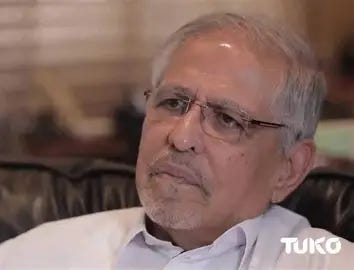
During this period, Raila’s Upper Hill office functioned as a de facto secondary seat of economic power, a sanctuary that existed outside the official mandates of the Grand Coalition government. It became the ultimate pilgrimage site for Kenya’s corporate elite. Businessmen—some genuinely seeking investment security, others scouting for regulatory favors or simply aiming to hedge their bets—trooped to Upper Hill in a steady, hushed procession. They weren’t just there to lobby; they were there to pledge loyalty. In a nation where political tides shifted violently, the Upper Hill office became a “safe harbor” where entrepreneurs sought to secure their standing and ensure they remained in the good graces of the man who held the keys to the future of the NARC legacy.
The Protectionism Paradox
Raila’s intervention in the GBHL saga was ostensibly framed by his camp as a high-minded procedural move. He argued that the port required a disciplined “master plan” and that allowing chaotic, piecemeal developments would compromise the efficiency of the national facility. However, the market interpreted this through a different, more cynical lens. To his critics, the effort to block the entry of a second handler was not about infrastructure logistics; it was a calculated act of protectionism. By wielding his influence to halt the tender, Raila demonstrated that he was capable of using his political capital to shelter specific market players. It was a classic “Protectionism Paradox”: the same man who championed transparency in the Safaricom IPO was now seen as the guardian of an entrenched monopoly in the grain sector.
The Lesson: Access as Political Currency
The lasting legacy of the GBHL saga is the harsh lesson it taught the Kenyan business community: “market access” was not won in the boardroom through operational efficiency or competitive bidding, but in the political office through alignment.
For the modern investor, the “Upper Hill Court” saga exposed the uncomfortable reality that for a Kenyan business to truly scale, it required the imprimatur of the political class. The Upper Hill office served as a high-stakes trading floor where political fealty was the primary currency and market dominance was often merely a byproduct of being “in the fold.” This era solidified the belief among corporate players that in the Kenyan market, the most valuable infrastructure wasn’t a road or a port—it was the ear of the man who could stop the regulators in their tracks.
VI. The Coalition Era: The Prime Minister as “Chief Coordinator”
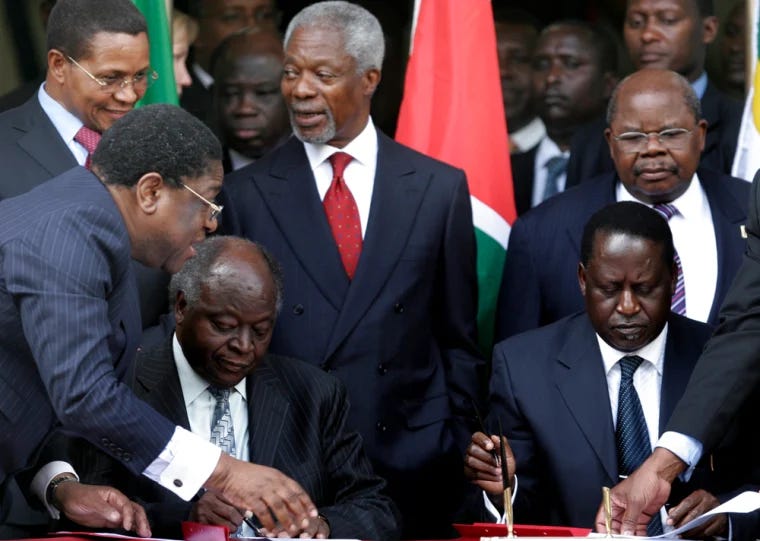
The 2007 election remains one of the most volatile chapters in Kenya’s democratic history. Following a bruising, disputed campaign and the ensuing national crisis, the 2008 National Accord brought Raila Odinga into the heart of the executive as the Prime Minister. This was not a partnership born of ideological alignment, but a forced marriage of necessity designed to stabilize a nation on the brink.
The “Chief Coordinator” Paradox
As Prime Minister, Raila’s formal mandate was to “coordinate and supervise” the functions of government. In reality, he was operating within a deeply suspicious Grand Coalition where every policy decision became a negotiation. Despite this constant friction, his tenure was marked by a shift from the street-level agitation of his past to the meticulous, often grinding work of institutional reconstruction. He used his office to force the machinery of government to focus on implementation, introducing performance contracts and interagency committees that sought to bring corporate-style discipline to a bloated public sector.
Institutional Reform as Market Signal
Raila understood that economic stability was impossible without political legitimacy. His premiership was the driving force behind the promulgation of the 2010 Constitution—a document that decentralized power, limited the “imperial presidency,” and created the legal framework for the devolution of resources. For the capital markets, this was the ultimate long-term reform; by de-risking the political environment and providing a constitutional guarantee of stability, he helped secure the foundation upon which future market growth would be built.
The Visionary Infrastructure Play
During this period, Raila leveraged his coalition position to ensure the continuity and acceleration of major infrastructure projects. He championed the “Vision 2030” development plan, ensuring that flagship projects like the Thika Superhighway and the expansion of the energy grid were not abandoned in the chaos of coalition infighting. For the NSE, these projects were the physical realization of the “unlocking” of the Kenyan economy—converting latent potential into accessible markets.
The Verdict on Coalition Governance
His time as Prime Minister remains a study in “constrained leadership.” While he was frequently frustrated by the limitations of a “coalition of the unwilling,” he successfully utilized the office to move the country toward a more transparent, predictable institutional order. He proved that even in a fractured government, a leader with a clear economic mandate could steer the ship toward structural reform. By the time he left office in 2013, the landscape of Kenyan business had been irrevocably altered: the “Grand Coalition” had not just prevented collapse; it had provided the necessary, if painful, transition into a new constitutional era where the rules of the game were finally written down.
VII. The Engine of Influence: Campaign Finance & The “Harambee” Economy
The mechanics of Raila Odinga’s campaign finance have always operated on a dual-track system that distinguishes him from the traditional, corporate-donor-dependent politician. He did not merely solicit funds; he pioneered a financial infrastructure that mirrored the broader Kenyan “Harambee” spirit, transforming political mobilization into a sophisticated economic engine.
The Financial Infrastructure: The Grassroots Barometer
Raila’s mastery lay in his ability to harmonize two seemingly contradictory funding streams. On the one hand, he utilized a massive, decentralized grassroots collection effort—a bottom-up model that relied on millions of small-scale contributors. This “Harambee” approach was not just a revenue source; it was a potent political barometer. The velocity and scale of these small-dollar donations provided him with real-time data on his ground-level support, allowing him to project political strength in a way that corporate-funded campaigns could never replicate. To his supporters, every contribution was an investment in a promised structural reset; to his opponents, the sheer scale of the grassroots chest was a constant, looming threat.
The “Fundraising” Circuit: Loyalty as Liquidity
While the grassroots provided the political narrative, the “Upper Hill” circuit provided the heavy-duty liquidity required for high-stakes national mobilization. Unlike the traditional corporate-donor model—where businesses make transactional contributions to whoever holds the current levers of power—Raila’s fundraising circuit was built on long-term ideological and strategic alignment.
Businessmen who sought “audience” with him were effectively entering a cyclical economic ecosystem. They contributed to his campaigns not just out of political charity, but in expectation of “policy dividends”—the anticipation that a Raila-led government would dismantle anti-competitive monopolies, streamline bureaucratic barriers, or open new sectors for investment. This created a symbiotic relationship where political loyalty was effectively converted into campaign liquidity, binding the interests of the elite corporate class to the trajectory of his political movement.
Market Signal: The “Upper Hill” Sentiment Index
For the broader Nairobi Securities Exchange and the institutional investment community, Raila’s fundraising cycles functioned as a definitive “Sentiment Index.” When the Upper Hill offices began to see a steady influx of high-net-worth donors and prominent industry captains, the market took note. It signaled a shift in the perceived “political risk” of the country.
If the corporate crowd felt confident enough to open their wallets, it was often interpreted by the markets as a tacit acknowledgment that Raila’s platform was either gaining inevitability or that his economic policy proposals had reached a level of maturity that the private sector could no longer afford to ignore. His fundraising was never just about paying for posters and rallies; it was a high-stakes signal to the capital markets, alerting them to the reality that the political wind was shifting and that the “Odinga premium”—the anticipated economic impact of his agenda—was once again becoming a central factor in the nation’s risk-reward calculus.
VIII. The Architect of the New Order: The Fight for the 2010 Constitution
If Raila Odinga’s tenure as Minister and Prime Minister was a lesson in navigating the constraints of existing power, his campaign for the 2010 Constitution was a masterclass in fundamentally rewriting the rules of the game. For decades, the Kenyan market had been hostage to the “Imperial Presidency”—a system where the concentration of executive power allowed a single individual to dictate the flow of capital, award state contracts with a stroke of a pen, and treat national infrastructure as personal property.
Dismantling the Imperial Presidency
Raila recognized that Kenya’s economic fragility was a direct byproduct of this political design. His crusade for a new constitution was, at its heart, an economic intervention. He sought to introduce the structural checks and balances that had been fought for by a generation of reformers. By campaigning to strip the presidency of its unilateral influence over capital markets, he aimed to move Kenya away from an era of “patronage-based accumulation” toward a system governed by the rule of law.
Institutionalizing Market Discipline
The 2010 Constitution was the ultimate market reform package. It did more than just change the political structure; it created a robust institutional framework designed to de-risk the nation for investors:
Constitutional Commissions: By establishing independent bodies such as the Ethics and Anti-Corruption Commission (EACC) and others, the reforms aimed to move anti-corruption efforts out of the “political shadow play” and into a permanent, institutionalized space.
Judicial Independence: The overhaul of the Judiciary was perhaps the most critical market signal. For the first time in Kenyan history, the private sector had a realistic avenue to challenge state overreach, providing a level of predictability and security for long-term investments that was previously unthinkable.
Devolution: By pushing for the decentralization of resources, Raila effectively broke the monopoly of the Nairobi-based elite. Devolution allowed for the creation of regional economic hubs, forcing capital to circulate outside the traditional corridors of power and creating new, localized markets for development.
The “Raila Premium” on Constitutional Reform
These reforms owe their origin to the relentless, decades-long push by Raila and his allies. By successfully shepherding the 2010 Constitution into law, he achieved what few politicians ever do: he voluntarily curtailed the very powers he had spent his life striving to acquire. For the capital markets, this was the ultimate long-term signal. It transformed Kenya from a “high-risk, high-influence” frontier into a constitutional democracy where institutional stability—not the shifting mood of a leader—began to dictate the economic climate. In his pursuit of a new constitutional order, Raila didn’t just change the country’s governance; he provided the NSE and the broader investment community with the only thing they had ever truly craved: permanence
The Institutional Reset: A Blueprint for Market Stability
The 2010 Constitution was far more than a political settlement; it was a comprehensive economic restructuring. By successfully shepherding this new order into law, Raila Odinga and his allies effectively dismantled the “Imperial Presidency”—the concentration of executive power that had allowed a single office to dictate the flow of capital, award state contracts with a stroke of a pen, and treat national infrastructure as personal property. To stabilize the economic environment and move Kenya from an era of patronage-based accumulation toward a system governed by the rule of law, the new constitution mandated a radical distribution of authority. The following pillars represent the core institutional reforms that permanently altered the landscape of Kenyan business, judicial oversight, and decentralized economic governance.
IX. Devolution: The De-concentration of Economic Power
If the “Imperial Presidency” had historically kept the economic lifeblood of the nation tethered to Nairobi, the 2010 Constitution provided the surgical strike to sever that monopoly. By anchoring devolution as a cornerstone of the new order, Raila Odinga and his fellow reformists triggered the most significant shift in resource allocation since independence.
Breaking the Nairobi Monopoly
For decades, capital markets and major infrastructure projects were concentrated almost exclusively within the capital, leaving the rest of the country as mere appendages. Devolution fundamentally inverted this model. By creating 47 autonomous County Governments, the reforms ensured that power and, crucially, financial resources were no longer the sole preserve of the central executive. This was an economic necessity: it forced the creation of regional commercial hubs, stimulated local construction and services industries, and allowed for the birth of county-level fiscal competition.
The Numbers: Putting Money Where the Power Is
The constitutional design mandated that a minimum of 15% of the national government’s most recently audited revenues must be transferred to the counties annually. However, through aggressive political advocacy and the operationalization of the Division of Revenue Act, actual allocations frequently exceeded this baseline, often oscillating between 25% and 35% of the national budget. This shift moved billions of shillings directly into county coffers, fueling local real estate booms, regional retail expansion, and a surge in service-sector demand that the Nairobi-centric market had previously ignored.
Devolved Functions: From Policy to Concrete
The transition also involved a massive transfer of functional mandates from the national government to the counties, directly impacting the daily lives of citizens and the environment for local businesses. The primary devolved functions include:
Agriculture: Development and regulation of crop and animal husbandry, including livestock and veterinary services.
Public Health: Management of county health facilities, pharmacies, and primary healthcare services.
Infrastructure: Development and maintenance of county roads, street lighting, and traffic management.
Trade: Regulation of markets, trade licenses, and fair trading practices at the local level.
Planning: County physical planning, land survey, and local environmental management.
For the capital markets, devolution transformed the “investment map” of Kenya. It forced institutional investors, banks, and retailers to look beyond the Nairobi skyline. By democratizing the budget, the reform ensured that economic growth was no longer a vertical trickle-down from the Presidency, but a horizontal, decentralized expansion that touched every corner of the republic. For Raila, this was the ultimate triumph: he had succeeded in spreading the wealth, ensuring that the “bottom-up” economic model was not just a campaign slogan, but a constitutional reality.
X. The Judiciary: The Independent Arbiter
The 2010 Constitution represented a seismic shift in the Kenyan legal landscape, fundamentally decoupling the Judiciary from the long, suffocating shadow of the Executive branch. For decades, the courts had been viewed as an extension of state power—a mechanism to validate political decisions rather than a guardian of constitutional rights. The new constitutional order sought to end this era of subservience by enshrining judicial independence as a non-negotiable pillar of the state.
Institutionalizing Independence
The reforms introduced a radical restructuring designed to insulate judges from political interference. Key among these was the establishment of the Judicial Service Commission (JSC), an independent body granted the mandate to oversee the appointment, discipline, and management of judicial officers. By shifting the power of appointment away from the unilateral whim of the President—and requiring transparent, competitive vetting processes—the Constitution ensured that the bench would be populated by jurists beholden to the law rather than to political benefactors. Furthermore, the creation of a Judiciary Fund provided a degree of financial autonomy, preventing the Executive from using budgetary starvation as a tool to coerce court decisions.
The Supreme Court: A Court of Finality
Central to this new judicial architecture was the establishment of the Supreme Court of Kenya, a tier of adjudication that did not exist under the previous regime. Beyond its role as the ultimate interpreter of the law and the protector of constitutional values, the Supreme Court was granted exclusive and original jurisdiction to hear and determine disputes relating to the election of the President.

This specific mandate would soon become a defining feature of the country’s political life. In the years following the promulgation of the Constitution, Raila Odinga—the very architect who had campaigned for this independent arbiter—would frequently find himself utilizing this newly created forum. Through various high-stakes presidential election petitions, Raila tested the mettle of the institution he helped build. These petitions became the ultimate stress test for Kenyan democracy: whether a court, now shielded from the Executive, could summon the courage to adjudicate the highest office in the land. Whether the court ruled for or against him, the mere existence of a venue where the power of the President could be challenged—and where the legitimacy of an election could be scrutinized in the public light—proved that the “Imperial Presidency” had been successfully brought within the reach of the law.
XI. Constitutional Commissions: The Guardians of the New Order
The 2010 Constitution moved beyond merely redefining the roles of the three traditional arms of government. To ensure that the “Imperial Presidency” could never again consolidate absolute control, the document established a suite of Constitutional Commissions and Independent Offices. These bodies were envisioned as a quasi-fourth arm of government, designed to operate with total autonomy from the Executive, Legislature, and Judiciary.
The Rationale: De-risking Governance
For decades, critical functions of the state—such as managing elections, overseeing land allocation, and maintaining police discipline—had been hijacked by the political elite to reward allies or punish perceived enemies. By moving these mandates to independent, constitutionally protected commissions, the 2010 reforms sought to depoliticize the administration of the state. These commissions derive their authority directly from the sovereign people of Kenya, not from the goodwill of the President. Their primary purpose is to act as a buffer against executive overreach, ensuring that the rules of the game are applied impartially, whether in the boardroom or at the ballot box.
The Constitutional Commissions
The Constitution establishes several key commissions, each tasked with a specific mandate essential to the health of the republic:
Kenya National Commission on Human Rights (KNCHR): Monitors and investigates human rights violations, promoting a culture of constitutionalism.
National Land Commission (NLC): Manages public land and resolves historical injustices, ending the era where the President could unilaterally alienate land.
Independent Electoral and Boundaries Commission (IEBC): Responsible for conducting free, fair, and transparent elections.
Parliamentary Service Commission (PSC): Provides services and facilities to ensure the efficient functioning of Parliament.
Judicial Service Commission (JSC): Oversees the appointment, promotion, and discipline of judicial officers, shielding the bench from political interference.
Commission on Revenue Allocation (CRA): Ensures the equitable distribution of national revenue between the national and county governments.
Public Service Commission (PSC): Manages human resources within the public service, focusing on merit-based recruitment and ethical conduct.
Salaries and Remuneration Commission (SRC): Harmonizes and sets the pay for all state officers, curbing the excesses of the political class.
Teachers Service Commission (TSC): Manages the registration, recruitment, and discipline of teachers.
National Police Service Commission (NPSC): Oversees the welfare and discipline of the national police, separating security management from political puppetry.
Ethics and Anti-Corruption Commission (EACC): Tasked with curbing corruption and promoting integrity among public servants.
By diversifying power across these institutions, the 2010 Constitution created a “checks and balances” ecosystem. For the Kenyan investor, these commissions represent a form of institutional insurance; they provide the regulatory predictability and oversight necessary for long-term capital stability, ensuring that the state remains a neutral referee rather than an active participant in market manipulation.
XII The Long Struggle for Transparency
Even after the milestone of the 2010 Constitution, Raila Odinga’s mission was far from complete. He understood that the mere existence of a new legal framework was insufficient if the political elite—entrenched in decades of patronage—continued to subvert the spirit of the law. Consequently, he transitioned into an unrelenting watchdog, using his mobilizing power as an external audit to hold the government accountable and force transparency on an establishment that had grown comfortable with impunity.
The Vanguard of Devolution
When the national government began to drag its feet on the implementation of devolution, Raila emerged as the fiercest defender of the grassroots. He recognized that the success of the 2010 order depended entirely on resources reaching the counties. In the face of budget stalemates and attempts to hoard funds at the center, Raila led a sustained crusade for the release of billions in equitable share revenue to county governments. He argued that every shilling withheld from the counties was a direct assault on the economic sovereignty of the people, effectively turning the battle for “more funds to the grassroots” into his primary political platform for rural empowerment.
Redefining the Role of Parliament
Perhaps his most provocative stance in the post-2010 era was his demand for a strict separation of powers regarding public expenditure. Raila became the leading voice challenging the National Government Constituencies Development Fund (NG-CDF). He argued that while the fund served a purpose in the era of the “Imperial Presidency” where local development was neglected, it had become an obsolete and unconstitutional mechanism in the new devolved order.
His critique was precise: the constitutional role of a Member of Parliament is to legislate, represent, and provide oversight—not to act as a project contractor or distributor of bursaries. By persistently calling for these funds to be transferred to the counties, Raila sought to end the culture where MPs used public cash to build political patronage networks. He insisted that implementation is the exclusive domain of the Executive (at both national and county levels), and that by usurping these roles, MPs were blurring the lines of accountability and undermining the very devolution they were elected to protect.
Raila’s call for NG-CDF funds to be devolved
This video highlights Raila Odinga’s firm opposition to the entrenchment of the NG-CDF in the Constitution, reinforcing his argument that MPs should stick to their constitutional oversight mandate rather than managing development funds.
Market Discipline as Political Strategy
Even while in the opposition, Raila’s ability to mobilize public opinion functioned as a de facto regulatory force. By consistently highlighting systemic wastage and calling out the encroachment of the legislative arm into executive functions, he forced the political class into a defensive posture. For the market, this was a critical signal: Raila remained the primary architect and defender of the “rules of the game.” His tireless advocacy ensured that the 2010 Constitution was not just a paper agreement, but a living, breathing mandate that could be defended from the streets. For an elite accustomed to doing business in the shadows, his presence was a constant reminder that the era of absolute discretion had ended, and the era of institutional scrutiny had arrived.
XIII. The Investor’s Paradox: Wealth and the Legacy of “Spectre”
To fully understand Raila Odinga’s economic imprint, one must look beyond the legislative halls to the boardroom. Raila was not merely a regulator of the market; he was a participant in it. His personal financial journey—often mirrored by his family’s involvement—is a study in the long-term accumulation of capital within a volatile political environment.

The Foundations of an Empire
The cornerstone of the Odinga business legacy is East Africa Spectre Limited. Founded in 1971, the company initially served as a manufacturing venture for industrial equipment, but it famously pivoted into the production and revalidation of Liquefied Petroleum Gas (LPG) cylinders. This move, born from a market gap identified during the Agip Oil shortages, transformed the firm into the leading cylinder manufacturer in the Eastern and Central African region. For Raila, East Africa Spectre was more than an asset; it was a testament to his engineering background and his belief in “self-reliance”—a conviction that Kenyans should own the means of their own industrial production.
Diversification and Strategic Interest
Over the decades, the family’s investment portfolio expanded significantly, reflecting a strategic move into high-barrier sectors:
Energy & Petroleum: Through a substantial stake in Be Energy, the family integrated into the petroleum distribution value chain, establishing a footprint that spanned storage facilities and specialized fuelling operations at Jomo Kenyatta International Airport (JKIA).
Real Estate & Development: Vehicles like Lennox Development Ltd anchored their interests in the real estate sector, culminating in large-scale projects such as the LV Marina in Kisumu—a multi-billion shilling mixed-use development on the site of the former molasses plant.
Holding Companies: Entities like Duma Investments served as private investment vehicles, allowing the family to maintain a presence across finance, agriculture, and broader manufacturing sectors, often operating away from the public gaze.
The Verdict on Wealth
While estimates of his net worth have frequently reached into the hundreds of millions of dollars, the “Odinga Empire” remains less about static wealth and more about long-term strategic positioning. His business trajectory was often intertwined with his political philosophy: he invested in sectors—like energy, manufacturing, and infrastructure—that were foundational to the very economic growth he advocated for in his policy career.
His life as an investor presents the ultimate paradox of the Kenyan reformist. In a nation where the “political class” is often accused of predatory accumulation, Raila’s business path was framed by his supporters as an exercise in industrial entrepreneurship. Yet, to his critics, the proximity between his policy influence and his family’s commercial interests remained a point of debate. Ultimately, Raila’s wealth was both a tool and a target; it provided him with the financial independence to challenge the political establishment, even as it invited the persistent, intense scrutiny that follows any man who sits at the intersection of power and profit.
VIII. The Market Critic’s Perspective: Power, Patronage, and the “Interventionist” Trap
To view Raila Odinga purely as a champion of reform is to overlook the intense skepticism he has faced from the market throughout his career. From the perspective of institutional investors and private-sector players, Raila’s influence was often characterized not by the “stability” of the 2010 Constitution, but by the volatility of his interventions. Critics frequently characterized his career as a blend of protectionist maneuvering and a “patronage-first” approach to capital, where business success often required navigating the “Upper Hill” political orbit.
The Industrialist or the Appropriator?
Critics have long pointed to the Kisumu Molasses Plant as the origin story of this market-driven skepticism. Originally a government-backed joint venture, its collapse and subsequent association with Raila’s private interests became a focal point for those accusing him of using political proximity to acquire state-linked assets. Similar tensions flared during his interaction with Dominion Farms in Siaya. While his camp argued for the protection of local interests and land rights, investors saw a pattern of political harassment that served to destabilize foreign direct investment. For these critics, the “Dominion” saga—involving land ownership disputes and accusations of extortion—was a warning sign to international investors that property rights in Kenya remained secondary to political currents.

Weaponizing the Consumer: The Boycott Era
Perhaps the most visceral criticism from the business community arose during the “Resist” campaign following the 2017 elections. By calling for consumer boycotts of major private-sector entities—specifically Safaricom, Equity Bank, Brookside, and Bidco—Raila demonstrated a willingness to treat the nation’s largest taxpayers as political collateral. To the market, this was an alarming use of economic sabotage. Business leaders viewed the boycott not as legitimate protest, but as a dangerous overreach that threatened the stability of the NSE and signaled that no company, regardless of its economic contribution, was safe from the “political axe” if it was perceived as “Jubilee-friendly.”
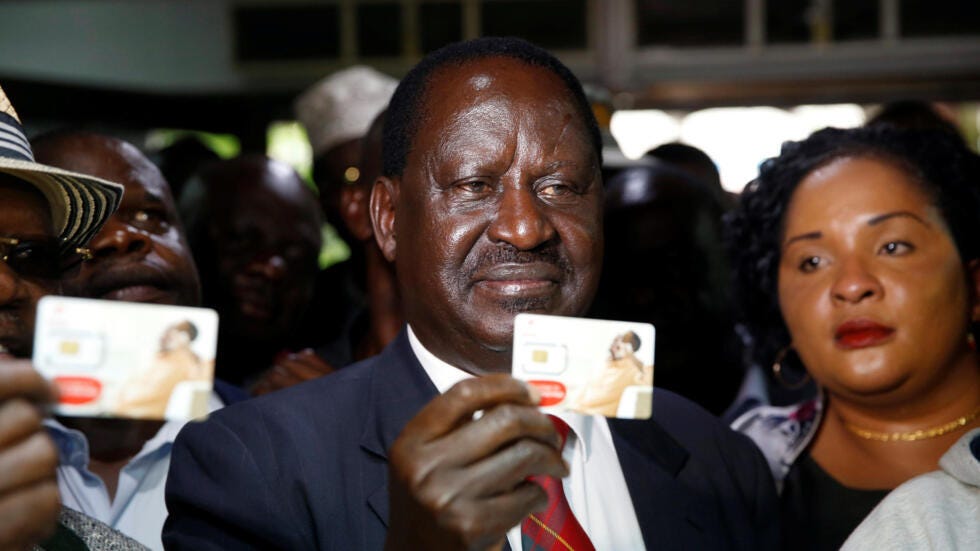
The “Master Plan” and the Grain Bulk Handler (GBHL) Monopoly
The GBHL saga remains the most cited example of Raila’s interventionism in the infrastructure sector. When he moved to suspend the tender for a second grain handler at the Port of Mombasa, citing the lack of a “master plan,” his critics—including then-Transport Minister Chirau Mwakwere—saw it as a thinly veiled effort to protect the existing monopoly. The optics of the move, combined with his reported close associations with high-profile power brokers and businessmen like Jimmy Wanjigi, Jacob Juma, and Cyrus Jirongo, fueled a pervasive narrative: that “market access” was being gatekept by a political inner circle.
Guilt by Association: The “Inner Circle” Critique
The “Inner Circle” Critique: Perception and the Political Premium
The market’s deep-seated distrust of Raila Odinga was significantly exacerbated by his proximity to a network of high-profile power brokers whose names became synonymous with Kenya’s most notorious procurement and corruption scandals. For the investor class, the concern was not just the potential for direct interference in market mechanisms, but the broader perception that Raila’s inner circle—a roster of figures whose wealth was often tied to state-linked contracts—signaled a potential return to “crony capitalism.”
This association with a specific “political clique” introduced what investors dubbed a “political premium”—a risk factor added to any project or sector where Raila’s influence was felt. When business fortunes in Kenya appeared contingent on one’s standing within a tight-knit, politically agile inner circle, institutional stability was viewed as secondary to interpersonal loyalty.
Among the figures whose names frequently clouded the “reformist” narrative were:
Jimmy Wanjigi: A billionaire businessman and quintessential political fixer, Wanjigi’s long-standing connection to Raila positioned him as the archetype of the “shadow power broker.” To the market, Wanjigi’s presence suggested that even the most transformative economic reforms might eventually be steered to benefit a select group of well-connected elites.
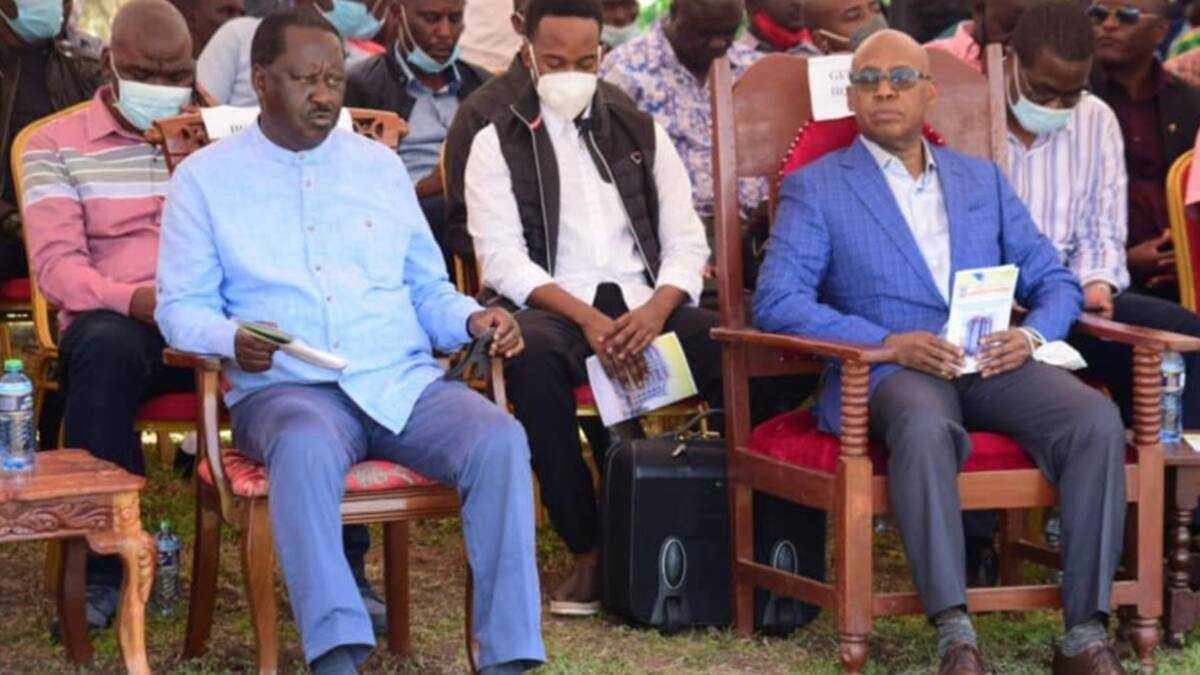
Cyrus Jirongo: A veteran political operative with deep roots in the YK’92 era—a period notorious for “money-printing” and rampant corruption—Jirongo’s alignment with Raila was viewed by many in the private sector as an uncomfortable bridge to a past of state-sanctioned economic malpractice.
Jacob Juma: A controversial contractor who often positioned himself as a whistleblower against government corruption, Juma’s complex web of business interests and his aggressive, often litigious style of engagement made him a polarizing figure. His proximity to Raila provided ammunition to critics who argued that Raila’s camp was just as deeply entangled in the opaque “tenderpreneurship” culture as the governments he sought to replace.
Yagnesh Devani (The Triton Scandal): Perhaps the most damaging association in the eyes of the financial sector was the legacy of the Triton oil scandal. In the minds of many market observers, the political shielding of key players involved in such systemic looting created a perception that “reform” was a selective endeavor—one that targeted political rivals while providing cover for allies.
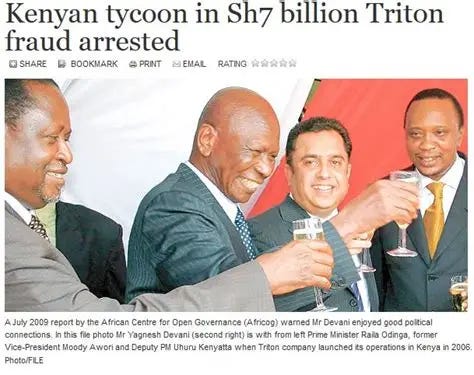
For the investor, these associations painted a troubling picture: a system where “market access” was not guaranteed by the rule of law or the 2010 Constitution, but by the strength of one’s ties to the “Upper Hill” inner circle. This perception forced a constant “political discount” on Kenyan equities and sovereign debt whenever Raila’s influence waxed, as the market struggled to reconcile his high-minded advocacy for institutional integrity with the reality of the powerful, and often controversial, figures who stood by his side.
The Verdict: Volatility as a Business Risk
For the market, the ultimate critique of Raila Odinga is that he represented a “double-edged sword.” While he was the primary architect of the institutional reforms that provided the legal framework for stability, his practical history—the boycotts, the tender suspensions, and the proximity to controversial financiers—created a level of political risk that made “business as usual” difficult to forecast. To his market critics, Raila was a revolutionary who built a stable house but was perpetually willing to burn it down if it didn’t align with his current political strategy. This duality—the reformer who built the system versus the politician who was willing to manipulate it—remains the central point of contention for those who view Kenya’s economic history through the lens of pure market-led growth.