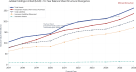

Centum Investment Company Plc presents one of the most fascinating dichotomies on the Nairobi Securities Exchange. On paper, the parent company’s FY2026 financial statements look like a corporate triumph: a completely clean, debt-free holding company balance sheet following the retirement of the remaining KES 690 million Stanbic Bank facility, paired with a massive surge in total dividend payouts to KES 521 million. Yet, zoom out to the consolidated group level, and a vastly different reality emerges. The Group sits on a towering KES 16.6 billion in total borrowings, heavily weighted toward capital-intensive real estate developments and special economic zones. For years, market observers have wrestled with a central paradox: Centum holds immense intrinsic value across its master-planned land banks and residential pipelines, but its balance sheet remains heavily constrained by the velocity of capital recycling.
Dissecting the KES 16.6B Debt Architecture
To understand Centum’s financial exposure, one must look closely at the composition of its liabilities. The group has progressively pivoted away from constrained local commercial banks toward heavy institutional and development finance institutions (DFIs)—bringing in major players like Nedbank Group (KES 5.11B), Vantage Capital (KES 4.91B), and a strategic USD 20 million IFC project facility for Centum Real Estate.
This shift makes strategic sense: mega-urban nodes like Two Rivers require long-tenor, hard-currency, or mezzanine capital that local banks cannot match due to single-borrower limits and short maturity profiles. However, the cost of alternative private debt remains punishing. Unsecured commercial papers and loan notes—such as those tied to Longhorn Publishers and Jafari Credit—carry steep annual interest rates of 19.0%, while Two Rivers loan notes sit at 14.0%. Compared to risk-free Kenyan 91-day T-bills yielding roughly 7.5% to 8.5% over the same window, these private instruments command an immense risk premium.
This expensive debt load has created severe covenant pressures across subsidiary Special Purpose Vehicles (SPVs). Entities like Two Rivers Power Company and Vantage-backed holdings have faced asset-cover and debt-service breaches, requiring active management intervention and formal lender waivers to prevent immediate restructuring crises.
The REIT Reality Check: Too Little, Too Late?
To combat this debt drag, management has leaned heavily into capital recycling, most notably via the TRIFIC REIT transaction. During FY2026, Two Rivers Land Company agreed to sell its shares in TRIFIC North Tower Company SEZ to the TRIFIC Green USD Income REIT for KES 4.66 billion (USD 35.88 million). On the FY2026 balance sheet, this required quarantining KES 4.74 billion in assets and KES 262.9 million in liabilities as “held for sale”, freezing depreciation while awaiting final realization in FY2027.
While hailed as a milestone in asset monetization, a rigorous look at the scale reveals a painful truth: it is too little, too late. Centum’s trapped real estate portfolio is massive; spinning off a single commercial tower is a drop in the ocean when the market is demanding a systematic unblocking of liquidity. To genuinely rerate the holding company and clear out the debt overhang, a monetization event needs to be at least triple this size.
What would a true game-changer look like? If TRIFIC were to instead construct a KES 15 billion institutional data center and offload it directly to the National Infrastructure Fund—where former long-serving Group CEO James Mworia now sits at the helm as founding CEO—the market would instantly forgive past pacing and hail it as a masterclass in strategic state-backed capital recycling. Instead, investors are left watching slow-burn organic cash flows try to outrun high-cost liabilities.
Can Slow-Burn Real Estate Clear the Debts?
To determine whether Centum can outrun its KES 16.6 billion consolidated debt burden, we must look past the holding company optics and examine the cash-generation engines sitting inside Centum Real Estate (Centum RE). Management’s overarching thesis relies on progressive asset turnover across two distinct business segments: DevCo (residential housing) and LandCo (development rights). When you crunch the numbers from the FY2026 financial disclosures, however, a stark asset-liability mismatch comes into focus.
1. The Residential Engine (DevCo)
Centum Real Estate DevCo houses a portfolio of 2,571 residential units spread across Vipingo, Nairobi, and Pearl Marina in Uganda, with roughly 58% sold by March 2026.
The Gross Potential: The units sold carry a cumulative revenue potential of KES 30.0 billion, alongside KES 6.7 billion worth of units sitting in inventory.
The Cash Flow Reality: Out of those sales, KES 16.1 billion in cash has already been collected, and KES 13.9 billion remains locked in outstanding customer receivables.
The Completion Drag: To turn those ongoing sales into recognized revenue and final cash, DevCo faces a heavy KES 7.9 billion cost to completion for ongoing projects.
When you net out the future construction costs against collections and receivables, the net cash realizable potential from the residential portfolio sits at KES 6.0 billion. It is a healthy liquidity cushion, but it is entirely insufficient to wipe out the group’s broader debt obligations on its own.
2. The LandCo Cash Cow (Development Rights)
Historically, Centum’s true operational cash cow has been its land monetization strategy. LandCo holds master-planned land banks across Vipingo and Pearl Marina (carved out of an original 10,600 acres) that have been unlocked through heavy capital investments in internal roads, power, water, and ICT infrastructure.
Cumulative Land Sales: LandCo has driven KES 11.1 billion in cumulative land sales against an apportioned land and infrastructure cost of KES 3.09 billion, yielding an impressive profit potential of KES 8.01 billion.
Upstreamed Liquidity: From these land sales, KES 7.4 billion in cash has been successfully collected, a significant portion of which has historically been upstreamed to the parent company to retire legacy shareholder loans.
The Remaining Pipeline: An additional KES 3.7 billion in outstanding receivables remains to be collected over the next 12 to 48 months as buyers satisfy their payment milestones.
3. The Grand Total vs. The Debt Overhang
If we combine DevCo’s net realizable cash (KES 6.0 billion) with LandCo’s outstanding land receivables (KES 3.7 billion), Centum Real Estate commands a combined potential liquidity pool of roughly KES 9.7 billion. On paper, a KES 9.7 billion war chest looks formidable. But stacked against total group borrowings of KES 16.6 billion, the math exposes the core flaw in management’s timeline: the velocity mismatch. High-cost liabilities—such as unsecured commercial papers carrying 19% interest rates and tightly covenanted DFI facilities—demand immediate, predictable debt service today. In stark contrast, DevCo residential completions and LandCo installment receivables are a slow-burn drip-feed bound by multi-year construction milestones and 12-to-48-month collection schedules.
Relying on organic real estate sales to outrun an aggressive debt schedule is an uphill battle. Until Centum couples its slow-burn operational cash flows with massive, lump-sum institutional monetizations (such as scaling REIT spin-offs or state-backed infrastructure offloads), the balance sheet will remain anchored by the very debt it is trying to escape.
Where Have All the Funds Gone? The 48-Month Handover Trap and the Customer Cash Dilemma
For years, Centum’s real estate marketing has operated on a polished, high-velocity premise: buy off-plan, let your asset appreciate within a master-planned urban node, and watch the cash flow compound. But as you zoom in from the clean, high-level parent optics to the operational reality on the ground, a deeply troubling divergence emerges between corporate presentations and customer experiences. If you scroll through digital community forums and social media channels, a chorus of buyer frustration echoes a single agonizing question: Where are the keys? Across multiple residential developments, unit handovers are routinely stretching 24, 36, to 48 months past initial projections.
To understand why projects are moving at a glacial pace, one must audit the cash flows embedded within Centum Real Estate DevCo’s “Ongoing - Sold” portfolio.
The KES 11.3 Billion Ongoing-Sold Trap
Centum RE DevCo carries an active pipeline of residential units valued at KES 11.3 billion that are classified as “ongoing and sold.” On paper, the monetization engine looks active:
The Cash Collected: Customers have already shelled out KES 4.4 billion in hard cash.
The Outstanding Receivables: An additional KES 6.9 billion remains locked in installment receivables.
The Completion Wall: To finish these exact units, DevCo faces a staggering KES 5.0 billion cost to completion.
When you net out the required construction costs against incoming collections, the net cash realizable from this massive chunk of the portfolio sits at a razor-thin KES 1.9 billion.
Herein lies the core structural vulnerability. If customers have already paid KES 4.4 billion in cash, why is there a massive KES 5.0 billion deficit standing between current sites and final completion? Why are construction sites starved of liquidity when millions in customer deposits have already flowed into the system?
The Liquidity Crunch Hypothesis
The most logical—and most alarming—answer points back to group-level capital allocation. With the consolidated group sitting on KES 16.6 billion in total borrowings—heavy with high-cost 19% private commercial papers and tightly covenanted DFI debt—subsidiary cash flows are under immense pressure. When holding-level and group liabilities demand immediate, non-negotiable debt service, project-level cash management often faces competing priorities. The operational data raises a hard, unavoidable question: Are customer deposits collected for specific residential SPVs being siphoned away to plug corporate liquidity holes and service expensive group debt elsewhere?
When development timelines drag on for years despite heavy customer buy-in, it creates a dangerous feedback loop. Buyers lose confidence, handovers stall, and the brand equity of East Africa’s premier master-developer takes a direct hit.
Centum’s management has successfully insulated the parent company balance sheet to zero debt, enabling a triumphant surge in dividend payouts. But that corporate victory looks very different if it has been subsidized by the slow-motion freeze of customer-funded housing units. Until management opens the books with total transparency on project-level cash segregation, the 48-month handover delay will remain the defining shadow over Centum’s real estate ambitions.
Beyond Real Estate: Auditing Centum’s Private Equity Portfolio and Extreme Concentration Risk
Stripping away Centum Real Estate Ltd and TR Land Co SEZ—the massive real estate engines that dominate the top of the chart—reveals the true shape, health, and hidden value of Centum Investment Company Plc’s broader Private Equity (PE) and non-real estate portfolio as of March 31, 2026. An analysis of the remaining portfolio companies highlights several striking trends:
1. The Crown Jewel: Isuzu East Africa Ltd
Carrying Value vs. Cost: Isuzu East Africa stands out as the absolute heavyweight of the non-real estate PE portfolio. Its carrying value dwarfs every other operating asset in this category, sitting at roughly KES 5.5 billion, compared to a negligible historical cost baseline.
The Strategic Role: Isuzu acts as Centum’s premier cash-generative anchor asset. While real estate sucks up capital and carries heavy debt drag, Isuzu reliably throws off dividends, serving as a primary contributor to the parent company’s cash flow stability and its ability to clear holding-level debt and boost dividend payouts.
2. The Value Chasm: Carrying Value vs. Historical Cost Outliers
Looking across the rest of the portfolio, the variance between carrying value and historical cost tells a story of mixed operational performance:
Jafari Credit Ltd & NAS Servair: Both show carrying values that comfortably exceed their historical costs, reflecting solid valuation uplifts and steady operational performance. (Notably, Jafari Credit’s presence here also intersects with the high-cost private notes seen on the broader balance sheet).
Akiira Geothermal Ltd & Ace Holdings: These represent classic venture/infrastructure and legacy holdings where the historical cost actually exceeds or matches the current carrying value. Akiira Geothermal, in particular, shows a heavy historical cost relative to its depressed carrying value, underscoring the protracted development timelines and value impairments inherent in geothermal energy plays in East Africa.
Longhorn Publishers Plc & Greenblade Growers Ltd: These smaller-ticket holdings carry modest valuations, with Longhorn reflecting the struggles of the publishing sector and micro-cap listed equities on the NSE.
Nabo Capital Ltd & Tribus TSG Ltd: Representing asset management and facilities/property management services respectively, these holdings sit at minor carrying values, acting more as captive operational supports for the broader ecosystem than standalone valuation drivers.
The Big Picture on Centum’s PE Portfolio
When you isolate the PE portfolio from the heavy capital-intensive real estate subsidiaries, Concentration Risk is extreme. Isuzu East Africa essentially carries the weight of the entire non-real estate asset base. While the total investment portfolio boasts a reported market value of KES 38 billion representing a 3.4x multiple on net cost invested, the liquidity and cash-generation power outside of Isuzu and the land sales engine are relatively thin. This reinforces why parent-level deleveraging has been so critical: with Isuzu providing steady cash dividends and real estate land sales providing bulk cash infusions, Centum has managed to insulate the holding company while its smaller PE holdings continue to mature at varying, often sluggish, paces.
The Path Forward: Scaling Capital Recycling Beyond the Drip-Feed
The core takeaway from Centum’s FY2026 numbers is that the group’s strategic blueprint is fundamentally sound, but its execution velocity remains misaligned with its capital structure. Isolating the parent company and wiping out holding-level debt to zero is a commendable governance win that successfully shields the holding entity from operational shocks and restores meaningful dividend streams. Furthermore, the deliberate pivot away from short-term, volatile commercial bank lines toward long-tenor Development Finance Institutions (DFIs) like the IFC, Nedbank, and Vantage Capital provides a sturdier structural runway.
Yet, structural longevity does not equal immediate liquidity. As long as high-cost private debt instruments—such as the 19% commercial papers and loan notes—continue to sit on subsidiary balance sheets, and as long as debt-service covenants require constant waiver management, the clock is ticking against management. Relying on incremental residential completions and multi-year land sale installments is a classic slow-burn strategy. It creates billions in underlying value on paper, but it cannot outrun the immediate, compounding gravity of heavy consolidated borrowings.
What needs to change?
To break the discount-to-intrinsic-value trap that has plagued the counter for years, Centum must fundamentally scale up its monetization framework:
Massive Institutional Spin-Offs: Single-tower REIT transactions like TRIFIC are a step in the right direction, but they need to be executed at a multiple of three or greater to truly liberate trapped capital.
Strategic State-Aligned Offloads: Crafting mega-scale infrastructure plays—such as developing institutional-grade data centers within special economic zones and cycling them directly into well-capitalized vehicles like the National Infrastructure Fund—would completely shift market perception.
Ultimately, Centum holds the crown jewels of East African master-planned real estate. But until capital recycling shifts from a slow-burn drip-feed to aggressive, large-scale institutional liquidations, the intrinsic value of those assets will remain locked behind a wall of debt.
About Boardlot Africa Research
Boardlot Africa is a premier financial intelligence and corporate governance publication dedicated to unpacking the mechanics of capital, market strategies, and structural shifts across East Africa’s corporate landscape. By bridging the gap between raw economic data and actionable market intelligence, we deliver deep-dive research, independent corporate analysis, and policy insights designed for institutional investors, boardrooms, and sharp market observers.
Get in Touch
Email: boardlot.research@gmail.com
Phone: +254 753 133 901
Substack: Subscribe to Boardlot Africa
X (Twitter): BoardLotSultan