
In the Kenyan economic landscape, land is the ultimate currency. Controlling it means controlling capital, politics, and local sovereignty. While popular narrative frames Laikipia’s vast conservancies as pure environmental stewardship, a deeper political economy reveals a sophisticated triad of power: global conservation capital, Kenyan state security, and the heavy military footprint of the British Army Training Unit Kenya (BATUK) Nanyuki,
The sheer geography of this alignment is staggering. Laikipia County spans approximately 9,532 square kilometers (2.35 million acres). Through a contiguous network of 24 private and trust-owned properties—anchored by the Lewa Wildlife Conservancy, Ol Pejeta Conservancy, Borana Conservancy, Loisaba, and Lolldaiga—the conservancy apparatus controls nearly 50% of the entire county's landmass. It is a spatial concentration of wealth unparalleled in East Africa, effectively placing over 1 million acres of prime plateau into the hands of a tightly knit network of private boards, global conservation trusts, and international security partners.
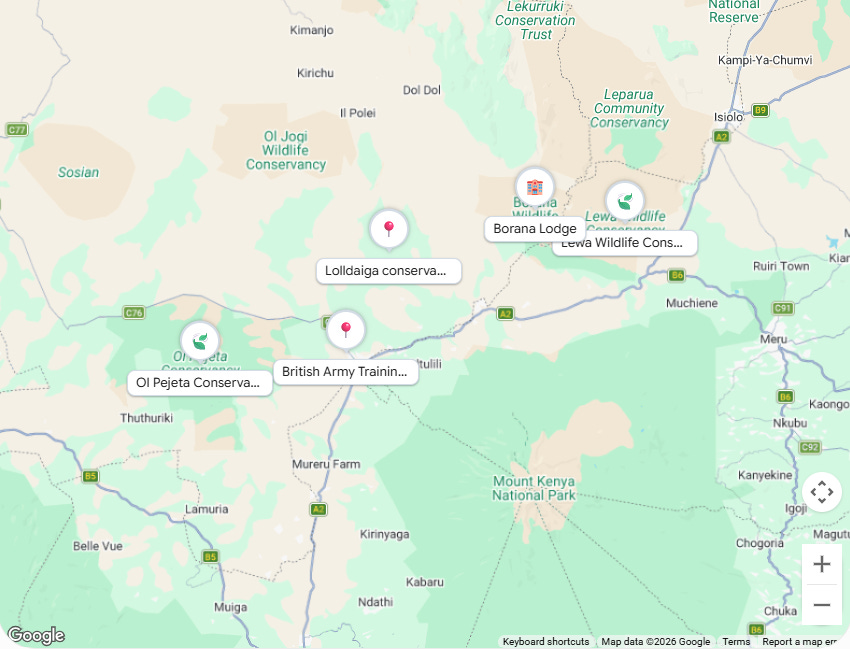
British Army Training Unit Kenya (BATUK) Nanyuki, Kenya it is the physical and geopolitical anchor of the entire Laikipia ecosystem. Positioned at the gateway of Northern Kenya, BATUK’s permanent presence creates a macro-security umbrella that shields an interconnected network of mega-conservancies—including the Lewa Wildlife Conservancy Click to open side panel for more information , Ol Pejeta Conservancy, Borana Lodge Click to open side panel for more information , and the Lolldaiga conservancy. By locking down airspaces, maintaining logistical corridors, and utilizing private landholdings as active military training grounds, BATUK physically and strategically severs the hyper-populated, agrarian engine of Central Kenya from the vast rangelands of the North.
This military deployment acts as a permanent demographic cork. By walling off half a county for wildlife, high-yield ESG capital, and live-firing grounds, the system creates an artificial land squeeze. It prevents smallholder expansion and isolates Laikipia into a low-density, high-value "Conservancy State"—shielded by foreign military power, legitimized by global conservation mandates, and protected from the political land pressures of the native majority.
Table of Contents
Executive Summary: The Triad of Power in Laikipia
I. The Custodian of the Corridor
II. Roots of the Dynasty (1918–1980s)
III. The BATUK Buffer: Isolating Laikipia and Safeguarding the Landscape
IV. The Conservancy Network: Ol Pejeta, Borana, and the Regional Web
V. The Conservancy Model: Capital Markets in the Wild
VI. The Leveraging of State & Imperial Security Structures
VII. The Dynasty: From Ancestral Roots to the New Guard
VIII. Elite Capture: The Institutionalization of Influence
IX. The Human Cost: Conservation or Control?
X. The Reckoning: Development or Dispossession?

I. Introduction: The Custodian of the Corridor
I. Introduction: The Custodian of the Corridor
In the vast expanse of Northern Kenya, where climate volatility and pastoralist survival collide, there exists a world apart. Within the fortified borders of the Lewa Wildlife Conservancy, security is elite and ecology is traded as a high-value global asset. At the center sits Ian Craig—not merely a rancher, but a land architect who has reshaped the geography of power in Kenya.
However, Lewa is only one block in a vast regional fortress. The ecosystem stretches across Kuki Galman’s Ol Pejeta Conservancy, Borana Lodge, and the Lolldaiga conservancy, anchored directly by British Army Training Unit Kenya (BATUK) Nanyuki, Kenya. While private scouts and Kenya Wildlife Service (KWS) rangers patrol the fence lines, BATUK provides macro-level security across the plateau. The presence of British battlegroups conducting live-fire exercises across these properties guarantees an implicit military deterrence, ensuring that the entire conservation ecosystem remains protected from political instability, land reform pressures, and large-scale incursions.
II. Roots of the Dynasty (1918–1980s)
I. The Colonial Foundation: From Grant to Empire
The Craig dynasty’s arrival in Laikipia in 1918 was part of a deliberate imperial project to carve the “White Highlands” into a bastion of British settlement. While many European estates faced uncertainty as the sun set on the British Empire, the Craig family’s survival in the 1960s and beyond was no mere accident. They cultivated deep, symbiotic ties with the emerging Kenyan political elite. By positioning themselves as reliable stewards of the land, the Craigs ensured their holdings remained a permanent feature of the post-colonial landscape. Their ability to weather the transition was predicated on a quiet, effective integration into the circles of power, ensuring their private property rights were viewed as an asset rather than a liability to the Kenyatta-era administration.
II. The Pivot: Turning Land into “Untouchable” Capital
By the 1980s, the traditional economics of ranching were under strain. Ian Craig realized that the “settler” label was an increasing political risk. His pivot to the conservancy model was a masterstroke of political engineering. He didn’t just save wildlife; he successfully “internationalized” his land tenure.
To achieve this, Craig built a network that blurred the lines between private ranching, high-level politics, and international conservation. Key connections that solidified this pivot included:
The Royal Connection: The Craigs leveraged their long-standing relationship with the British Royal Family, particularly King Charles III (then Prince of Wales). When the Prince visited Lewa, it provided an impenetrable layer of global legitimacy. The ranch became a frequent stop for international elites, including members of the Rothschild family and various European aristocrats, creating a “global protective layer” around the land.
The Government/Conservation Nexus: Craig integrated his model with the Kenya Wildlife Service (KWS), particularly during periods where the agency sought to bolster its international funding. By aligning Lewa’s objectives with the state’s security and tourism goals, he ensured that his private conservancy was treated as an extension of the state’s own mandate.
NGO and Donor Alliances: He effectively mobilized influence through organizations like the Nature Conservancy and various international development agencies. By inviting these entities into his boardroom, Craig made the survival of his land a key performance indicator for global donors.
This was political genius. By making his land the “gold standard” for African conservation, Craig ensured that any local attempt to challenge the size or legitimacy of his holdings would be viewed as an affront to his high-profile global partners. He effectively privatized the land, while socializing the cost of its protection through state security apparatus and donor grants. He had not just secured his family’s future; he had created a new form of land tenure—one that was “untouchable” because it was backed by the most powerful institutions in the world.
III. The BATUK Buffer: Isolating Laikipia and Safeguarding the Landscape
1. The Demographic Cork Between Central and Northern Kenya
Directly south of Laikipia lies the hyper-populated agricultural heartland of Central Kenya. Historically, population growth pushed smallholder farming northward in search of arable land. BATUK’s operational presence, combined with the contiguous conservancy belt, forms an impenetrable demographic cork. By designating huge swaths of Laikipia as active training areas and high-security wildlife zones, British military infrastructure and private landholders have effectively severed Central Kenya’s agrarian expansion from the northern plains.
2. Protecting the Ecosystem as a Whole
BATUK’s strategic role is not limited to a single ranch; it covers the entire Laikipia ecosystem. Through joint military exercises, counter-poaching training, and infrastructure construction, BATUK reinforces the operational stability of the broader landscape:
The Geography of Enclosure: Half a County Under Lock and Key
To fully grasp the leverage of the “Conservancy State,” one must look at the administrative map of Laikipia County, which spans approximately 9,532 square kilometers—or roughly 2.35 million acres. Through a contiguous network of private trusts, corporate ranches, and community-titled conservation blocks, nearly 40% to 50% of the entire county’s footprint is locked within the conservancy apparatus. This spatial concentration creates an artificial land squeeze: while hundreds of thousands of local citizens in towns like Nanyuki, Rumuruti, and Nyahururu compete for increasingly fragmented smallholder agricultural plots, over 1 million acres of prime high-altitude plateau are reserved for wildlife preservation, elite eco-tourism, and foreign military maneuvers. Anchored directly by BATUK’s operational presence across these key blocks—most notably on estates like Lolldaiga—this massive land division is fortified against demographic expansion from Central Kenya and protected from local political land-reform pressures.
Primary Landholdings within the Laikipia Conservancy Network
Ol Pejeta Conservancy 90,000: Flora & Fauna International (FFI) / Arcus Foundation (Historically Lord Delamere / Adnan Khashoggi) Non-profit trust operating as a commercial ranching and rhino sanctuary model, governed by an international board.
Ol Ari Nyiro (Gallmann Mukutan) 90,000acres: Kuki Gallmann (Gallmann Memorial Foundation) Environmental and cultural sanctuary managed under private family stewardship focusing on biodiversity research.
Lewa Wildlife Conservancy 62,000 acres: Ian Craig & Family (Founders of NRT) UNESCO World Heritage trust, founding anchor of the Northern Rangelands Trust, and Craig family ancestral seat.
Loisaba Conservancy 58,000 acres: Tom Silvester (CEO) / The Nature Conservancy (TNC)Community trust managed under a partnership between TNC, local boards, and high-end lodge operators.
Segera Conservancy50,000 acres: Jochen Zeitz (Former PUMA CEO / Founder of Zeitz Foundation) Private retreat and sanctuary balancing high-end eco-tourism, contemporary art, and the “4Cs” (Conservation, Community, Culture, Commerce).
Lolldaiga Conservancy 45,520 acres: Robert Wells & Family (Historic Settler Dynasty) Private ranch serving as a primary tactical training and live-fire maneuver zone for the British Army (BATUK).
Borana Conservancy 35,000 acres: Michael Dyer & Family Private family-run conservancy fence-dropped with Lewa to establish a contiguous black rhino sanctuary.
Other LCA Member Conservancies450,000+Laikipia Conservancies Association Board Network of smaller settler ranches, corporate holdings, and community blocks operating under a unified regional lobby.
Total Conservancy Footprint 880,000 – 1,000,000 acres+
The Laikipia Conservation-Military Nexus Governs 40% – 50% of Laikipia County’s total landmass under a tight network of private and international elites.

IV. The Conservancy Network: Ol Pejeta, Borana, and the Regional Web (New Section)
While the Craig family and Lewa Wildlife Conservancy Click to open side panel for more information act as the ideological vanguard, the “Conservancy State” operates as a web of contiguous mega-properties across Laikipia:
Ol Pejeta Conservancy Click to open side panel for more information : Spanning over 90,000 acres, it combines intensive high-end tourism, cattle ranching, and rhino protection, forming the southwestern wall of the conservancy grid.
Borana Lodge Click to open side panel for more information : Directly adjacent to Lewa, Borana dropped its fences to create an uninterrupted black rhino sanctuary, demonstrating how private landholdings merge to scale up territorial control.
Lolldaiga conservancy Click to open side panel for more information : Occupying over 45,000 acres of rugged hills, it functions as a crucial wildlife corridor while simultaneously serving as a key operational terrain for BATUK military maneuvers.
Together, these private conservancies aggregate hundreds of thousands of acres into a unified landscape where private ownership, global NGO funding, and imperial security forces form an unassailable block.
VI. The Leveraging of State & Imperial Security Structures (Updated Segment)
In Laikipia, the boundary between private property, Kenyan state authority, and foreign military power has completely dissolved. The security apparatus operates across three distinct levels:
Private Conservancy Rangers: Highly mobile, heavily armed internal units enforcing property boundaries on the ground.
Kenyan State Integration: Embedded Kenya Wildlife Service (KWS) rangers and Police Reserve units giving state authority to private directives.
BATUK Infrastructure: Advanced intelligence, aerial surveillance capabilities, and rapid logistical footprints anchored at British Army Training Unit Kenya (BATUK) Nanyuki, Kenya Click to open side panel for more information .
By positioning conservancies as critical partners to both the Kenyan defense apparatus and foreign entities like BATUK, the conservancy network has elevated private land preservation to an issue of international security policy. The state and foreign military forces together function as a guarantee for these estates, ensuring Laikipia remains isolated, militarized, and immune to local political pressure.
VI. The Conservancy Model: Capital Markets in the Wild
I. Land as a High-Yield Asset Class
In traditional Kenyan agriculture, the value of a ranch was pegged to its beef yield per acre. Ian Craig effectively tore up that financial model. He recognized earlier than most that the global appetite for “saving Africa” was a far deeper well of capital than the local commodities markets. By commodifying biodiversity, Craig transformed his landscape into a high-yield asset class.
Lewa ceased to be a mere ranch; it became a Special Purpose Vehicle (SPV) engineered to harvest global capital. In this sophisticated market, an elephant or a rhino generates exponentially more capital through ESG (Environmental, Social, and Governance) funds and philanthropic endowments than a herd of cattle ever could. Craig turned the wilderness into a financial instrument, proving that in the 21st century, the most lucrative crop a settler could harvest was global environmental anxiety.
II. The Funding Machine: How the Capital Flows
The conservancy model functions as a sophisticated financial ecosystem that blends private equity-style management with global aid flows. It raises funds through a diversified, multi-layered “capital stack”:
Premium Eco-Tourism as “Cash Flow”: Unlike a standard hotel business, tourism here acts as a high-margin revenue stream that sustains the day-to-day operational “burn rate.” Elite visitors—who pay thousands of dollars per night—are not just buying a holiday; they are buying an entry ticket into an exclusive global circle, effectively subsidizing the massive security and land management costs.
The Donor-Industrial Complex: The core infrastructure is funded by international institutional heavyweights—USAID, Danida, the European Union, and The Nature Conservancy. These are not mere donations; they are high-level project grants that require stringent, corporate-style reporting. The conservancy provides the “delivery platform” that these international donors need to prove their environmental impact goals to their own constituents back home.
Philanthropic Endowments: By curating a membership of the global elite—the “Lewa donors”—Craig has built a permanent endowment pipeline. These are high-net-worth individuals and family foundations for whom “donating” to the conservancy serves as both a moral legacy and a high-status networking tool.
Security as a Product: Perhaps most uniquely, the conservancy effectively “sells” security. By maintaining a highly trained, quasi-military anti-poaching unit that receives intelligence and resources from international security partners, the conservancy offers a stable, controlled zone in an otherwise volatile region. This stability makes the conservancy an attractive “safe harbor” for international research entities and government-funded security initiatives.
III. The Lewa/NRT Nexus: Aggregating the Commons
If Lewa is the proof-of-concept, the Northern Rangelands Trust (NRT) is the expansive holding company. Through NRT, Craig devised a mechanism to aggregate millions of acres of communally owned pastoralist land under a centralized, corporate-style governance structure.
While NRT is marketed globally as “community-led,” the financial reality is a masterclass in market aggregation. By channeling massive international capital into these managed blocks, NRT effectively dictates land use, grazing patterns, and resource allocation across vast swathes of Northern Kenya. In the language of capital markets, this is a leveraged buyout of the commons: the local communities contribute the land, while the global donor class and the Lewa-trained elite provide the capital and the management rules. This ensures that the control of Northern Kenya’s land is consolidated, optimized, and protected by the combined weight of international finance and state backing.
VII. The Leveraging of State Structures
I. The “Protector” Narrative: Privatizing State Security
In the rugged landscape of Laikipia, the divide between private property and state authority has been effectively dissolved. The conservancy model utilizes a sophisticated “Protector” narrative: by framing their operations as vital to the survival of endangered species and national heritage, entities like Lewa have secured a symbiotic relationship with the Kenyan state that is inaccessible to the ordinary citizen.
While a pastoralist struggling with land disputes or stock theft might wait days for a police response, the conservancy operates within a fortified security bubble. They leverage the Kenya Wildlife Service (KWS), elite police units, and specialized security contractors to provide around-the-clock protection. This isn’t just private security; it is a collaborative enforcement apparatus where the state essentially acts as the private security detail for these vast landholdings. By integrating their own internal rangers with state forces, they have created a “security grid” that protects private assets with a level of efficiency and resource-intensity that the state fails to provide to the wider public, effectively turning national security resources into a tool for the stabilization of private estates.
II. The Political Interface: Architect of the Corridor
Ian Craig has long occupied a unique position at the intersection of high-level policy and local reality. He operates as the essential bridge—a man who speaks the language of global donor boardrooms in London and Washington with as much ease as he navigates the complex, often fraught, local politics of Northern Kenya.
This interface creates a powerful feedback loop:
Policy Capture: By serving as a trusted advisor to government ministries and international donors, Craig helps shape the very policies that govern land use and conservation. He ensures that these policies favor the conservancy model, effectively embedding his business framework into the state’s official development agenda.
The Modern Fence: The central question remains: Is this progress, or is it a high-tech reinvention of the colonial enclosure? To the donor, it is “development”—a sustainable, data-driven, and internationally compliant model of land use. To the pastoralist community, however, it often functions as a modern fence. By formalizing land use and restricting access to traditional rangelands under the guise of “conservation zones,” the model effectively keeps the original inhabitants on the margins.
They are no longer masters of their own migration routes; they are instead invited guests—or at best, junior partners—in a corporate-managed landscape. Craig has mastered the art of making this exclusion look like a service to the nation. He has built a political interface where he is the gatekeeper, deciding whose land is “productive” (the conservancy) and whose land is “marginal” (the community), all while positioning himself as the indispensable architect of a future that the native majority must now navigate on his terms.
VII. The “Executive” Run: The Marathon as a Power Ritual
The Lewa Safari Marathon is frequently presented to the public as a charitable sporting event, a triumph of conservation and community spirit. However, for the astute observer of power, it functions as something far more strategic: it is an annual pilgrimage where the “Conservancy State” performs its dominance.
I. The Marathon as Political Theater
The marathon acts as a high-stakes networking ritual. By positioning itself as one of the “world’s toughest” races, the event attracts the global elite—international donors, corporate CEOs, diplomats, and influential Kenyan powerbrokers—into a controlled, secure, and exclusive environment. During this weekend, the traditional power structures of Nairobi are transported to the bush. The CEO of a major telecommunications firm, a Cabinet Secretary, and the chairman of a multinational insurance company don’t just run alongside each other; they negotiate the future of land-use policy while literally traversing the private landscape of the Conservancy.

II. Legitimizing the Exclusion
The event serves as the annual “seal of approval” for the conservancy model. By drawing massive media attention and corporate sponsorship from giants like Safaricom and Huawei, the marathon legitimizes the fencing of the rangelands. It frames the existence of these private conservation blocks as a public good. When thousands of runners—often the very individuals who shape national policy—participate in the event, they are implicitly endorsing the management structure of the land. It becomes impossible for the state to question the legitimacy of a “conservation model” that is so heavily integrated into the country’s corporate calendar.
III. The Elite “Executive” Race
The existence of an “Executive 10km Race” with a premium entry fee is a microcosm of the entire system. It is designed to signal exclusivity, inviting the upper crust of society to “pay-to-play” in a space that is shielded from the common citizen. This race is not about the sport; it is about physical proximity to the people who hold the strings of the state.
IV. The Illusion of Benefit
The marathon’s marketing highlights the millions of dollars raised for schools, hospitals, and ranger training. While these are tangible contributions, in the context of state power, they serve a specific, defensive purpose: they position the Conservancy as a “better state” than the government itself. By providing services that the Kenyan state has systematically failed to deliver to its people, the Conservancy earns a moral right to dominate the land.
In this theater, Ian Craig and his partners have built a brilliant loop: they take the donor funds, build a clinic or a school, invite the elite to run a race through their gated paradise, and use the publicity to prove they are “developing” the region. It is the ultimate display of state-aligned power, where the line between private interest and national duty is completely erased, leaving the local pastoralist community as mere bystanders in a landscape owned and operated by a global-local elite alliance.

VIII. The Dynasty: From Ancestral Roots to the New Guard
The longevity and institutional influence of the Craig family rest on their ability to evolve. They are not merely landholders; they are a multi-generational network that has masterfully embedded itself into the Kenyan state and the international conservation-industrial complex.
I. The Ancestral Foundation: David and Elizabeth Craig
The Craig story in Laikipia began in 1918 with David and Elizabeth Craig. Settling during the post-WWI era of colonial expansion, they established the foundational holdings that would become the Lewa Wildlife Conservancy. Their legacy was one of strategic resilience; unlike many colonial-era families who liquidated their assets during the volatility of the 1960s, the Craigs prioritized political pragmatism. By embedding themselves into the fabric of the post-independence era, they ensured that their private property was viewed not as a colonial relic, but as an essential element of the region’s stability.
II. Ian Craig: The Architect
Ian Craig, the son of David and Elizabeth, is the man who transformed this colonial inheritance into a global power center. Born and raised on the family ranch, Ian possessed an intimate “insider” understanding of both the landscape and the shifting corridors of power in Nairobi. His true genius was realizing that the era of the “rancher” was ending. He reinvented the family legacy by pivoting to the role of a diplomat, technocrat, and financier. He understood that to retain control of his land in a modern Kenya, he needed to stop farming for the market and start “farming” for global influence.
III. The New Guard: Jecca and Will Craig
The family’s influence is now being fortified by the third generation, who represent the sophisticated, high-tech face of the “Conservancy State.”
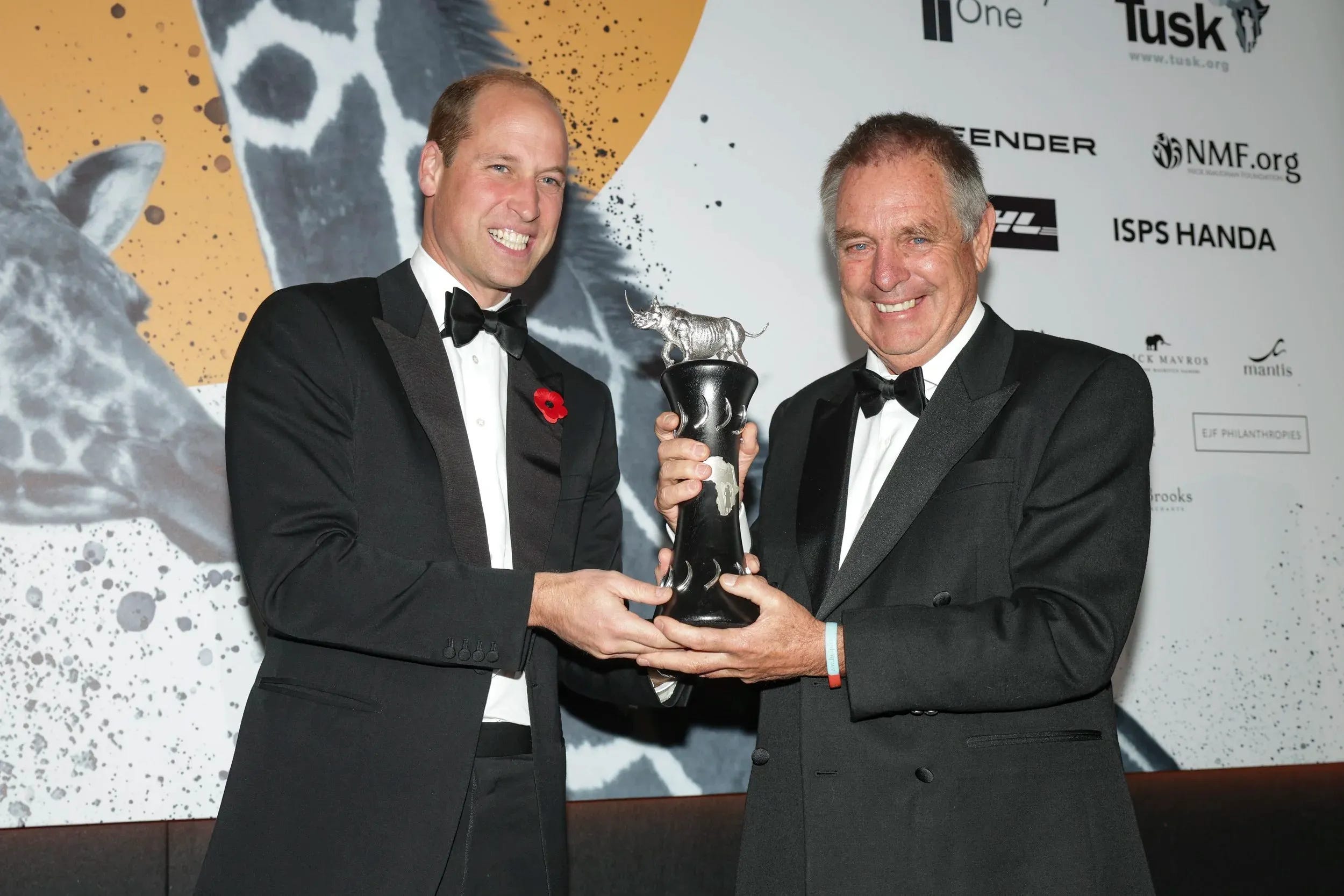
Jecca Craig: As the co-founder of organizations like Panthera and Stop Ivory, Jecca represents the “expert/technocrat” arm of the family legacy. Her career is built on the global stage, using data-driven conservation, remote sensing, and international advocacy to lend the family’s land-management model scientific and global-standard credibility. Her long-standing personal ties to the British Royal Family—specifically her friendship with King Charles III and Prince William—have provided the family with a permanent, impenetrable layer of global prestige.
Prince William says Jecca Craig's father made him a conservationist https://mol.im/a/10276123 via @DailyMail

Will Craig: Operating at the core of Lewa, Will continues the family’s role as the on-the-ground custodians. His work ensures that the operational management of the conservancies remains seamlessly integrated into the global conservation network. He represents the continuity of the “Craig mandate”—ensuring the ranch remains a vital nexus for tourism, high-level networking, and donor engagement.
IV. A Networked Inheritance
The Craig dynasty is a testament to the art of strategic adaptation. Through three generations, they have transitioned from colonial grantees to local ranchers, and finally to international conservation titans. By successfully passing the baton to children who are equally comfortable in a London boardroom, a scientific symposium, or the Laikipia bush, they have ensured that their family’s control over the Laikipia corridor remains absolute. They have created a model where the family’s private interests are permanently protected by the very global institutions and state apparatuses they helped build.

IX. The Human Cost: Conservation or Control?
I. The Poverty/Wealth Gap: Two Worlds in One Landscape
The visual disparity in Laikipia is jarring. Within the electrified, gated perimeter of the Lewa-Northern Rangelands Trust (NRT) ecosystem, the landscape is a manicured paradise: lush pastures, high-end security, and abundant wildlife funded by global capital. Just beyond these fences, the reality for the indigenous pastoralist communities is a stark, recurring cycle of drought, resource scarcity, and land dispossession.
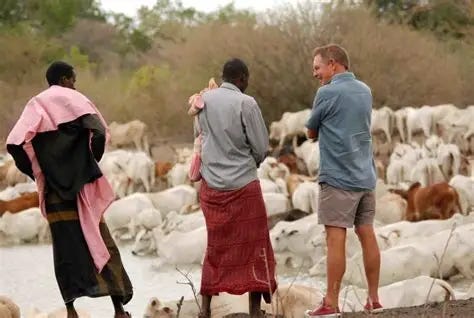
This is not a failure of the system; it is a feature of the geography. The conservancy model creates a fenced-off “wealth island” where ecological assets are prioritized for international consumption, while the surrounding communities—who have managed these rangelands for centuries—find themselves increasingly pushed into “marginal” zones, squeezed by both ecological degradation and the loss of traditional access routes.
II. The Critique: Are Conservancies the New “White Highlands”?
Critics argue that the modern conservancy movement is simply a high-tech iteration of the colonial enclosure. Where the early 20th-century settlers used the cattle whip and the crown grant to carve out the “White Highlands,” the modern conservation elite uses international ESG mandates, biodiversity “corridors,” and state-sanctioned security to achieve the same result: total control over vast tracts of land.
By turning local pastoralists into “subjects” of a conservation economy, this model subtly strips them of their autonomy. Instead of being owners of their land, they are incentivized to act as “conservation stewards” who must follow the rules set by donor-funded boards. It is a new form of land tenure where the natives are permitted to exist on the land only as long as they serve the ecological and tourism objectives of the elite.
III. Managing Resistance: The Architecture of Co-option
You ask how Ian Craig manages the inevitable local resistance to this control. He does not use brute force; he uses the more effective tool of co-option. Craig has engineered a brilliant, multi-layered strategy to neutralize dissent before it can solidify into a political movement:
Financial Dependency (The NRT Pipeline): By channeling international donor funds through the NRT, Craig makes the local community leadership economically dependent on the conservation structure. When schools, water projects, and basic employment are funded by the “Conservancy,” local leaders are incentivized to silence opposition. Resistance is not just discouraged; it is framed as a threat to one’s own livelihood.
Elite Integration: Craig identifies the most influential local voices—the “gatekeepers”—and brings them onto boards, advisory committees, or into well-paid positions within the management structure. By giving the local elite a stake in the conservancy’s success, he transforms them from potential leaders of resistance into the primary enforcers of the status quo.
The “Peace and Security” Narrative: Resistance is often rebranded as “insecurity” or “poaching.” By aligning with state security apparatuses, Craig can characterize traditional grazing movements—which are vital to pastoralist survival—as illegal encroachments. This allows him to deploy the state to suppress local land rights movements under the guise of “maintaining law and order” and “protecting endangered species.”
Information Asymmetry: The conservancy model is heavily reliant on international expertise, complex legal contracts, and high-level donor reporting—all in English. This technical language creates a barrier that keeps the average pastoralist out of the loop regarding land agreements and long-term legal status. By owning the data, the maps, and the narrative, Craig ensures that he is always the only person in the room who truly understands the power dynamics at play.
In essence, Ian Craig manages resistance by making the “Conservancy” the only viable path to development in a region that the state has otherwise abandoned. He has turned a struggle for land rights into a bureaucratic process of “partnership,” where the local community is always the junior party, and he is always the architect.
II. Key Figures and the Governance Nexus
The conservancy model is bolstered by a network of figures whose presence provides the political cover necessary to keep the “Conservancy State” functioning.
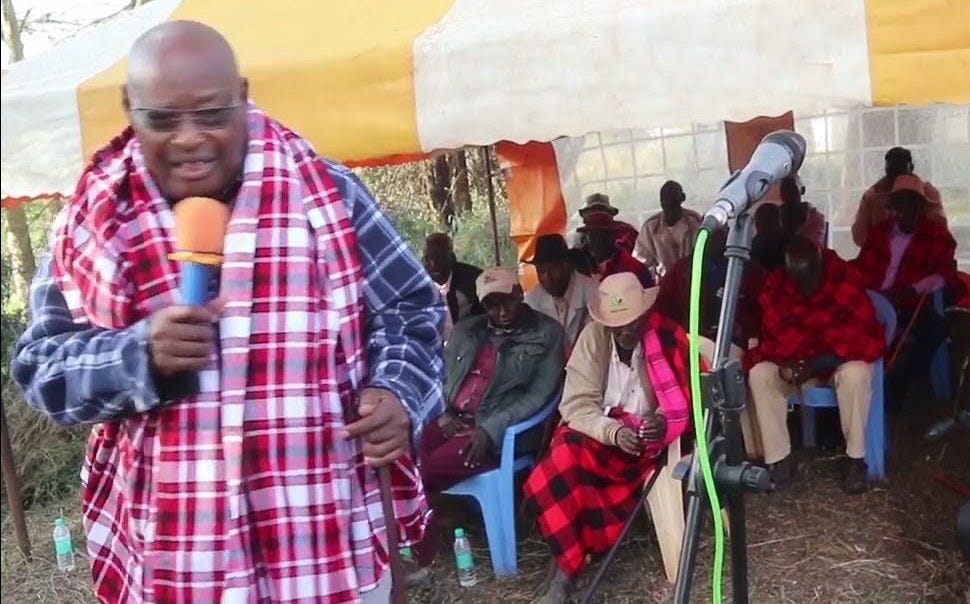
The Political Architect: Perhaps the most pivotal figure in this nexus is Francis ole Kaparo, the former long-serving Speaker of the National Assembly. Kaparo has served as the Chairman of the Lewa Wildlife Conservancy and was instrumental in the founding of the Northern Rangelands Trust (NRT). His involvement is a masterstroke of elite integration; as a respected Maasai leader and former Speaker, he provides an indigenous “seal of approval” that lends the conservancy movement profound political legitimacy. When Kaparo speaks for the conservancy, he does so not just as a conservationist, but as a statesman, making it nearly impossible for regional politicians to oppose the model without appearing to challenge a national elder.
Corporate & Political Patrons: The boards are further populated by figures who command immense influence in Kenya’s corporate and political spheres. A prominent example is Julius Kipng’etich, the CEO of Jubilee Holdings and former Director of the Kenya Wildlife Service (KWS). His presence bridges the gap between the conservation-industrial complex and the highest echelons of Kenya’s corporate sector, ensuring the movement is viewed as a “business issue” with serious state backing.
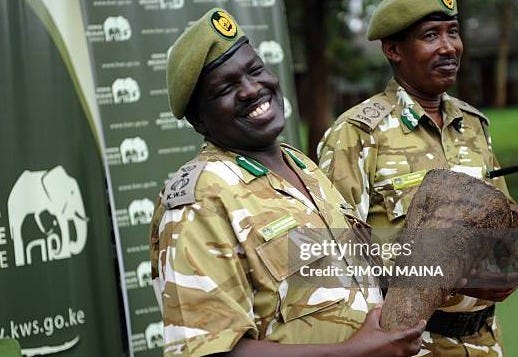
The Security & State Interface: The model relies on a seamless integration with the Kenya Wildlife Service (KWS). Because KWS management and regional conservation area heads often collaborate directly with conservancy scouts on “anti-poaching” and “security” operations, the conservancy is effectively treated as a state-sanctioned security partner. This turns the state’s enforcement power into a tool for securing private-led conservation blocks.
The “Community” Faces: Figures such as Tom Lalampaa, who has risen through the ranks to lead NRT’s partnership and growth efforts, represent the “new face” of the model. These individuals act as the vital bridge, ensuring that donor capital flows smoothly to the community level while maintaining the overarching vision set by the founding architects.
III. Why This Defeats Resistance
This structure makes dissent almost impossible for the average pastoralist. If a community member or local activist speaks out against the conservancy’s land-use policy, they are not just challenging a rancher; they are challenging a board that includes a former Speaker of the National Assembly, the heads of major insurance conglomerates, high-ranking security officials, and regional political representatives.
By tying the survival of local leadership to the success of the conservancy, Craig has successfully “captured” the opposition. He has turned the very people who should be protecting the pastoralist interest into the architects of its exclusion. This is the ultimate “Standard-Bearer” legacy: creating a system so deeply integrated with the national and local elite that the model becomes synonymous with the state itself, making it politically and legally immune to the claims of the disenfranchised.
X. The Reckoning: Development or Dispossession?
As we conclude this investigation into the architecture of Northern Kenya’s “Conservancy State,” we are left with a fundamental question that every citizen and market participant must confront. We have seen how Ian Craig, through the Lewa-NRT nexus, has masterfully integrated global capital, state security, and local elite co-option to build an impenetrable system of land control. But beneath the polished veneer of “sustainable development,” the evidence of deep, structural friction remains.
To our readers, the architects of our future markets, we pose this defining question:
“In the balance sheet of our national progress, does the Conservancy model represent a genuine benefit to the Kenyan nation and its local communities, or is it merely the sophisticated enclosure of the 21st century?”
The Divergent Narratives
The answer depends entirely on which ledger you examine:
The “Assets” Ledger: Proponents—including global donors, state officials, and a layer of integrated local elites—point to a thriving balance sheet. They cite the protection of endangered species, the injection of millions of dollars in donor and tourism capital, the creation of modern infrastructure (schools, water projects), and the integration of Northern Kenya into a globalized, “green” economy. In this view, Craig is a pioneer who salvaged a dying ecosystem and turned it into a world-class asset.
The “Liabilities” Ledger: Critics—including pastoralist communities, human rights organizations, and legal scholars—present a far more sobering audit. They point to the alienation of ancestral lands, the criminalization of traditional pastoralist migration routes, the militarization of the rangelands, and the systematic marginalization of the original inhabitants. In this view, the “Conservancy State” is a fortress that has outsourced the governance of Kenyan territory to private boards and international NGOs, stripping the local citizen of their primary economic asset: the land itself.
A Market Under Construction
As we document those who have “shaped our capital markets,” we must recognize that Ian Craig’s legacy is not just in wildlife. It is in the marketization of geography. He has proven that in modern Kenya, the most profitable way to “hold” land is to package it as a global public good.
But as you weigh the impact of this legacy, consider this: If a model of development requires the continuous co-option of local elders, the deployment of quasi-military security against traditional lifestyles, and the heavy shielding of international diplomatic and financial capital to survive, is it truly “development”? Or have we simply witnessed the creation of a private, permanent economic order that exists parallel to—and often at the expense of—the sovereignty of the Kenyan people?
The jury of history remains out. For those of us tracking the flow of capital and power across our markets, the story of Ian Craig serves as the ultimate case study: Who owns the landscape, and by what authority is the value of that landscape defined?
Boardlot Africa is a premier financial intelligence and corporate governance publication dedicated to unpacking the mechanics of capital, market strategies, and structural shifts across East Africa’s corporate landscape. By bridging the gap between raw economic data and actionable market intelligence, we deliver deep-dive research, independent corporate analysis, and policy insights designed for institutional investors, boardrooms, and sharp market observers.
Get in Touch
Email: boardlot.research@gmail.com
Phone: +254 753 133 901
Substack: Subscribe to Boardlot Africa
X (Twitter): BoardLotSultan